
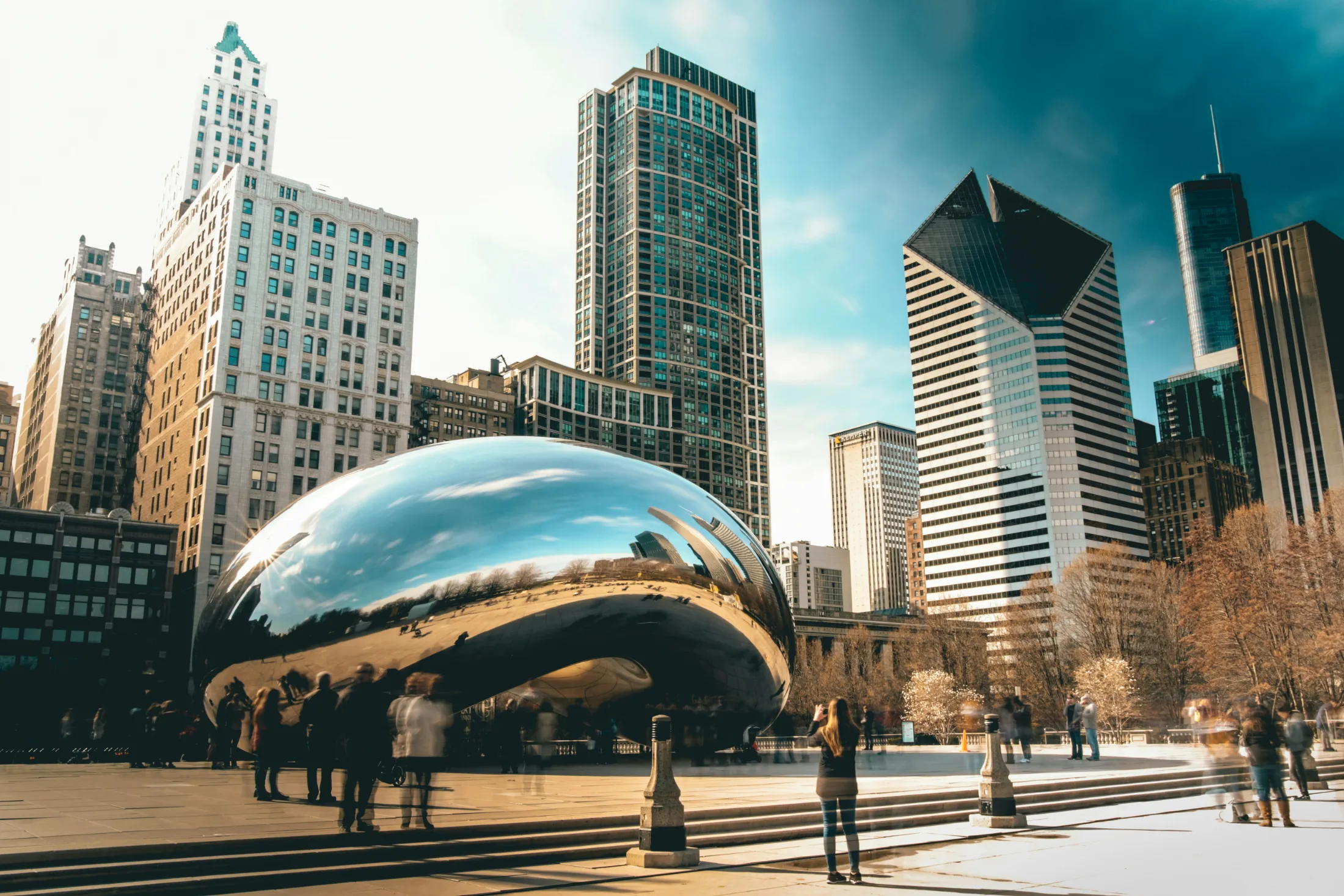
Its official name is Cloud Gate. Everyone in Chicago calls it The Bean. At 66 feet long, 33 feet tall, and 110 tons of seamlessly welded stainless steel, it is the city's most reliably spectacular photo op, and, if you actually go under it, something considerably stranger than a photo op.
Who Made It, and Why It Looks Like That
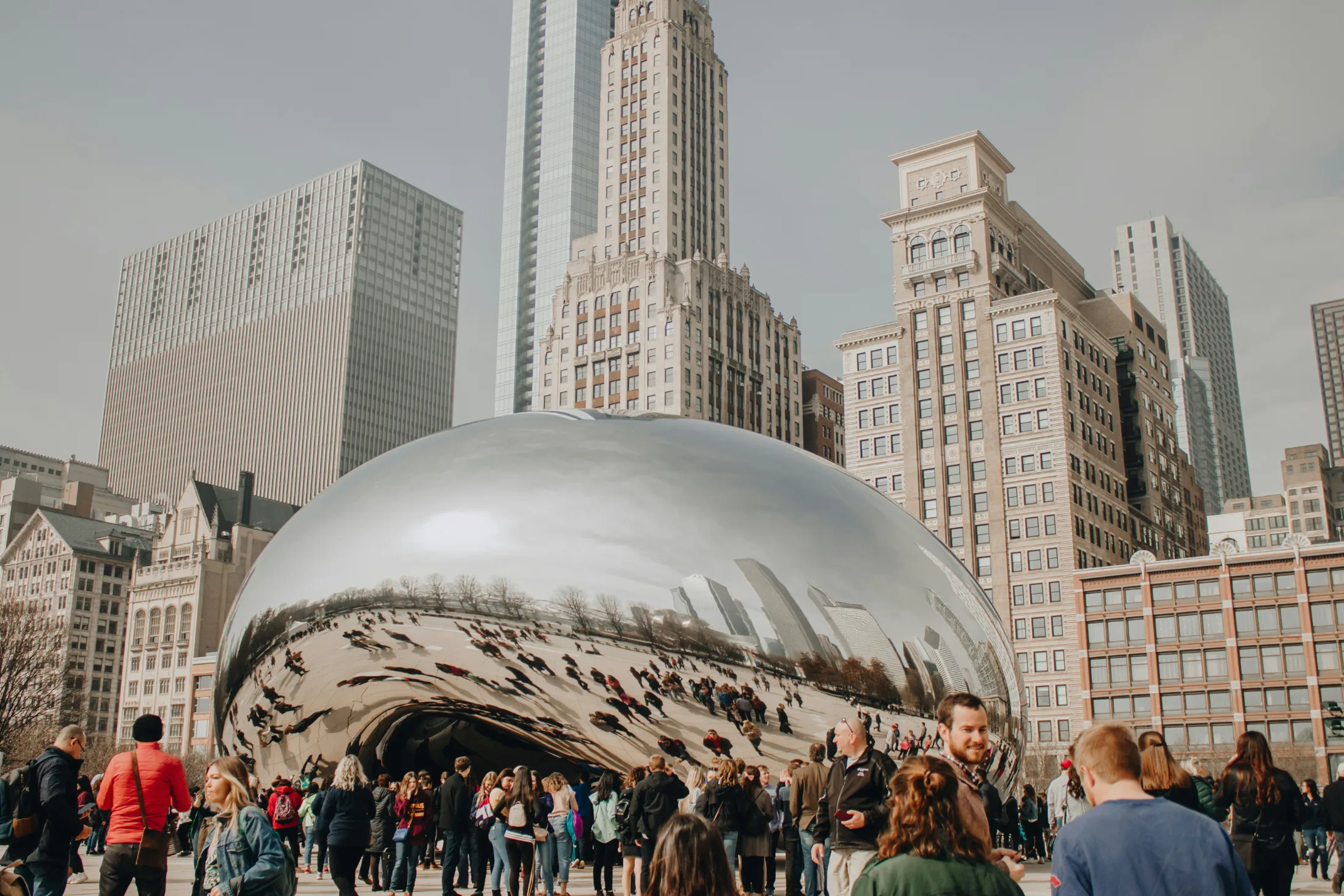
Cloud Gate is the work of Indian-born British sculptor Anish Kapoor, commissioned for the opening of Millennium Park in 2004. Kapoor drew his inspiration from liquid mercury, the idea of a massive, formless drop of metal that appears to have landed in the middle of the Loop and stayed. The surface is 168 polished stainless steel plates, welded so precisely that the seams are invisible. You are not looking at a reflective coating. You are looking at the city itself, bent and warped across a single continuous skin of metal.
The project cost $23 million in private funding. Construction ran past the park's public opening and wrapped in 2006.
The Omphalos: What Most People Miss
Walk the full perimeter first. Then go under. The arch stands 12 feet high, and the concave underside, known as the Omphalos, pulls your reflection into a spinning, infinite loop of sky and strangers. It is harder to photograph than the exterior and far more disorienting. That is the point.
Where It Stands
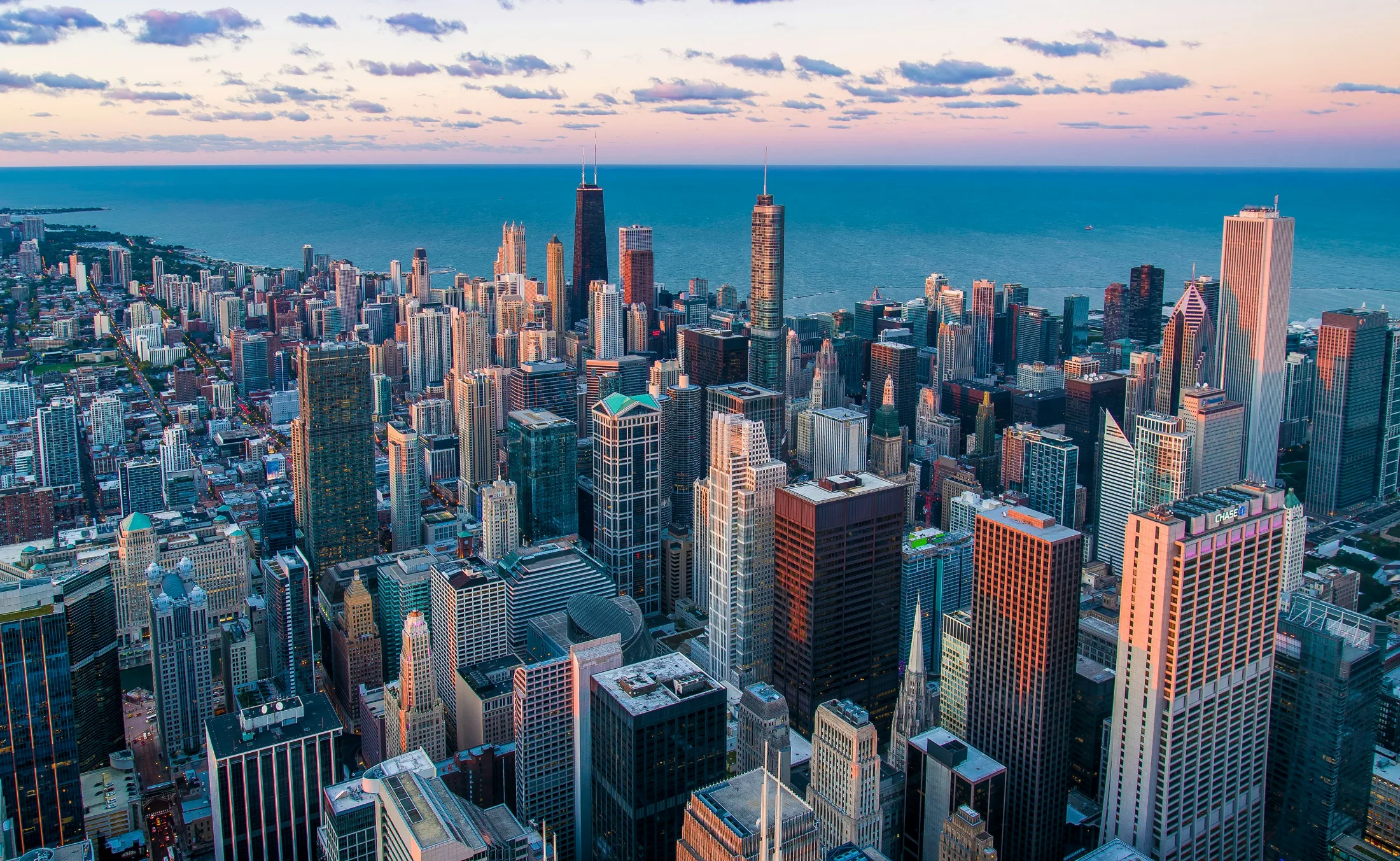
Cloud Gate anchors Grainger Plaza inside Millennium Park, at 201 E. Randolph St in the Loop, between Michigan Avenue and Columbus Drive, south of Washington Street and north of Madison. That puts it right at the seam where downtown's street grid meets the lakefront, which is exactly why the reflection works: Kapoor gave the sculpture one of the world's great skylines to eat.
About 20 million people visit annually.
What You Need to Know Before You Go
Admission is free. Millennium Park is open daily from 6:00 a.m. to 11:00 p.m. The plaza reopened in July 2024 after a ten-month renovation, new stairs, updated ramps, fresh waterproofing, so the approach is cleaner than it has been in years.
From 4:00 to 11:00 p.m. Thursday through Sunday, bag checks and metal detectors are in place at the Michigan Avenue entrances at Washington and Madison Streets. On weekend evenings, minors must be accompanied by an adult to enter between 6:00 and 10:00 p.m.
The best light hits early morning, when the plaza is quieter and the steel catches a low, raking sun. Come back after dark and the sculpture becomes a second skyline, inverted and suspended just above the ground.