
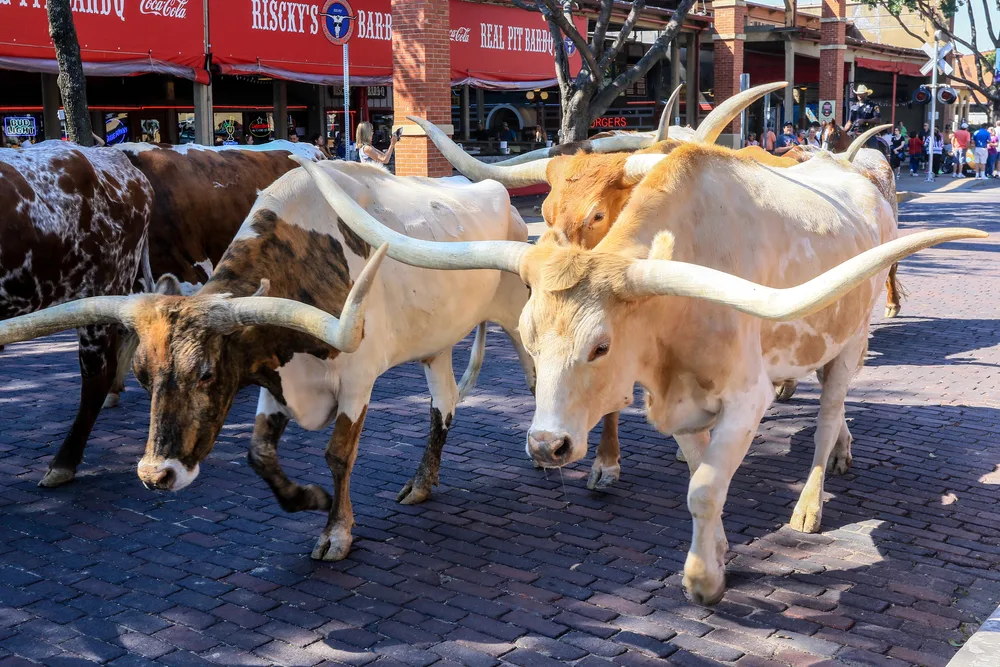
The longhorns come around the corner at a walk that fills the street, horns spanning wider than most trucks, hooves clattering on old brick pavers in front of Riscky's Bar-B-Q while the crowd presses in from the sidewalk. The drive has run on this schedule for decades. It isn't staged for whoever showed up today, and it doesn't slow down for a better photo angle. That's what separates the Fort Worth Stockyards from every Western-branded retail experience you've ever walked through: the place isn't performing. It's just going about its day.
Fort Worth earned the tag "Cowtown" the hard way. By the late 1800s, the Chisholm Trail had made this city the last major stop before Kansas, and the livestock industry that followed built the physical bones of what still stands on Exchange Avenue. The brick is original. The scale is original. The smell, on a warm afternoon, is also original.
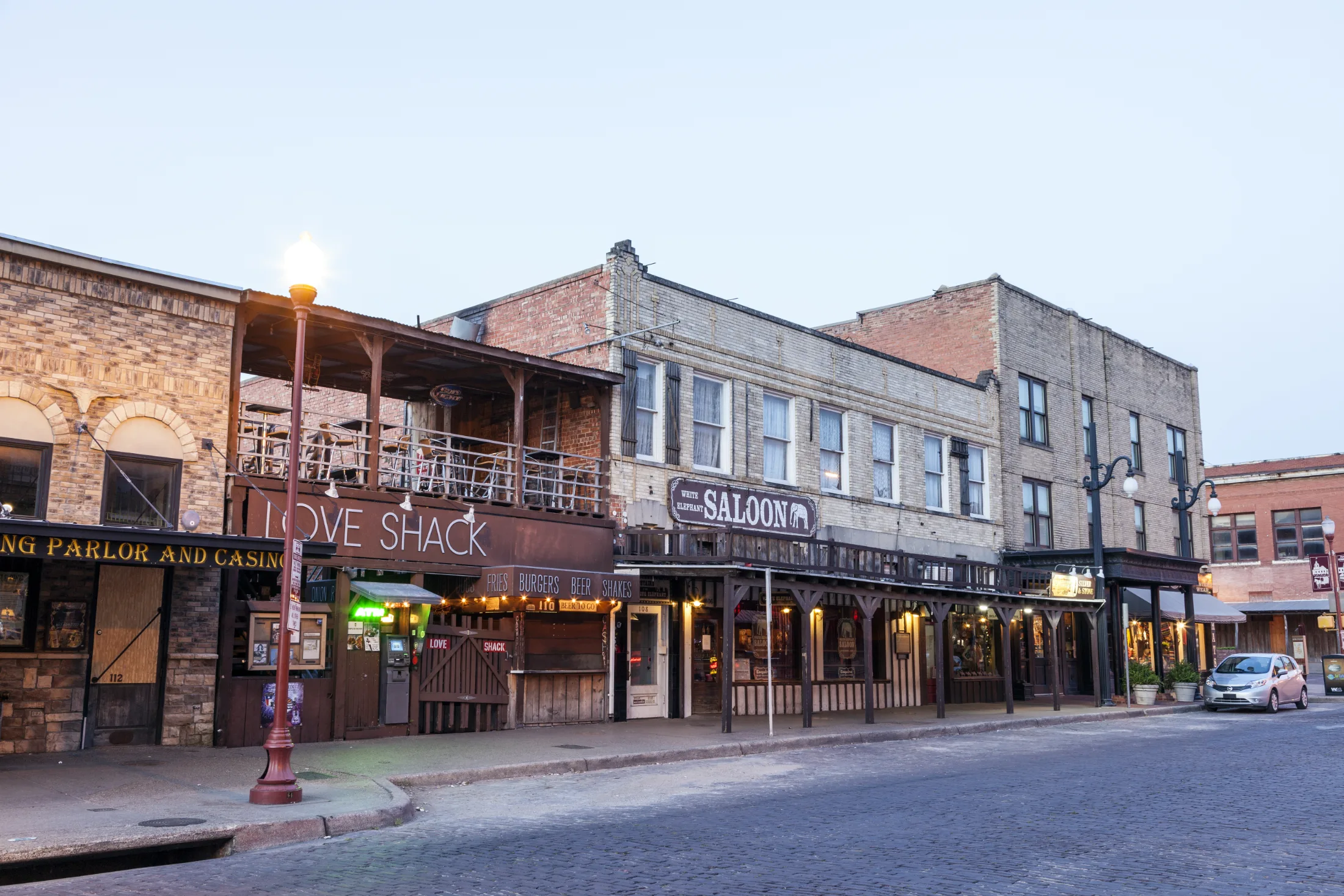
At dusk the block settles into itself. The White Elephant Saloon's sign goes warm against the old limestone and brick. Love Shack's upper deck glows over the street below, fries, burgers, beer, and shakes spelled out in plain block letters. These aren't reconstructions. The facades here are the real article, buildings that absorbed decades of cattle money and kept standing. Walk the block on a quiet evening before the night crowd arrives and you feel the weight of it. Or get a burger and a cold one on the deck and just look at the street. Both are correct.
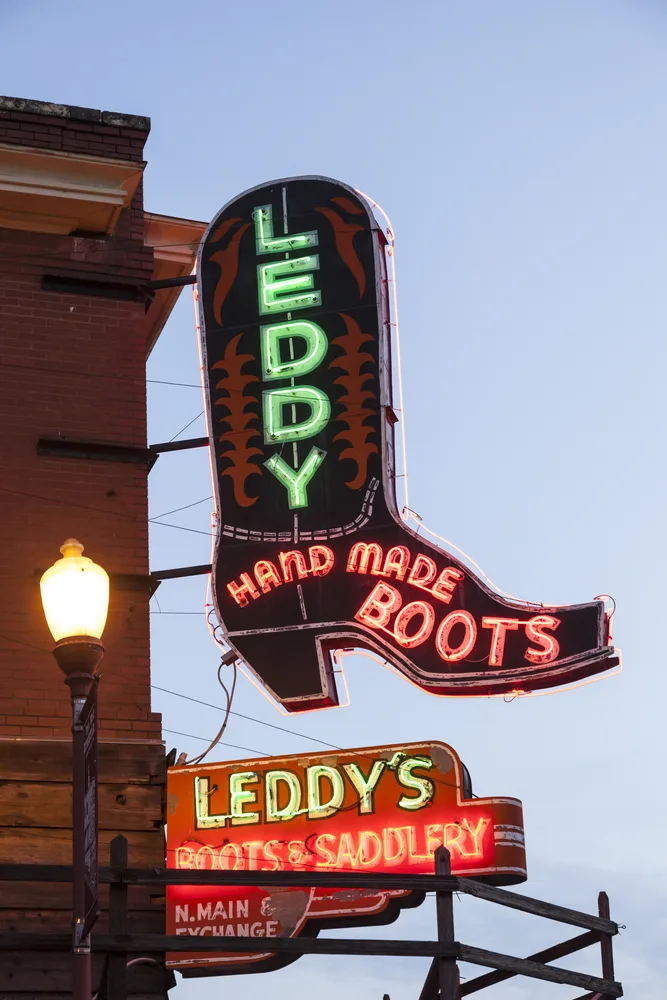
Two blocks up, Leddy's Handmade Boots stakes its corner with one of the best neon signs in Texas. The boot shape rises above the roofline in green and red against the evening blue, "HAND MADE BOOTS" burning underneath it. Leddy's has been fitting custom boots and saddlery in the Stockyards long enough that the sign itself has become a landmark. People photograph it the way they photograph the cattle drive — not because someone told them to, but because it's genuinely worth looking at. The custom boot and saddlery work on the floor inside explains the rest.
The city's range runs further than brisket and boot leather. This story on Fort Worth's more unexpected food culture is worth your time before or after the walk.
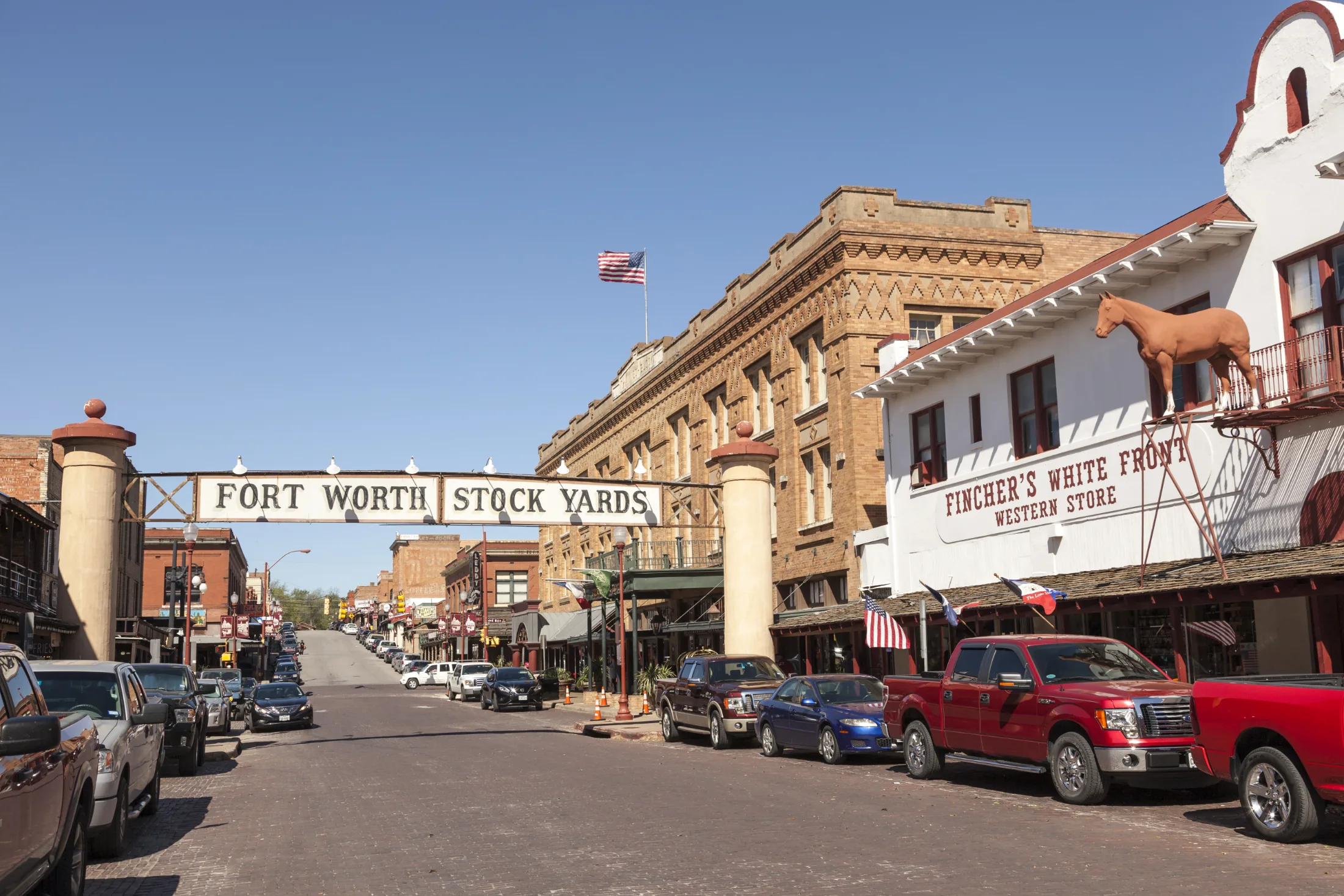
Pull back to the arch and the full length of Exchange Avenue opens up. "Fort Worth Stock Yards" spans overhead in black letters on white, the American flag flying from the stone building behind it, trucks parked nose-in along the curb the way they have been since people drove trucks instead of tying horses. Fincher's White Front Western Store anchors the near corner, a fiberglass horse on the parapet surveying the street below. This is a working commercial block. People buy hats here, get their boots resoled, argue over belt buckles. The tourism is real, but it hasn't hollowed the place out the way it tends to in districts that trade exclusively on what they used to be.
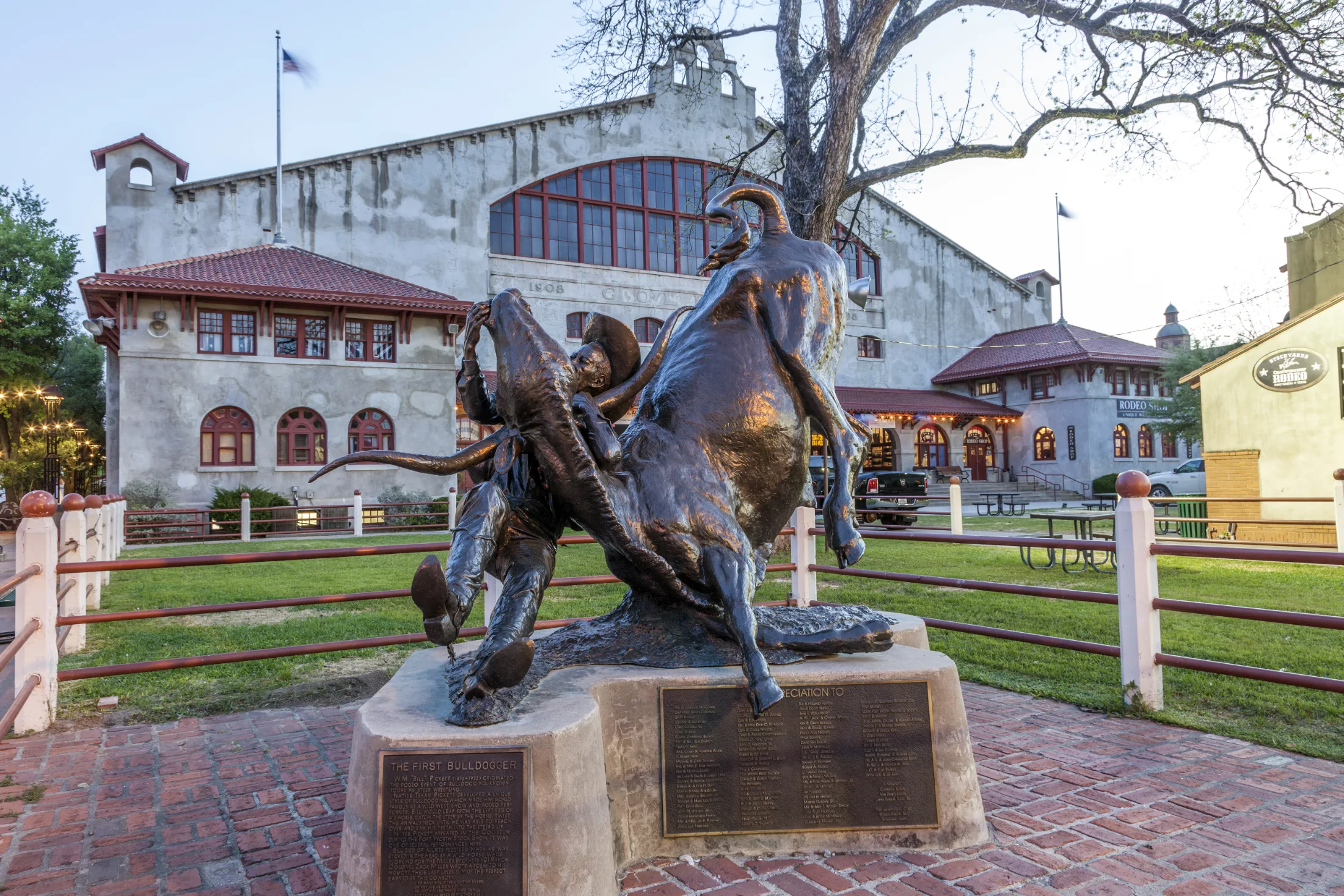
End it at the 1908 Coliseum, which says the year it was built right on the facade and means it. The bronze out front — a bulldogger mid-wrestle, one hand on the steer's horn, the animal's hooves off the ground — is titled "The First Bulldogger," and the plaque beneath it carries a list of names long enough to remind you that this sport has a deep human history. At blue hour, with the coliseum's red-trimmed windows going warm and the grounds going quiet, the statue holds the same frozen second it always has. The cowboy doesn't let go. The steer doesn't go down.