
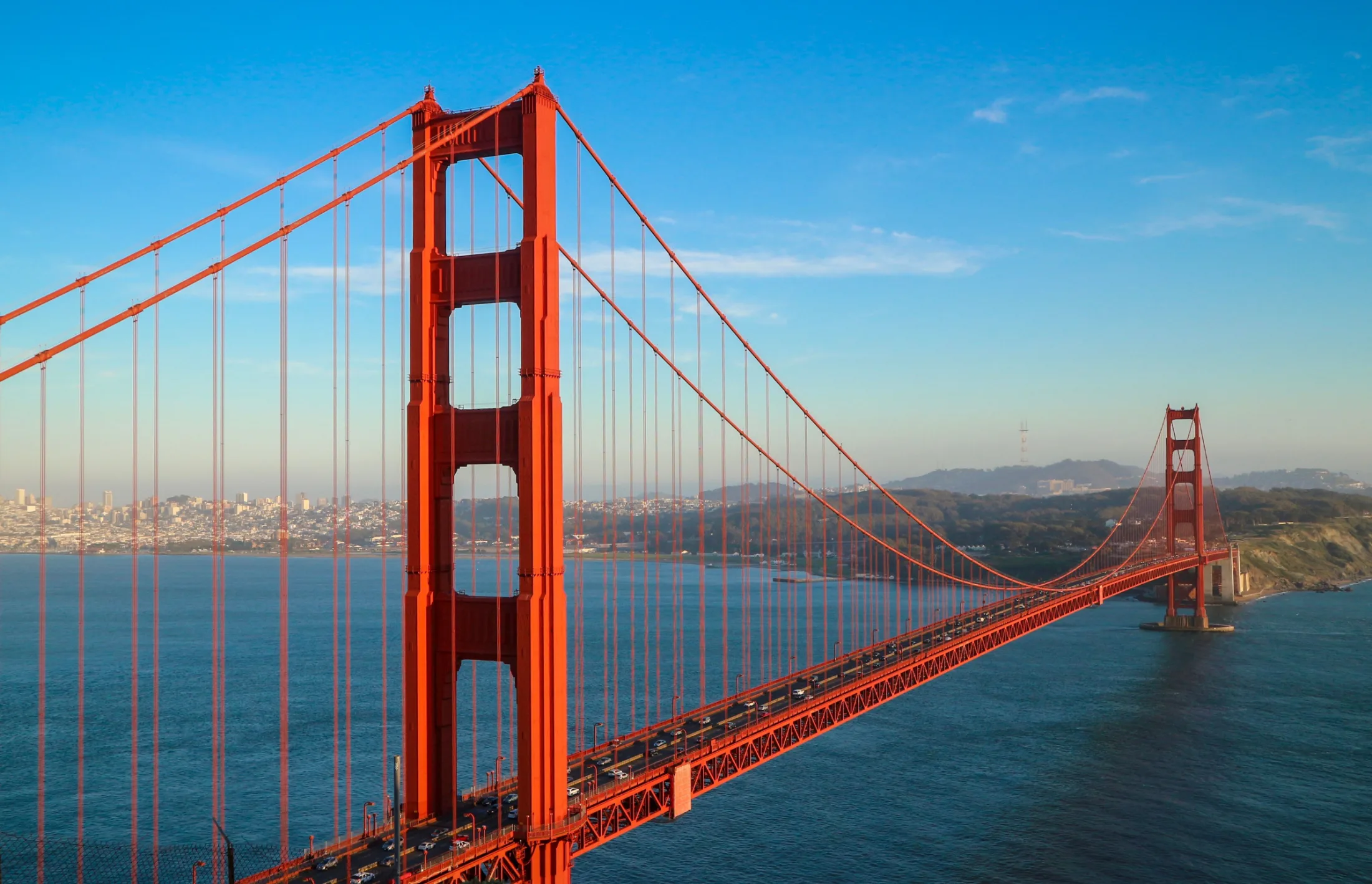
Every city has an icon. San Francisco has one that earns it. The Golden Gate doesn't just mark the entrance to the Bay — it sets the terms. Come in ready for something real, or don't bother.
Live here long enough and you stop seeing the bridge and start feeling it: that specific weight of salt air and cold Pacific wind when you cross from Marin. Visitors feel it on day one. Residents forget it, then get ambushed on a Tuesday when the fog lifts at noon and the whole span goes fire-orange against a scrubbed blue sky. That's the rhythm of this city — it surprises you on the days you least expect it.
The Street-Level City
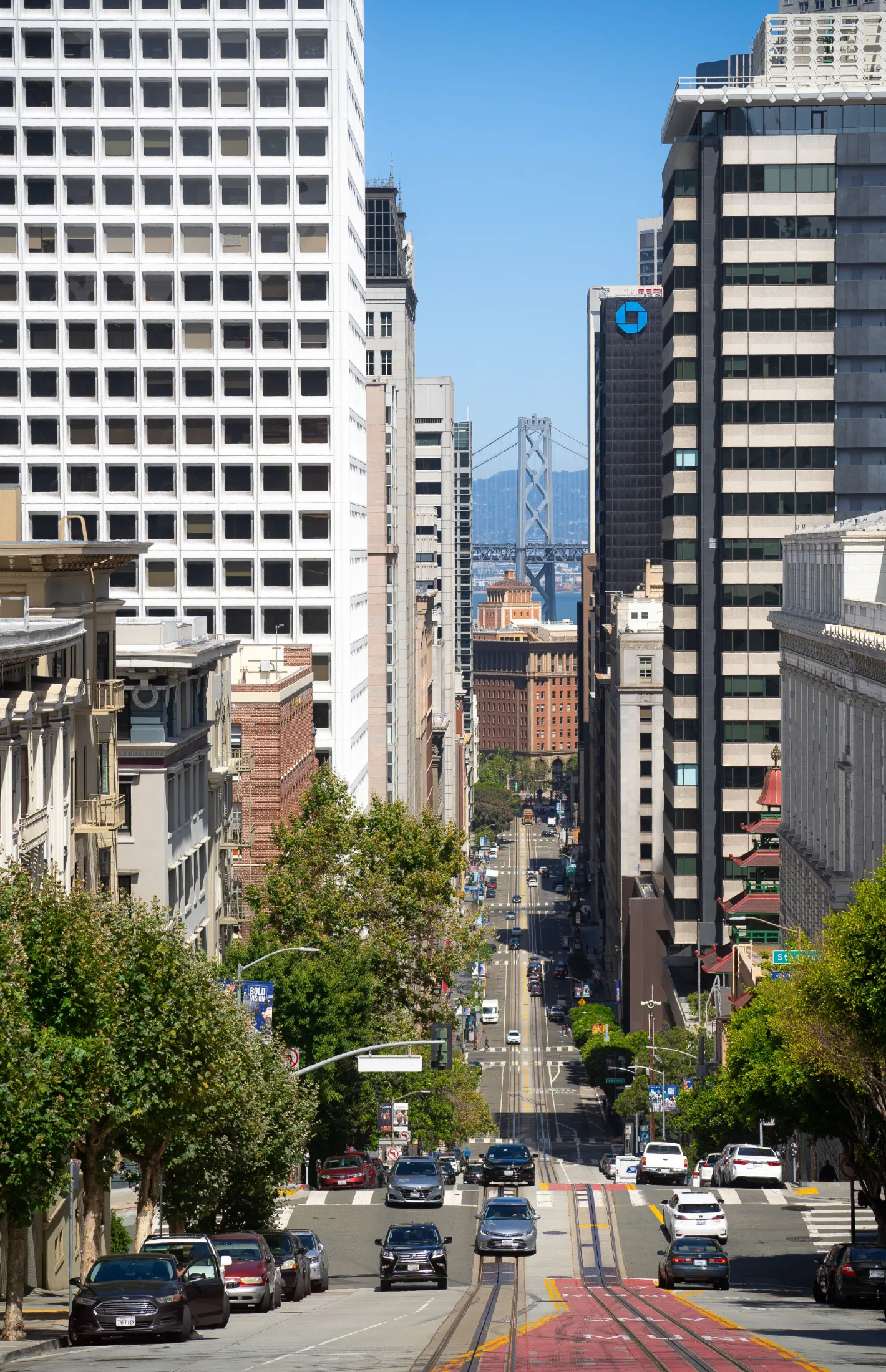
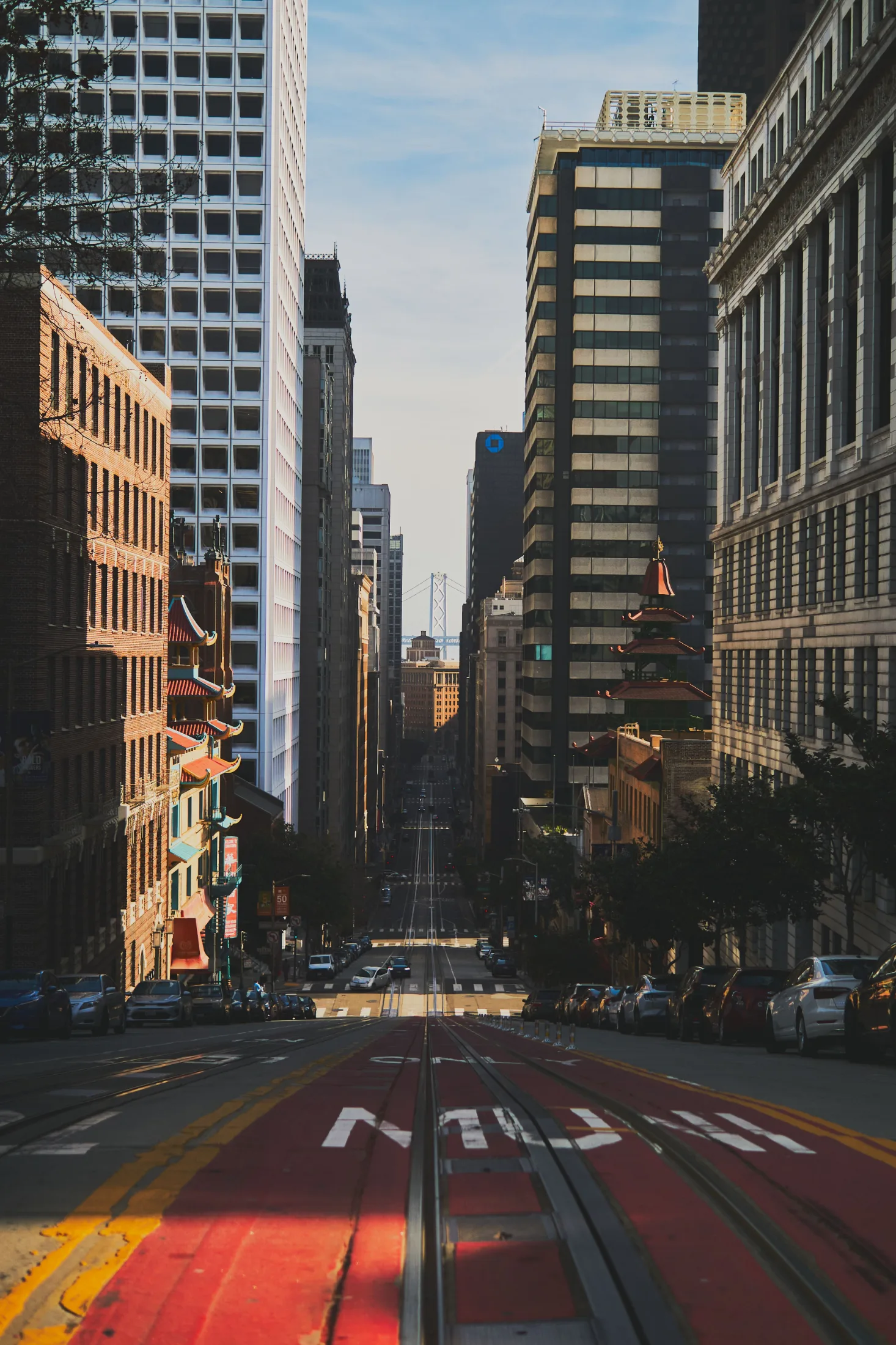
Stand at the top of one of San Francisco's cable car corridors on a clear morning and you get the full argument for why this place works. The tracks run straight down through the Financial District, past century-old brick and glass towers, and dead-end at the Bay with the Bay Bridge framing the whole thing. It's a city that refuses to apologize for its hills or its ambition.
Living here means learning the neighborhoods the way you learn a person — slowly, and with a willingness to be wrong about your first impression. The Financial District at 7am is all purpose and cold coffee. The same streets at 7pm are louder, slower, somebody's after-work corner. Chinatown gives way to North Beach, North Beach to the waterfront, and the cable car rails are the thread that stitches it together.
For visitors, that overlap is the whole point. San Francisco Travel — the city's official destination marketing organization, based at One Post Street — exists to make sure people arrive with a real plan and the right expectations. Call them at 415-391-2000. They know this city, and they know what first-timers get wrong. The answer, almost always, is underestimating how much ground the neighborhoods cover and how different each one feels.
For people making the move here, that same specificity matters even more. You don't live in San Francisco generically. You live in the Richmond, or the Mission, or Noe Valley, and you build your whole routine around it.
What the Bridge Looks Like When It's Working
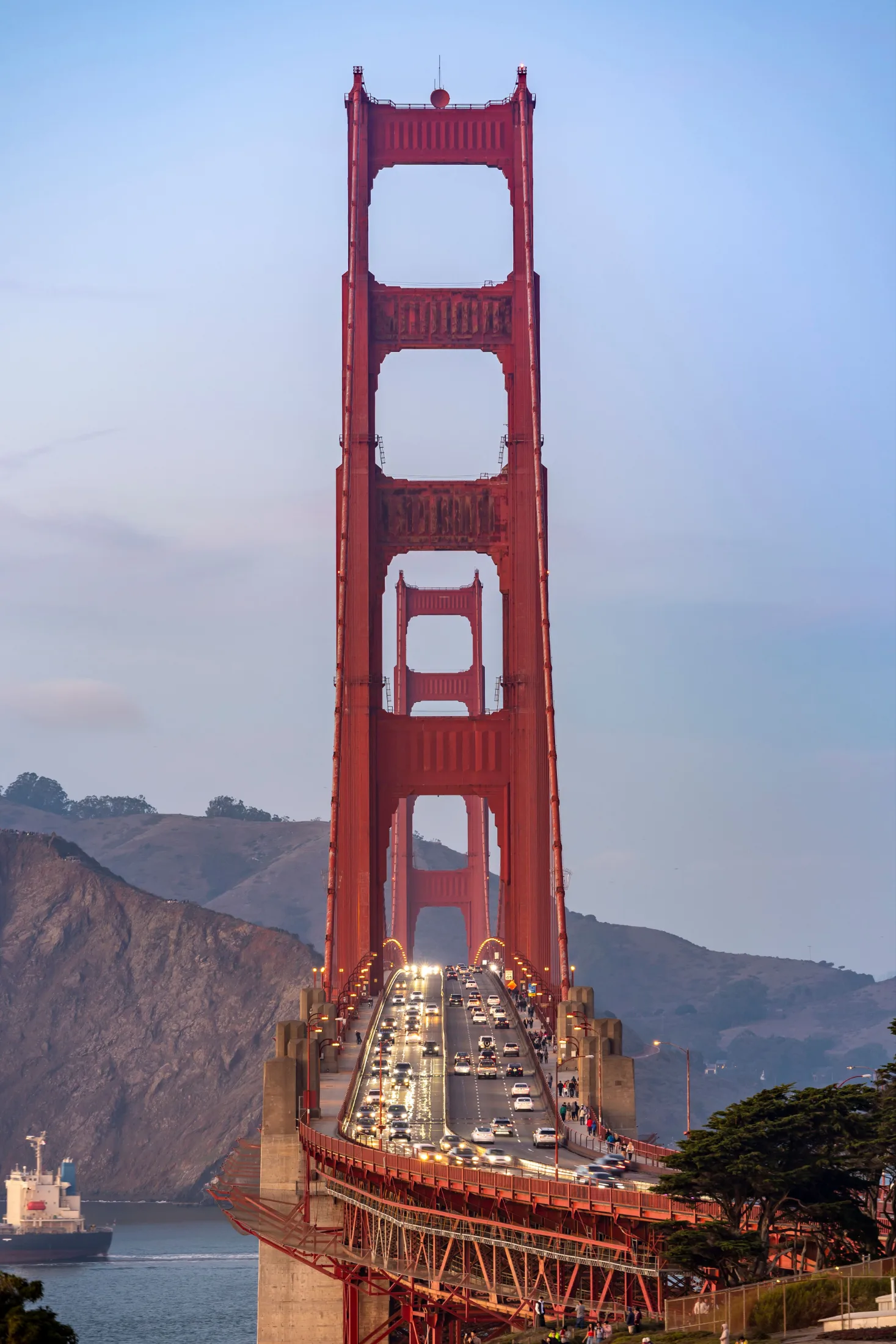
At dusk, the Golden Gate does something no photograph quite captures. The tower goes dark red against a pale lavender sky, headlights stream across the deck in both directions, and a cargo ship sits low in the water waiting to pass underneath. It's a working bridge. A working city. That's what makes it different from a postcard.
Visiting San Francisco and living in San Francisco are two different negotiations with the same place. Visitors get the compressed, high-contrast version — the iconic angles, the cable cars, the fog rolling in over Twin Peaks at 4pm. Residents get the long game: the micro-climates you memorize, the coffee order the counter knows, the shortcut through Clarion Alley that saves you four minutes every morning.
The city doesn't ask which version you're here for. It just asks you to show up and pay attention.