
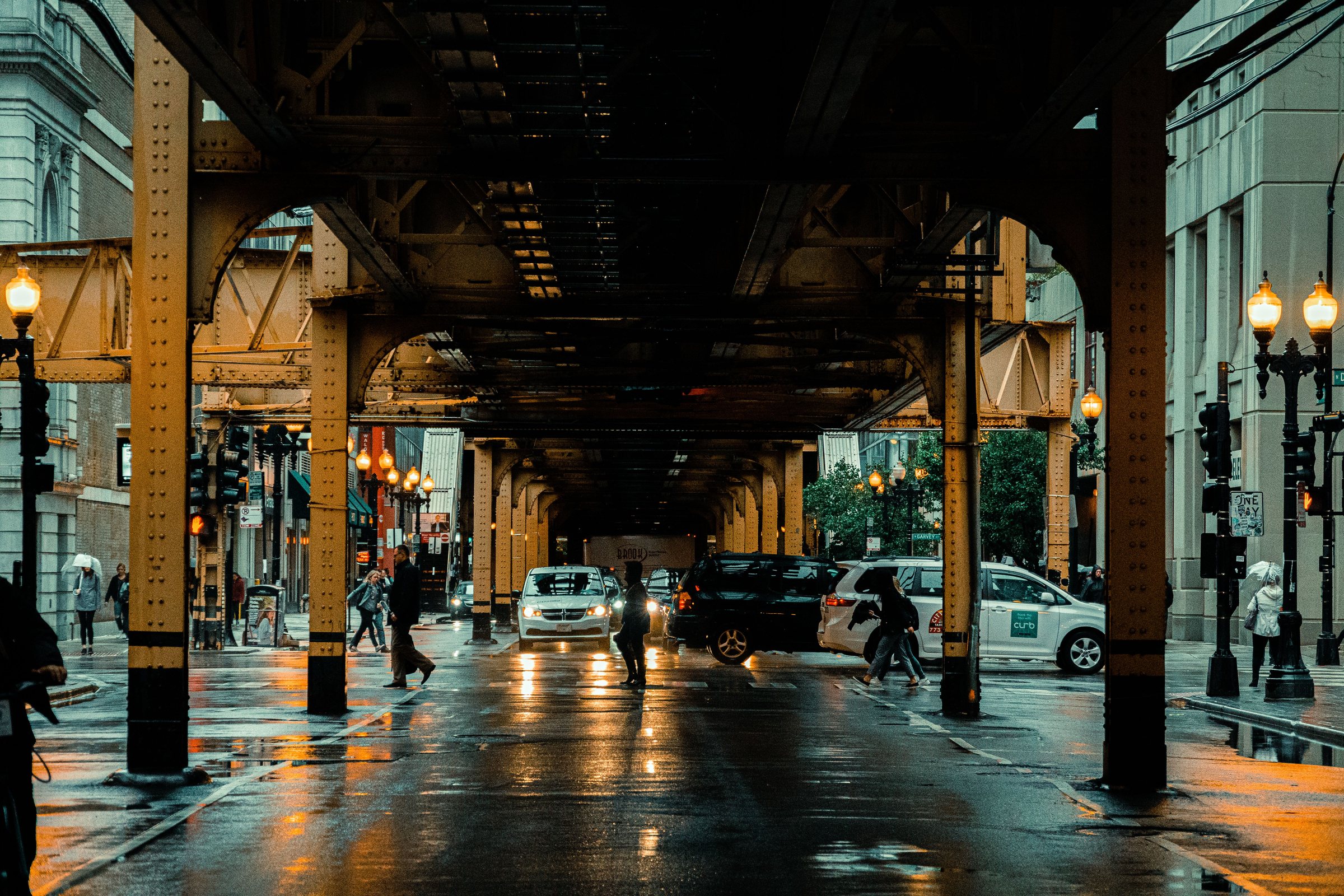
On June 6, 1892, the first L train left the 39th Street station. A steam locomotive pulled four wooden coaches, and 14 minutes later it reached the Congress Street Terminal, over tracks the Green Line still uses. Most of the L runs on elevated track, which is where the name comes from: "el." The L is the second-oldest rapid transit system in the Americas, after New York City's elevated lines.
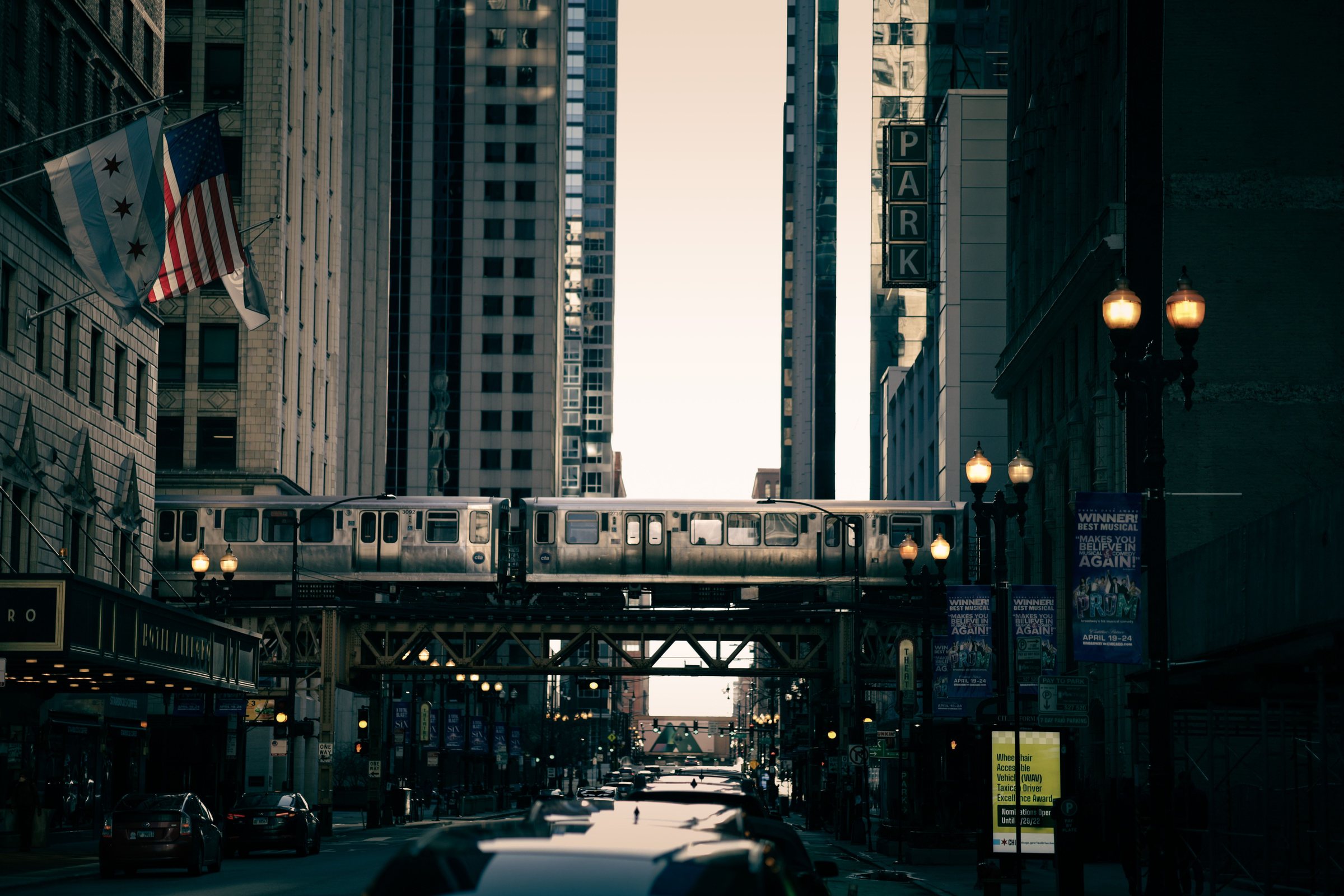
The railway loop has given its name to Chicago's downtown, which is also known as the Loop. The Loop is a 1.79-mile circuit of elevated rail around a rectangle formed by Lake Street, Wabash Avenue, Van Buren Street and Wells Street. It went up in pieces between 1895 and 1897, and the last connection was finished in 1900. The Loop includes eight stations. Five of the eight L lines use the Loop tracks, and the Brown Line makes a full counterclockwise circuit around the Outer Loop.
The Chicago Riverwalk runs along the south bank of the main branch of the Chicago River, from Lake Michigan and the Outer Drive Bridge west to the Wolf Point area and Lake Street. Construction began in 2001. The Riverwalk has restaurants, bars, cafes, small parks, and boat and kayak rentals. The Marina Plaza has restaurants, outdoor seating and boat access. The Cove has docking for kayaks and canoes. The River Theater has a sculptural staircase linking Upper Wacker Drive and the Riverwalk, and the Water Plaza, originally named the Swimming Hole, has a zero-depth fountain. The Jetty has a series of piers and floating wetland gardens, with chances to fish and identify native plants.
Navy Pier opened to the public on July 15, 1916, and was renamed Navy Pier in 1927. It is a 3,300-foot-long pier on the shoreline of Lake Michigan, in the Streeterville neighborhood, and it was built atop 20,000 logs imported from Oregon and piled into the lake bed. The pier encompasses over 50 acres of shops, restaurants, live theaters, family attractions, parks, gardens and exhibition facilities. Navy Pier draws over nine million visitors annually.
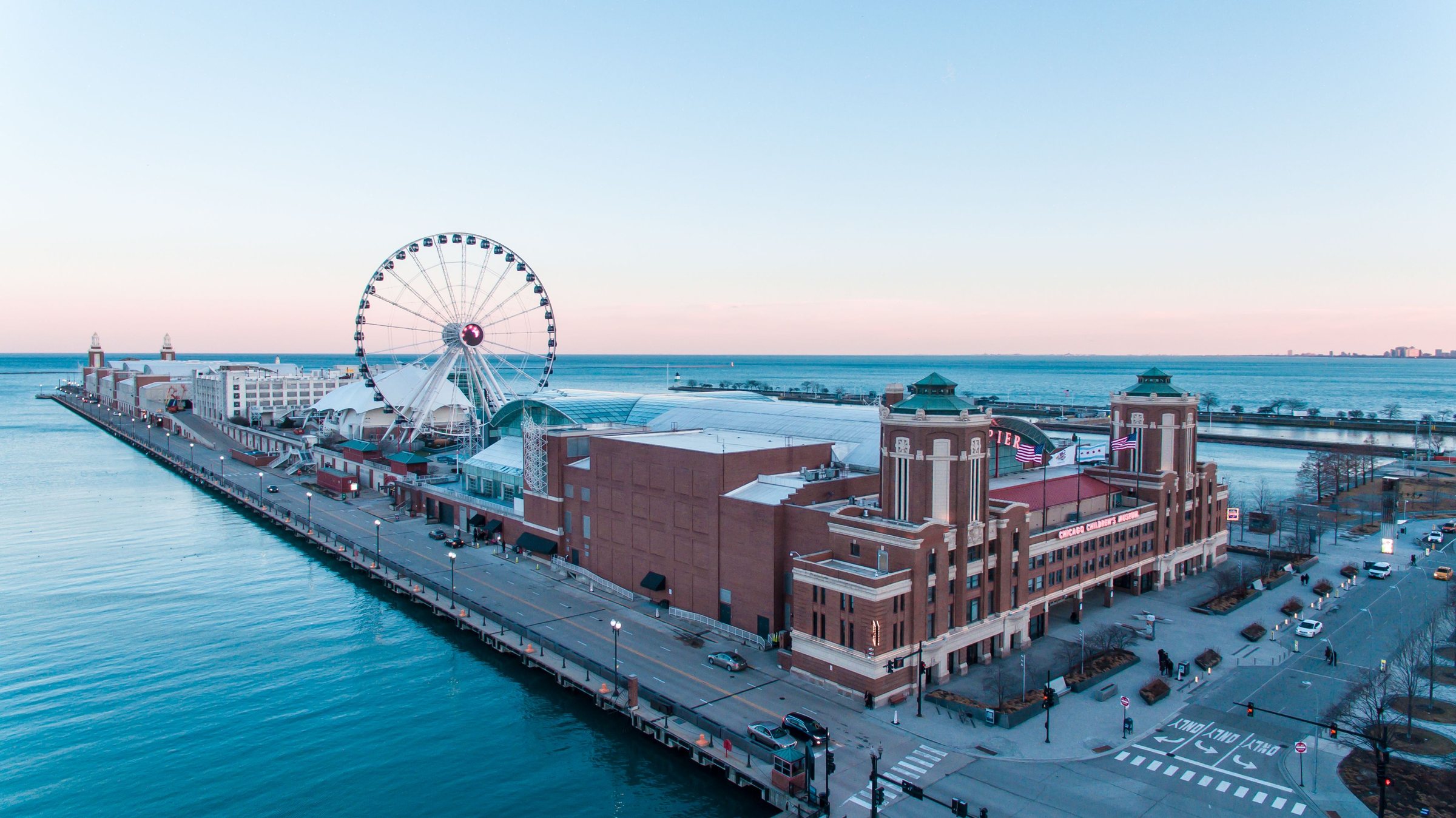
The pier's new Ferris wheel opened in May 2016 with brighter lights, and the new wheel is 196 feet tall, 46 feet taller than the wheel before it. A lighted water fountain and ice skating rink was created in Polk Bros Park.
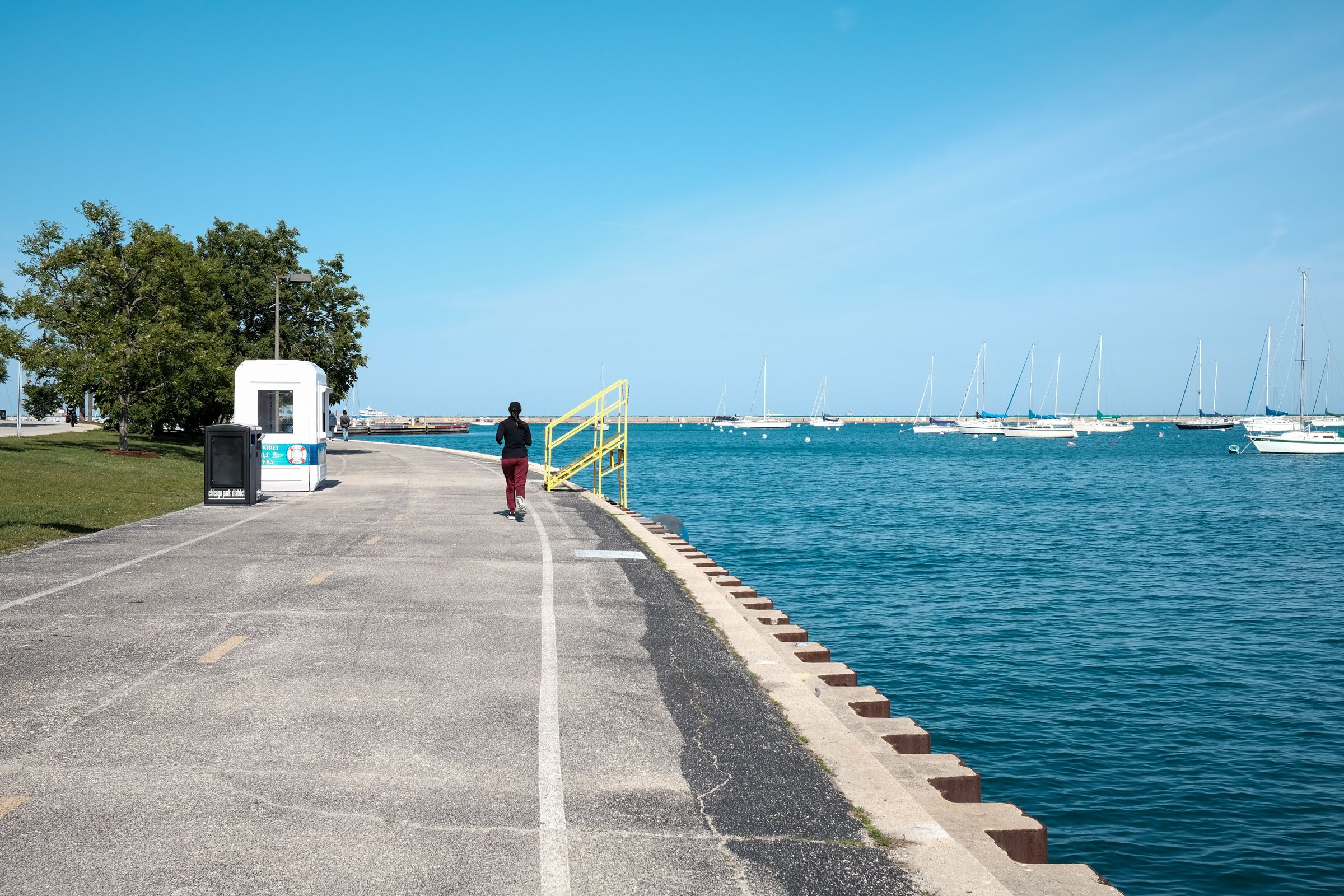
The Chicago Lakefront Trail is an 18.5-mile-long partial shared-use path for walking, jogging, skateboarding and cycling along the western shore of Lake Michigan. On busy summer days, 70,000 people use it. From north to south, the trail runs through Lincoln Park, Grant Park, Burnham Park and Jackson Park. From south to north, the attractions along the path include the South Shore Cultural Center, the Museum of Science and Industry, McCormick Place, Soldier Field, Chicago's Museum Campus, Monroe Harbor, Navy Pier, Belmont Harbor and the Waveland Clock Tower. The trail is open 24 hours a day. The parks and beaches along it close at 11 PM.
North Avenue Beach sits at 1600 North in Lincoln Park, where piers hold the sand in place and create a scalloped shoreline, ending in a hook like Cape Cod's. North Avenue Beach has the largest lifeguard staff and the most developed beachhouse, and the beach is lined with poles for people and leagues to hang volleyball nets. North Avenue Beach is the site of the annual AVP Chicago Open.
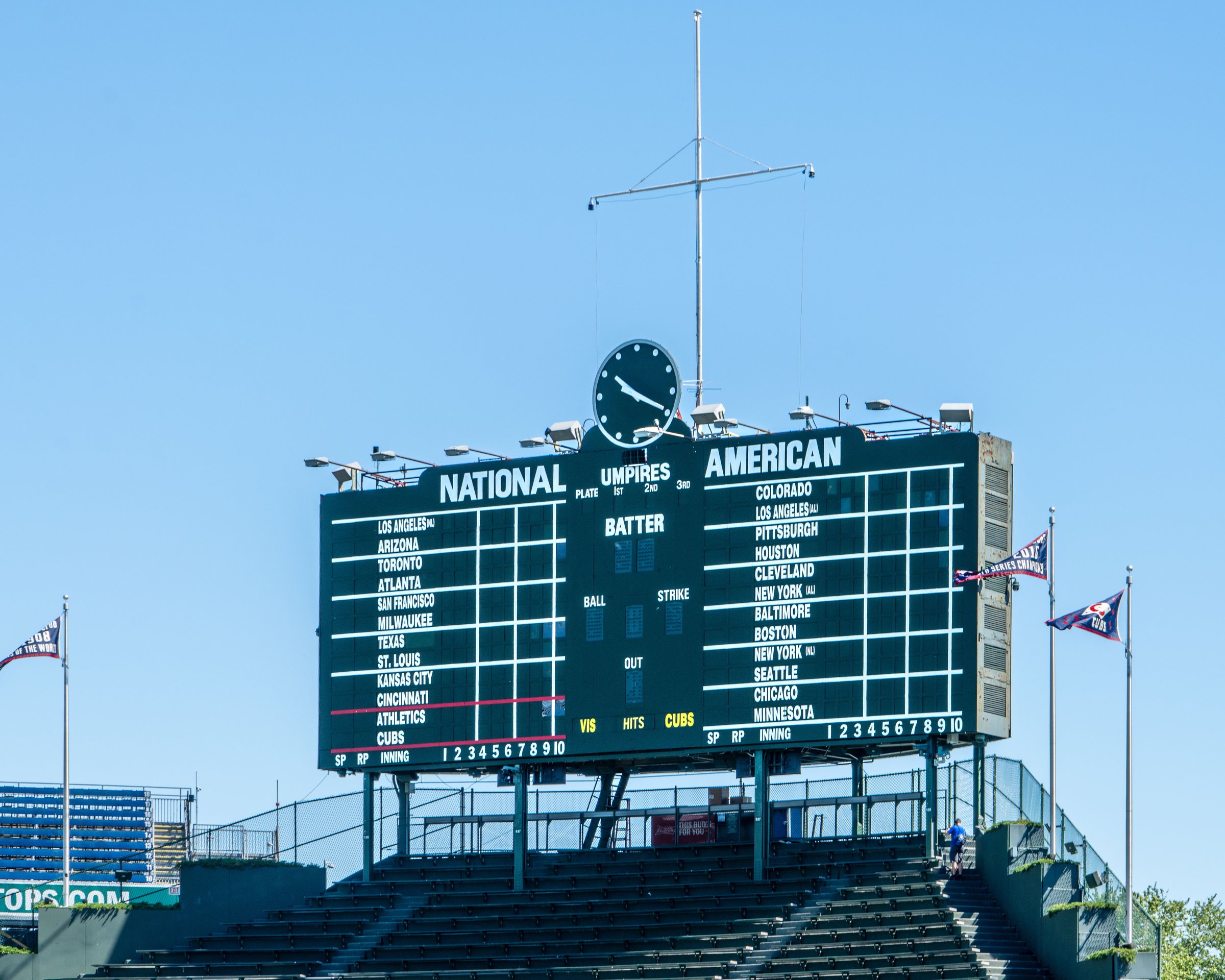
Wrigley Field first opened in 1914 as Weeghman Park. The Cubs played their first home game there on April 20, 1916, and the park changed its name to Wrigley Field in 1927. Wrigley Field is the oldest park in the National League and the second-oldest in the majors, after Fenway Park. It sits in the Wrigleyville neighborhood, on an irregular block bounded by Clark and Addison streets and Waveland and Sheffield avenues, and it seats 41,649. The stadium is in a primarily residential neighborhood without parking lots, and spectators have views from the rooftops behind the outfield. From 1921 to 1970, the stadium was also home to the Chicago Bears. Wrigley Field is well known for its ivy-covered brick outfield wall, distinctive wind patterns off Lake Michigan, the red marquee over the main entrance and the hand-turned scoreboard. It was the last Major League Baseball park to have lights installed for night games, in 1988.
Bill Veeck planted ivy vines against the outfield walls in 1937. The ivy was originally English ivy, but it was later changed to Boston ivy, which can endure the harsh Chicago winters better. In the first weeks of the baseball season, the ivy has not leafed out, and only the vines are visible. As the season moves further into spring, the ivy grows thick and green, disguising the hard brick surface of the outfield wall, and in the autumn, generally during the postseason, the ivy turns red. If a baseball gets stuck in the ivy, the batter is awarded a ground rule double.
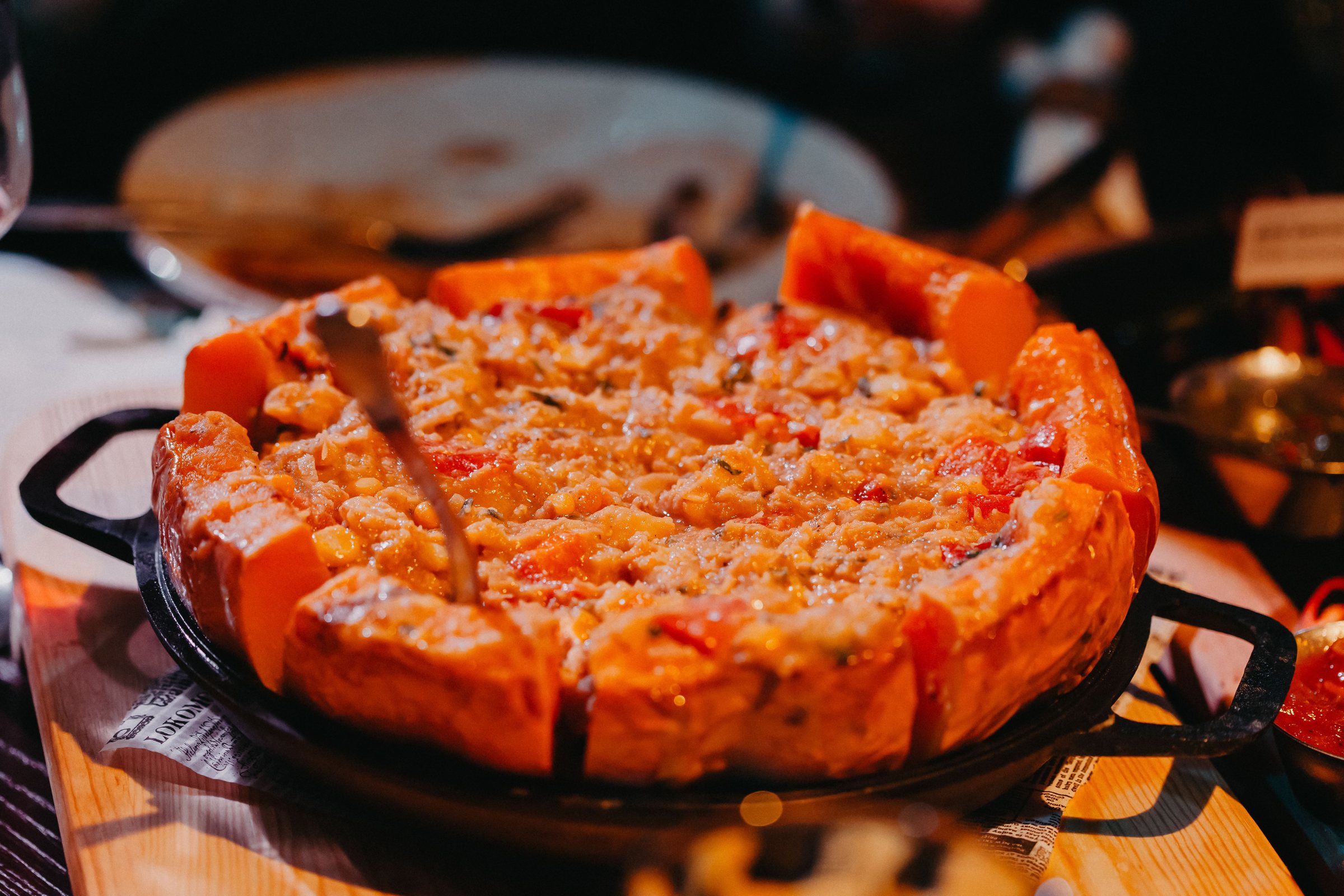
Deep-dish pizza was invented at Pizzeria Uno in Chicago, founded by Ike Sewell and Richard Riccardo in 1943. It has a tall outer crust and very large amounts of cheese, with chunky tomato sauce on top of the cheese instead of underneath it. In traditional recipes, meats or vegetables and mozzarella go on the crust, then a layer of crushed tomatoes is ladled over the top before baking. Rudy Malnati's sons later founded Lou Malnati's Pizzeria in 1971 and Pizano's in 1991, and both are known for deep-dish pizzas. By the mid-1970s, two Chicago chains, Nancy's Pizza and Giordano's Pizzeria, began experimenting with deep-dish pizza and created the stuffed pizza. Stuffed pizzas are typically deeper, with another layer of dough covering the toppings and more cheese than standard deep dish. Where You LIVE.