
The Margaret Hunt Hill Bridge Over the Trinity River
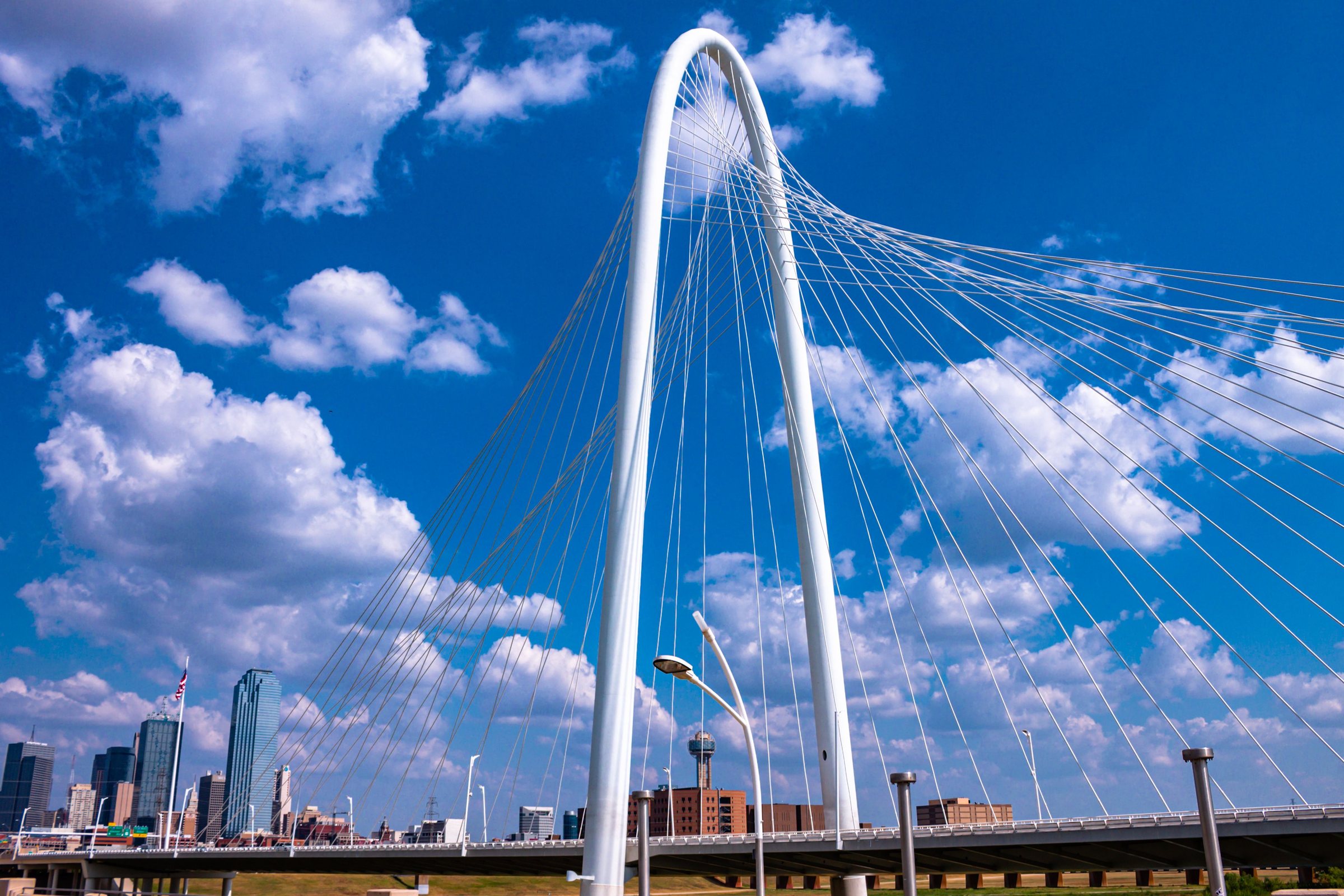
Santiago Calatrava designed the bridge, which opened in March 2012 and carries six lanes of traffic in Dallas.

Trinity River
In Dallas, a cable stayed bridge called the Margaret Hunt Hill Bridge spans the Trinity River, and you cross the connection from Spur 366, the Woodall Rodgers Freeway, downtown, to Singleton Boulevard, West Dallas. The bridge is 1,206 feet long with a 603 foot main span, and it is 120 feet wide, carrying six lanes of traffic. It opened in March 2012. Opening festivities ran March 2 to 4, 2012, and cars got the bridge after that weekend.
Margaret Hunt Hill
The bridge takes its name from Margaret Hunt Hill. She was an heiress and a philanthropist. She was born October 19, 1915, in Lake Village, Arkansas, and she died June 14, 2007. She grew up in El Dorado, Arkansas. She also grew up in Tyler, Texas, and she moved to Dallas in 1938. She founded the Dallas County Heritage Society, and a director role there lasted throughout her life.
Trinity River Project
The Trinity River Project included this bridge, and Santiago Calatrava designed it, as one of three Calatrava bridges planned over the Trinity. The Margaret McDermott Bridge was completed, and the third was cancelled. In the United States this counts as his first vehicular span, and a close resemblance links it to bridges he designed over the Autostrada A1, the ones in Reggio Emilia, Italy. The bridge opened in March 2012 and is the first Calatrava bridge in the set planned for the Trinity at downtown Dallas.
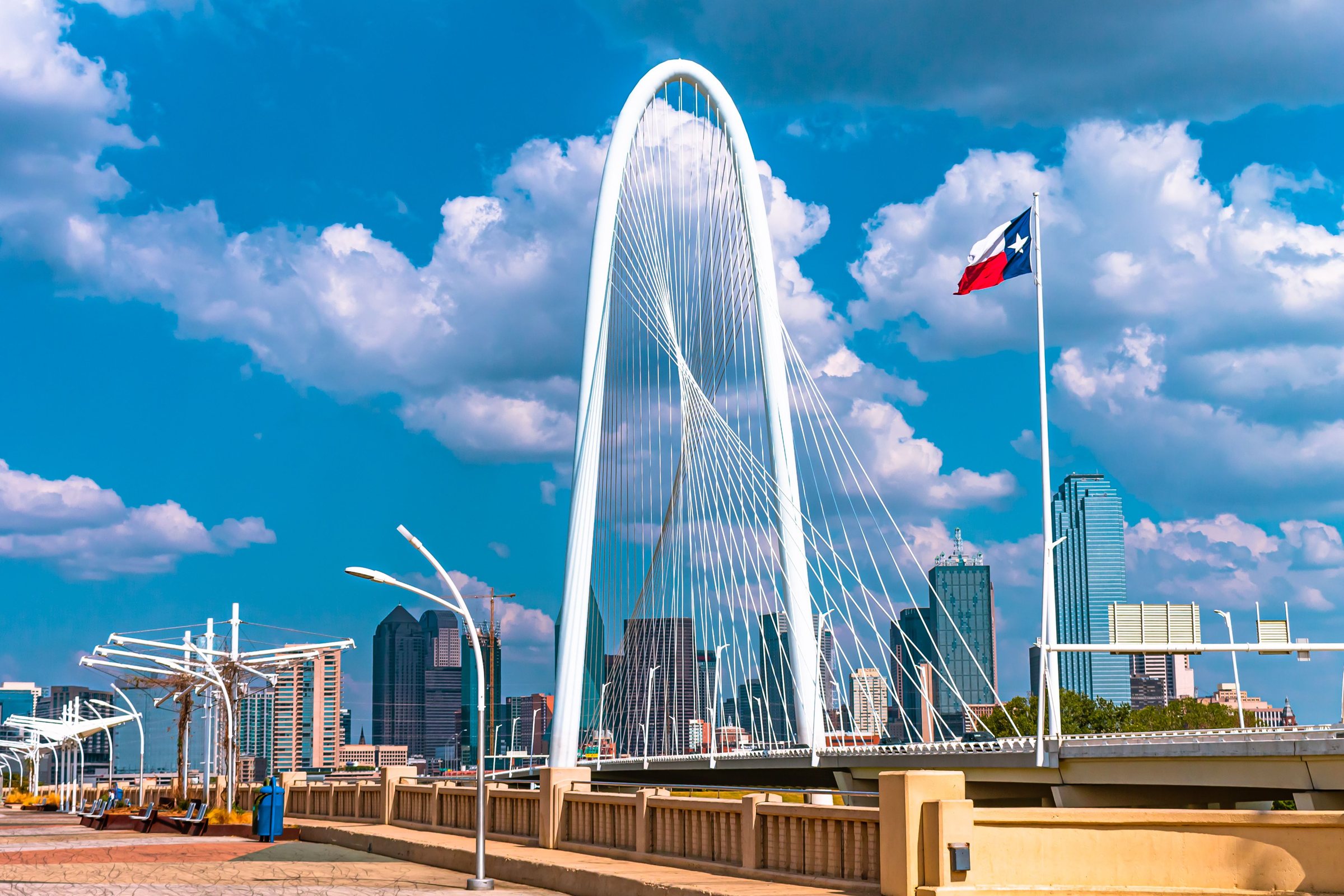
June 26, 2010 brought the topping of the 40 story center arch, curved span included, and that curved span can be seen many miles away. The downtown skyline gains a feature from that span. Heavy equipment for the build included drill rigs and one 1,000 ton crane. In 2012 an Outstanding Civil Engineering Achievement Award came from the American Society of Civil Engineers, Texas section, and a 2012 award for steel bridges came from the European Convention for Constructional Steelwork.
Santiago Calatrava
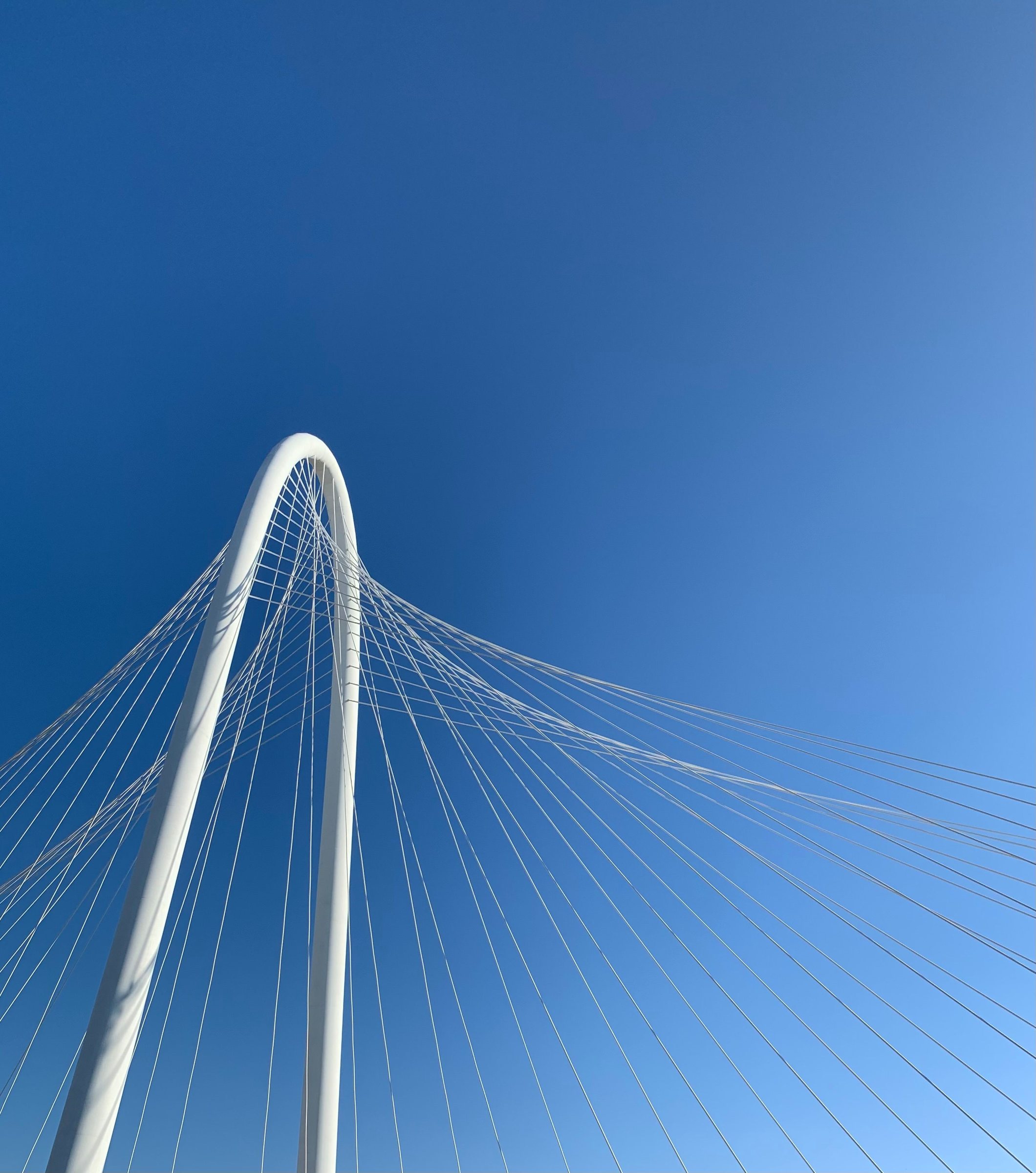
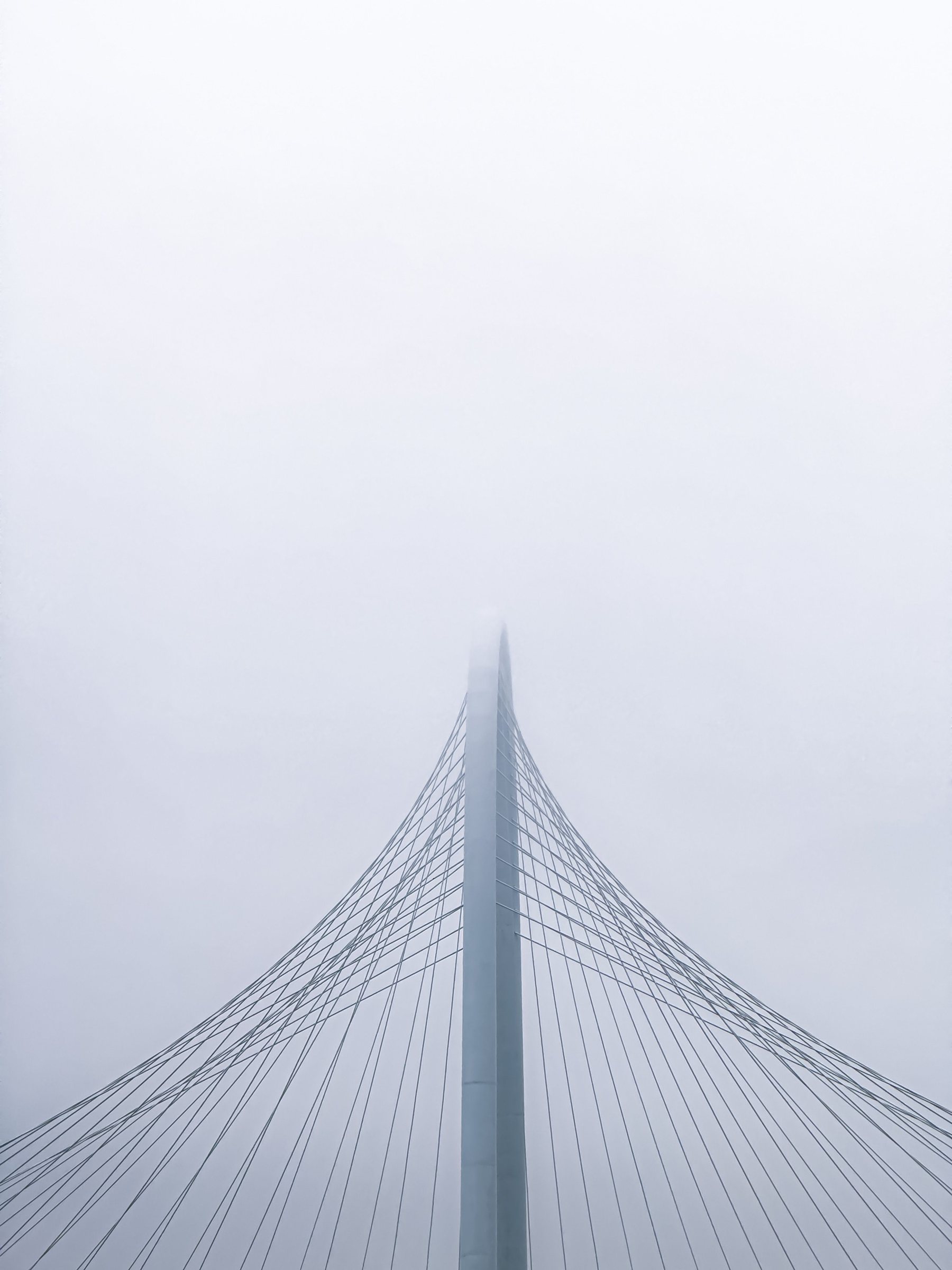
A steel arch perpendicular to the roadway peaks at 400 feet. The arch is a closed steel tube. Internal diaphragms belong to that tube, along with stiffeners and cable anchorages. A central box girder serves as the spine, and that spine stiffens the bridge against twisting. The cable stays let the deck stay light. The arch support has a 16 foot diameter and is made of 25 individual segments.
Fifty eight white cables come down from the arch, and their anchors follow the centerline of the deck. The 58 cables range from 6.5 to 5 inches in diameter and from 642 to 390 feet in length. They reach either side of the bridge in web-like sweeps. Deck assembly used 30 segments in a central box girder and 60 segments in each of two exterior box girders, and 116 floor beams tie those girders together.
Ronald Kirk Bridge
The Margaret Hunt Hill Bridge parallels the Ronald Kirk Bridge, a walking bridge that was previously the Continental Avenue bridge. The Ronald Kirk walking bridge began as the Lamar-McKinney Viaduct, and that viaduct is one of several Dallas bridges built when the river was realigned. The old viaduct is 60 feet wide and stretches over 2,100 feet across the river and floodplain on 43 concrete T-beam spans, with a 120 foot main span over the channel.
HistoricBridges.org calls the design unusual. A central span anchors two half spans, and those half spans go out as cantilevers to meet the concrete approaches, in a reverse of the usual cantilever layout. Steel and concrete are mixed in this single bridge. Francis Dey Hughes designed the viaduct after learning bridge building through work at construction firms and at architectural firms, and engineer Jean Howard Knox assisted him. The variable depth steel plate girder on the old viaduct was the first in the city.
Rebuilt as a pedestrian only plaza, the Ronald Kirk walking bridge reopened on Father's Day 2014 with benches, a splash park, playground equipment, a human-sized chess board, and large cloth umbrellas for shade. From that plaza you have a sweeping view of the floodway and of the Margaret Hunt Hill Bridge. In 2015 the walking bridge was placed on the National Register of Historic Places.
Margaret McDermott Bridge
The second Calatrava design is the Margaret McDermott Bridge. Cable stayed lanes for bikes on that bridge run beside the Interstate 30 crossing of the Trinity. That bridge was completed, and the third Calatrava bridge planned over the Trinity was cancelled.
Far North Dallas
The arch can be seen at all points of the compass, and as far away as far North Dallas and Oak Cliff. The curved span topped on June 26, 2010 can be seen many miles away, and that same curved span adds a downtown skyline feature.
Margaret Hunt Hill Bridge
At night, 200 light fixtures placed every 20 feet cover the bridge in brilliant white light. The fixtures were first lit for two weeks, and permanent lighting began the weekend of March 2, 2012.
Stories, places and events, edited by LIVIN.in.