

You feel it the moment you clear the last rise on I-70 west of town: the city sits low against the Front Range, its handful of towers no match for the wall of peaks that still catch the late light long after the streets have gone dark. Denver orients itself to that horizon first. Everything else follows.
Walk the Platte in the morning and the water runs cold off the mountains, carrying the same pine scent you catch higher up. Cyclists and runners move along the path that threads past RiNo’s old rail yards and under the bridges, but their heads turn west every few minutes as if checking a compass. Cross over into the Highlands and the streets climb just enough to give you a clean line of sight to the Divide; the neighborhood’s porches and rooftop decks all face that direction, not each other. Even Capitol Hill, dense with brick and traffic, still opens westward at the end of its east-west blocks so the sunsets land straight on the state capitol dome.
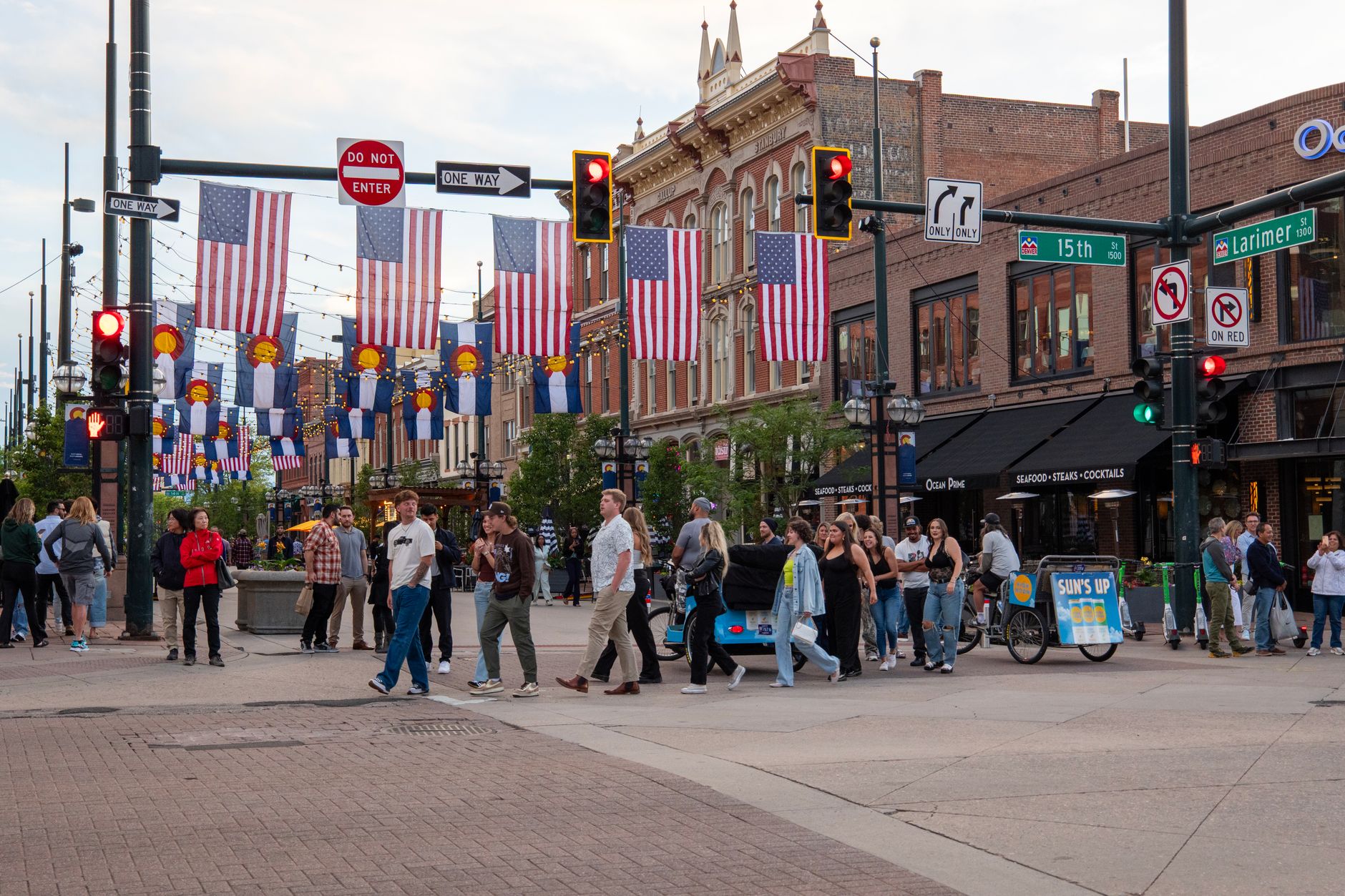
The range sets the real schedule. People here talk about “going up” the way other cities talk about going downtown. Cherry Creek’s trail system becomes the escape route on any clear afternoon, and the same cars that crawled through morning congestion on Speer are already parked at trailheads by the time the light shifts. The skyline exists, but it functions more as a thin foreground layer than the main event. You notice it only when you’re stuck facing east on Colfax or when a new tower briefly blocks an older view of the foothills.

That orientation creates the honest limit. If you arrive expecting a city that rewards vertical density and street-level friction the way Chicago or New York does, you’ll keep looking for it and keep coming up short. The buildings don’t hold the energy the mountains do. Traffic on the Front Range corridors moves because people are headed toward or away from the high country, not because they’re circulating inside a compact urban core. Miss that and you spend your time circling for parking in LoDo while the actual life of the place is already two drainages west and gaining elevation.
The tradeoff is simple: you trade skyline spectacle for immediate access to real topography. The mountains are close enough that the city never has to manufacture drama; it just has to stay out of the way. Once you accept that the Front Range is the primary fact and the towers are secondary, the neighborhoods make sense as way stations rather than destinations. Highlands, RiNo, the edges of Cherry Creek, they all work because they keep one eye on the peaks and the other on the valley floor.
One thing. LIVIN.in has no Market Mayor in Denver yet. If you’re the local who actually understands how this city sits against the range instead of trying to make it perform like a skyline town, that seat's open, come tell us.
LIVI