
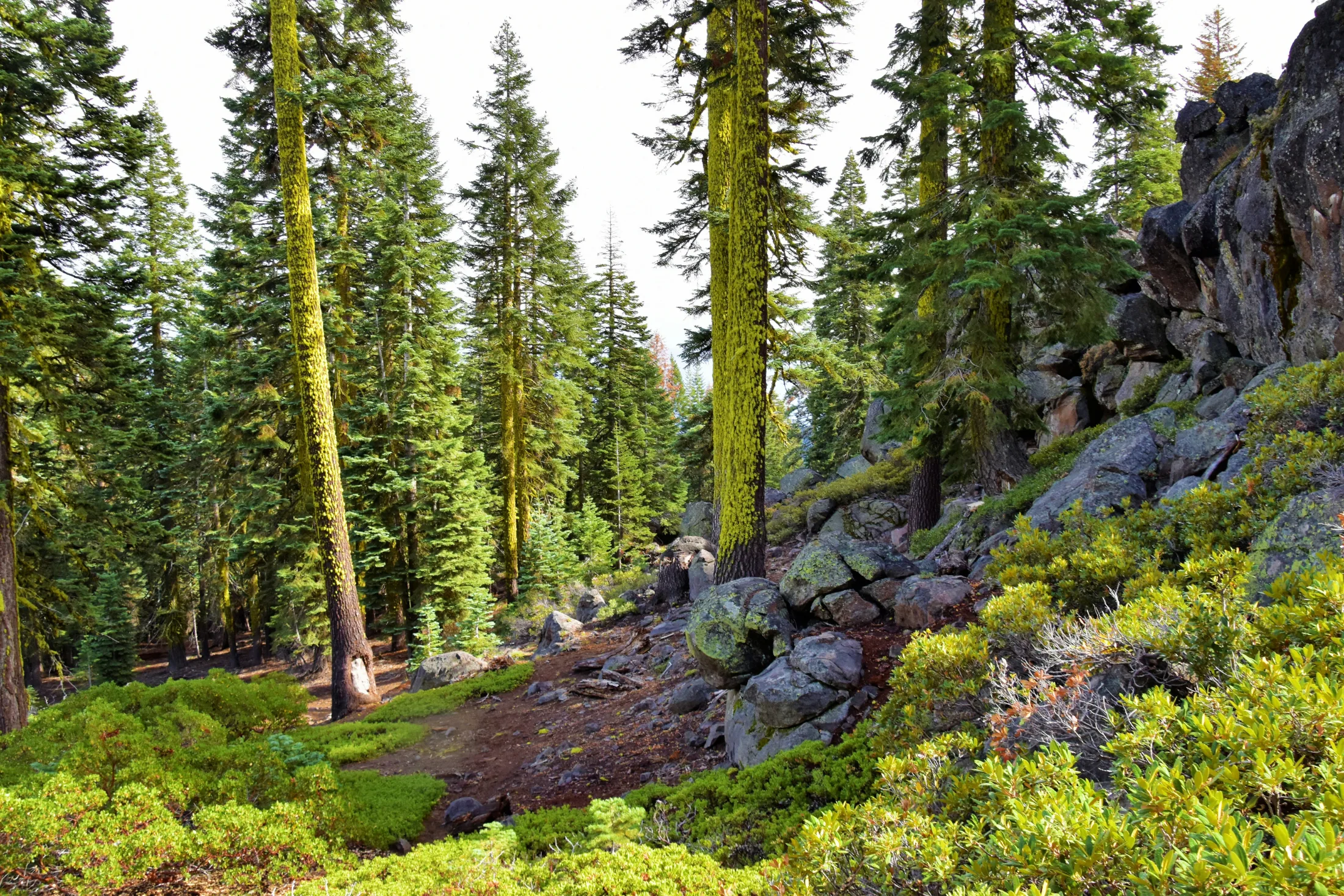
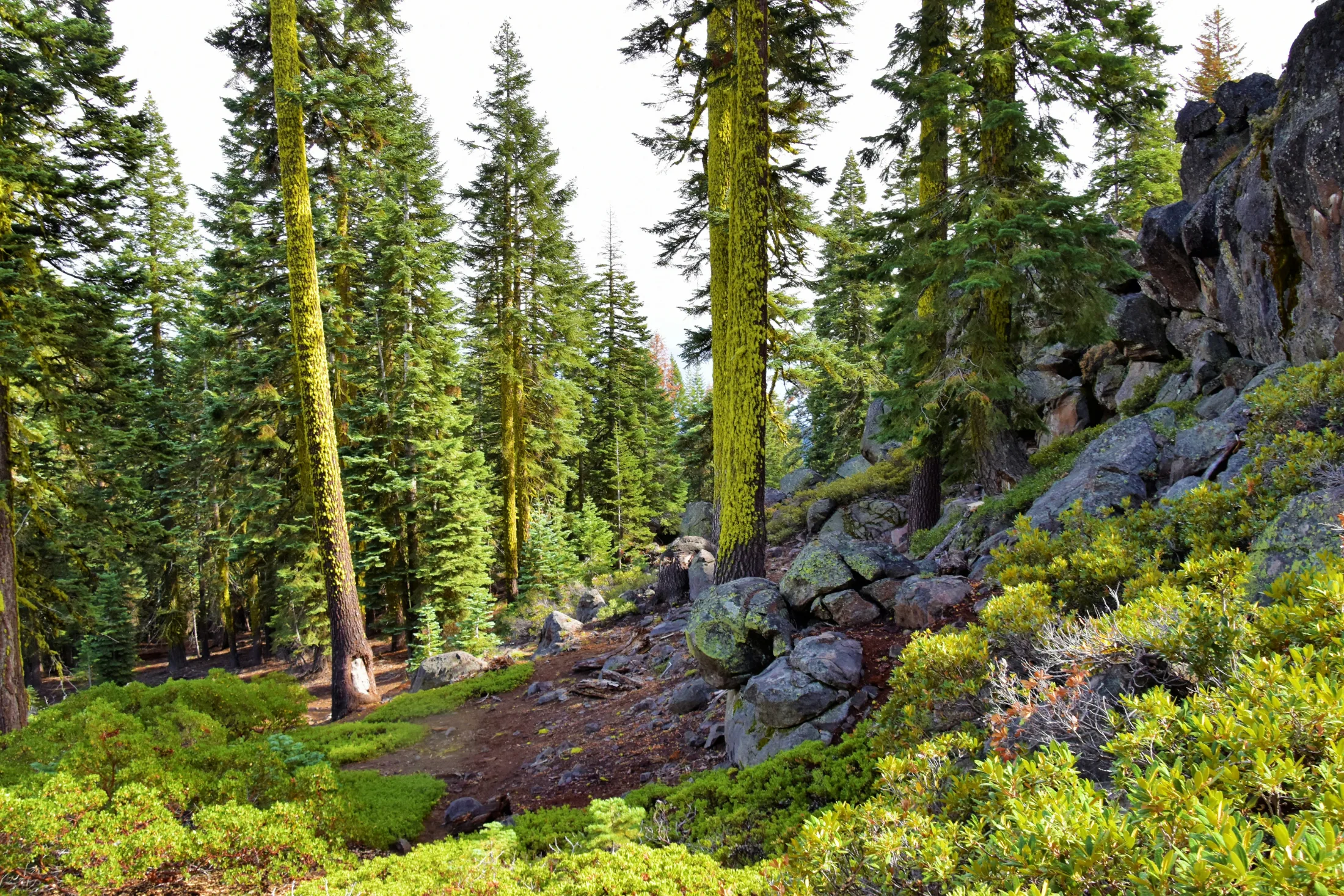
Leave the pavement in Mount Shasta, a town of 3,250 at 3,554 feet, an hour from Redding, no Costco, job market that earns an honest F, and within minutes you're in a conifer corridor where the ponderosas wear neon-yellow lichen like paint from a pressure washer. The understory is low manzanita and scrub, the color of a new lime. The ground is volcanic: dark, fractured basalt pushing up through the red-brown dirt, a constant reminder that the 14,179-foot dormant volcano behind you isn't just scenery. It built all of this.
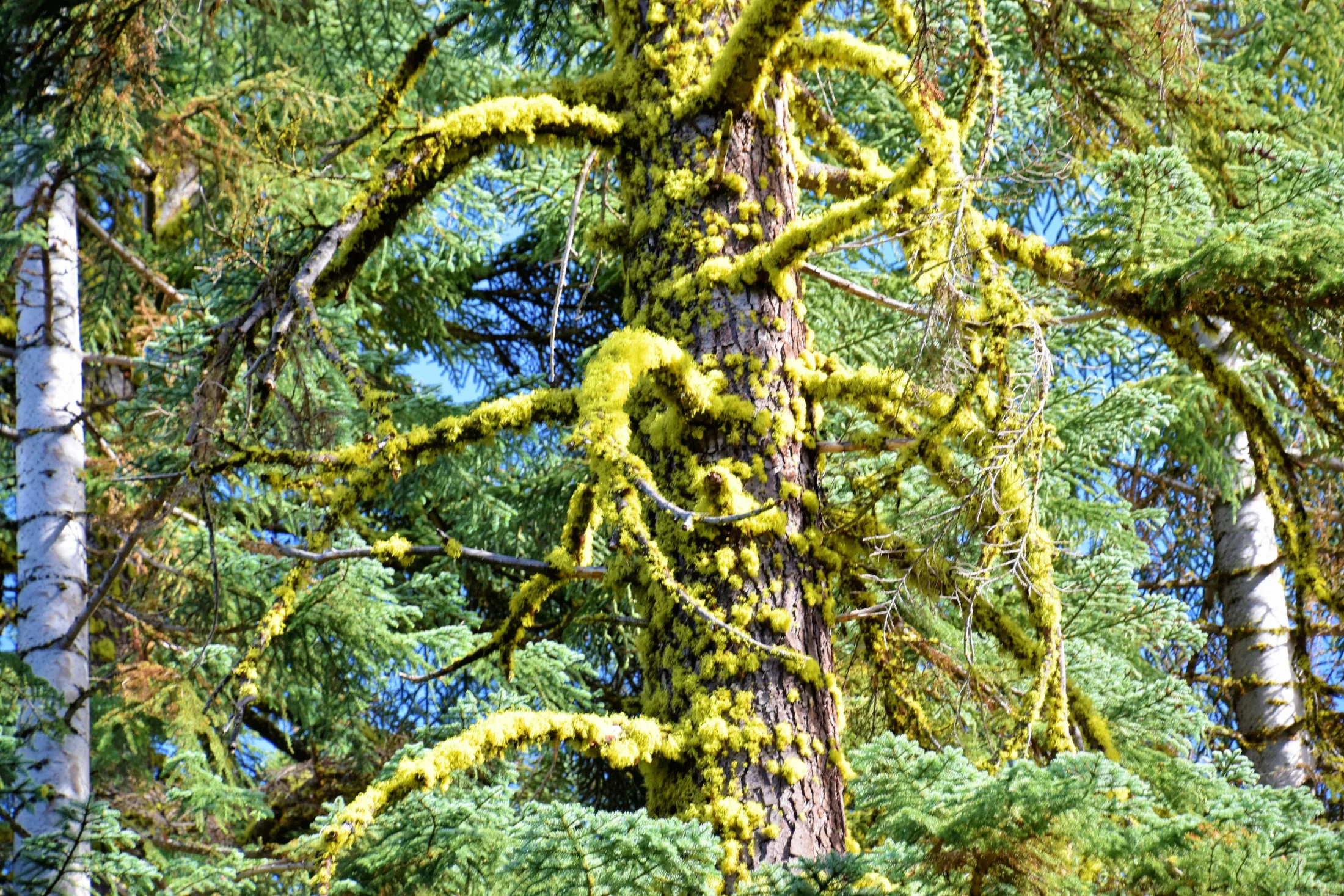
The lichen is worth stopping for. Up close, it's not the flat green crust you see on a garden wall, it's branched and bushy, almost architectural, draping every branch in chartreuse. Ecologists will tell you that wolf lichen only colonizes where the air is genuinely clean. That's not marketing copy. It's a measurable fact, and it's one of the quiet indicators that something about this place is different from most of California.
The average one-way commute here is ten minutes. Which means the trailhead is never more than a short drive behind your workday. That math doesn't work anywhere south of Redding.
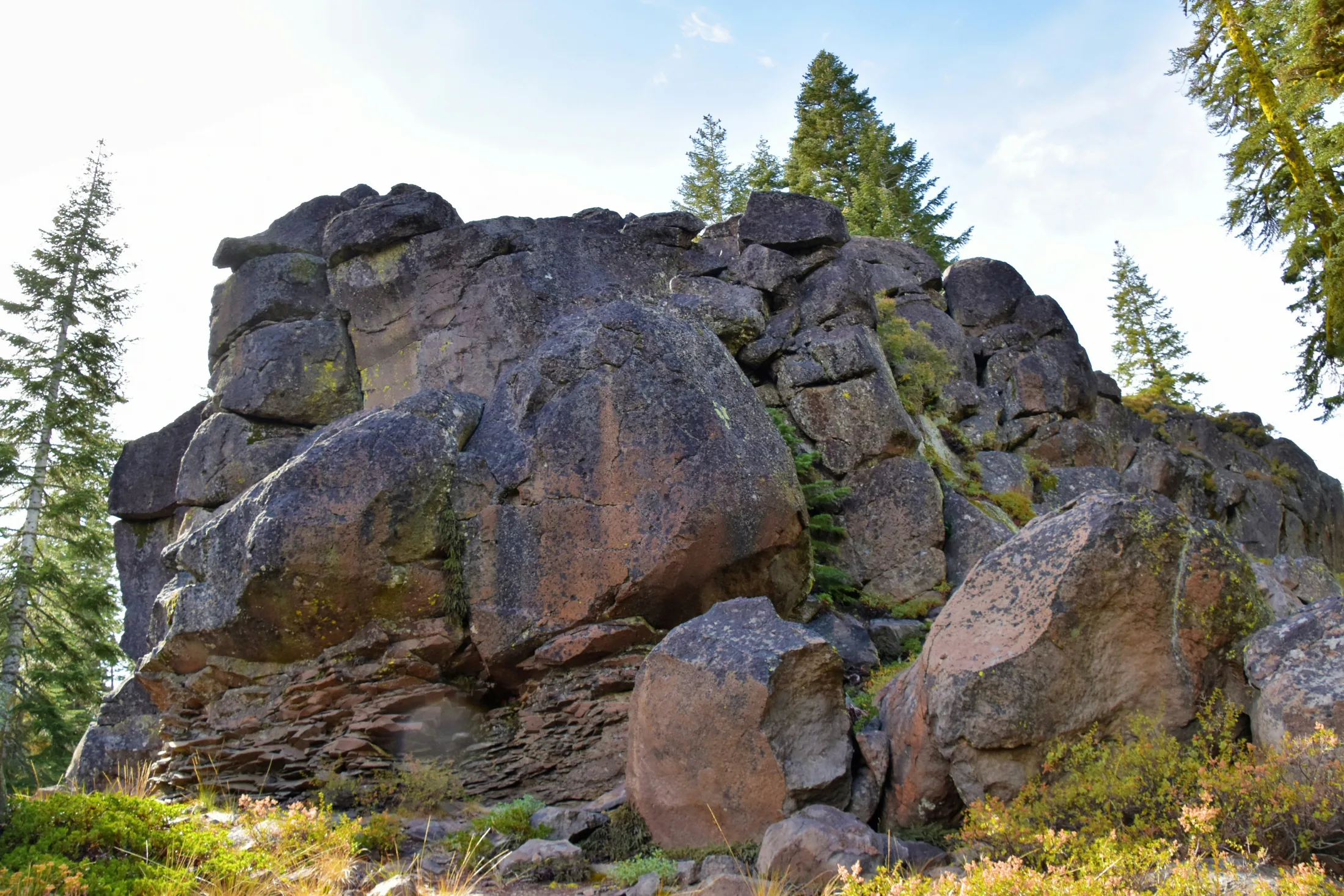
The rock formations up here are the kind of thing you'd drive two hours to see in another state. Columns of dark basalt stacked into irregular outcroppings, lichen-spotted in yellow and grey, manzanita crowding the base and conifers splitting through every available crack at the top. They're not signed. They're not on most maps. They're just there, the way things are when a volcano has had a few million years to rearrange the ground.
I know what this town lacks. The trade-offs are real, read the full breakdown here if you're thinking about making the move. Finding clean, affordable housing is genuinely hard. The job market is what it is. You drive to Redding when you need a real grocery run. These aren't small things.
But then you get a day like the one in that last frame below, when the clouds stack a lenticular cap over the summit and the whole mountain turns white against a cobalt sky, framed by the same trees you just walked through. And the calculation changes.
At 14,179 feet, on a clear day from the trail, you see most of that vertical, the snow line, the ridgeline, the cloud formations that wrap the summit with precision. It is not a backdrop. It is the organizing fact of life here. Everything else, the town, the way the place gets under your skin, the spiritual culture, the Pacific Crest Trail traffic in summer, radiates out from that peak.
People who move here for lifestyle tend to stay. People who move here expecting urban convenience tend to leave inside a year. The forest doesn't care either way. It was here before the town, and the lichen on those branches suggests it'll be here long after.
If you're curious what daily life actually looks like once you're in, mornings, errands, the social fabric, Six O'Clock Sharp is a good place to start.