
I brought two one-gallon jugs the first time I went. A neighbor told me to bring four. She was right.
The walk starts at 1315 Nixon Rd — Mt. Shasta City Park, open daily from 7 a.m. to 9 p.m. You park, move through the ponderosa shade, and follow the paved path toward Spring Hill. The park opens up: wide lawn, tall conifers, the particular quiet of a place people actually use.
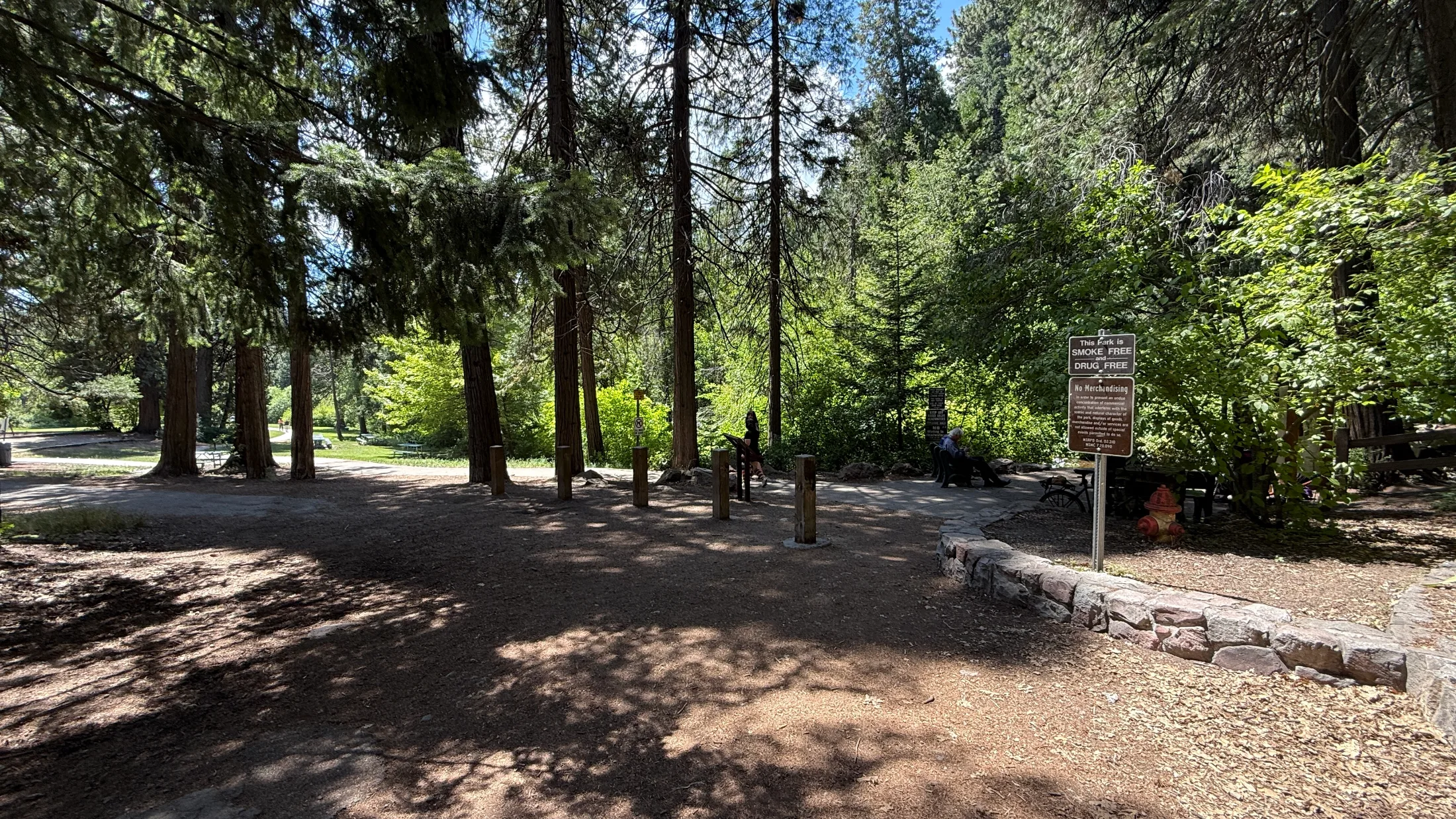
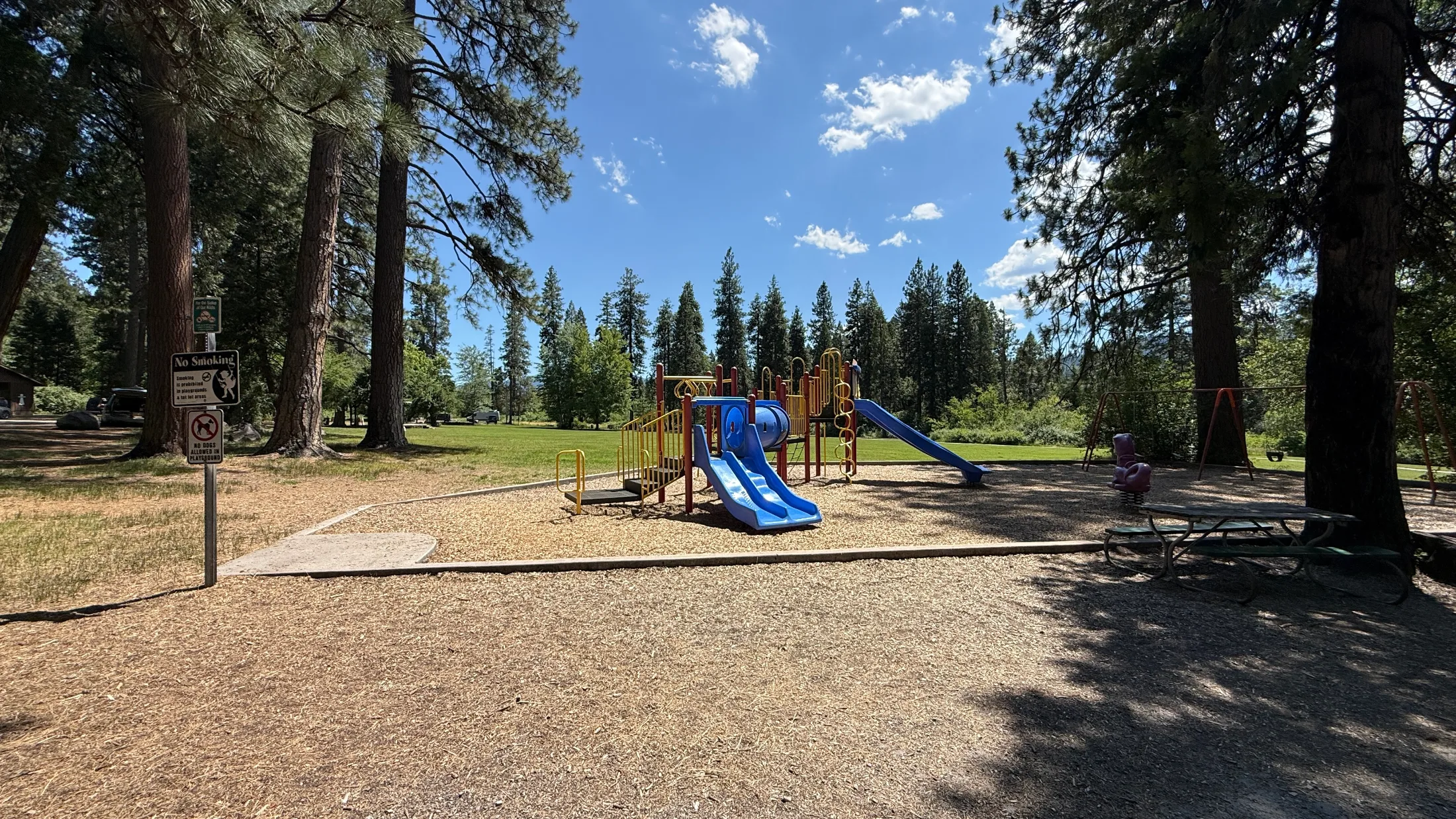
You pass the playground — a marker that this is a real neighborhood park, not a monument — and then the trail curves and drops slightly and the air changes. It gets cooler. You hear the water before you see it.
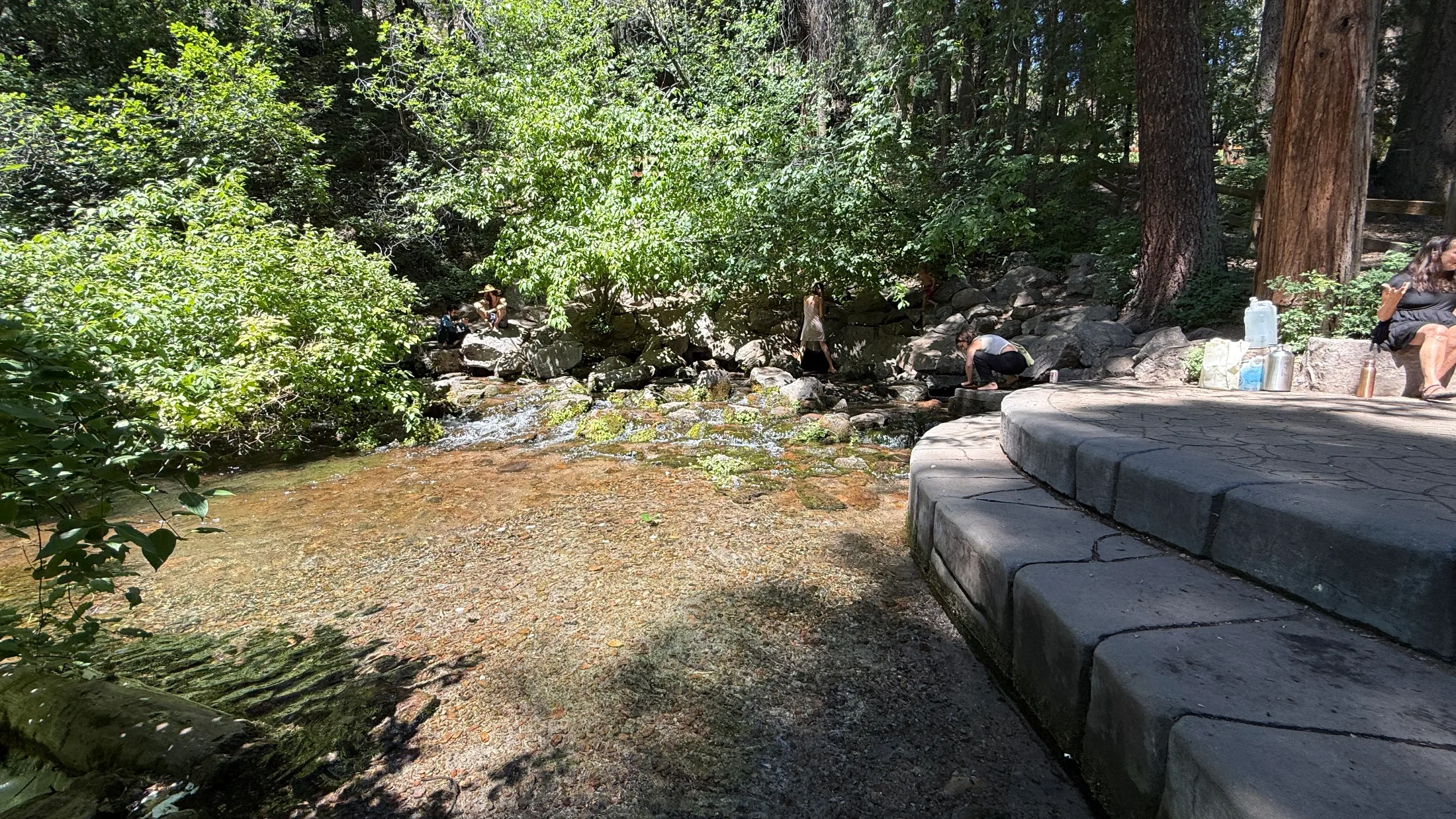
Then you're there. A stone viewing patio, a couple of green benches, a sign reminding you that this water is not tested and you drink at your own risk. And in front of you: Headwaters Spring, the recognized source of the Upper Sacramento River, pouring straight out of the base of Spring Hill into a clear, fast-moving sheet over ancient volcanic rock.
The water that comes out of this ground fell as snow on Mt. Shasta's peaks and spent more than 50 years filtering down through underground lava tubes before surfacing here. Fifty years. Whatever precipitation became this water fell when most of us were children — or not yet born. It's cold the way only geology can make water cold.
The Ritual
On a weekday morning the patio is never empty. An older couple occupies one bench, unhurried, watching the water move. A woman in her thirties crouches at the stone edge, submerging a wide-mouth stainless bottle. Two younger people pick their way across the flat volcanic rocks downstream, shoes off, reaching down with cupped hands. The jugs — gallons, half-gallons, repurposed kombucha bottles — sit lined up on the curved stone ledge like they're waiting their turn.
Nobody talks much. That's not unfriendliness. It's the same quiet you get at Seven Suns before the morning crowd arrives — people doing something they mean to do, without narrating it. The filling takes a few minutes. Most people sit on the benches afterward, or just stand and look at the water. I do the same thing every time and I never feel like I should leave faster.
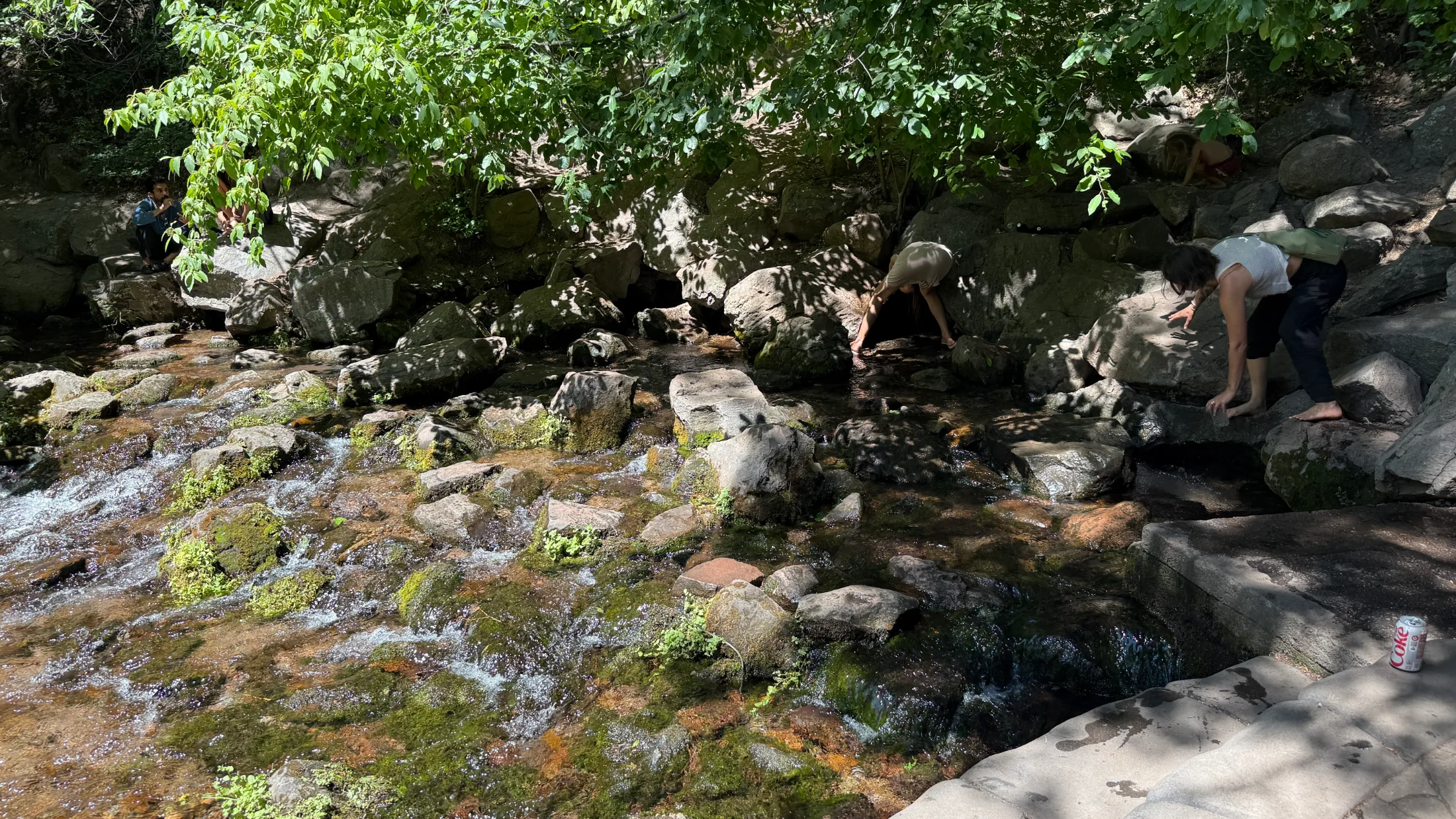
The spring feeds Stream Creek, which eventually reaches Lake Siskiyou, passes Box Canyon Dam, and joins the Sacramento River proper. Every gallon you fill here will, in some sense, become the Sacramento. It's the same river that defines the valley 200 miles south, but up here it starts as a sound — a rush over basalt — in a city park where kids are playing 50 yards away.
What the Place Is Actually Saying
The Wintun, Maidu, and Okwanuchu people used this ground as a hunting territory long before the first outside explorers crossed it around 1841. By 1901, the city had installed a water wheel at Big Springs — the local name for the same source — to generate energy for the town. The spring has been doing work here for as long as anyone has been keeping track.
A town that keeps coming back to fill its jugs at the same spring is telling you something. It's not nostalgia — the people at those benches aren't performing quaintness. They're getting water the way you go to Berryvale when you want to actually talk to someone. The spring is a reference point. It's where the town goes to remember what it's made of.
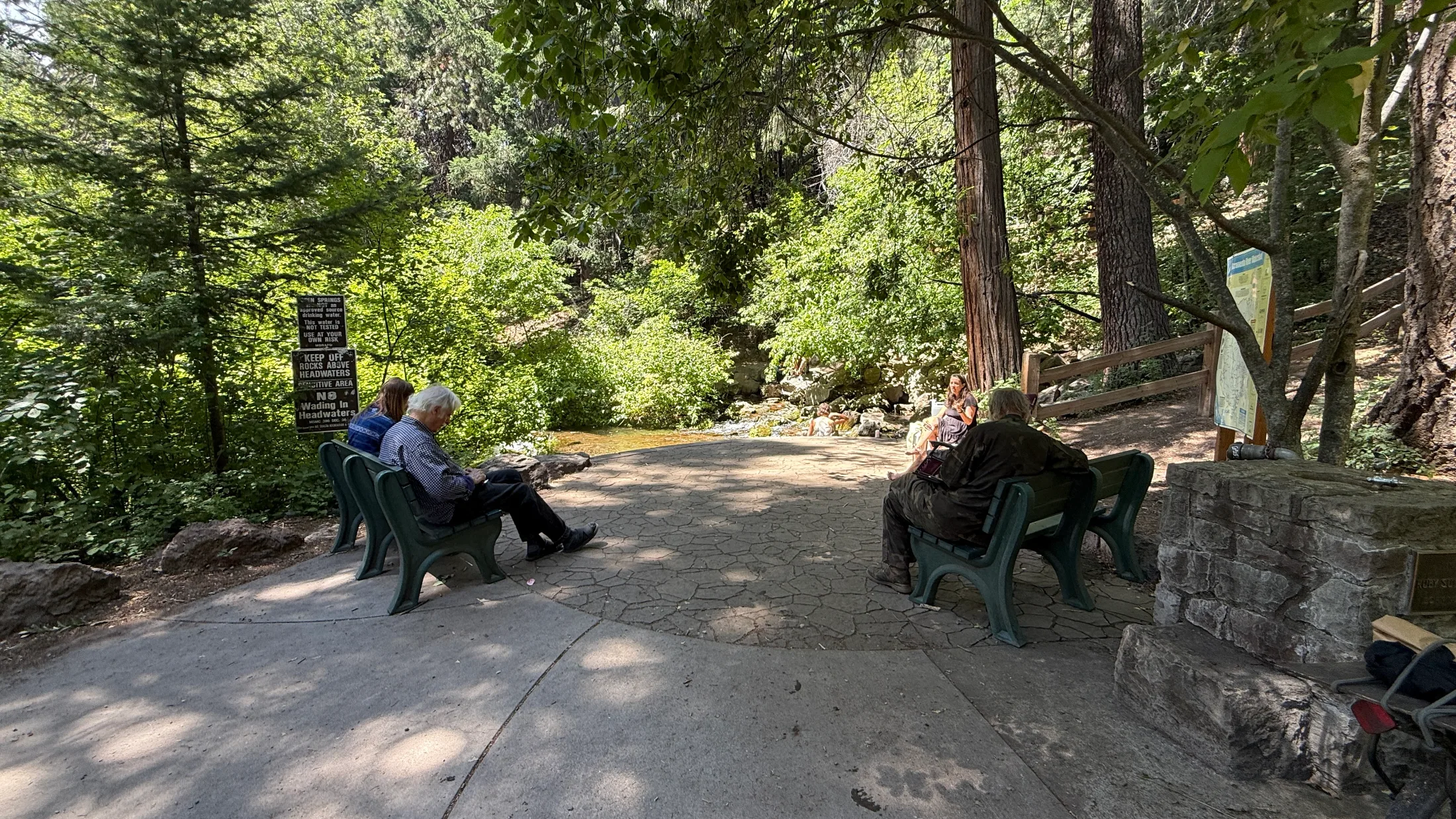
That sign — the one that says the water isn't city-tested, drink at your own risk — tells you something too. Nobody's selling you this. Nobody's putting a logo on it. The city built the patio and the benches and the footbridges and the paved walkway out to the wetlands, then stepped back. The spring does the rest.
How to Get There, What to Bring
Head to Mt. Shasta City Park at 1315 Nixon Rd. The park opens at 7 a.m. — go early if you want the place to yourself; go mid-morning if you want to see the full cast of regulars. Follow the main path toward Spring Hill; you'll hear the water. There's a footbridge and a stone patio with benches. The filling spot is at the stone ledge where the spring pools before it runs downstream.
Bring more containers than you think you need. Wide-mouth openings work better than narrow ones. The water is cold enough that you'll want to linger, so wear layers if you're there at opening. Dogs are not allowed in the headwaters area — the signs are clear on this. Wear shoes you don't mind getting wet if you plan to step out on the rocks.
After, if you've worked up an appetite, Pipeline Craft Taps on the Boulevard is a short drive. Or take the path back through the park and sit with it a minute. If you're new here, this is a good introduction to how the town operates — the kind of place that keeps stopping you cold once you know where to look.
The Sacramento River starts in a city park, free, open daily, seven to nine. Bring a jug.