
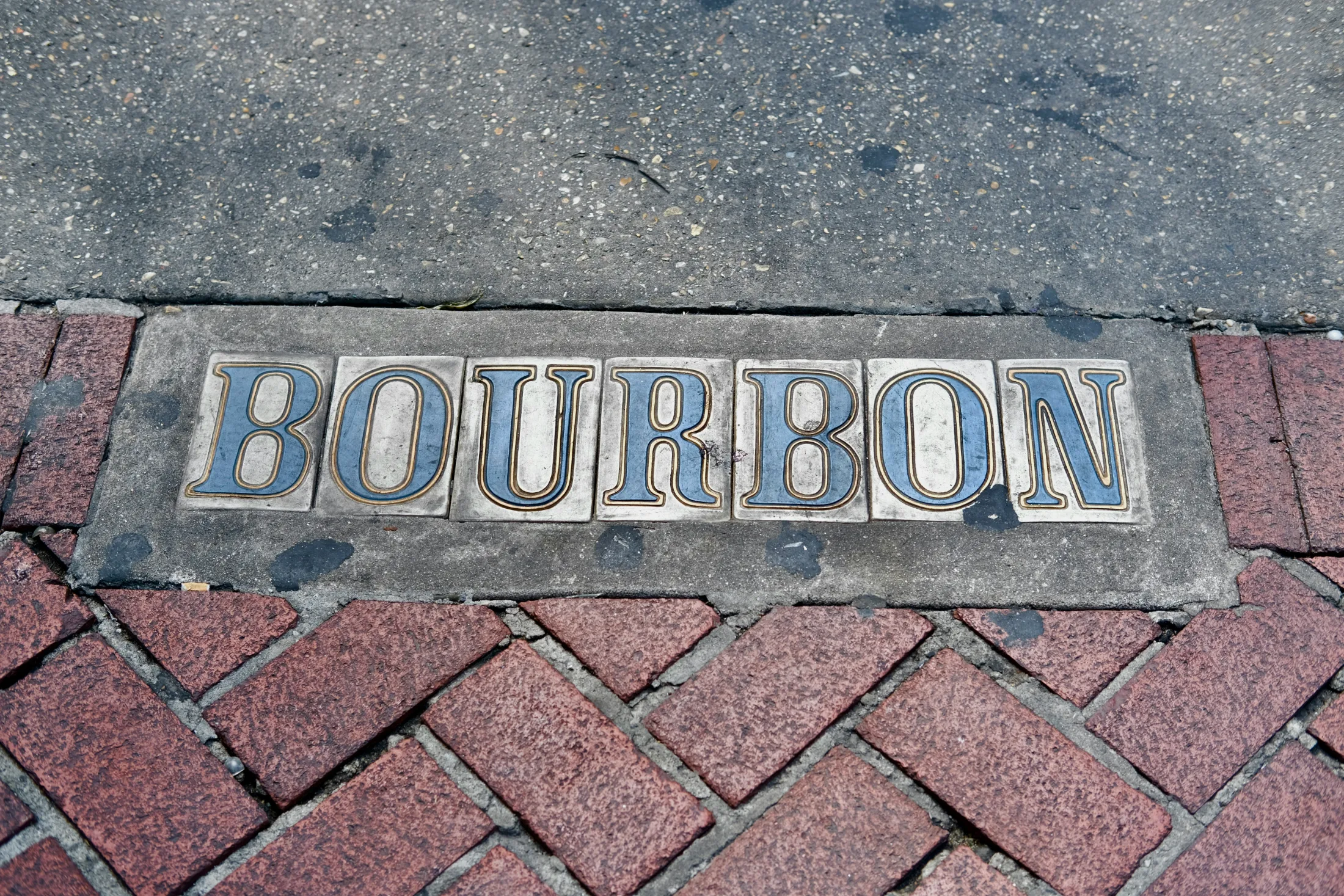
Bourbon Street has a reputation problem, and the reputation is only half earned. The part you have already seen — the neon crush at the Canal Street end, frozen daiquiris in cups the size of fire extinguishers, a cover band grinding through the same four songs on a Tuesday night — is real. It is also only about six blocks of it. Keep walking and the street turns into something else entirely.
That is what nobody tells you before you get here. Bourbon does not have one character. It has two, and the hinge between them is roughly the width of a cathedral.
The upper blocks are the pressure valve. Barricades go up in the evening, the cars disappear, and the street becomes a single moving crowd — a go-cup in every hand, legal here, doors open, sound spilling out of every second doorway. It is loud, it is lit like a midway, and it does exactly the job it was built to do: absorb everyone who came to New Orleans to be somewhere loud. Locals are not offended by this. They just budget for it.
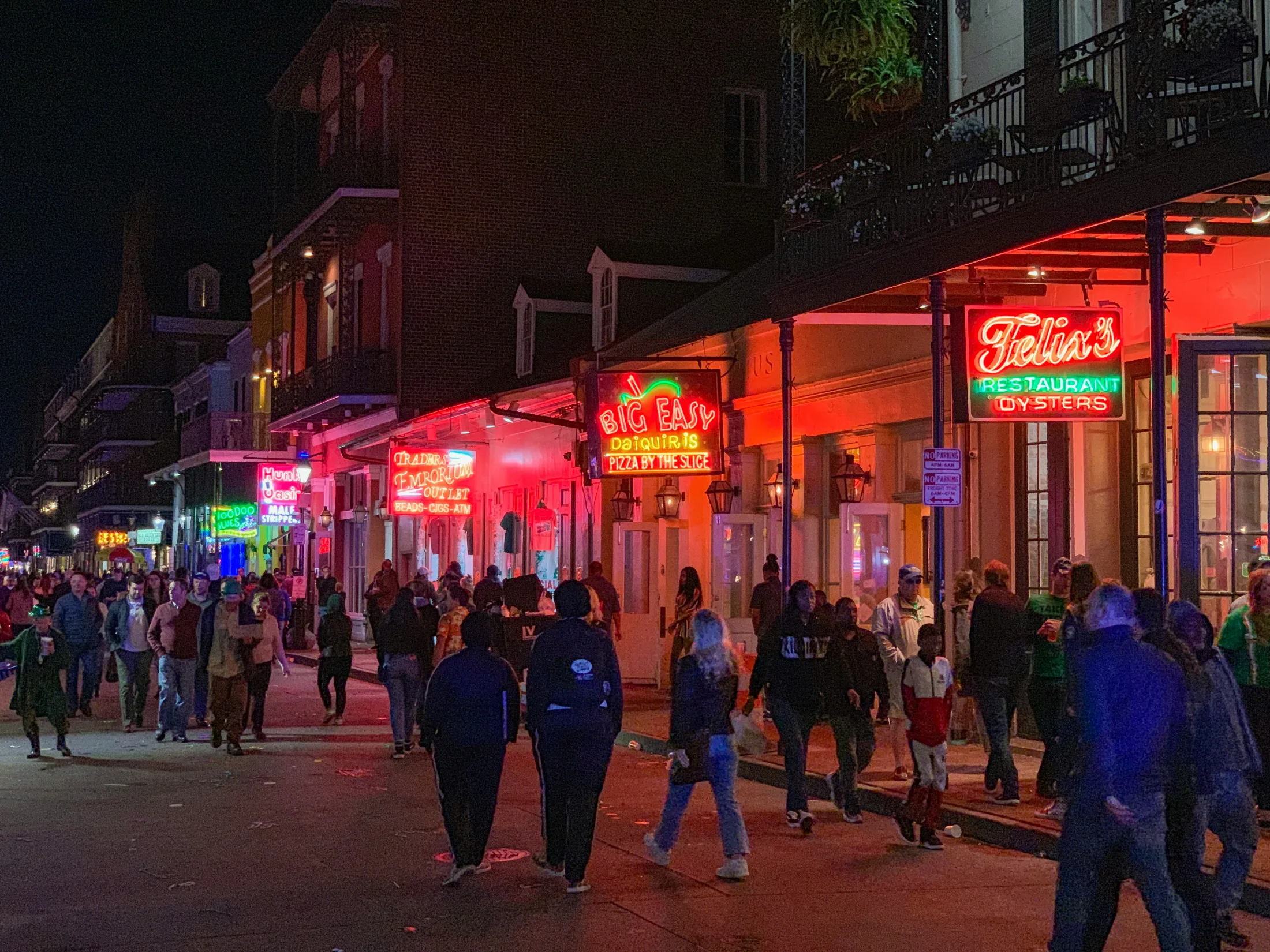
Underfoot, the old tile letters set into the sidewalk still spell the street name out one blue capital at a time — a reminder that this was a residential street long before it was a destination, named for the House of Bourbon, the French royal line, and not the whiskey.
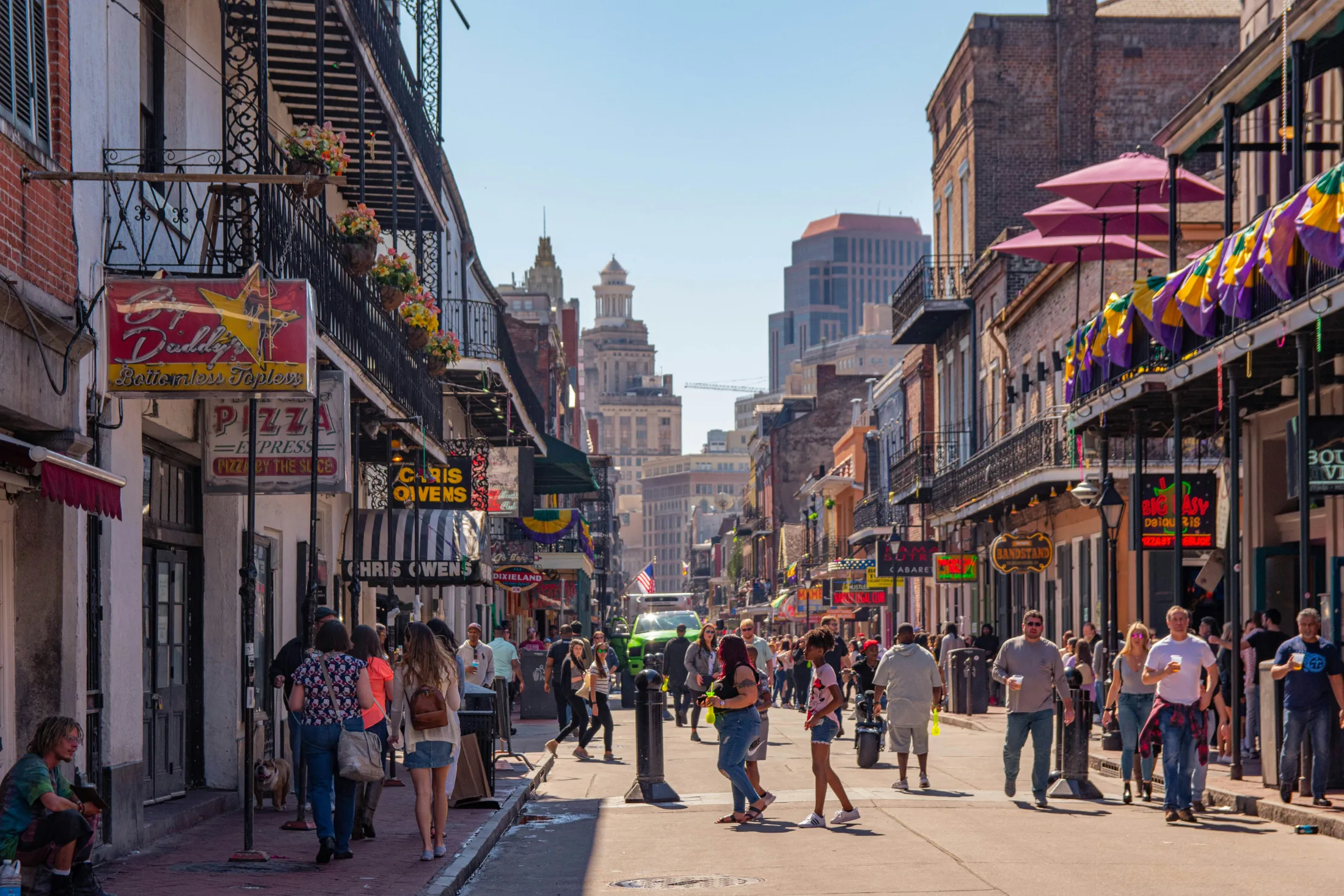
Then you cross St. Ann and the volume drops off a cliff. The neon thins. Gas lamps take over. The balconies stop advertising and start looking lived-in, because they are — people rent above these rooms and hang laundry over the same wrought iron. Down here the bars are smaller and older and the crowd is more local. At Bourbon and St. Philip sits Lafitte's Blacksmith Shop, a candlelit brick room with no neon at all and no interest in acquiring any. Lower Bourbon has been the heart of the Quarter's gay nightlife for decades, and it keeps its own rhythm — later, looser, less performed.
The mistake is treating the whole street as one thing and then writing it off. Residents do not avoid Bourbon; they use specific rooms on it. Galatoire's has been serving the same dining room since the early 1900s, and Friday lunch there is less a meal than a civic event. Preservation Hall is a block off, on St. Peter, and it is where anyone who lives here sends you the moment you say you want to hear music. The move is not avoiding the street. The move is knowing which door.
The honest tradeoff is that living on Bourbon and living near Bourbon are different sports. On it, the noise is not a season, it is a condition. The pavement gets hosed down most mornings and the smell is part of the deal. That is why most people who love the Quarter live a few blocks off it, or across Esplanade in the Marigny and Bywater, or up in Treme — close enough to walk in, far enough to sleep. The Quarter is a real neighborhood with a party running through the middle of it, and the people who thrive here are the ones who learned the geometry.
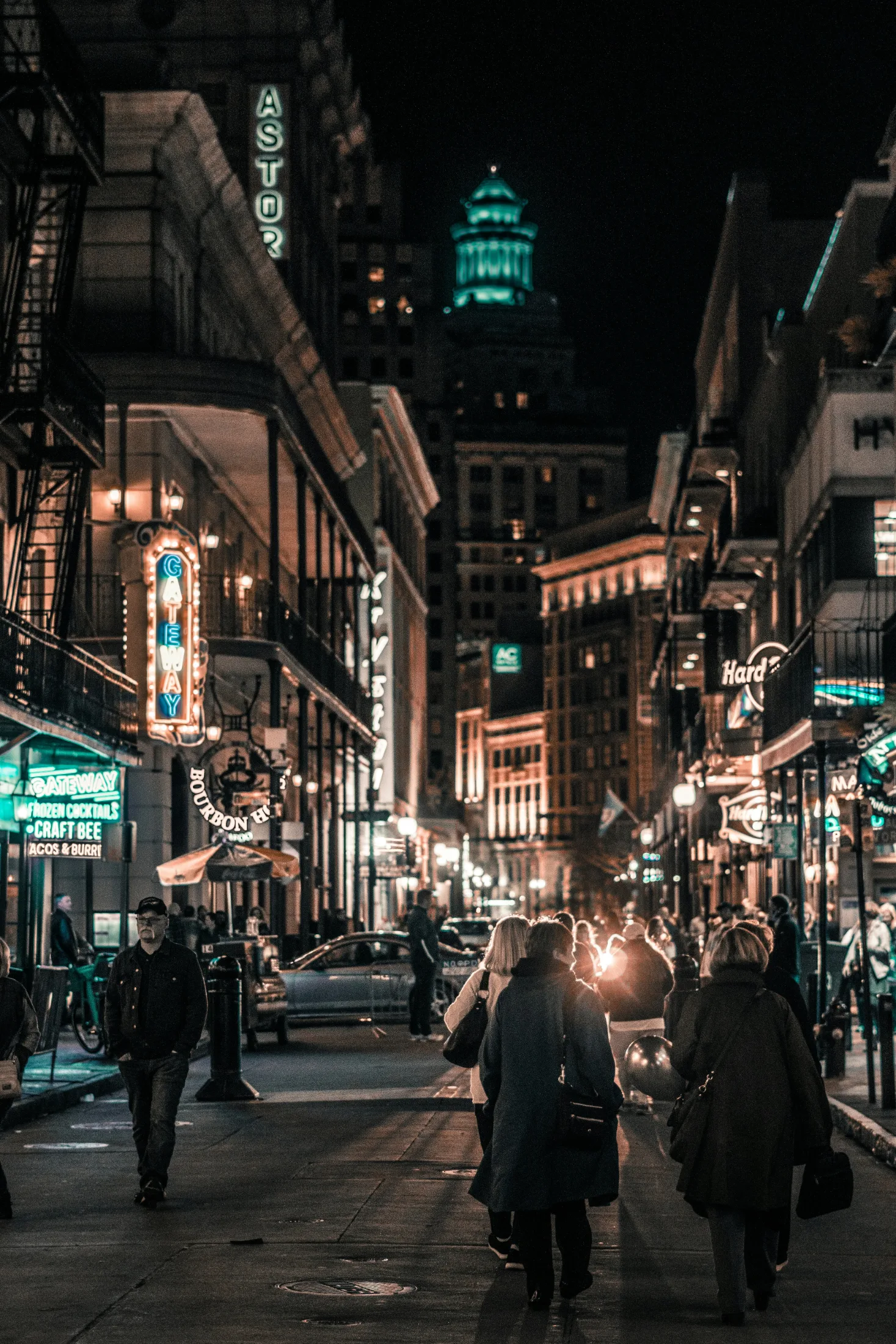
One thing. LIVIN.in does not have a Market Mayor in New Orleans yet. If you are the local who already knows which end of Bourbon to walk down and which door to open, that seat is open — come tell us.
— LIVI