
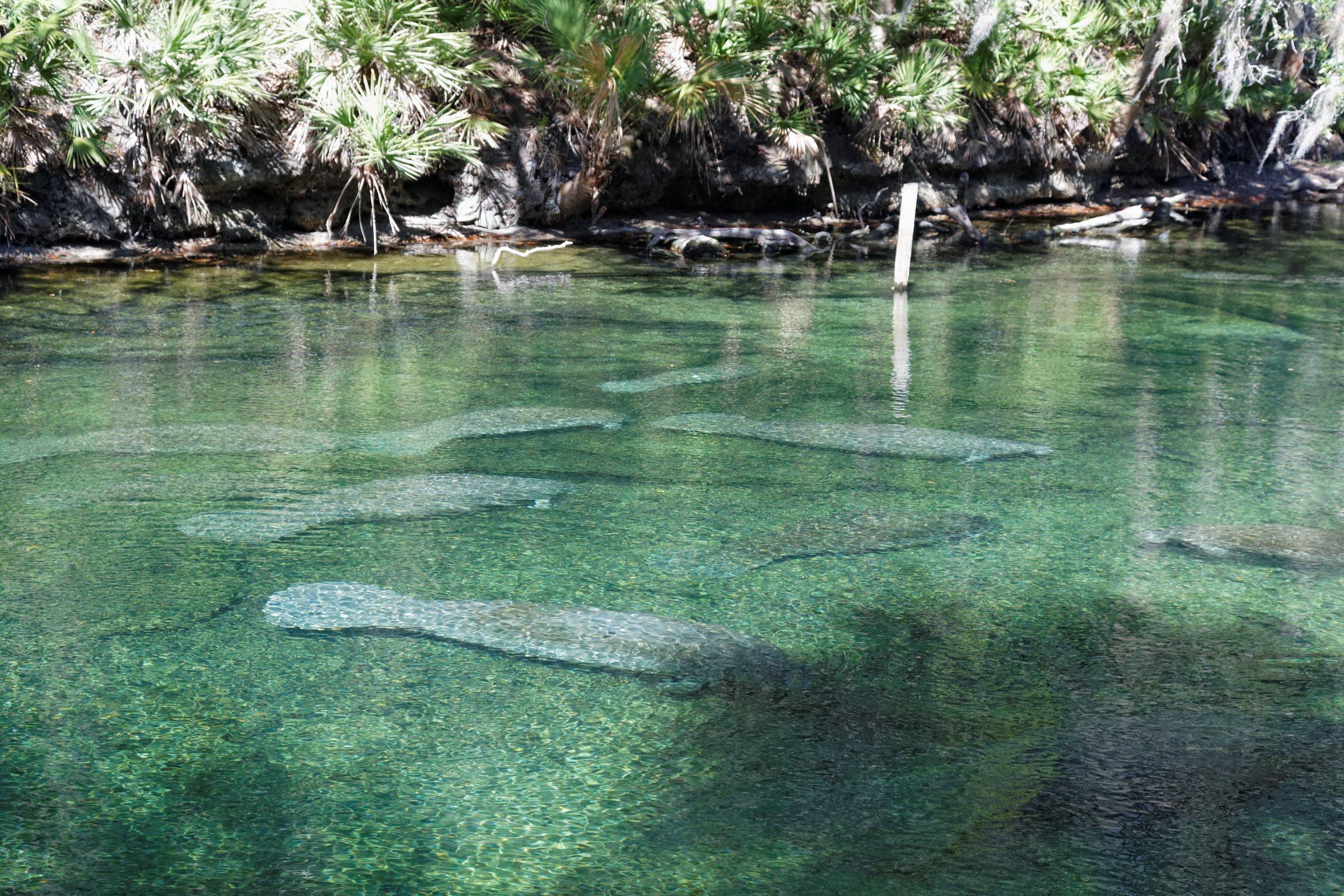
Blue Spring State Park is home to a first-magnitude spring that is one of the largest winter gathering sites for manatees in Florida. Visitors can see hundreds of manatees enjoying the constant 72-degree spring water in the colder winter months. Blue Spring State Park is a state park located west of Orange City, Florida. Orange City is a city in Volusia County, Florida. Measured from the published coordinates of the park and of Orlando, Blue Spring State Park is about 30 miles north of Orlando. The spring in the park, Volusia Blue Spring, is the largest on the St. Johns River. About 102 million gallons of water flow out of Blue Spring into the St. Johns River every day. Large concentrations of Florida manatees are located in the Crystal River and Blue Spring regions in central and north Florida.
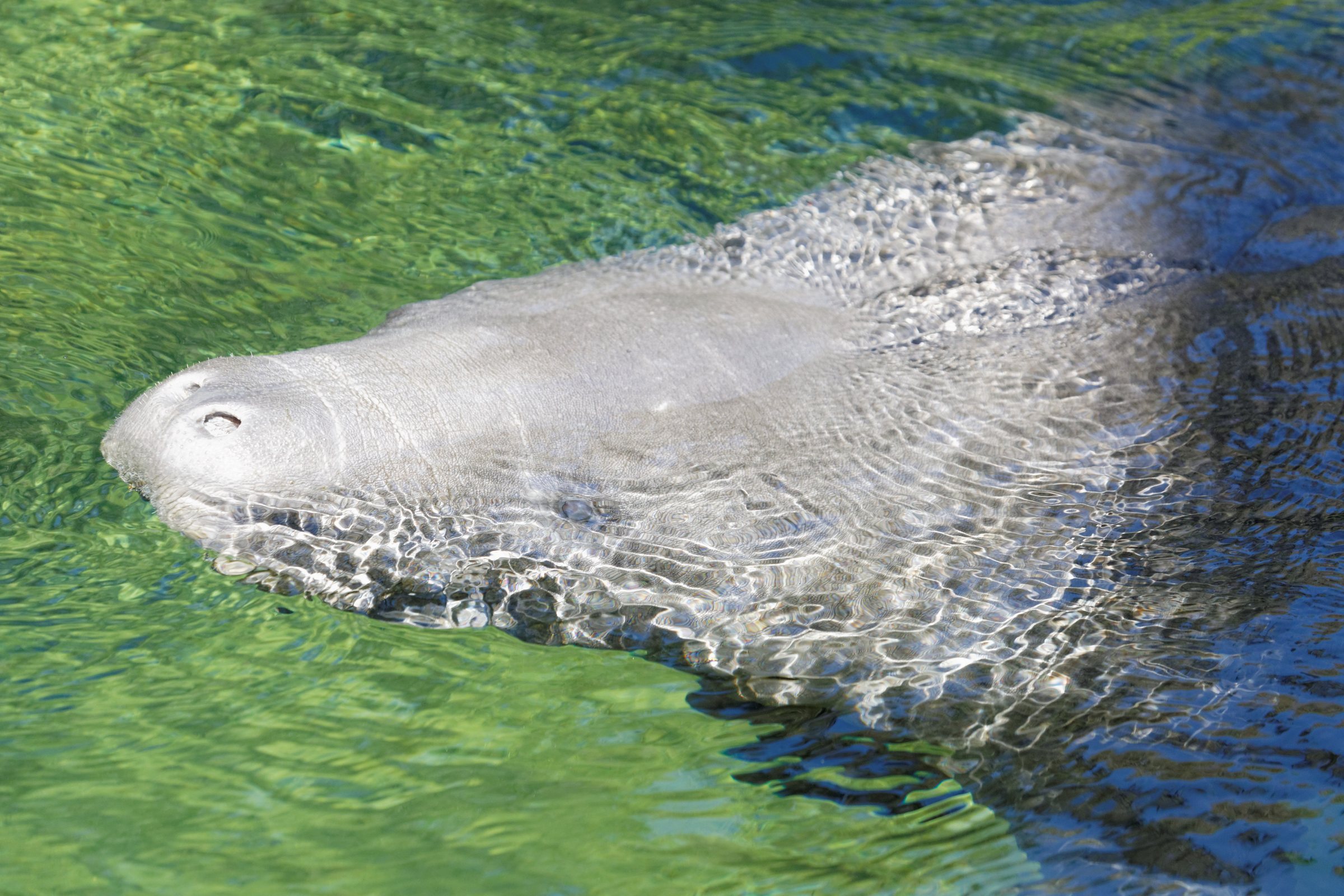
Manatees depend on warm water for survival, because they cannot tolerate water temperatures colder than 68 degrees for long periods of time. Manatees have only about an inch of fat and a very slow metabolism, meaning they cannot easily stay warm. Manatees are frequently solitary creatures, but they do aggregate at warm-water habitats during the winter. Manatees migrate to warmer spring water during colder weather in Florida, and they often return to the same spring every year. Manatees exhibit high site fidelity and can recall previous refuge sites to which they frequently return in successive winters.
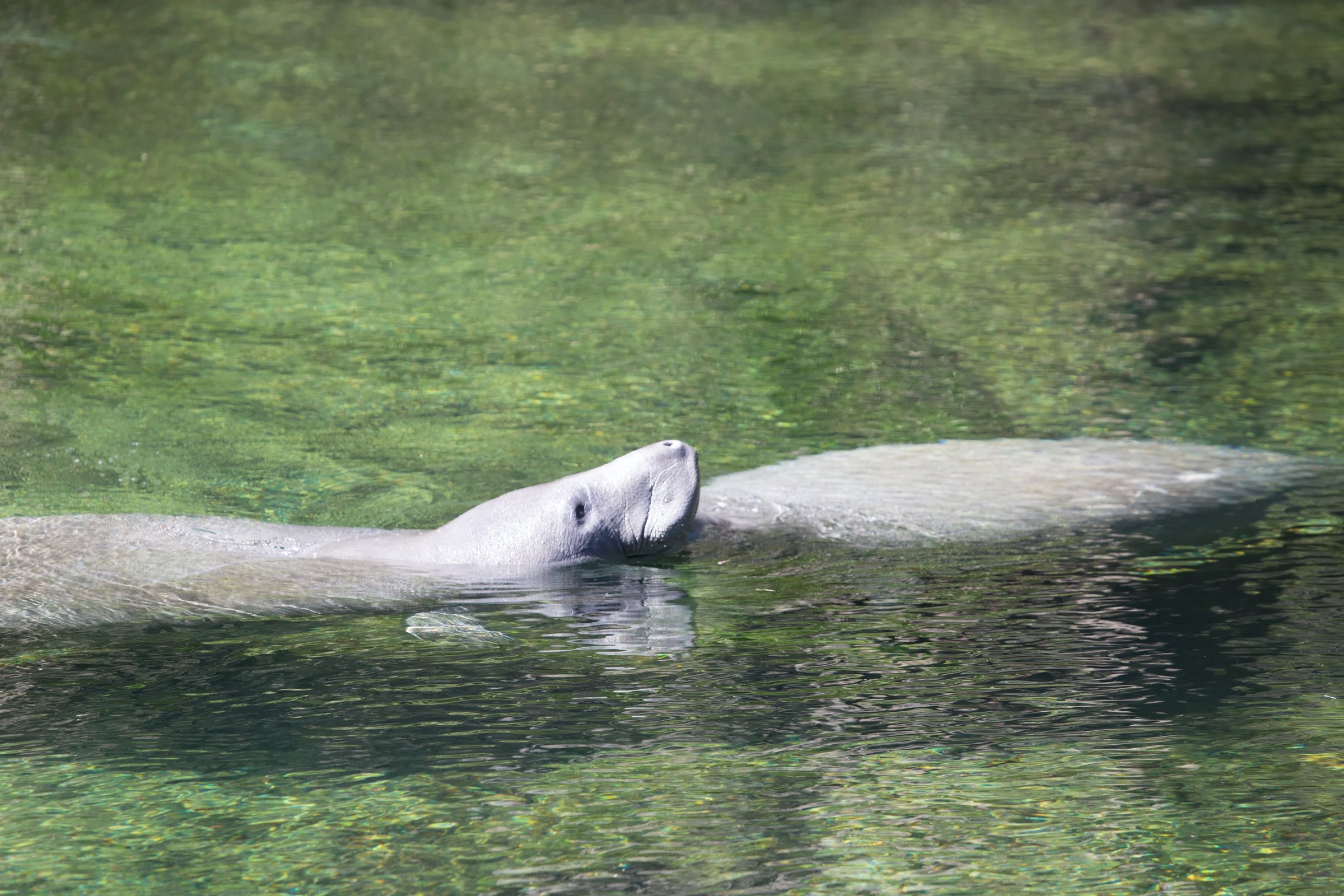
At Blue Spring, visitors view manatees in the crystal-clear spring water from the boardwalk, which stretches a third of a mile from the St. Johns River to the headspring. Visitors on the boardwalk can see manatees socializing and mothers nursing their small calves, without influencing the manatees' natural behavior. The spring run covers only 4.47 acres. Fish abound in the spring run and attract a variety of wading birds, ospreys, eagles and kingfishers. The spring run itself has little rooted vegetation, partly because wintering manatees eat what grows there.
The average West Indian manatee is about 8.9 to 11.5 feet long and weighs 440 to 1,320 pounds, with females generally larger than males. Manatee skin is gray, but it can vary in coloration due to algae and other biota, like barnacles. Manatees are mammals: they breathe air, have warm blood and produce milk. Manatees are obligate herbivores that feed on over 60 species of aquatic plants in both fresh and salt water. Manatees typically graze for five or more hours per day, consuming anywhere from 4% to 10% of their body weight in wet vegetation per day. On average, one calf is born to a female manatee every two to three years. Manatees are estimated to live 50 years or more in the wild, and one captive Florida manatee, Snooty, lived for 69 years, from 1948 to 2017. The largest manatee on record weighed 3,649 pounds and measured 15 feet long.
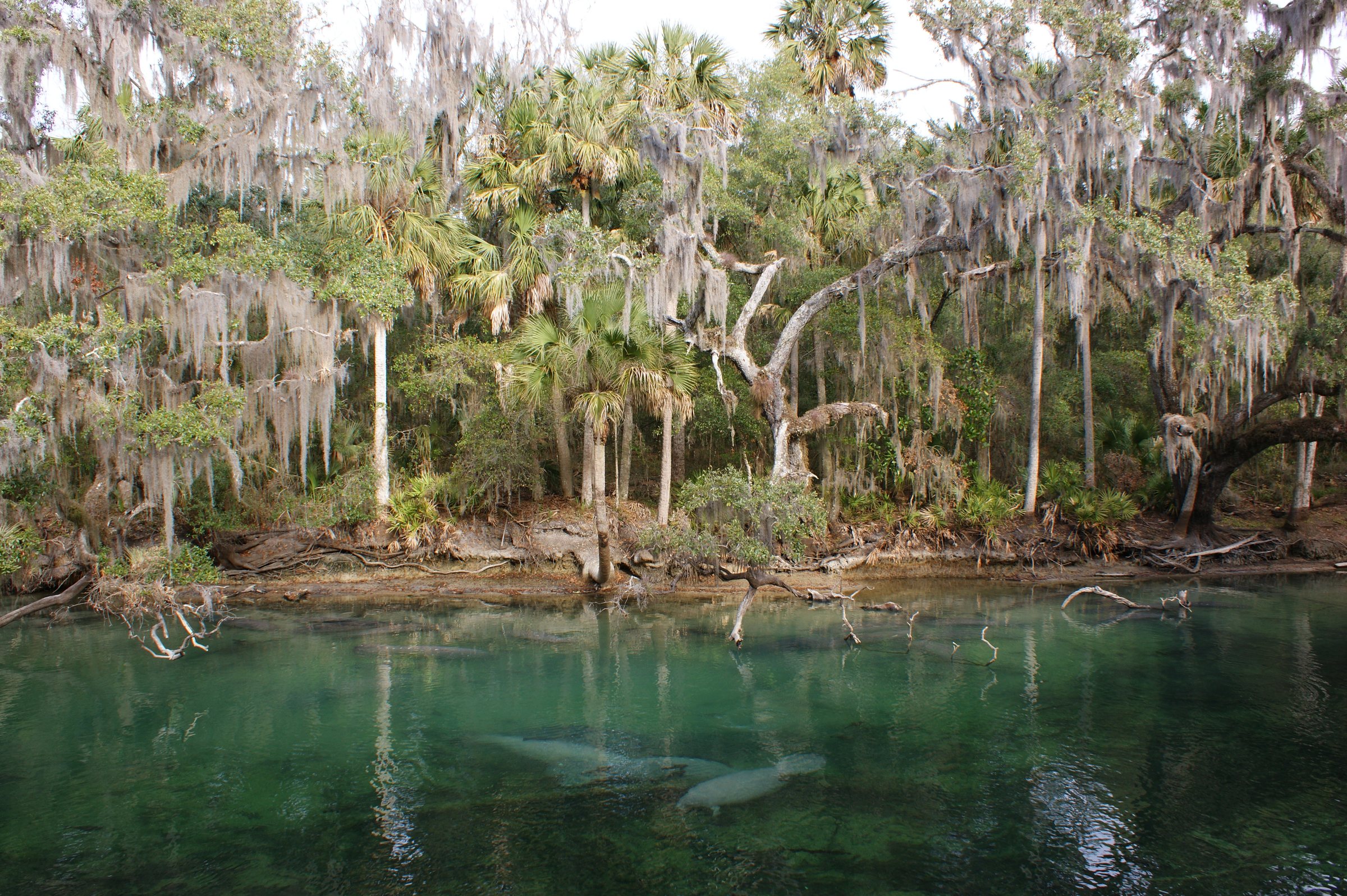
Blue Spring manatees are identified by their scar patterns, which they acquire mainly from boat strikes, but also from fishing-line entanglements, cold lesions and fungal infections. Scar tissue on manatees is white and persists for decades, allowing for easy identification. Researchers have recorded the life history of individual manatees at Blue Spring since 1978, including births, deaths and relationships. During manatee season, from November to March, the live video streaming of the spring is made public.
The number of manatees visiting the park has grown from about 36 animals when research began in the 1970s to over 700 animals in 2023. In 1970, researchers tracked 14 manatees in the spring run. By 2005, wintering manatee numbers exceeded 200, and by 2023 that number reached a record 729. According to the Manatee Sightings Update: April 2026, manatee season at Blue Spring State Park officially ended on March 27. A severe, prolonged cold front in early February brought overnight lows of 23 °F and a record count of 859 manatees in a single day.
In 1971 the Cousteau television series filmed an episode on manatees, The Forgotten Mermaids, at Blue Spring. Blue Spring State Park is an ideal location to release manatees back into the wild after they have been rehabilitated from sickness or injury. Some individual manatees seek out Blue Spring in the summer to birth their calves in a protected area.
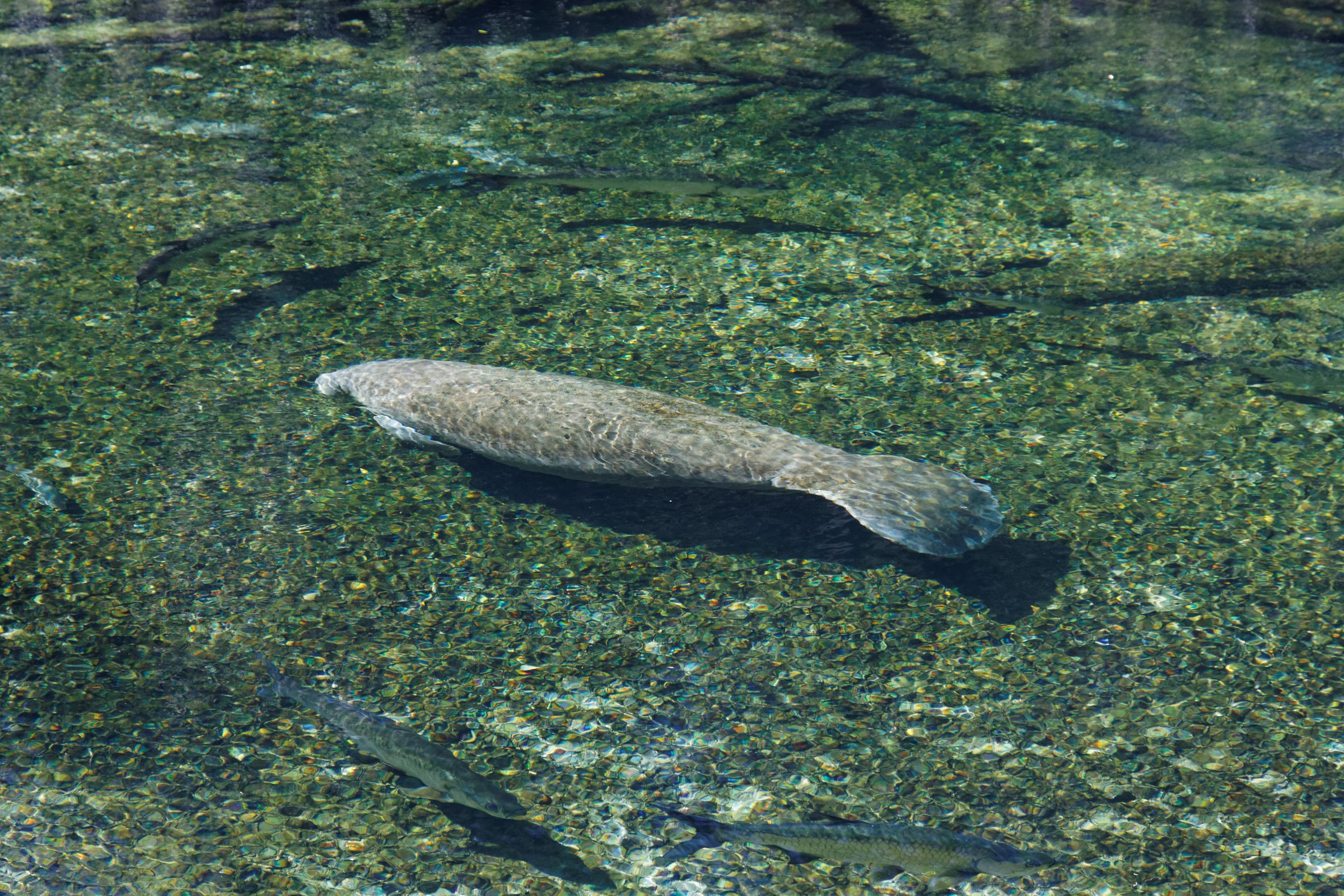
Fees at Blue Spring State Park: $6 per vehicle. Blue Spring State Park is open 365 days a year. Visitors can hike along the spring run or on the 4.5-mile Pine Island Trail. Wildlife besides manatees can be seen at Blue Spring, including alligators, bears, raccoons and various species of birds. Visitors can launch a canoe or kayak, with rentals available at the park, or take a guided river boat cruise. Hontoon Island State Park is a short paddle down the St. Johns River. Hontoon Island State Park is a 1,648-acre park on Hontoon Island between the St. Johns River and the Hontoon Dead River in Volusia County. Hontoon Island can only be reached by boat or park-operated passenger ferry.
The three-story Thursby house stands tall near the St. Johns River. Thursby's son John later added a third story to the house, which was rented as rooms to travelers and sportsmen. Nine steamboats eventually called at Blue Spring Landing on regular routes, carrying freight, mail, tourists and sportsmen.
The naturalist William Bartram reached the plantation in 1774 and was taken from there to see the spring. Bartram reported clear water crowded with fish, alligators and gar at the spring.