
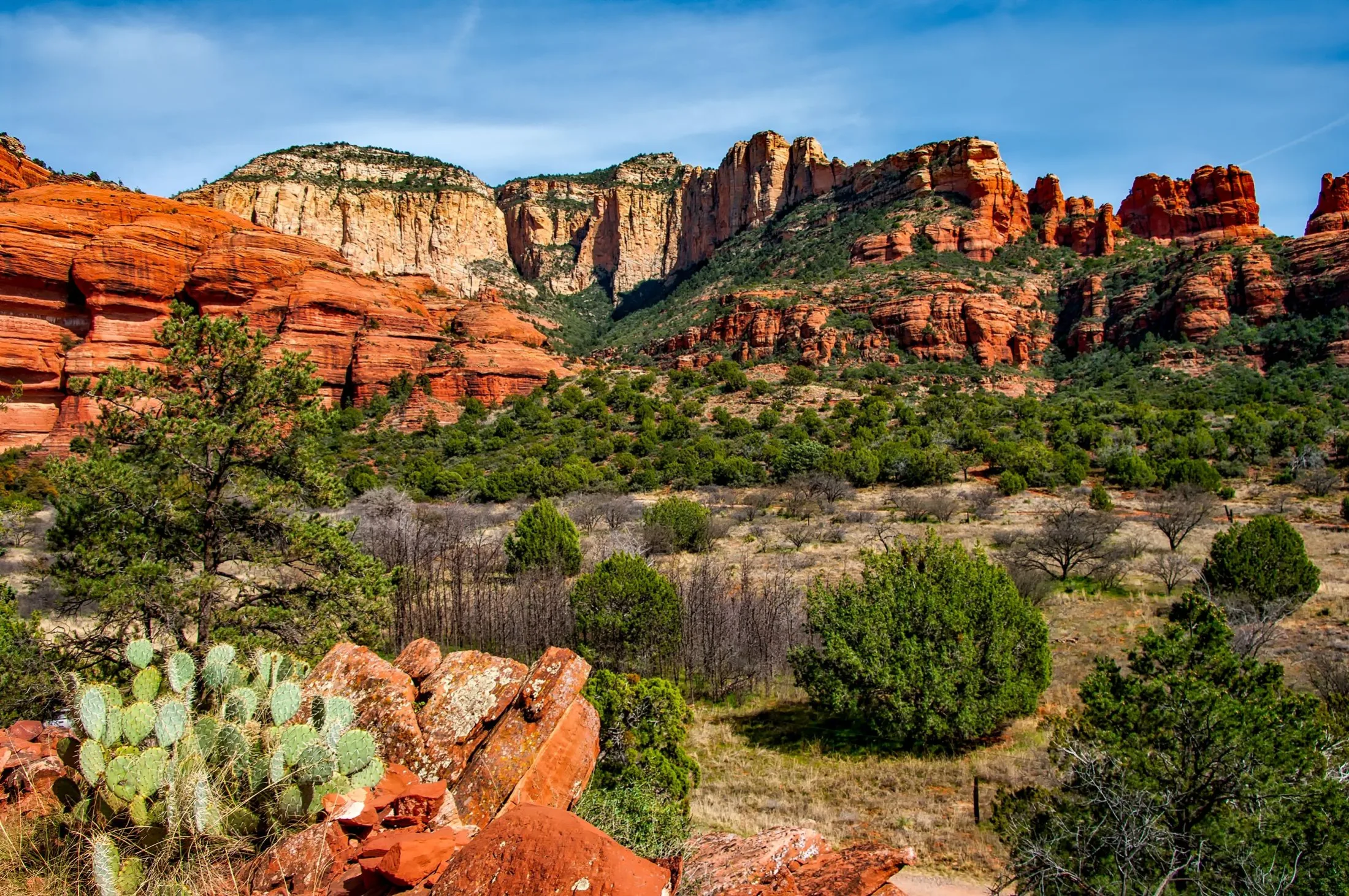
Sedona has it. You feel it before you understand it — a deep electric charge that settles into your bones the moment the canyon walls close around you on the drive in. Other cities talk about energy. This one produces it.
The red rock here isn't decoration. Those iron-oxide formations rising 1,000 feet off the valley floor are among the oldest exposed geology in North America, and the land around them carries four recognized vortex sites — Bell Rock, Cathedral Rock, Airport Mesa, Boynton Canyon — where locals, seekers, and skeptics alike report the same thing: a shift. A loosening. Whatever mental static you hauled in from the highway gets confiscated at the canyon mouth.
Skeptics can argue the mechanism. What's harder to argue is the landscape itself. Stand in the lower canyon among the juniper and prickly pear, look up at those striated orange walls stacked in perfect geological record, and try to feel nothing. The rock forces presence. That's not mysticism — that's just what happens when something is 300 million years old and doesn't care what you had for lunch.
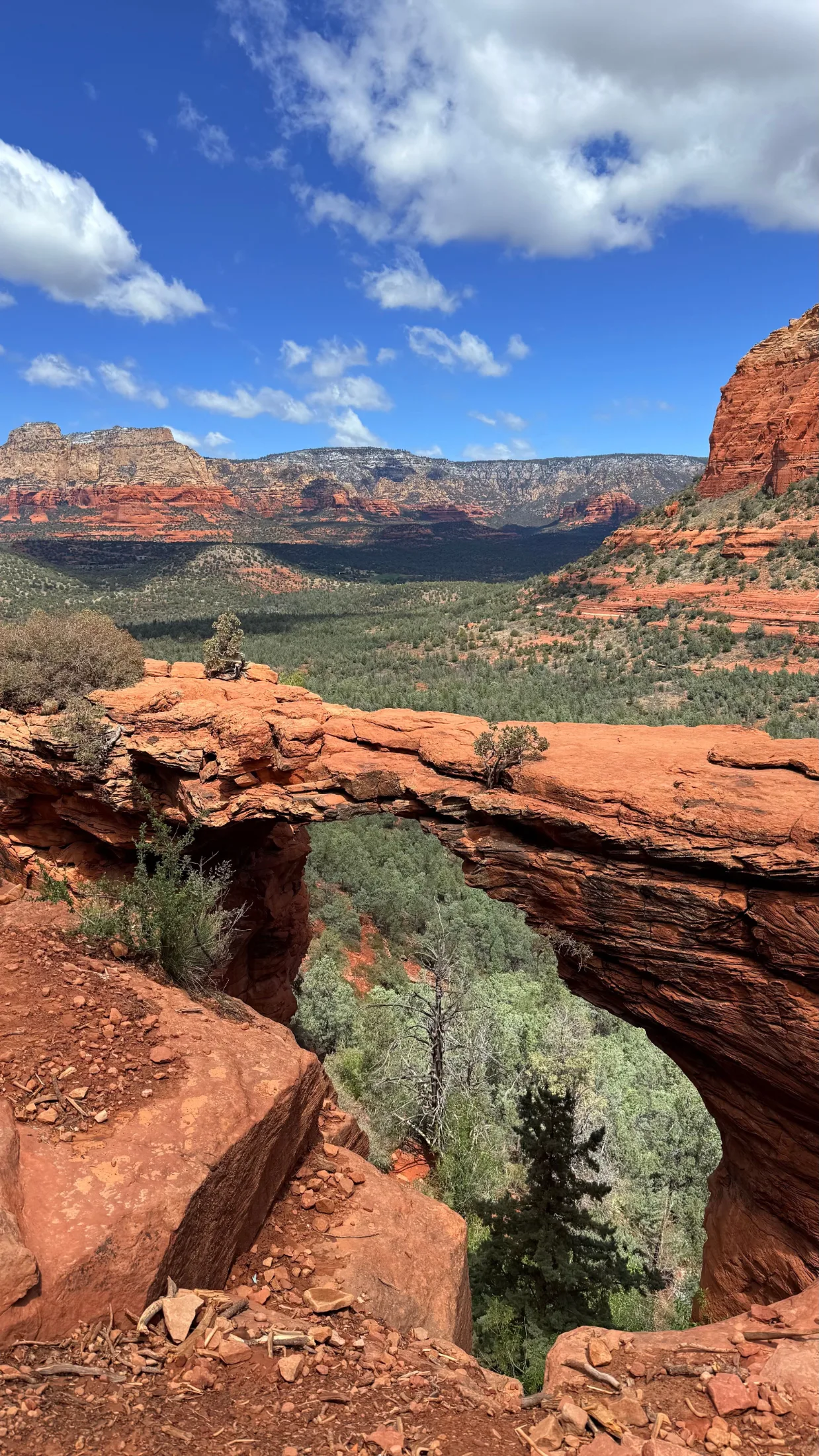
What LIVIN Here Actually Looks Like
Living in Sedona means your daily backdrop is the same landscape people fly across the country to photograph once. The morning light hits Cathedral Rock and turns the stone from rust to amber to near-white over about forty minutes. Afternoons, the shadows carve the canyon walls into something new. You stop taking it for granted right around never.
The community that's built up around this energy is specific: artists, wellness practitioners, longtime Arizona families who've been here since long before the vortex tours. What they share isn't a belief system — it's a commitment to being somewhere intentional. Sedona selects for that.
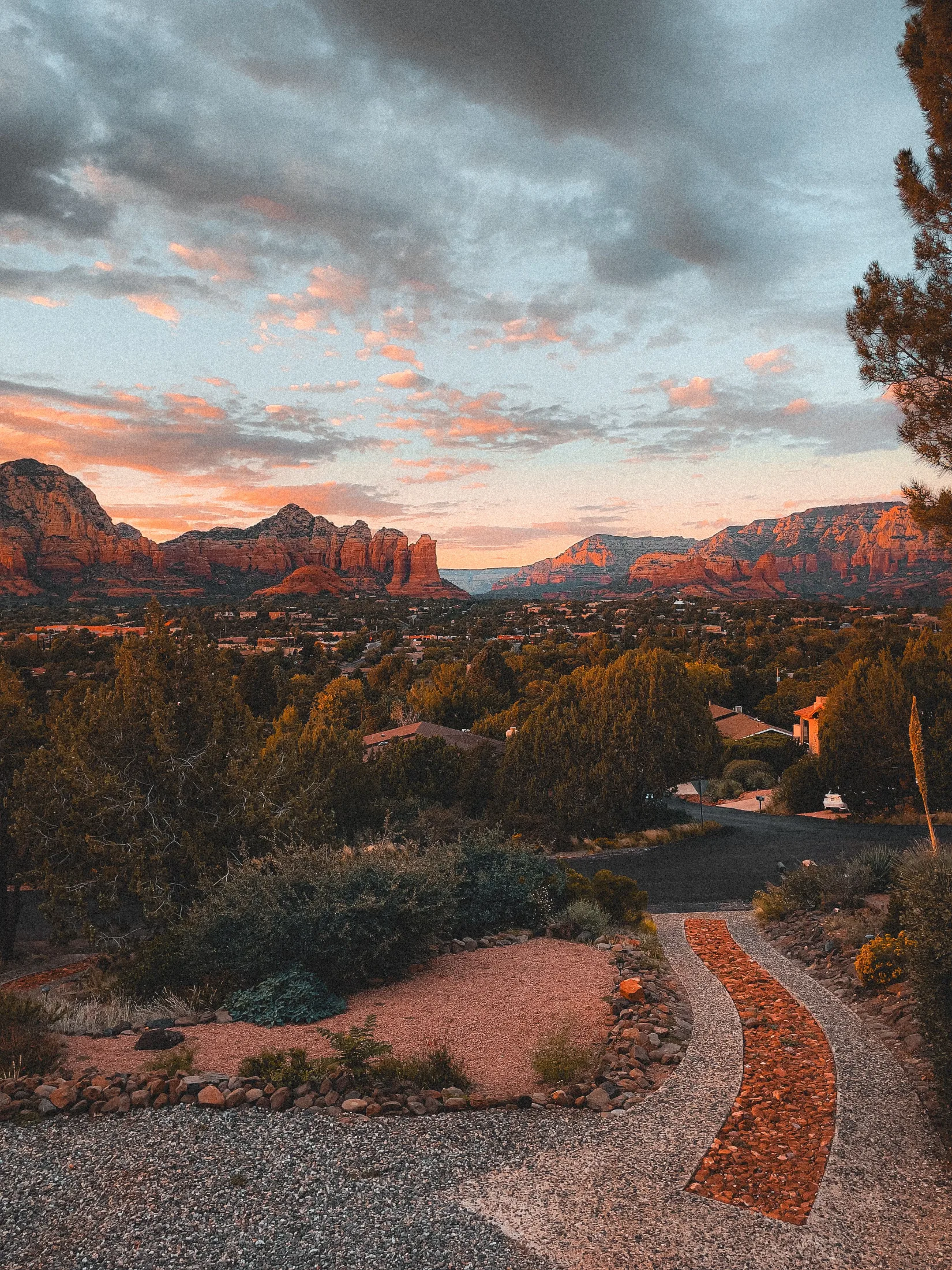
The Light Changes Everything
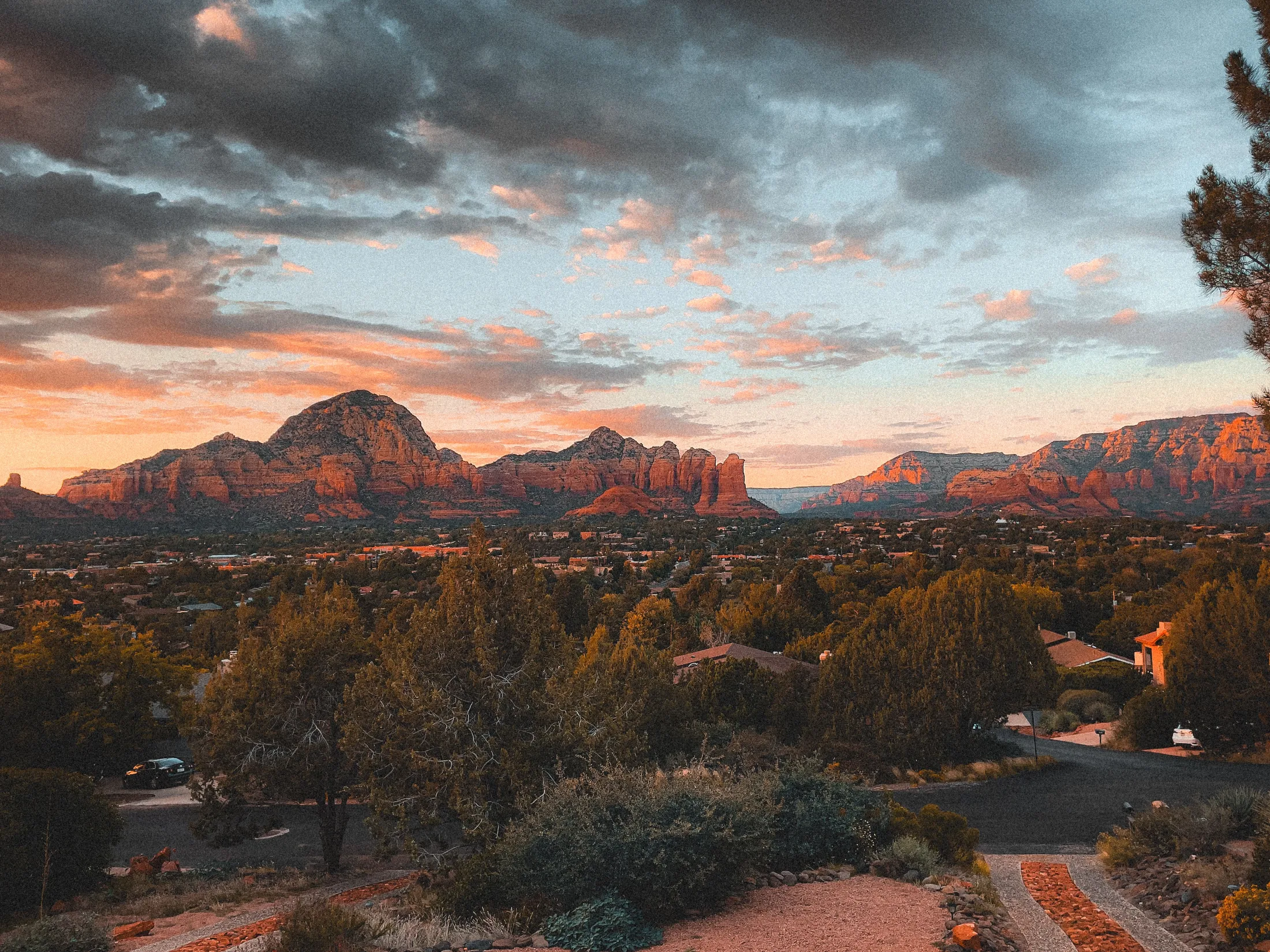
The golden hour here is not metaphor. When the sun drops behind the western ridgeline and the last light catches the buttes from below, the entire town turns amber. The sky above Cathedral Rock goes deep coral, then a bruised violet that bleeds into the first stars. The whole scene is over in twenty minutes and it never repeats exactly.
People who move to Sedona often say the same thing: they came for a weekend and started looking at real estate by Sunday. Stripped of the spiritual shorthand, what the vortex actually delivers is a place with the rare ability to make you stop — to pull your attention fully into the present and hold it there. In a world engineered for distraction, that might be the rarest resource of all.
Why It Matters to Live Here, Not Just Visit
Tourism gives you Sedona curated. Residency gives you Sedona raw — the January mornings when the rock is dusted with snow, the summer monsoons that roll in from the south and turn the creeks fast and red, the quiet weekday trails where you can walk for an hour and hear nothing but wind through the junipers.
The vortex energy of Sedona isn't something you schedule a tour to access. It's ambient. It's in the iron smell of the earth after rain, in the way sound carries differently at elevation, in the particular quality of silence that settles over the canyon after dark. You don't visit it. You live inside it.
That's the LIVIN difference. Not a place you pass through on the way to somewhere else — a place that turns out to be the destination everyone else is still searching for.