
Where the Towers Meet the River: Seeing Tampa's Skyline
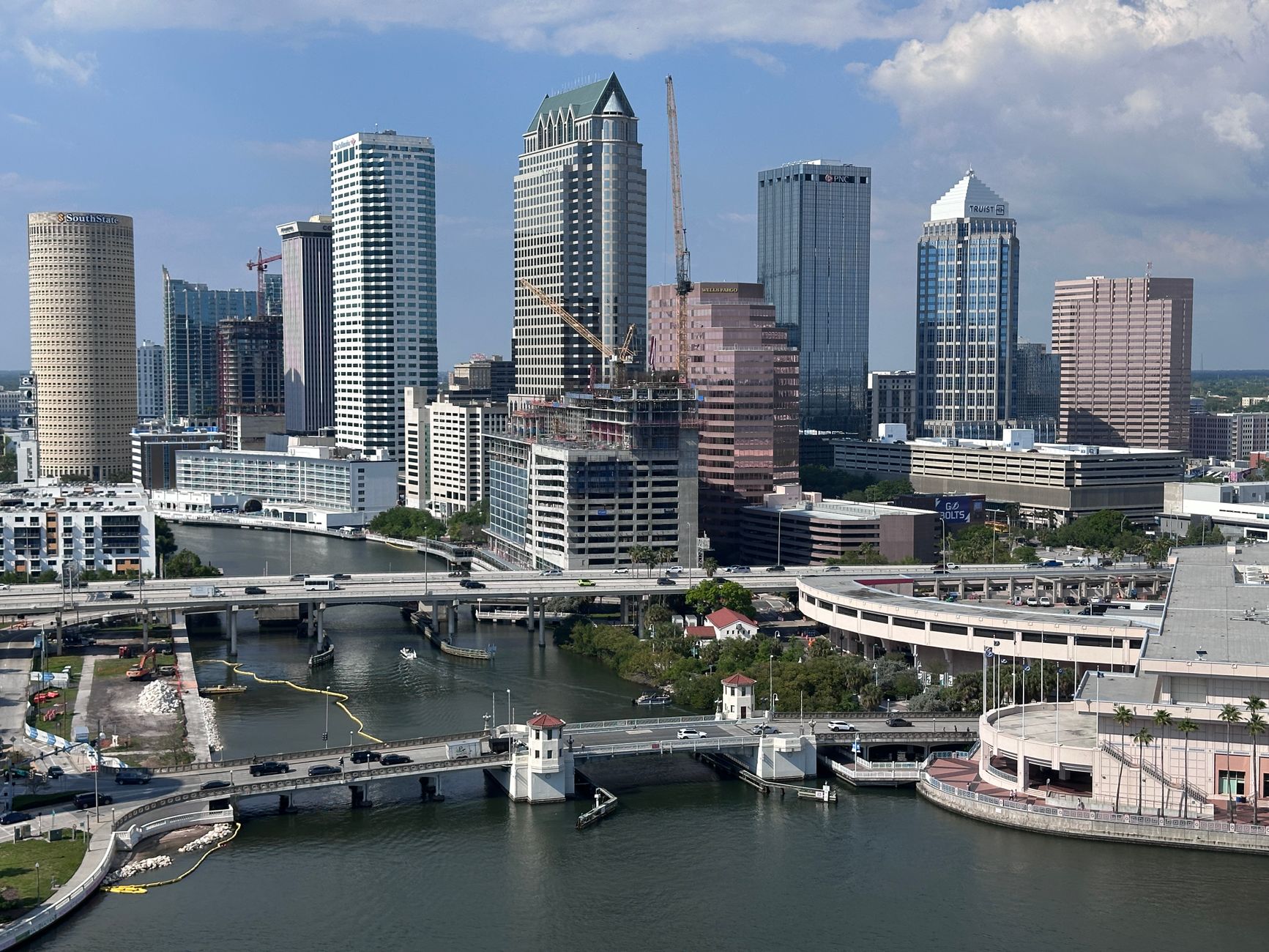
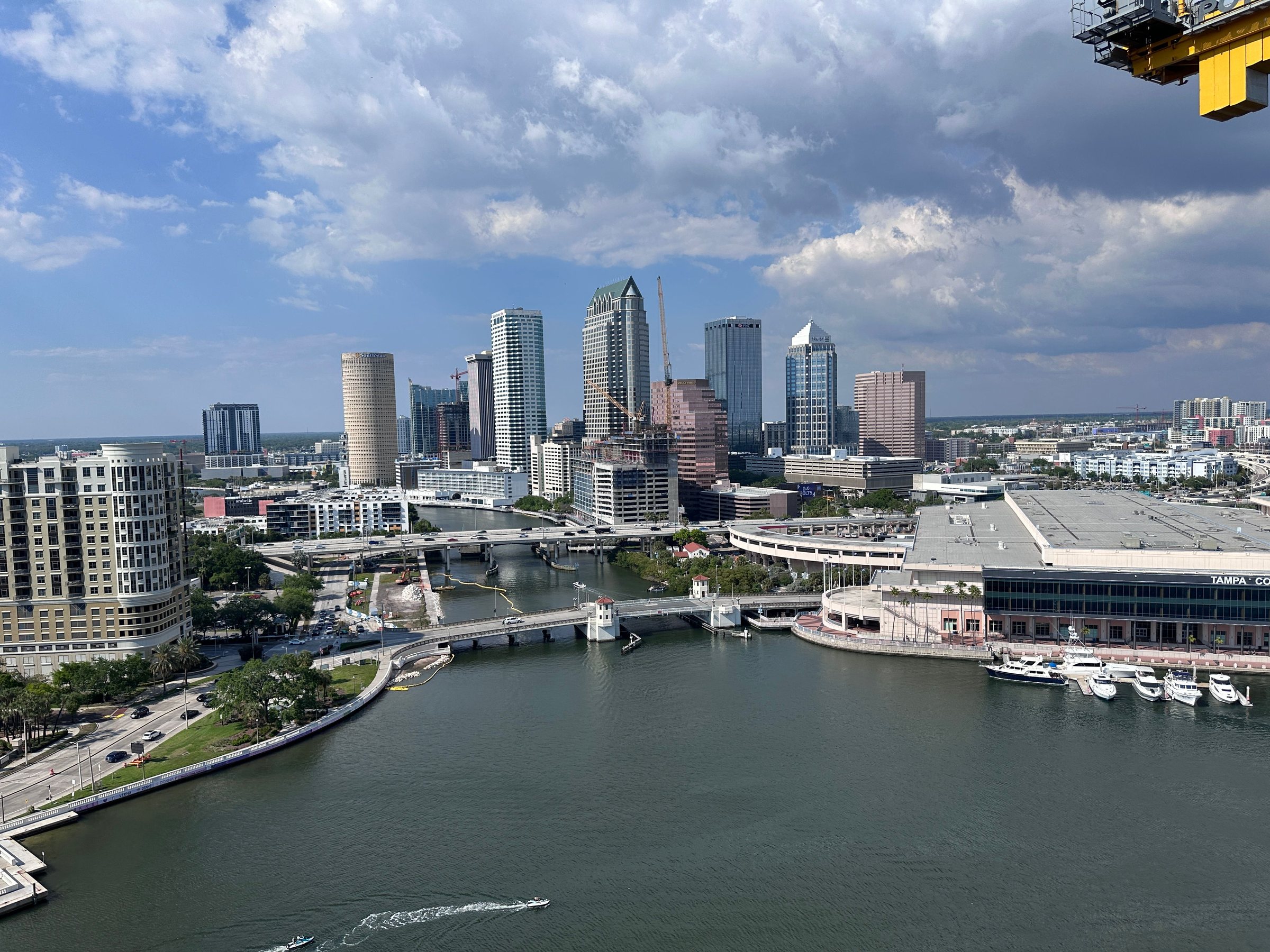
Old Tampa Bay and Hillsborough Bay border Tampa, and the two bays join and form Tampa Bay, while the Hillsborough River passes Downtown Tampa directly at its front.

Tampa Bay
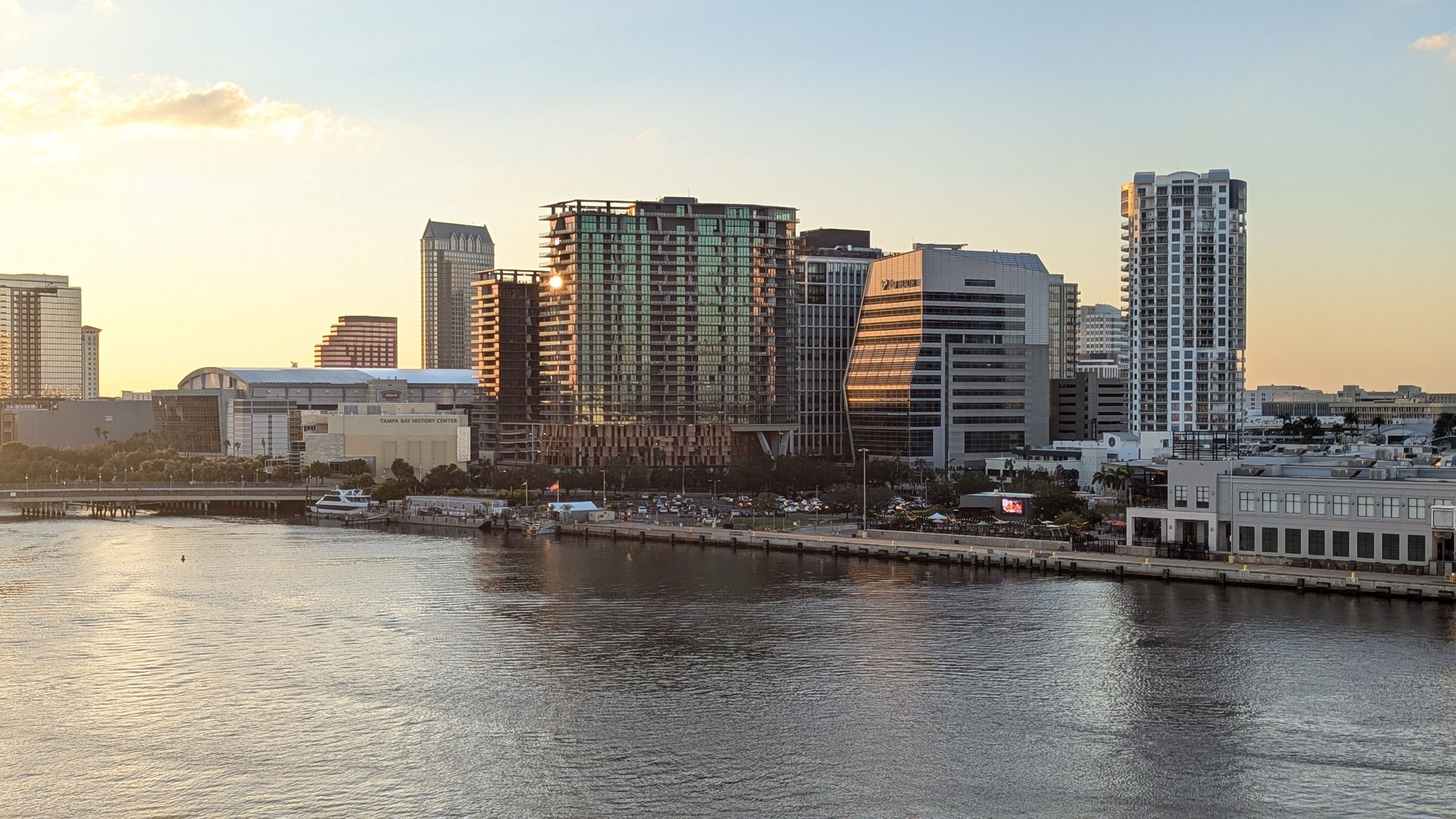
Old Tampa Bay borders Tampa, and Hillsborough Bay borders the city as well. The two bays flow together, and that joining forms Tampa Bay. The Hillsborough River flows into Hillsborough Bay. On that same course, the river passes directly in front of Downtown Tampa.
Downtown Tampa
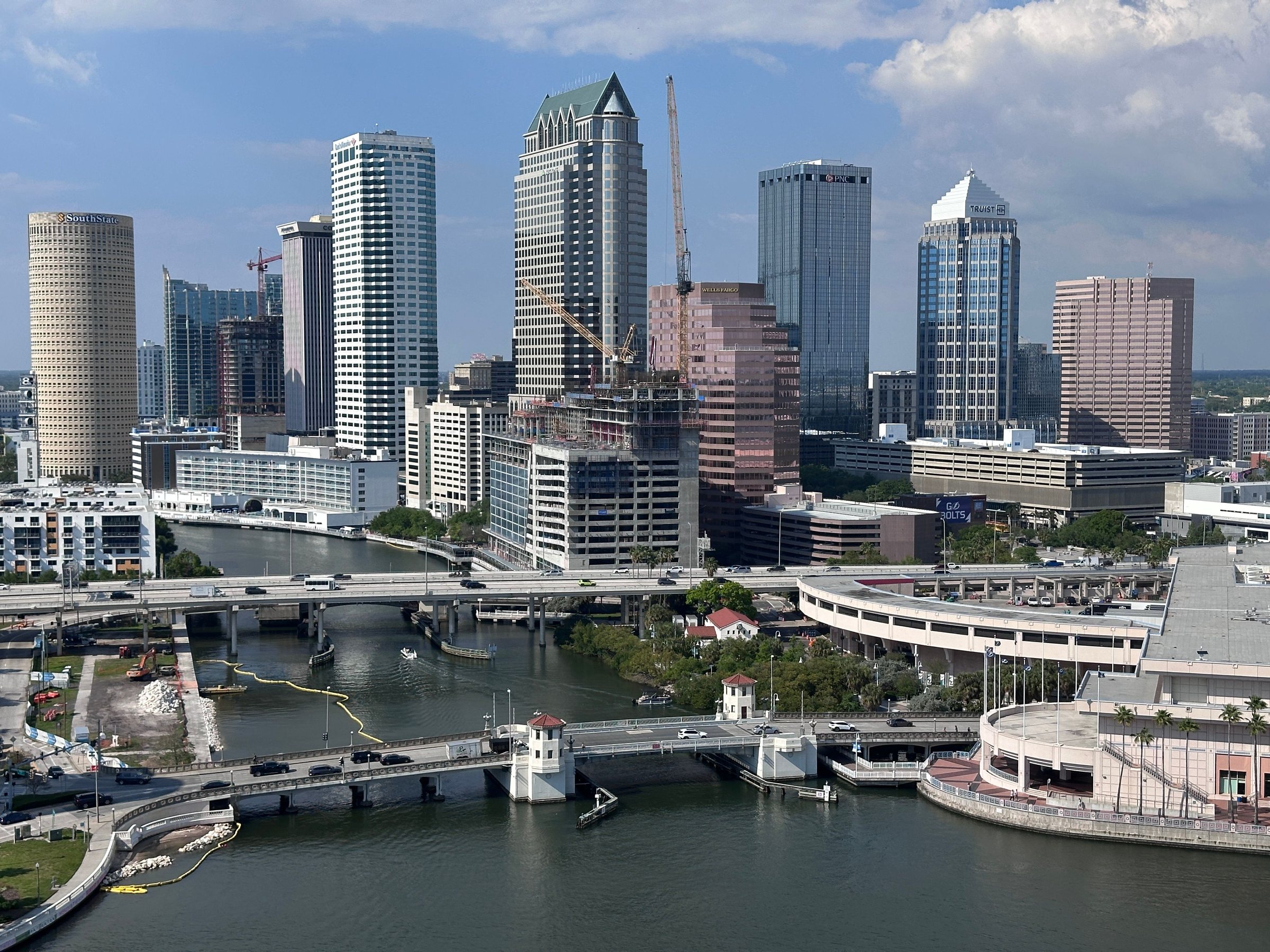
A building of 10 stories, completed in 1913, is regarded as Tampa's first high-rise. The first building to clear a height of 200 feet was finished in 1926 at 230 feet. It held the top height in Tampa across four decades, until a building of 280 feet opened in 1966. From the 1970s to the early 1990s, a boom in high-rise building recast the downtown skyline and placed residential towers along Bayshore Boulevard. The tallest building in Tampa is 100 North Tampa, a 42 story building that rises 579 feet and was completed in 1992.
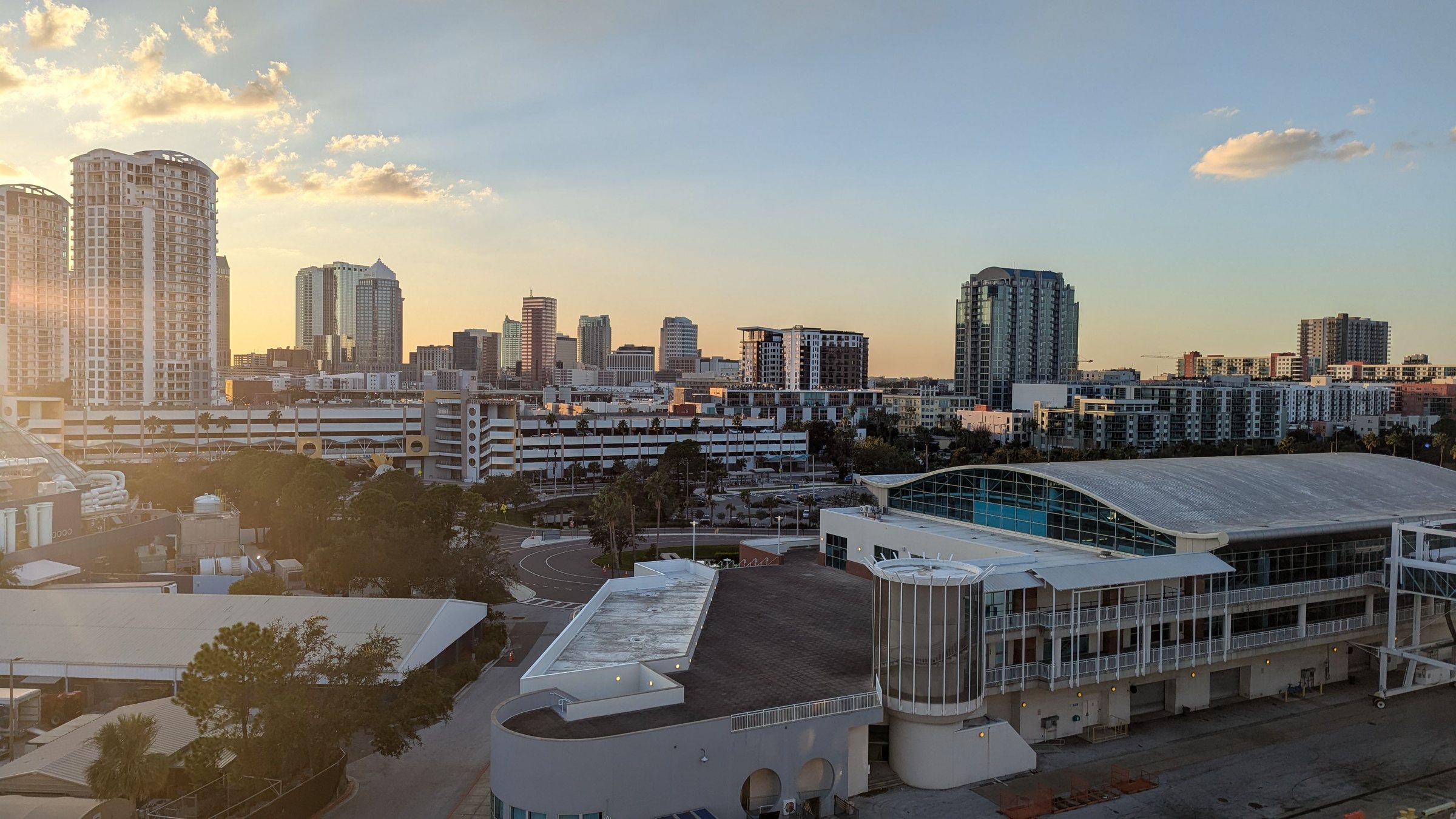
In 2026 the city counted 52 high-rises above 200 feet, and 16 of those stand above 300 feet. Toward the east, the skyline now reaches the Channel District and the Water Street neighborhood, where development began in 2017. The Hillsborough River bounds the main downtown skyline on the west side. The Garrison Channel separates downtown and Water Street from Harbour Island.
Tampa Riverwalk
The Tampa Riverwalk is a pedestrian trail and an open space of 2.6 miles following the Hillsborough River. In 1975 the walk was conceived as a project for the Bicentennial. A year later, the first wooden planks were set down near the ground now called Curtis Hixon Park. In 1989 granite pavers took the place of those original wooden planks. As of 2022, bronze busts along the Riverwalk had honored thirty historical figures.
The path was built out in separate pieces. MacDill Park opened in 2005, and the path also gained the Platt Street Bridge Underpass in 2008, the Brorein Street Underpass in 2013, and Water Works Park in 2014. The segment running from the Straz Center to Water Works Park was completed in 2016. The Heights District extension of the Riverwalk was completed in 2020.
Kennedy Boulevard Plaza
Kennedy Boulevard Plaza was completed in 2015. It carries the Riverwalk 1,460 feet over the water, linking MacDill Park to Curtis Hixon Waterfront Park under the Historic Kennedy Boulevard Bridge. Shades and trellises of a cabana-like kind take a hoop shape. The hoop grows from the deck where the edge curves. That form was chosen so it could stand up to winds in the region, and lighting and furniture were designed with the hoop.
North Boulevard Bridge
The walk runs from the North Boulevard Bridge down the Hillsborough River and along the Garrison Channel to the Channelside District. It passes under all 10 bridges along the way except the Cass Street railroad bridge. Cotanchobee Fort Brooke Park, a park of 4.5 acres along the Garrison Channel, is part of the Riverwalk.
Curtis Hixon Waterfront Park
Curtis Hixon Waterfront Park opened in 2010 near the site of the original boardwalk from the 1970s. The park covers 8 acres. Landscape architect Thomas Balsley reconfigured it to open views from the downtown side, across the Hillsborough River, to the University of Tampa beyond.
A Great Lawn lined with trees sits at the center, framed at each end by fountain plazas. Those plazas hold interactive fountains, both the louver kind and the mist kind. Lawn panels in terraces spill down from the terraces of the museums. Lights for the fountains, the pavement, and the pylons keep the park glowing at night.
Kiley Gardens
Kiley Gardens, named for architect Dan Kiley, is a plaza of 4.5 acres. The grid of the plaza is based on the Fibonacci sequence. A pedestrian bridge links Curtis Hixon Waterfront Park to Kiley Garden. Kiley Garden sits one story above grade.
Plant Hall
Across the river, Plant Hall at the University of Tampa was built as the Tampa Bay Hotel. That resort held 511 rooms, opened on February 5, 1891, and was designed in the Moorish Revival style. The building is a quarter mile long. Its roofline has six minarets, four cupolas, and three domes. All of them were restored to their original stainless steel in the early 1990s.
On the hotel grounds, the Henry Plant memorial fountain is carved stone by the sculptor George Barnard. It was commissioned after Plant's death in 1899. The fountain is the oldest public art in Tampa, and it was fully conserved in 1995. A large live oak that presided over hotel construction from 1888 to 1891 stands on the grounds. An avenue of cabbage palms once led down to the hotel's river docks, when the river served as an entrance for guests arriving by boat.
Bayshore Boulevard
The park and the boulevard at Bayshore Boulevard were conceived between 1891 and 1893.
Today Bayshore runs 4.5 miles, with a continuous sidewalk 10 feet wide. A balustrade of whitewashed masonry edges that sidewalk, and the views of the bay are uninterrupted. Since 1989 the boulevard has formed part of the city's Greenway trail. A bike lane, a linear park, and the greenway trail give views of urban Tampa and the water.
Tampa Riverwalk at Night
The city has installed an LED lighting system that changes color along portions of the Riverwalk. The system adds color at night to the path and to bridges nearby. Colorful lights bring life to the Riverwalk at night.
Stories, places and events, edited by LIVIN.in.