
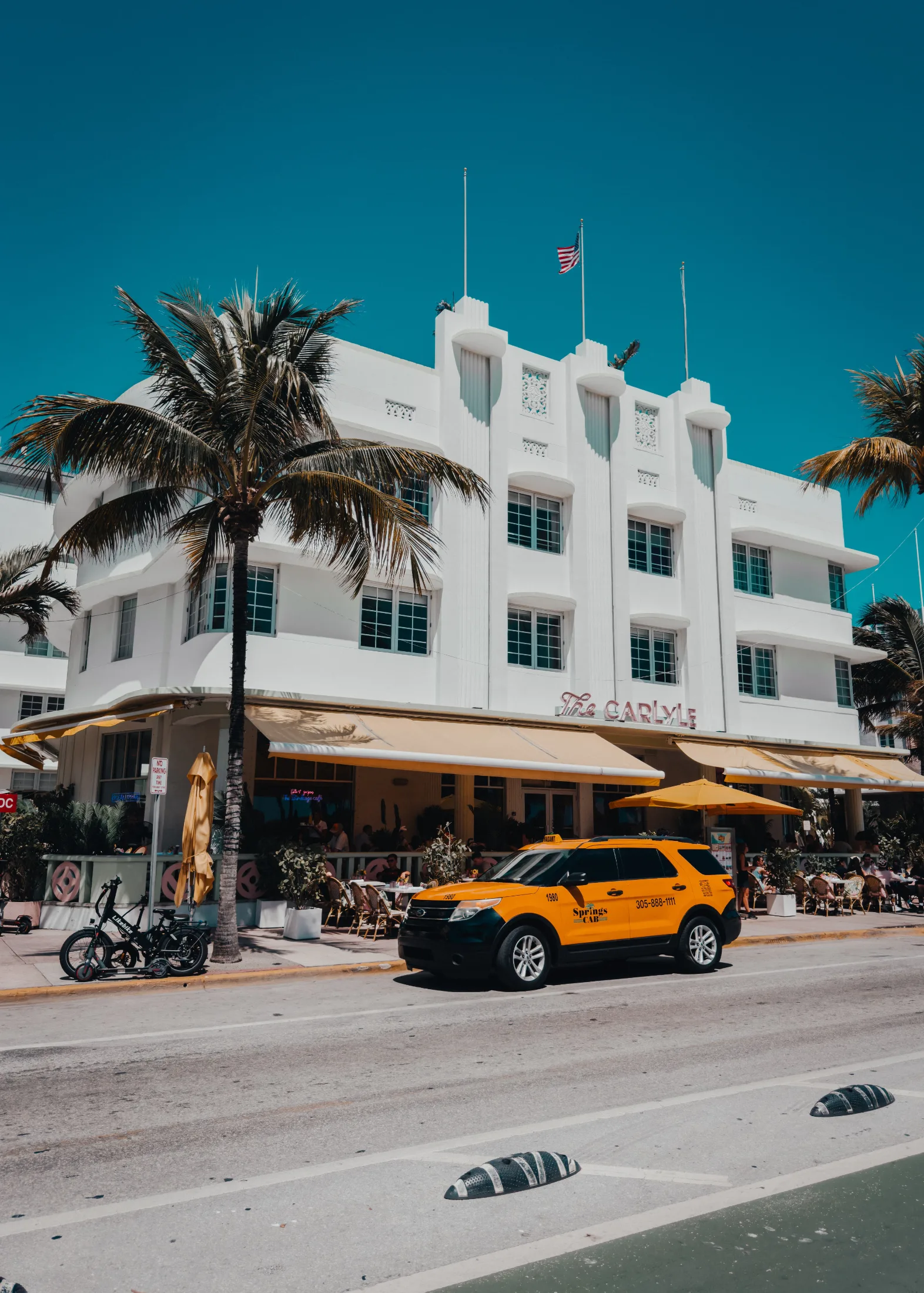
Ten years ago, people from New York and California still talked about Miami like it was a long weekend — somewhere to visit, not somewhere to commit to. The Carlyle on Ocean Drive was already old, already iconic, already photographed from every angle. The city behind it was still figuring out what it wanted to be when it grew up.
What happened to Miami over the last decade isn't a single story. It's a compounding one. The tech and finance migration that accelerated through the early 2020s didn't create Miami's identity — it collided with one that was already forming. Wynwood had already started its turn from warehouse district to open-air gallery. Brickell was already stacking glass towers. The food scene was already serious. What the influx did was force the rest of the country to pay attention to something locals had quietly known for years.
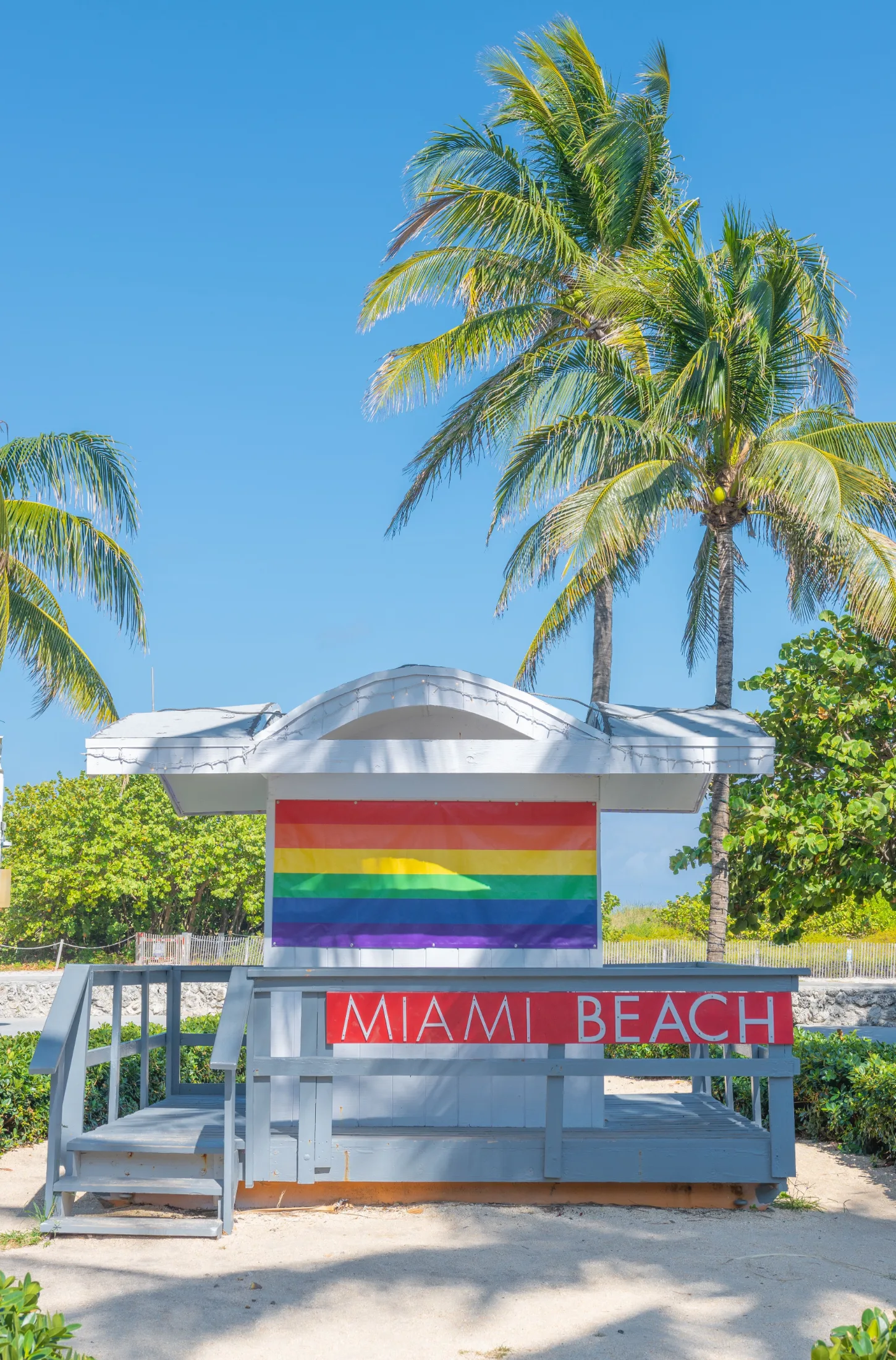
Miami Beach evolved in ways that go beyond the skyline. The lifeguard stands — painted structures that tourists photograph and locals barely notice anymore — started flying pride flags and carrying the weight of a community that insisted on being seen. Miami Beach has been an LGBTQ+ destination for decades, but the last ten years brought a new kind of confidence to that identity. More permanence, less occasion.
The beach stayed exactly as honest as it always was. Salt air, white sand, Atlantic water running turquoise on a clear afternoon. That part held.

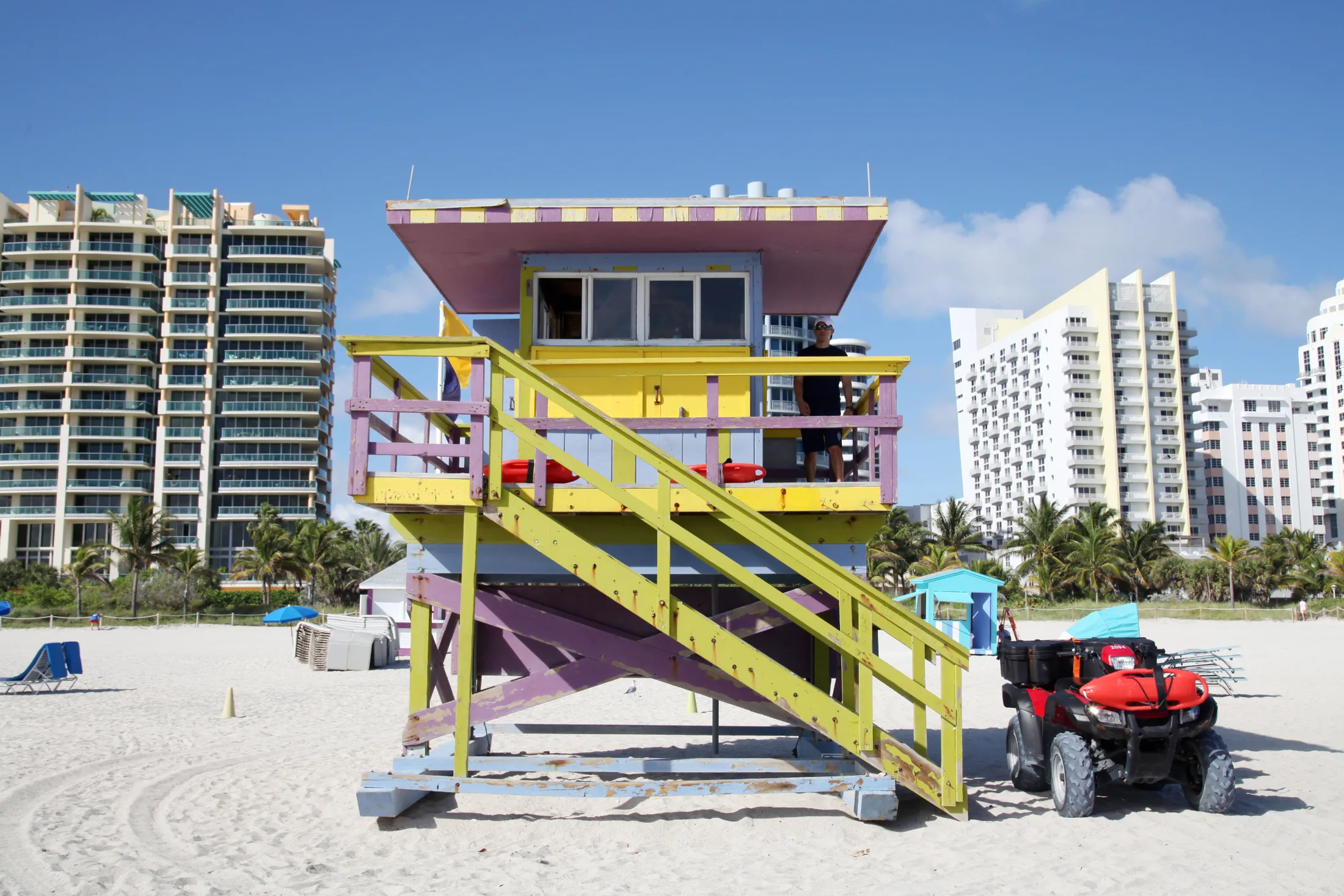
Look at the skyline behind any of the South Beach lifeguard towers and you'll see the tension that defines modern Miami living: those bold, painted wooden structures in the foreground, high-rise residential towers stacking up behind them. The city built upward, fast. New construction reshaped the Brickell and Edgewater corridors into something unrecognizable from a decade prior. With that growth came the pressures any honest Miamian will acknowledge — rising rents, cost-of-living conversations that once felt imported from other cities, traffic patterns that test patience on a daily basis.
None of that erased what makes this place worth the argument.
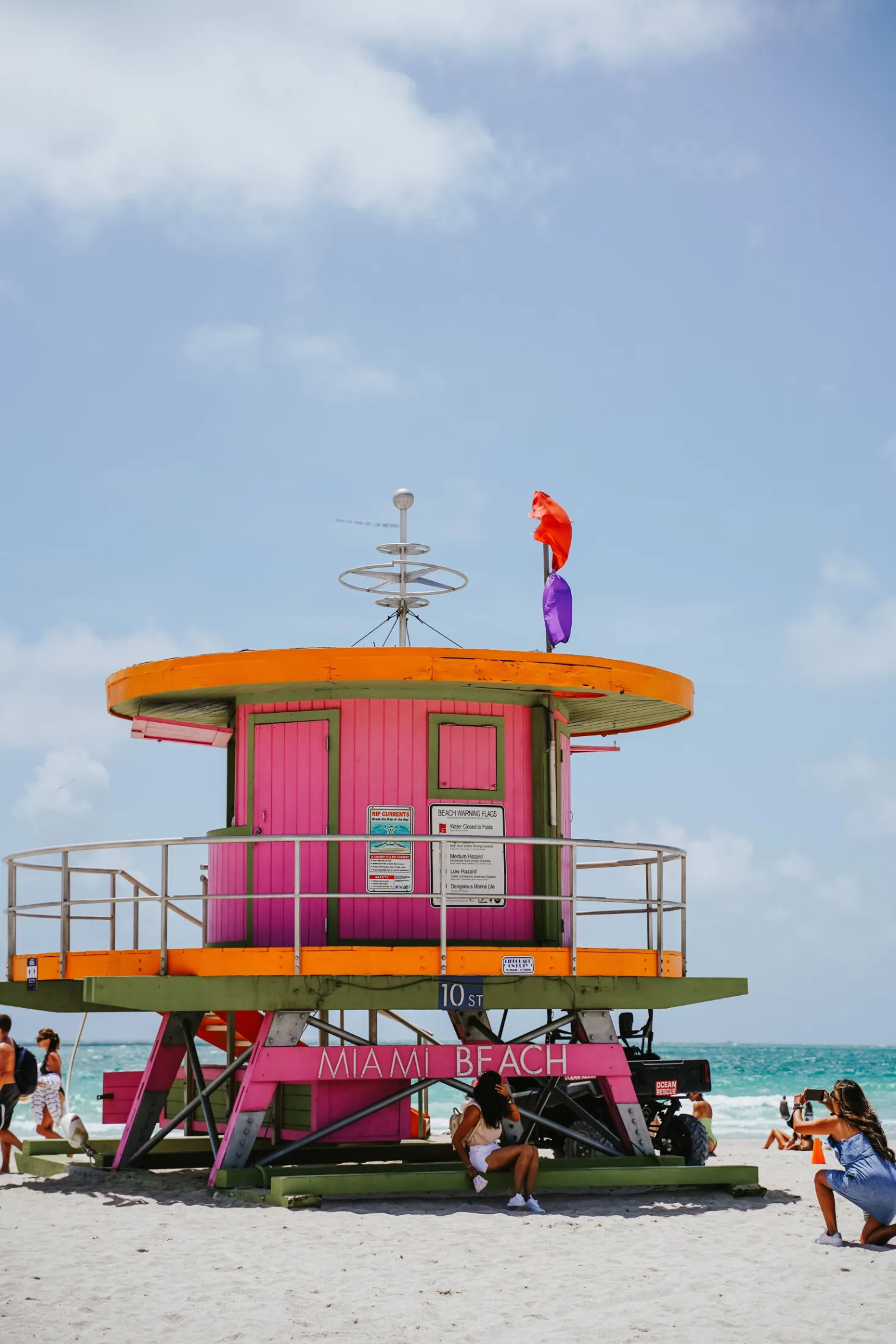
The 10th Street lifeguard stand has been photographed a million times. People pose against the hot pink panels, snap the orange brim against the Atlantic horizon, and post it before the sun moves. What those photos are actually capturing, even when people don't realize it, is Miami's relationship with itself. Bold by design. Unbothered by trend. Confident that the color is right even when everyone else would default to beige.
That's the city built over the last ten years. Not a new city — a sharper version of the one that was always here. More residents who came and decided to stay. More industries that planted flags and stopped treating Miami like a branch office. More neighborhoods that got their own gravitational pull.
Living here used to require a certain tolerance for being misunderstood. That's over. Miami is one of the most discussed, analyzed, relocated-to metro areas in the country right now. The question isn't whether it's worth your attention. The question is whether you're ready for what it actually asks of you — the heat, the hustle, the cost, the beauty, the noise, and the particular kind of aliveness that comes from a city that has finally stopped apologizing for what it is.