
Walking the Brooklyn Bridge, Manhattan Side to Brooklyn Side
A walk over the East River on the promenade of the bridge John A. Roebling designed, from Lower Manhattan to Brooklyn Heights.

Lower Manhattan
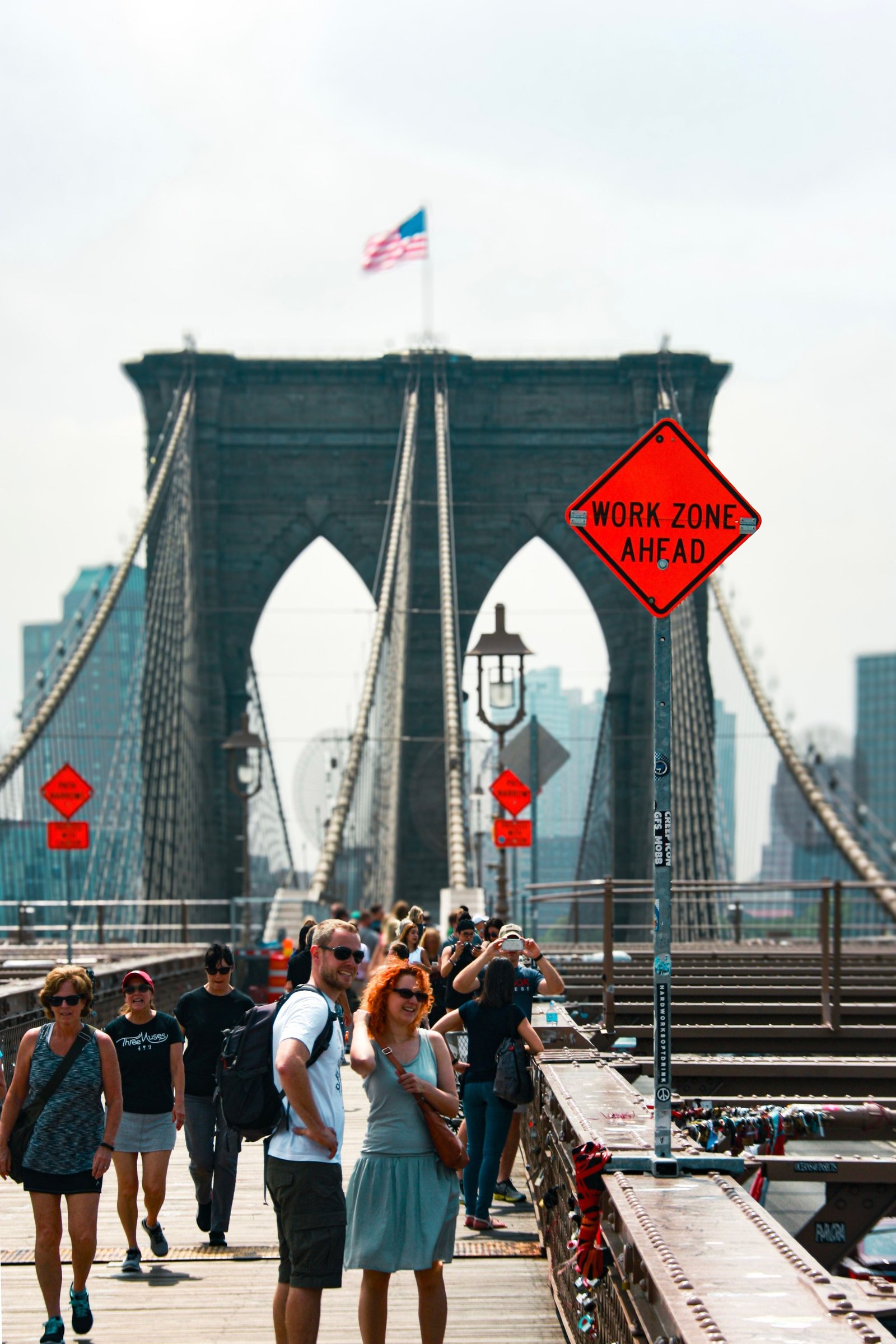
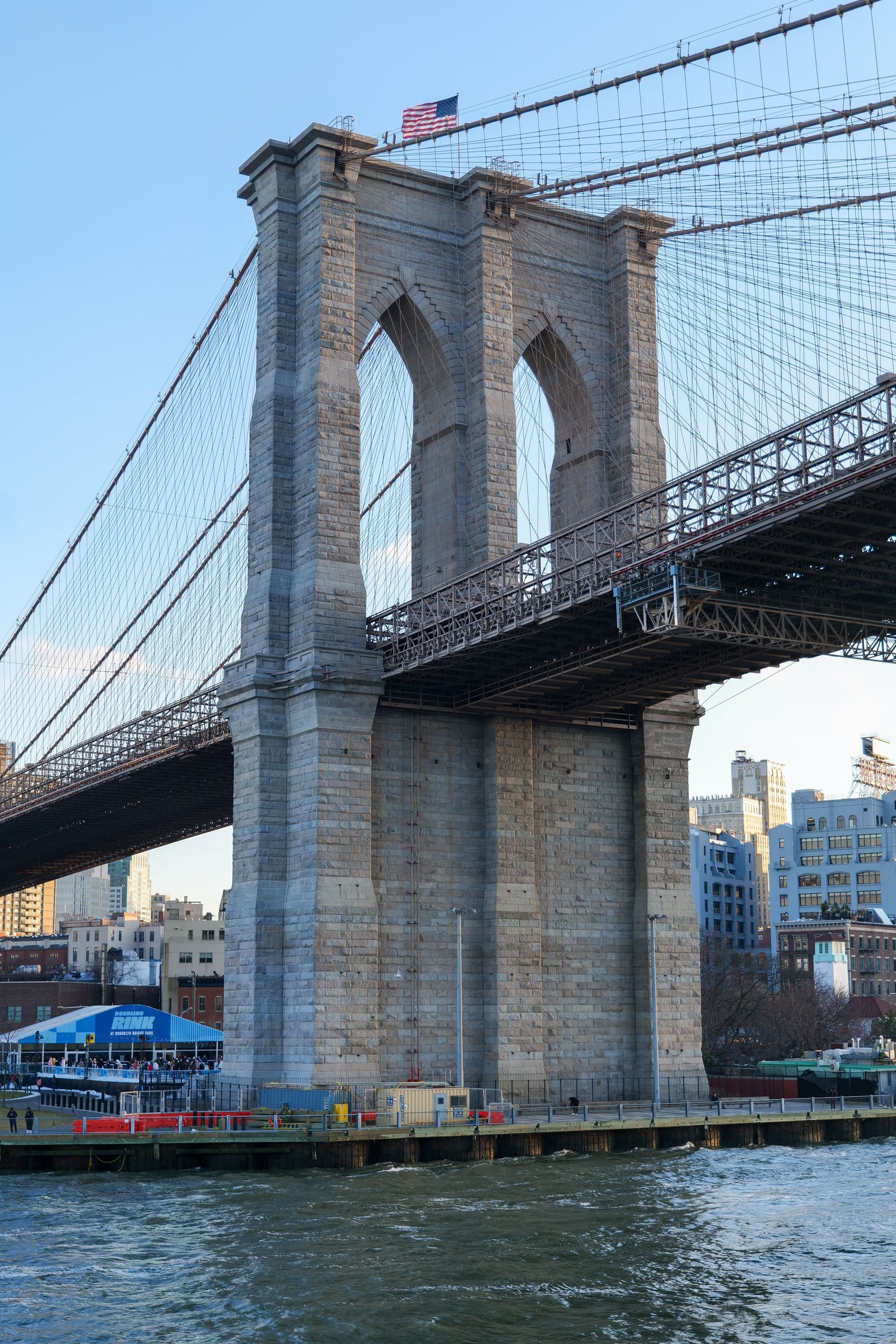
The Brooklyn Bridge links Lower Manhattan with Brooklyn Heights by spanning the East River, and stone arches are what it is known for. Five vehicle lanes run under the promenade, and those lanes do not carry trucks. A protected bicycle path belongs to the bridge as well, so you share the span with cars below you and with bikes in a lane of their own.
The Promenade
On an average day in 2024, 28,845 people walked the bridge, 5,504 people rode bikes, and 103,051 vehicles crossed. Those three numbers are the 2024 daily averages on the bridge you are walking. Since September 2021, cyclists have had a two-way protected bike lane, so the promenade is for walkers. You stay on the walking path while bicycles use that separate lane.
Your path is an elevated promenade through the middle of the bridge. It stands 18 feet over the automobile lanes, and the width generally runs from 10 feet to 17 feet. In May 1954, work on a rebuilt elevated promenade came to an end, which also finished a restoration that had widened both roadways. In 1971 a painted center line separated cyclists from people on foot. That line created a dedicated bike lane and put it among the first in the city.
The East River
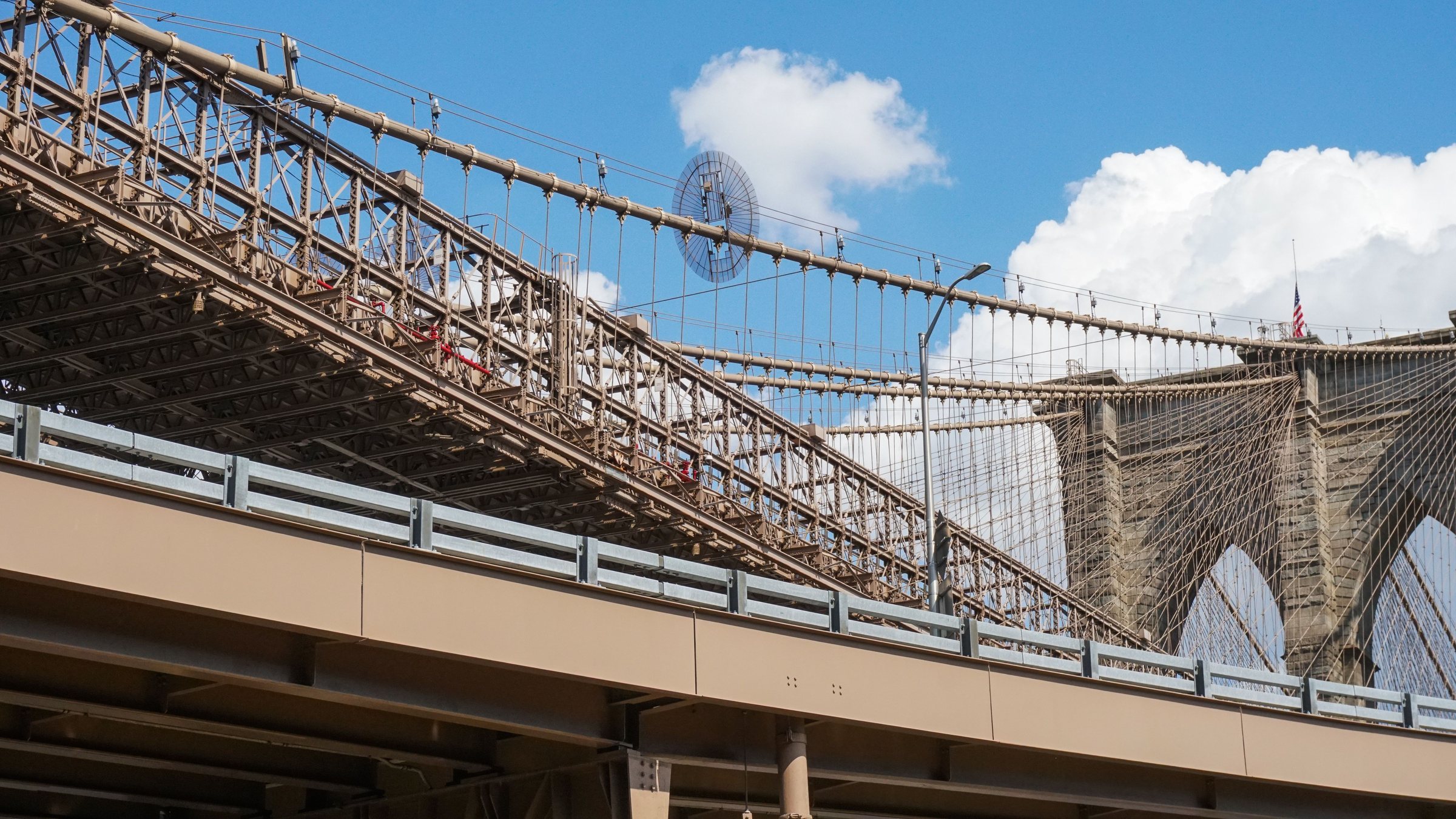
With the approaches included, the length is 6,016 feet. The main span measures 1,595.5 feet, with clearance at the center of 135 feet. Because the span sits high and the shores are low, the bridge reaches well inland on each shore as it slopes down toward ground level.
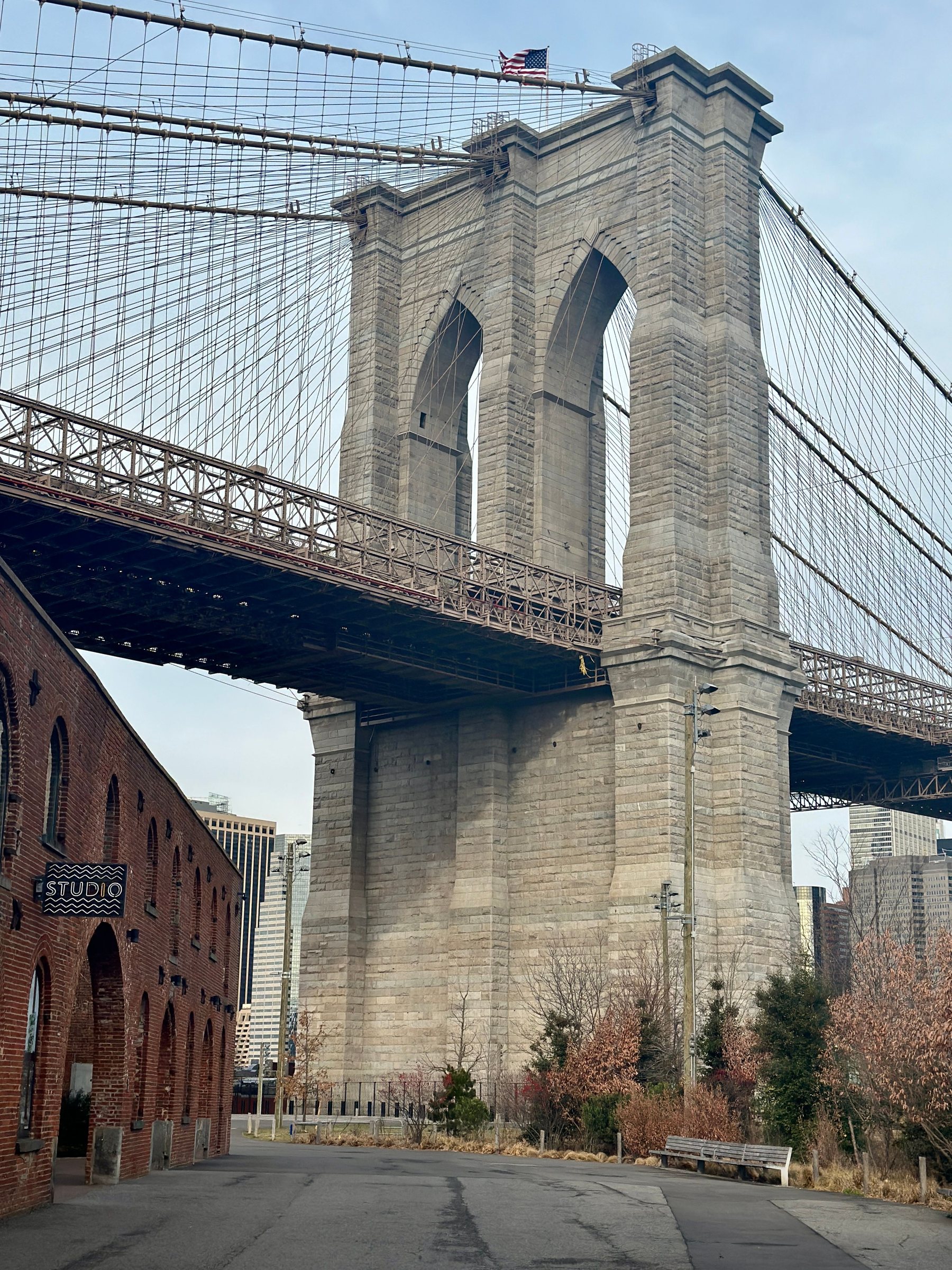
The bridge uses four main cables, each nearly 16 inches in diameter. Limestone, granite, and Rosendale cement make up the two suspension towers. Limestone came from the Clark Quarry in Essex County, New York. Crews quarried the granite and shaped it on Vinalhaven Island in Maine, then schooners brought it to New York. Each anchorage is limestone in a trapezoidal shape, set a little inland from the shore, and each weighs 60,000 short tons.
East River Bridge
John A. Roebling designed the bridge. Engineers who first heard the plan called it visionary and impractical. He had completed several suspension bridges already, and he went forward with the project. In 1869 his foot was crushed during a survey for the bridge. He died three weeks after the injury.
Colonel Washington Roebling, a Civil War veteran and John A. Roebling's son, became chief engineer and built the cables from his father's plans. Work on the Manhattan caisson, deep beneath the East River, left him with caisson disease, also known as decompression sickness. From his apartment he designed the caissons and other equipment, and a telescope in his bedroom let him direct the work that remained. From 1872 until the opening in 1883, Emily Warren Roebling served as surrogate chief engineer. She learned higher mathematics and engineering practice on the job, and she was the link between her husband and the construction crew.
Opening day for the span you walk was May 24, 1883, and the East River then had its first fixed crossing. No suspension bridge elsewhere was longer at the opening. The new span was 20 percent longer than any suspension bridge built earlier, and it remained the longest until the Williamsburg Bridge opened in 1903. Officially, the first person across was Emily Warren Roebling, and a plaque on the bridge honors her. The crossing was first called the New York and Brooklyn Bridge or the East River Bridge, and in 1915 the official name became the Brooklyn Bridge.
In 1964 the bridge became a National Historic Landmark, and in 1967 New York City landmark status covered the bridge and the Manhattan and Brooklyn lots that form the approaches. In 1972 it became a National Historic Civil Engineering Landmark. You are walking a span that holds all three of those titles.
On May 17, 1884, P. T. Barnum's elephant Jumbo headed a parade counted at 21 elephants, and the parade crossed the bridge. For the centennial on May 24, 1983, ships formed a flotilla in the harbor, and Grucci Fireworks presented a fireworks display that evening. The Brooklyn Museum marked the year by showing drawings made for the construction, some of them by Washington Roebling. In 1930, Hart Crane made the bridge the central metaphor of The Bridge, his book of poetry.
Brooklyn Bridge Park
Brooklyn Bridge Park sits on the water once you reach the Brooklyn side. The park stays open seven days a week, from 6 AM to 1 AM, and entry is free. Places to see there include Fulton Ferry Landing, Main Street, John Street, and Pier 1. You will also find Pier 2, Pier 5, and Pier 6 on the list of places to see. Your walk can continue there, coming from Lower Manhattan or heading back. Manhattan to Brooklyn, or the other way around?
Stories, places and events, edited by LIVIN.in.