Balboa Park is a 1,200-acre historic urban cultural park in San Diego. Its site was placed in reserve in 1835, and it is one of the oldest in the United States dedicated to public recreational use. The park hosts various museums, theaters, restaurants, and the San Diego Zoo. Balboa Park hosted the 1915 to 16 Panama-California Exposition and the 1935 to 36 California Pacific International Exposition, and both left architectural landmarks. Many of the park's original trees were planted by the American landscape architect, botanist, plantswoman and gardener Kate Sessions.
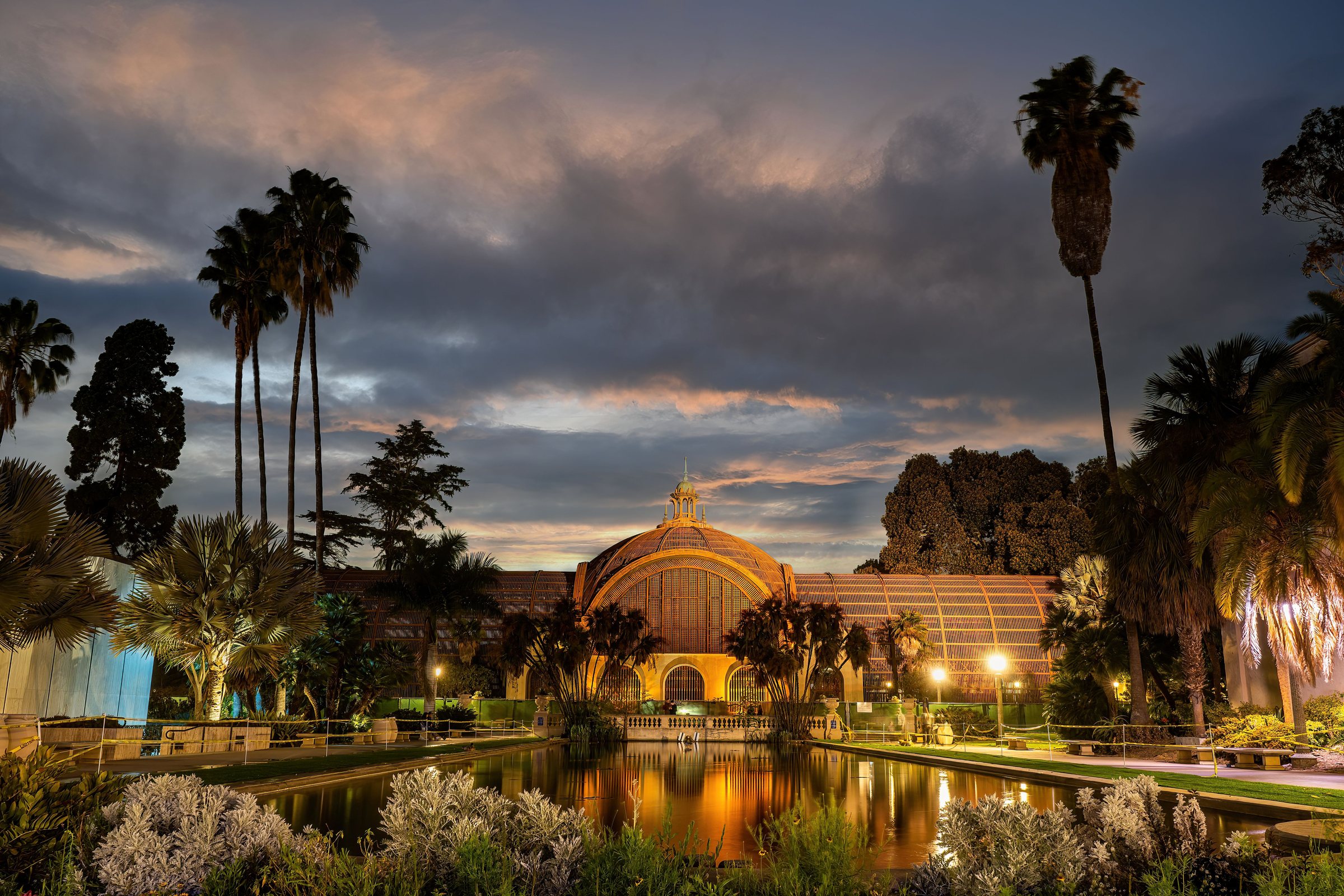
El Prado, a long, wide promenade, runs through the center of the park. Most of the buildings lining El Prado are in the Spanish Colonial Revival style. Other features along El Prado include the Reflection Pond, the latticed Botanical Building and the Bea Evenson Fountain. The Botanical Building, designed by Carleton Winslow, was the largest wood lath structure in the world when it was built in 1915 for the Panama-California Exposition. The Botanical Building contains large specimen palms and other plants, and it sits next to a long reflecting pool. The Botanical Building closed in 2021 for renovations and reopened in December 2024.
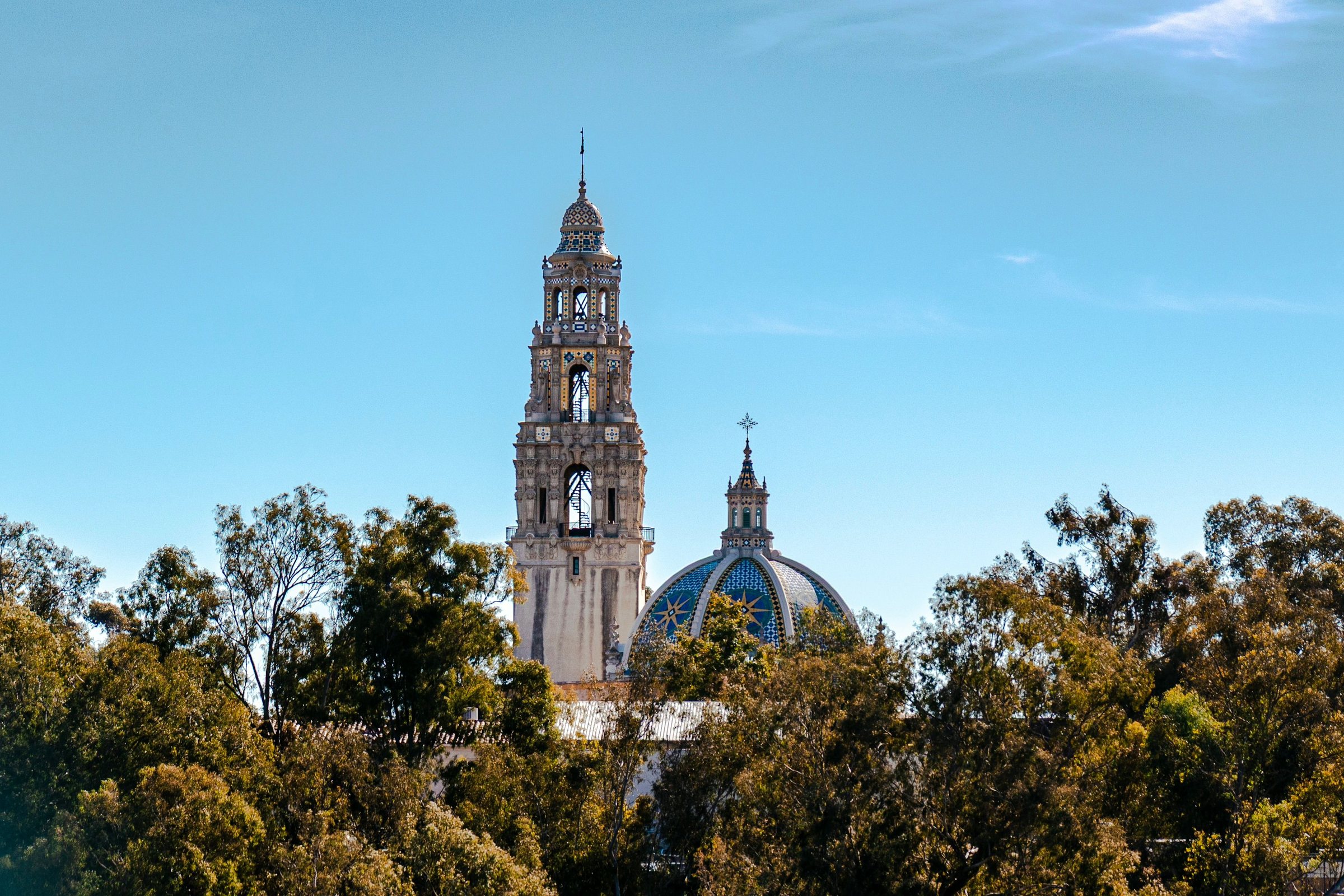
The California Quadrangle, California Building and California Tower were built for the 1915 to 16 exposition and served as the grand entry to the event. Architect Bertram Goodhue designed the buildings and courtyard. The California Building with its ornate facade and blue-and-gold dome, together with the adjoining California Tower, is among the most recognizable landmarks in San Diego. The California Building and the California Tower house the Museum of Us. The Spreckels Organ Pavilion features one of the world's largest outdoor pipe organs. The Old Globe Theatre complex includes a replica of Shakespeare's Globe Theatre, an outdoor stage and a theatre in the round. The Balboa Park Carousel was built in 1910 and has been in the park since 1922. The carousel keeps most of its original equipment, including 52 hand-carved wooden animals and four chariots.
La Jolla Cove is a small cove with a beach surrounded by cliffs in La Jolla, a community of San Diego. La Jolla Cove is popular with snorkelers, swimmers and scuba divers. Some swimmers swim to Scripps Pier and back, totaling 3 miles round trip. The orange Garibaldi fish are unusually common in the cove. The cove is home to many open water swimming events year round, including the Rough Water Swim. While the beach has only a small dry sand area at high tide, during very low tides, tide pools are revealed at the cove.
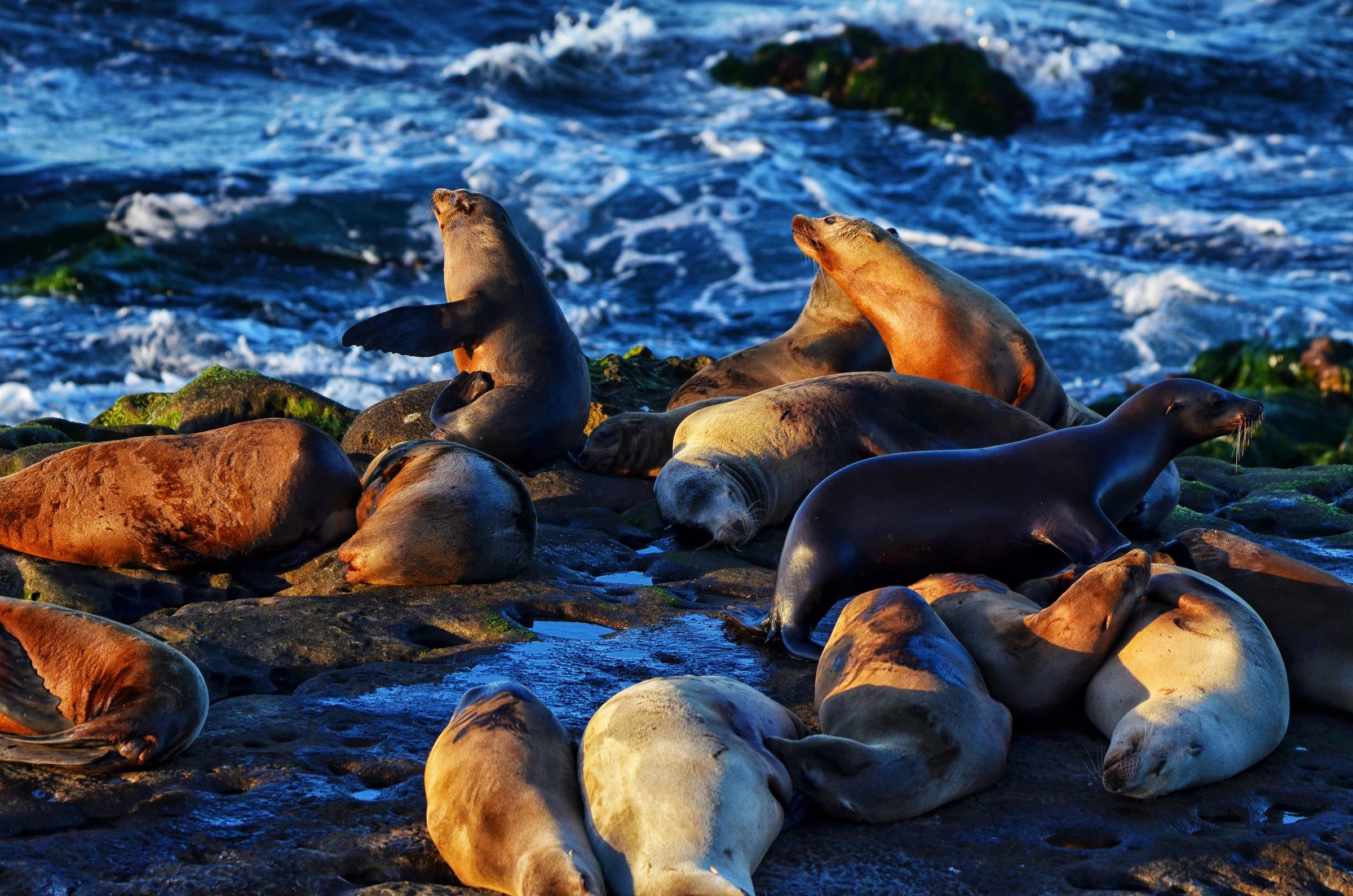
California sea lions can be found in the waters of La Jolla Cove and hauling out to rest on its beaches, cliffs and bluffs. Hundreds of sea lions call La Jolla Cove home, sometimes seen in the deeper water of the cove or basking on rocks. The air throughout the La Jolla Cove area is filled with the odor of sea lion and bird feces. Up on the bluffs above the beach is Scripps Park, a grassy area with trees. The La Jolla sea caves, or the 7 caves of La Jolla, are just north of the cove. Sunny Jim's Sea Cave is a short walk from the cove. Sunny Jim's Sea Cave is reached through The Cave Store, which charges a nominal fee to go down a staircase leading to the cave.
In the 1820s the town of San Diego grew up at the base of the bluff, and the Old Town area remained the heart of the city until the 1860s. Old Town San Diego State Historic Park, in the Old Town neighborhood, includes many historic buildings from the period 1820 to 1870. The park was established in 1968. Five original adobe buildings are part of the complex, which includes shops, restaurants and museums. Other historic buildings include a schoolhouse, a blacksmith shop, San Diego's first newspaper office, a cigar and pipe store, and a stable with a carriage collection. Casa de Estudillo is an 1827 adobe house. The Cosmopolitan Hotel and Restaurant is an 1870 restored hotel, still working as a hotel and restaurant. There is no charge to enter Old Town San Diego State Historic Park or any of its museums. Living history demonstrations and free tours are regularly scheduled. There are also stores, with local artisans demonstrating their craft.
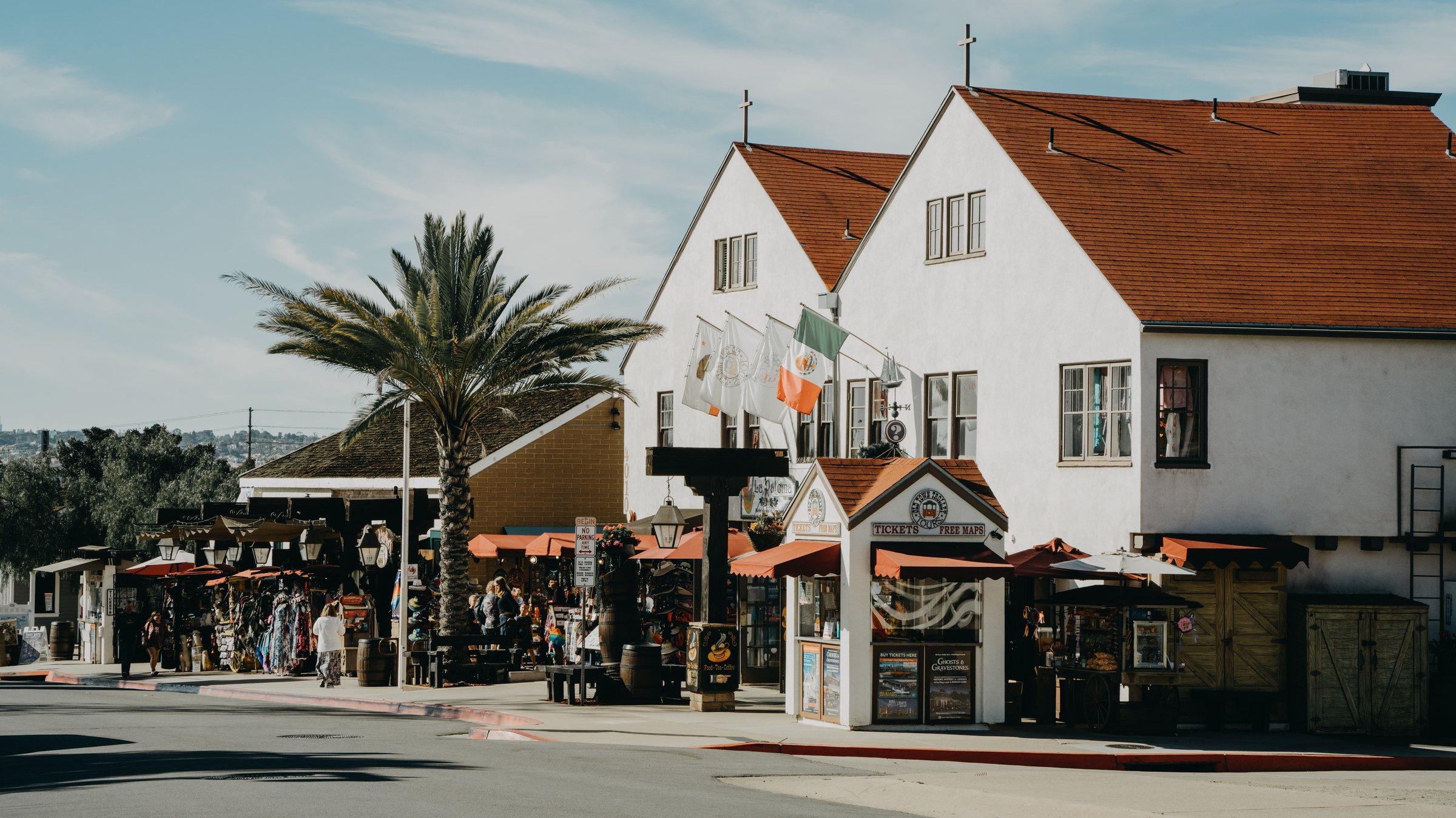
Hungry? The Old Town area is a popular tourist destination, known especially for its Mexican restaurants. Fish tacos originated in Baja California in Mexico, where they consist of grilled or fried fish, lettuce or cabbage, pico de gallo, and a sour cream or citrus and mayonnaise sauce on a corn or flour tortilla. In California, fish tacos are often found at street vendors, and a regional variation is to serve them with cabbage and coleslaw dressing on top.

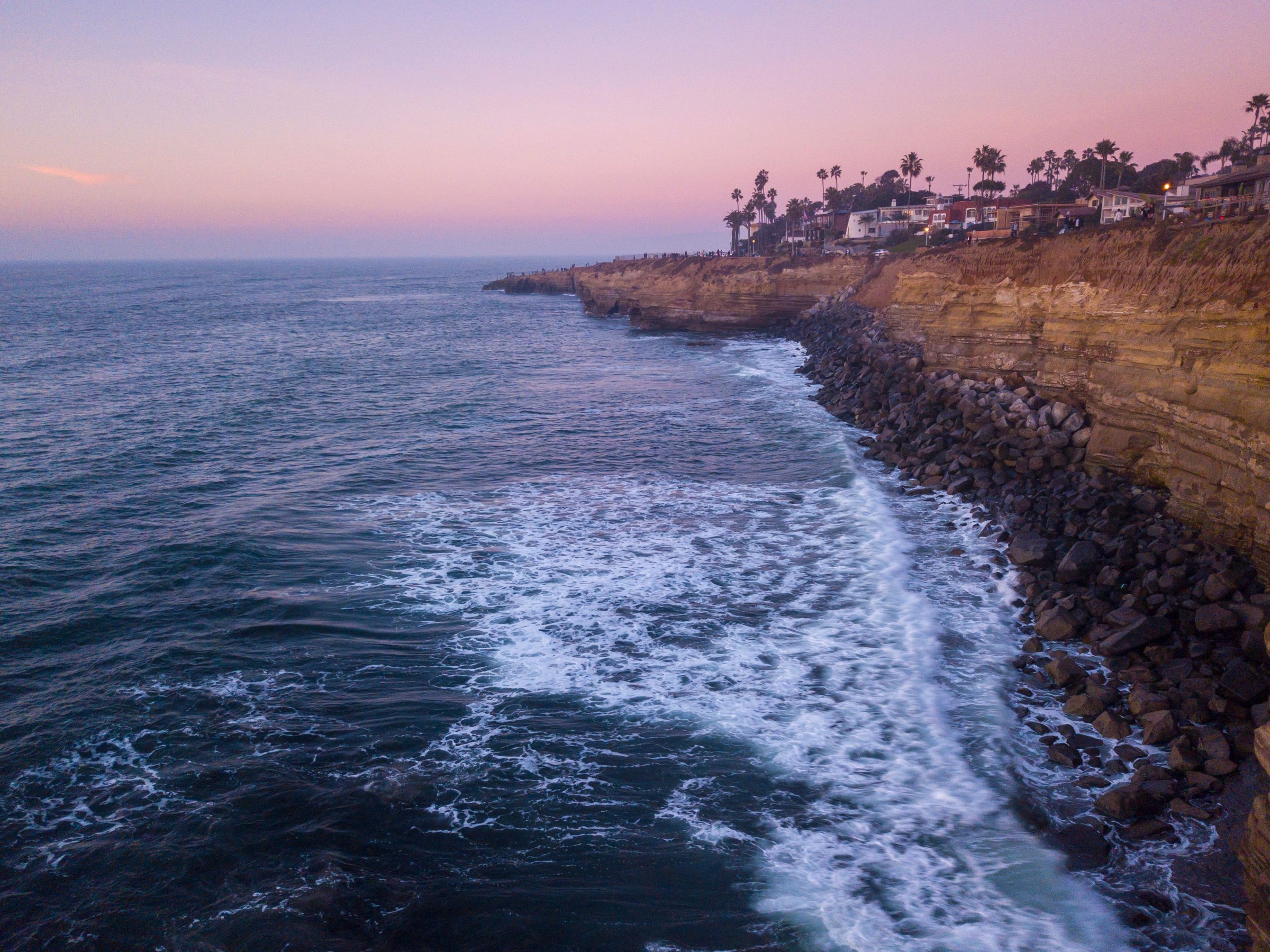
The Sunset Cliffs area, in the Point Loma community of San Diego, is named for the sheer cliffs which border the ocean. There are surfing spots below the cliffs. The cliffside trails are popular for walking and for watching the sunset, but they are undeveloped and can be dangerous. Sunset Cliffs Natural Park is a 68-acre park adjacent to the Pacific Ocean on the western edge of Point Loma. The park includes carved coastal bluffs, arches and sea caves. From the cliffs, the California gray whale can be seen migrating annually from the Bering Sea to Baja California. The Luscomb Point area, at the end of Hill Street, is named after Happy Luscomb, a local resident who often surfed the area. Where You LIVE.