
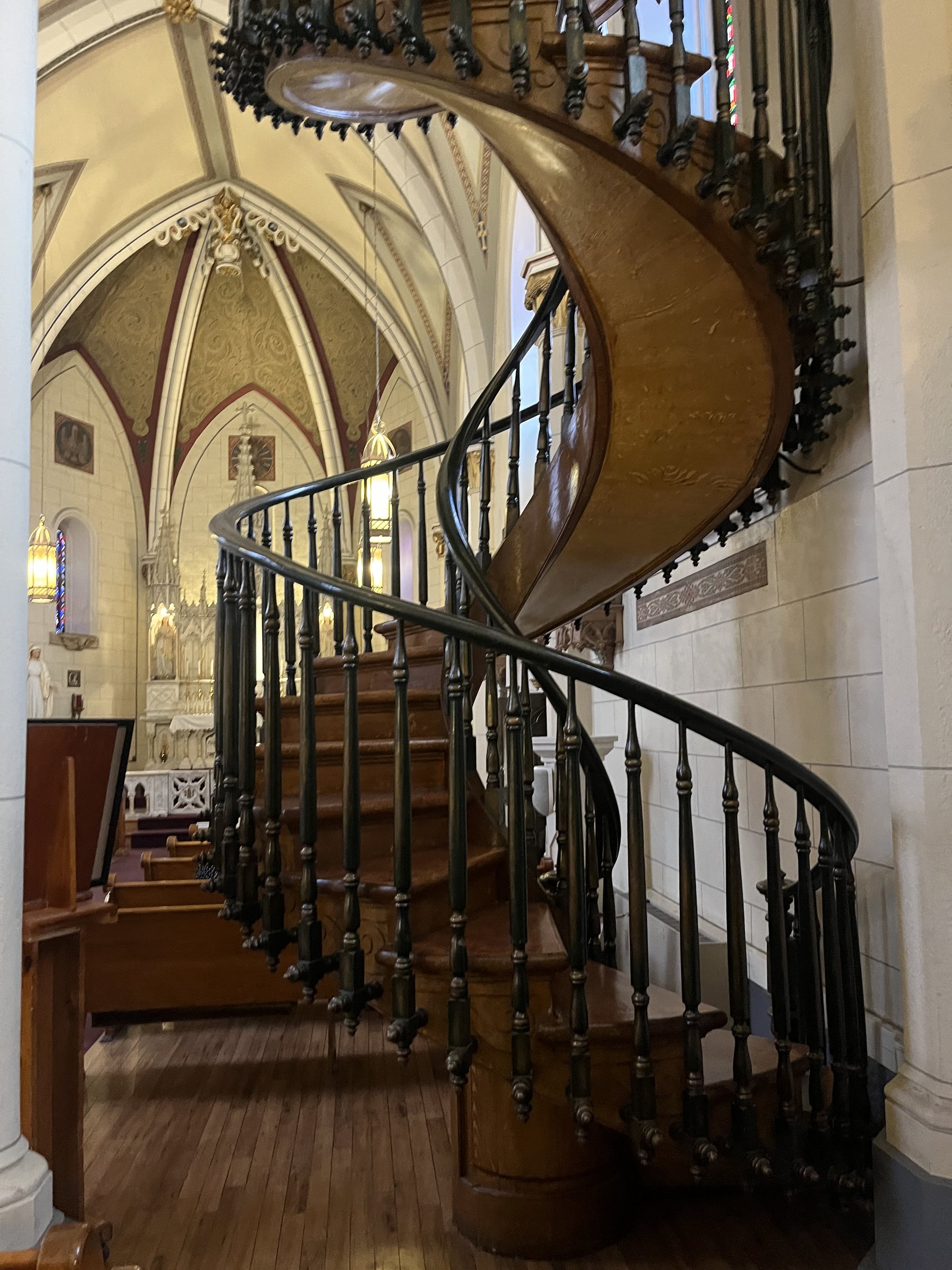
The Loretto Chapel is a former Roman Catholic church in Santa Fe, New Mexico, that is now a privately owned museum and a wedding chapel. The Loretto Chapel is known for its helix-shaped spiral staircase, nicknamed the Miraculous Stair. The Loretto staircase rises 20 feet to the choir loft while making two full turns, without the support of a newel or central pole. Loretto Chapel says it attracts people from all over the world who want to find out more about its miraculous staircase.
A chapel modeled on Paris
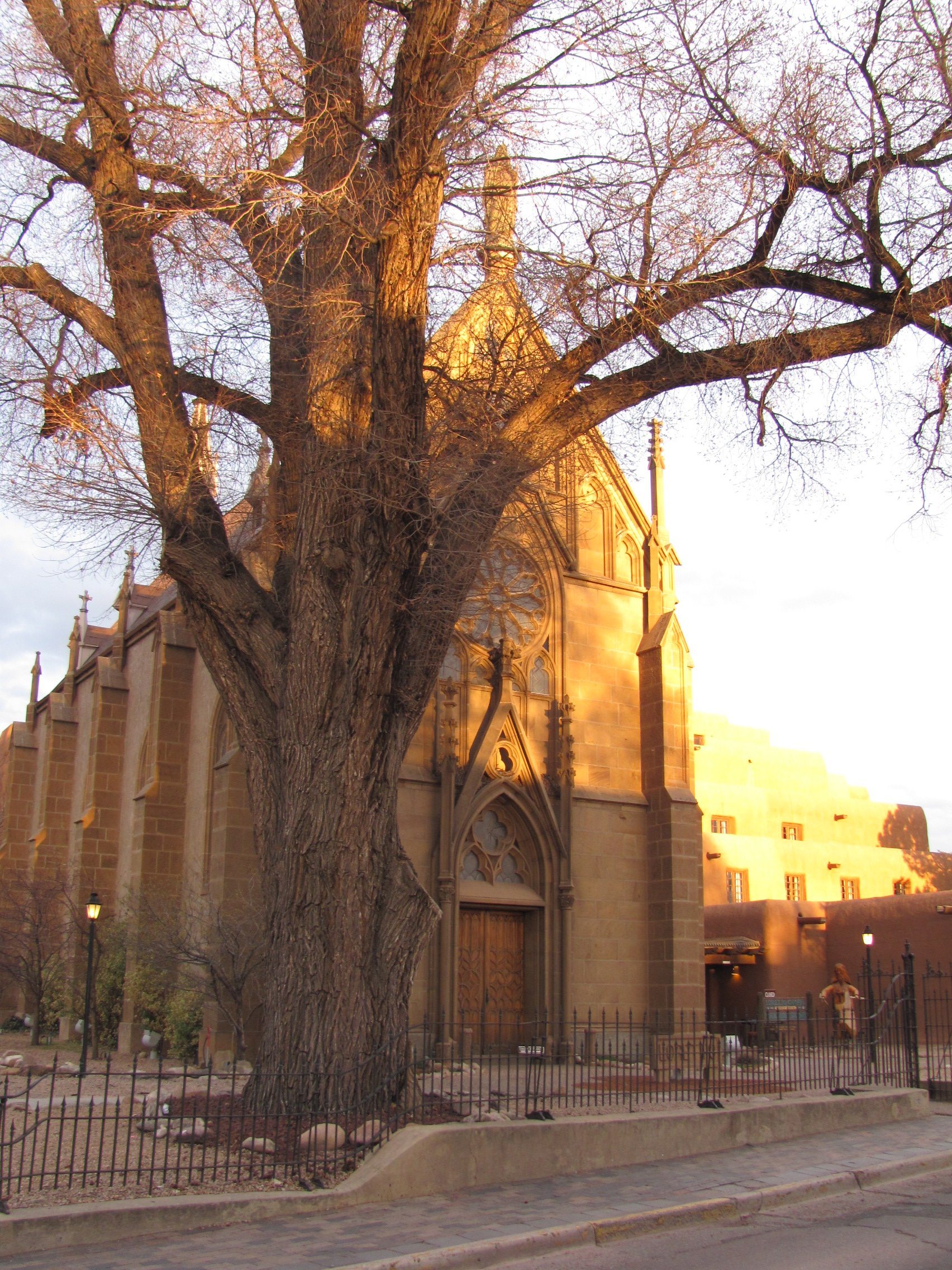
The chapel was commissioned by the Sisters of Loretto for their girls' school, Loretto Academy, in 1873. Archbishop Jean-Baptiste Lamy had brought in two French architects, Antoine Mouly and his son Projectus, to work on the Saint Francis Cathedral project. Lamy suggested the Sisters could use the Moulys' services on the side to build a chapel for the academy.
Projectus Mouly was the main architect, basing his Gothic Revival design on the Sainte-Chapelle in Paris. The Gothic Revival design includes spires, buttresses, and stained glass windows imported from France via the Santa Fe Trail. The chapel was built from locally quarried sandstone and took five years to complete, and was consecrated in 1878. In a city known for Pueblo Revival architecture, the Loretto Chapel is a reminder of the many influences that shaped Santa Fe.
The staircase and its story
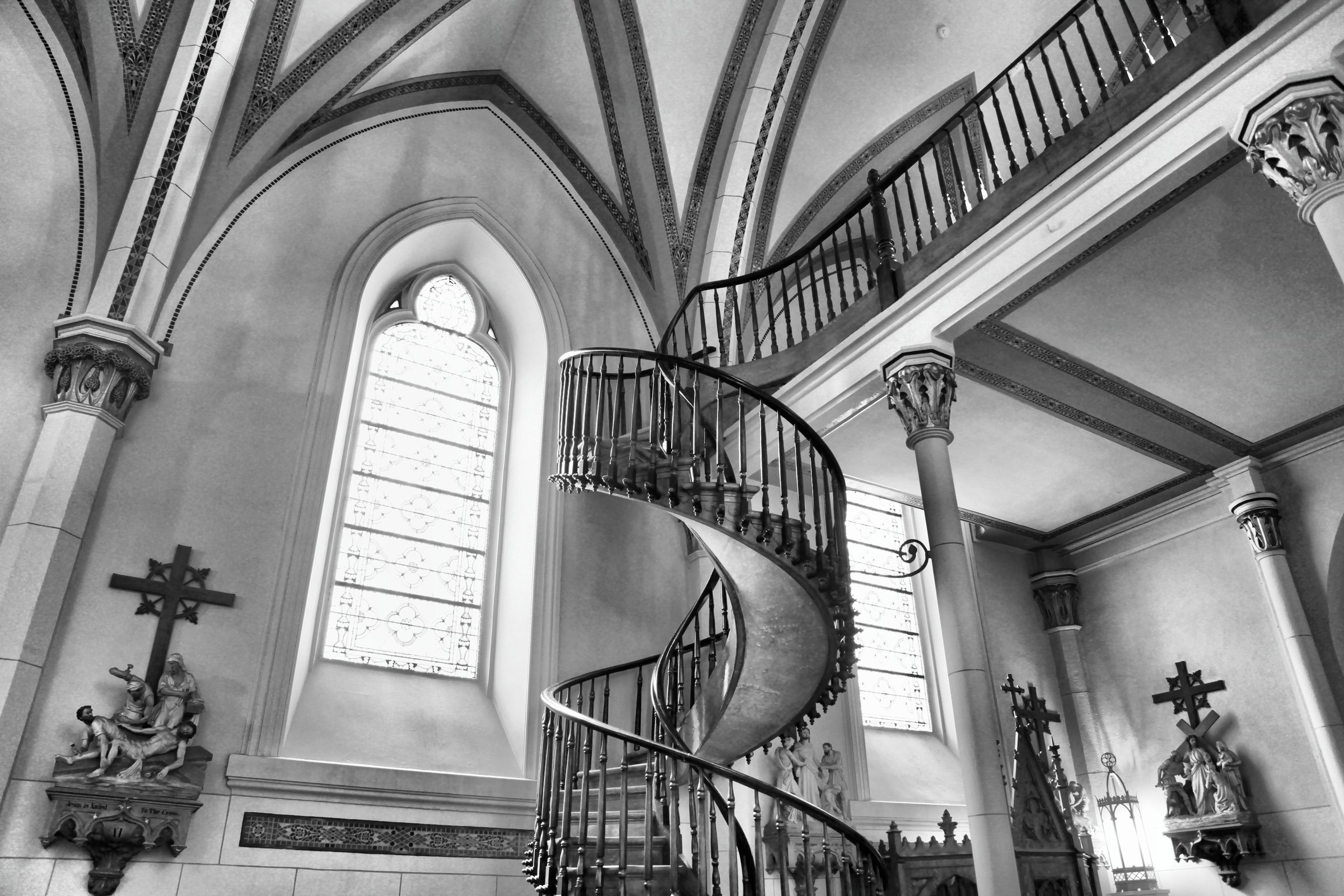
The staircase was built sometime between 1877 and 1881. The chapel lacked access to the choir loft, possibly due to the death of the architect, Projectus Mouly, in 1879. According to the Sisters of Loretto, the nuns prayed for nine straight days to Saint Joseph, the patron saint of carpenters. In the Sisters' story, on the last day of the novena a mysterious stranger offered to build the staircase, worked alone with a few simple hand tools, and disappeared without collecting his pay.
The staircase is built mostly out of wood and is held together by wooden pegs. The staircase has 33 stairs. The inner stringer of the staircase has seven wooden segments joined with pegs, while the longer outer stringer has nine segments. The staircase wood has been confirmed to be a type of spruce that is probably not native to New Mexico. The staircase is supported by its stringers like a conventional staircase, but each stringer is twisted into a helix. The use of wooden pegs rather than nails in the staircase prevents degradation of the joints as the wood swells and shrinks with humidity and temperature.
The staircase as originally built lacked handrails and was reportedly so frightening to descend that some of the nuns and students did so on their hands and knees. The handrails were added in 1887 by another craftsman, Phillip August Hesch. An iron support bracket was added to the staircase in 1887, at the same time as the railings. Users of the staircase reported a certain amount of springiness even after the 1887 bracket was added. A photo taken around 1959 shows at least 20 choir members posing on the steps.
Who built it?
In the early 2000s, amateur historian Mary Jean Cook named François-Jean Rochas, a French carpenter, as the probable builder of the staircase. An 1895 newspaper notice of Rochas's death said he built the handsome staircase in the Loretto chapel. Cook found an entry in the Sisters' logbook stating that Rochas had been paid $150 for wood in 1881. At the time of his death, Rochas reportedly owned an extensive set of carpentry tools, including five saws, nine planes and nineteen moulding planes. Others have disputed Cook's theory about Rochas.
A professional carpenter interviewed for the 2014 book Mysterious New Mexico said of the staircase: "The execution is just incredible." Another spiral staircase without a center support is at the Old Washoe Club in Virginia City, Nevada, and also dates to the 1870s.
From school chapel to museum
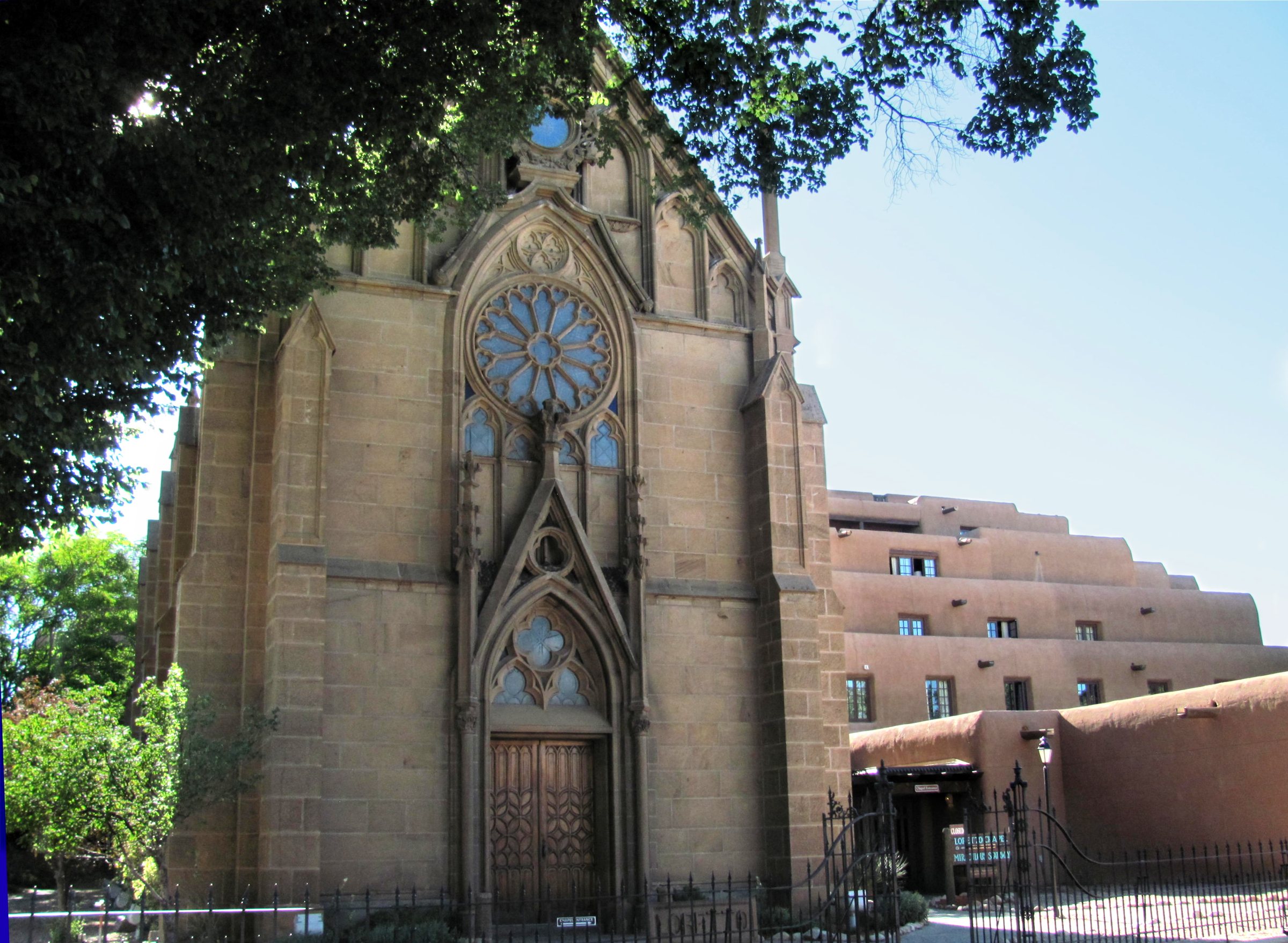
Loretto Academy was founded in 1853 and operated until 1968. Loretto Chapel was used daily by the students and nuns of Loretto Academy until the school closed in 1968. After Loretto Academy closed, Saint Michael's High School, previously all-male, turned co-ed to accommodate the Academy's female students. After 1968 the chapel became a privately owned museum and wedding venue, while the rest of the Academy campus was demolished. The stairs have been mostly closed to the public since the chapel became a privately run museum.
The Loretto staircase was the subject of the Unsolved Mysteries episode Miracle Staircase in 1990. The staircase story was the subject of the television film The Staircase in 1998, starring Barbara Hershey and William Petersen. Young-adult author Ann Rinaldi based her 2000 book The Staircase on the Loretto Chapel.
Visiting
The Loretto Chapel is at 207 Old Santa Fe Trail, Santa Fe. Loretto Chapel lists its hours as 9:30 AM to 4:30 PM every day of the week. The Loretto Chapel is also called the Chapel of Our Lady of Light. The Loretto Chapel is a historic site on the Santa Fe National Historic Trail, El Camino Real de Tierra Adentro National Historic Trail, and the Old Spanish National Historic Trail.
Where You LIVE.