
Great Smoky Mountains National Park in North Carolina and Tennessee has been the most-visited park since 1944, and it had over 12 million visitors in 2024. In 2025 it had 11,527,939 recreation visitors. Zion had 4,984,525 recreation visitors in 2025. Yellowstone had 4,762,988 recreation visitors in 2025. Grand Canyon had 4,430,653 recreation visitors in 2025. Yosemite had 4,278,413 recreation visitors in 2025. Rocky Mountain had 4,171,431 recreation visitors in 2025.
We ranked the parks by how many people came to each one in 2025, using its recreation visitor count. The five busiest made the list, in that order, and nothing else counted.
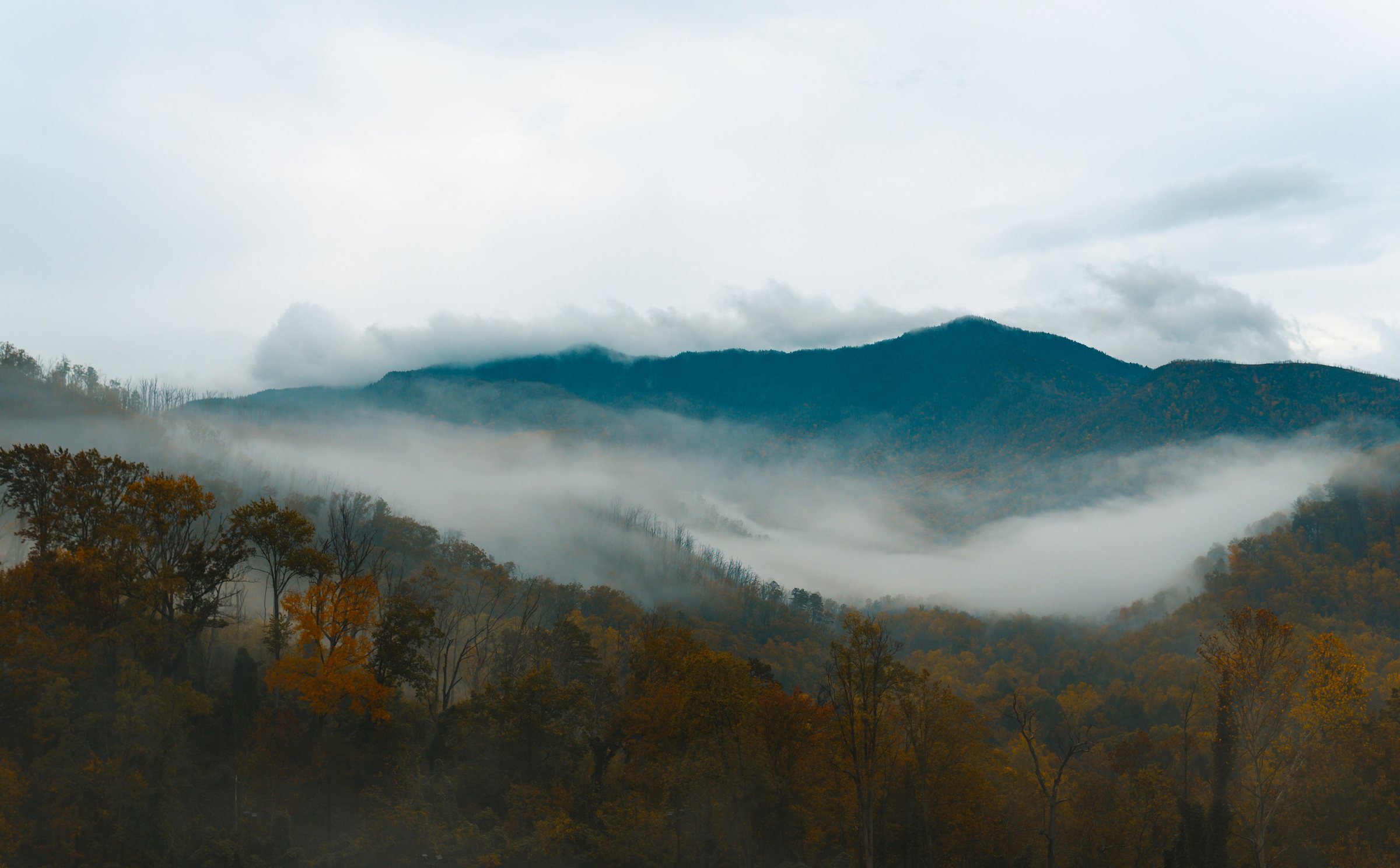
Great Smoky Mountains National Park straddles the ridgeline of the Great Smoky Mountains, part of the Blue Ridge Mountains and part of the Appalachian temperate rainforest. The Great Smoky Mountains span a wide range of elevations, making them home to over 400 vertebrate species, 100 tree species, and 5,000 plant species. Hiking is the main attraction in Great Smoky Mountains National Park, with over 800 miles of trails, including 70 miles of the Appalachian Trail. Other activities in the park include fishing, horseback riding, and touring nearly 80 historic structures. The most frequented destination in the park is Cades Cove, a cleared valley that provides dramatic views of the surrounding mountains. An 11-mile one-way loop road encircles Cades Cove, which has numerous preserved historic buildings including log cabins, barns, and churches. Great Smoky Mountains National Park has three main entrances, located in Gatlinburg, Cherokee, and Townsend. Black bears are the animals most commonly associated with the park, and an estimated 1,900 of them reside there, although the exact figure is variable. From late May to early June, the Elkmont area of the park hosts the peak display period for synchronous fireflies, one of at least 19 species of fireflies that live in the park.
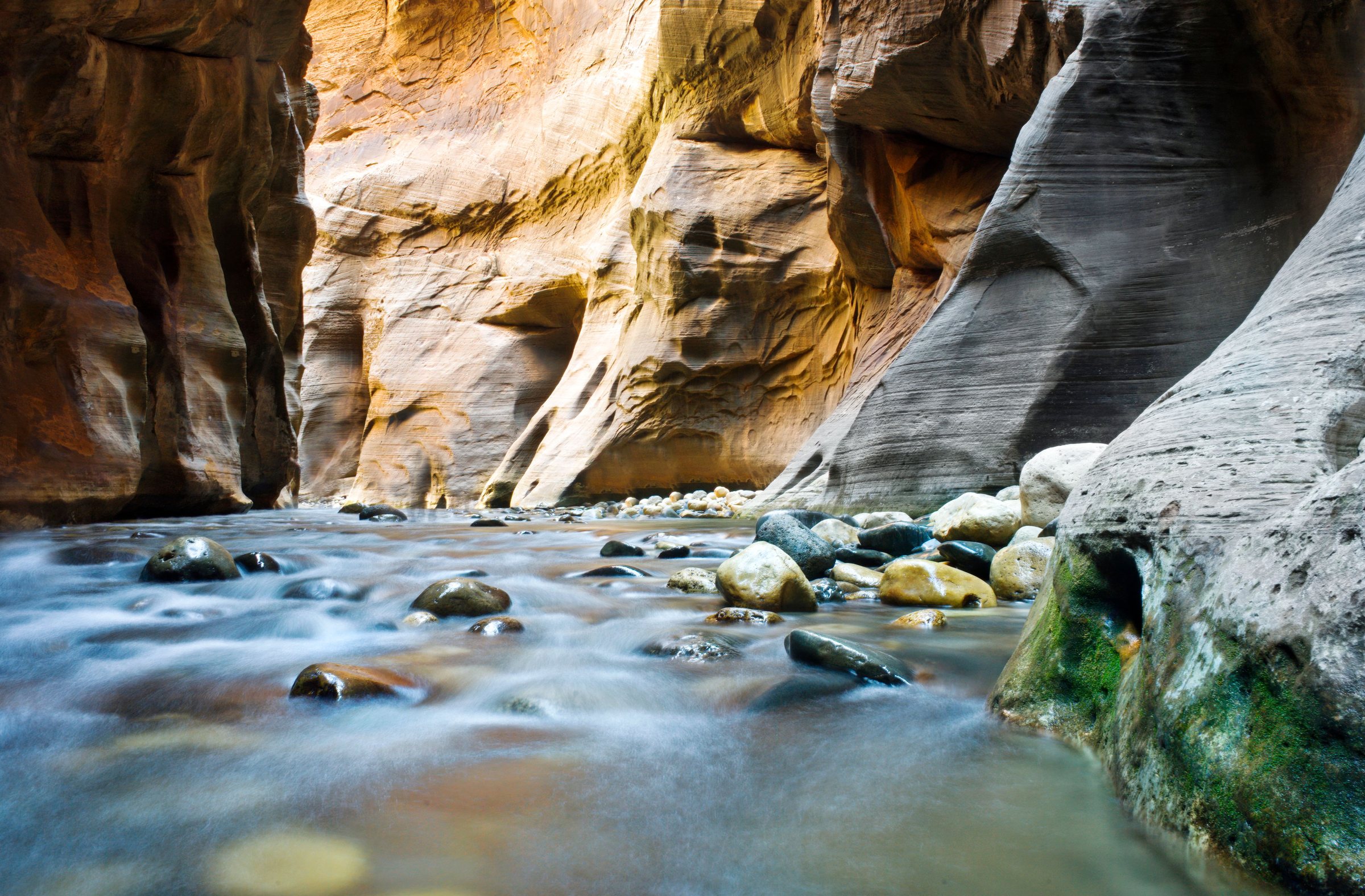
Zion National Park is located in southwestern Utah near the town of Springdale. A prominent feature of the 229-square-mile park is Zion Canyon, which is 15 miles long. A hiking trail continues to the mouth of The Narrows, a gorge only 20 feet wide and up to 2,000 feet tall. Other notable geographic features of Zion Canyon include Angels Landing, The Great White Throne, the Court of the Patriarchs, The Sentinel, The West Temple, Towers of the Virgin, the Altar of Sacrifice, The Watchman, Weeping Rock, and the Emerald Pools. Seven trails with round-trip times of half an hour (Weeping Rock) to 4 hours (Angels Landing) are found in Zion Canyon. The northern part of Zion National Park is known as the Kolob Canyons section and is accessible from Interstate 15, exit 40. Numerous plant species as well as 289 species of birds, 75 mammals, including 19 species of bat, and 32 reptiles inhabit Zion's four life zones: desert, riparian, woodland, and coniferous forest.
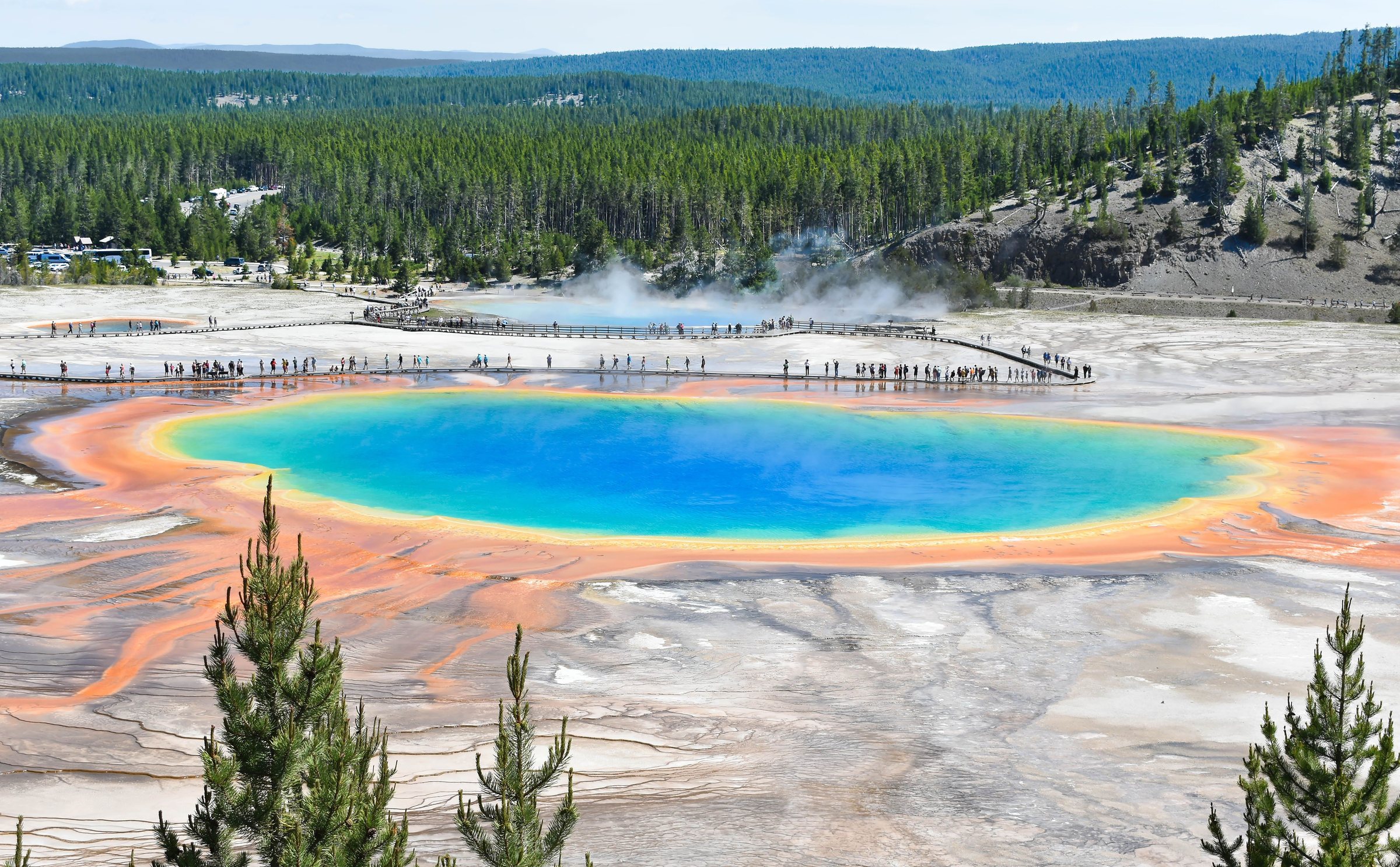
Yellowstone National Park is located mainly in the northwest corner of Wyoming, with small portions extending into Montana and Idaho. Yellowstone was the first national park in the US, and is also widely understood to be the first national park in the world. Yellowstone National Park is inhabited by grizzly bears, cougars, wolves, and free-ranging herds of bison and elk. Yellowstone National Park is known for its wildlife and its many geothermal features, especially the Old Faithful geyser. The most famous geyser in Yellowstone is Old Faithful, located in Upper Geyser Basin, and Old Faithful Inn, constructed in 1904, serves Yellowstone. Situated on the Yellowstone Caldera, Yellowstone has an expansive network of geothermal areas including boiling mud pots, vividly colored hot springs such as Grand Prismatic Spring, and regularly erupting geysers. The yellow-hued Grand Canyon of the Yellowstone River contains several high waterfalls, and four mountain ranges traverse the park. Yellowstone Lake is one of the largest high-elevation lakes in North America and covers part of the Yellowstone Caldera, the largest super volcano on the continent. More than 60 mammal species live in Yellowstone, including timber wolves, grizzly bears, black bears, lynxes, bison, and elk.
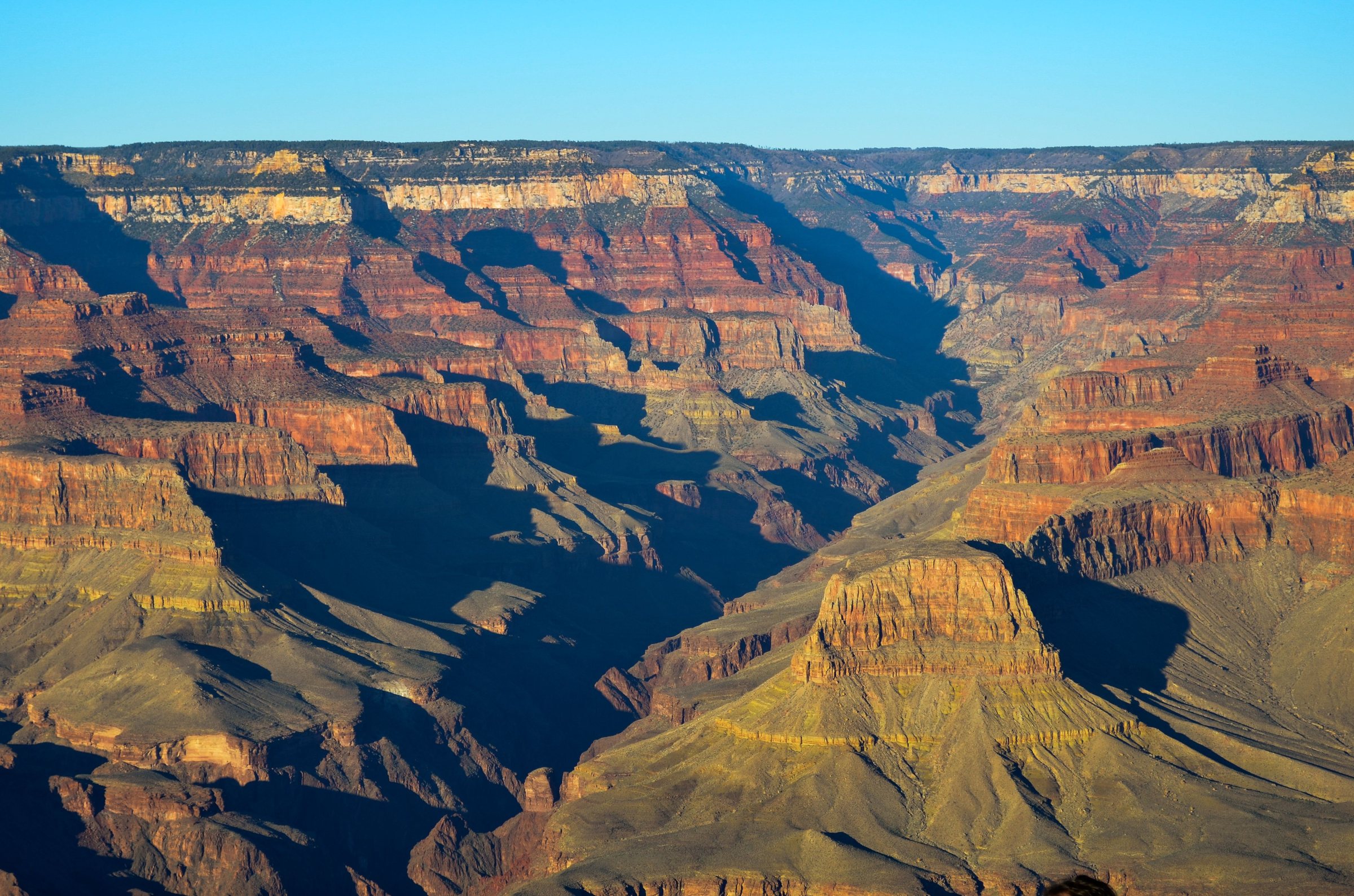
Grand Canyon National Park is located in northwestern Arizona. The park's central feature is the Grand Canyon, a gorge of the Colorado River, which is often considered one of the Wonders of the World. The Grand Canyon is 277 miles long, up to 1 mile deep, and up to 15 miles wide. The multicolored layers of the Colorado Plateau are visible in mesas and canyon walls from trails that descend into the canyon from the north and south rims. The South Rim is more accessible than the North Rim and accounts for 90% of park visitation. Hotels and other lodging at Grand Canyon include El Tovar, Bright Angel Lodge, Kachina Lodge, Thunderbird Lodge, and Maswik Lodge, all in Grand Canyon Village, and Phantom Ranch, located on the canyon floor. Bright Angel Lodge was built of logs and stone in 1935. Desert View Watchtower at Grand Canyon was built in 1932.
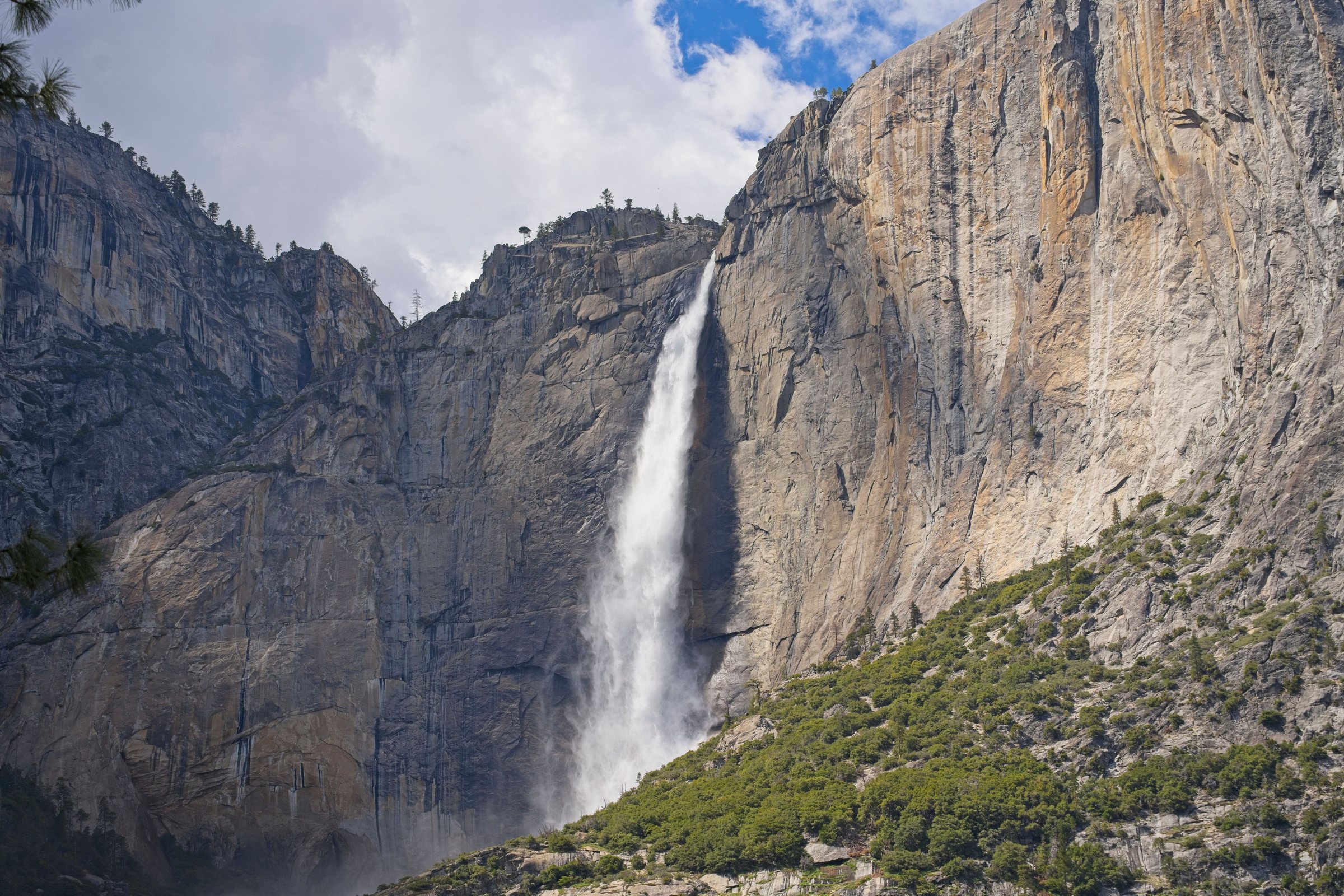
Yosemite National Park is in California, and it is internationally recognized for its granite cliffs, waterfalls, clear streams, groves of giant sequoia, lakes, mountains, meadows, glaciers, and biological diversity. Almost 95 percent of Yosemite is designated wilderness. Half Dome and El Capitan rise from the park's centerpiece, the glacier-carved Yosemite Valley. From the vertical walls of Yosemite Valley drop Yosemite Falls, one of North America's tallest waterfalls at 2,425 feet high. Three giant sequoia groves, along with a pristine wilderness in the Sierra Nevada, are home to a wide variety of rare plant and animal species. Where You LIVE.