
LSU Doesn't Just Define Baton Rouge · It Funds It
Forty-one thousand students, 24,000-plus jobs, and $2.73 billion in annual output: LSU is the economic engine you actually live inside when you choose Baton Rouge.


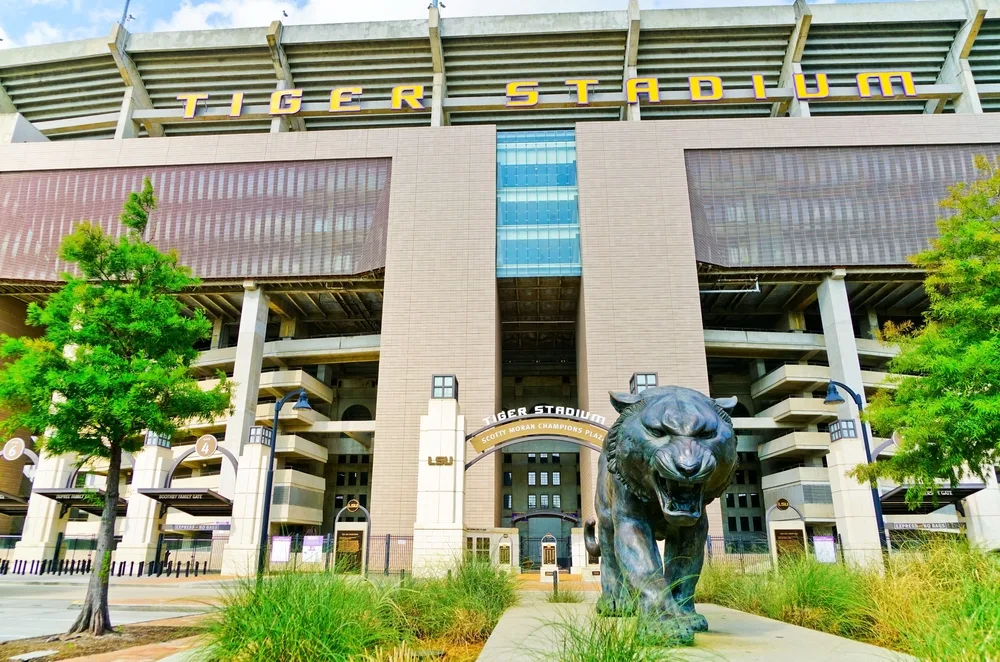
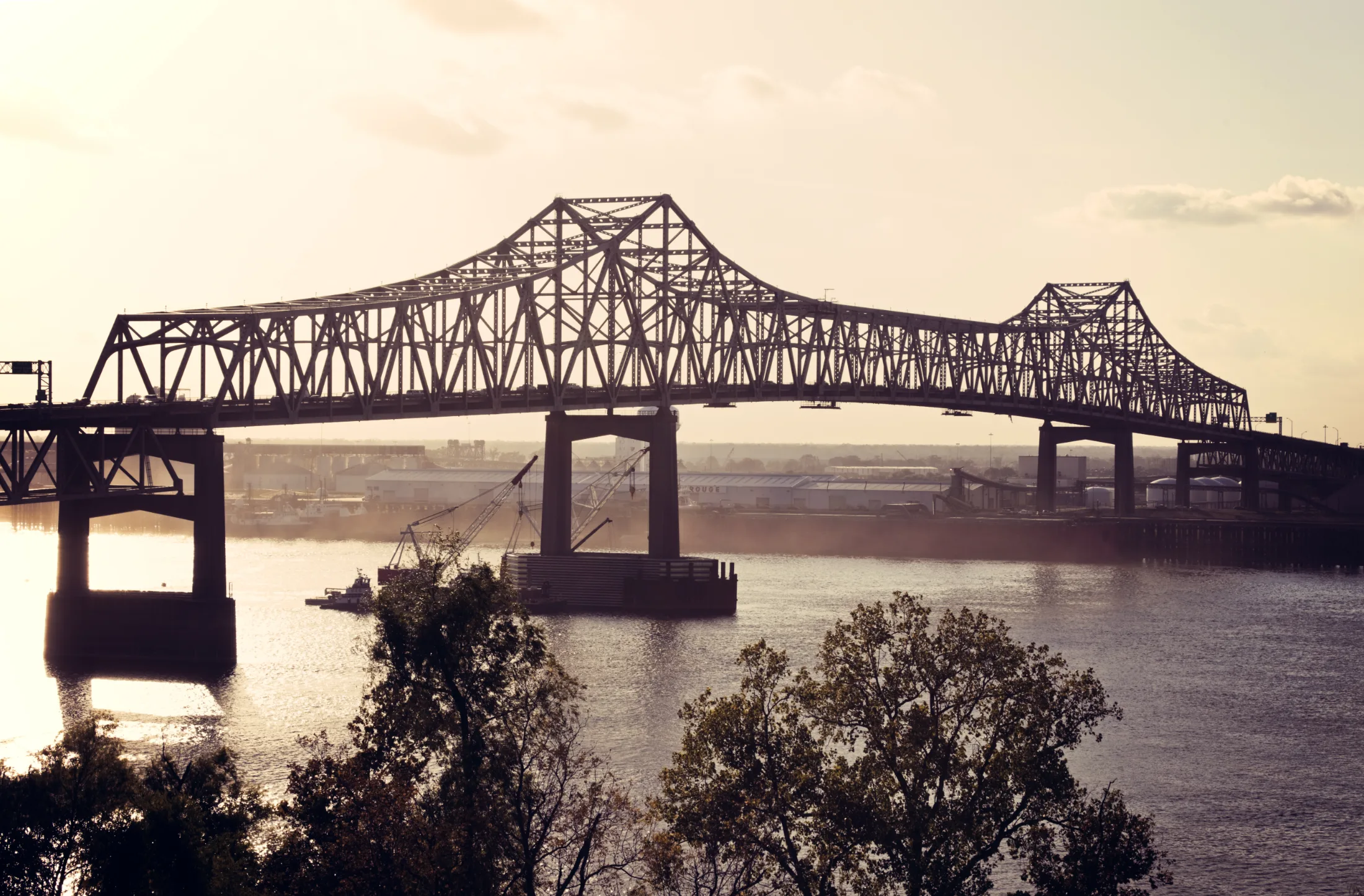
On a Saturday in October, Baton Rouge compresses itself into about three miles. Tiger Stadium pulls nearly a hundred thousand people onto a campus that, from the air, looks like a grid of terracotta rooftops pressed up against a river bend. Walk north from the stadium concourse and the State Capitol tower rises above the treeline, the tallest in the country when it was built, still the most recognizable thing on the skyline. Keep going and you hit the bluff where the Horace Wilkinson Bridge shoulders across the Mississippi, the river wide and brown and indifferent to the tailgate noise behind you. The whole geography of the city, its economy and its identity, lives inside that corridor on a game day. The question worth asking is what that corridor does the other six days of the week.
LSU is not the weekend. It is the reason Baton Rouge has a functional labor market, a research corridor, and a construction pipeline that would keep a mid-sized city busy for a decade. The university is not the backdrop. It is the mechanism.
Start with the number that should recalibrate how you think about this place. In fiscal year 2021–22, LSU's flagship campus generated $2.73 billion in total economic output for Louisiana, supported 24,450 jobs, and produced $970 million in labor earnings. These are not projections, they are the university's own impact figures. Translate them into daily life and you are looking at a city where a meaningful share of the people your plumber knows, your dentist trained alongside, and your neighbors work for or because of a single institution sitting four miles from the river.
LSU is also the largest employer most people in East Baton Rouge Parish will ever have a neighbor at. The university accounts for roughly 13,000 direct parish employees and approximately $700 million in annual parish salary. That payroll moves through Baton Rouge grocery stores and landlords and contractors and pediatric offices in ways the petrochemical corridor along the river does not reach in quite the same daily texture. The university's money is diffuse. It is in the rent checks and the school fundraisers and the Friday lunch tabs.
Then there is the research dimension, which is where the city's next decade is quietly being written. LSU recorded $601 million in research expenditures in fiscal year 2025, with an estimated downstream impact of $1.65 billion. That level of activity generates patents, spin-outs, and the kind of specialized workforce that draws employers outside the oil business. For a city that has historically leaned on petrochemical and government employment, a $601-million research engine is a genuine hedge, and a reason that people with options in Austin or Raleigh are worth a conversation about Baton Rouge.
The enrollment story compounds all of it. Fall 2024 brought 41,707 students to campus, with projections tracking toward 43,000. Those students need housing, and the South Gate–Burbank development pipeline is delivering more than 4,000 new beds to meet that demand, a construction surge reshaping the streets immediately south and west of campus. Sixty-five percent of Louisiana-resident LSU graduates stay in-state after commencement, which means the pipeline from freshman orientation to Baton Rouge career is not a metaphor. It is, statistically, the dominant outcome.
None of that means Baton Rouge is an easy city to land in. From late May through September, the heat is a physical condition that reorganizes your schedule, not local color, a logistical fact. I-10 through the city, and especially the Horace Wilkinson crossing over the Mississippi, backs up in ways that punish anyone without a plan, and there is no quick fix on the horizon. Crime perception in Baton Rouge runs ahead of campus-area reality, but perception shapes decisions, and the city's safety picture varies sharply by zip code. The industrial corridor along the river produces jobs and also, on certain wind directions, an air quality you notice. Know these things before you sign a lease.
Practically: the campus itself runs as two different cities. On a weekday, the red-roofed quads between the parade ground and the lakes operate at a research university's rhythm, the Spanish Revival arcades emptied out enough to hear your own footsteps, the live oaks wide enough to throw real shade. On game day, South Stadium Drive and the surface lots around Tiger Stadium become effectively impassable for anyone without a plan. If you live near campus, that Saturday calendar governs your errands. And the Mississippi, which looks close on every map, sits about a mile and a half north of the stadium's north end zone, at the bottom of the bluff the Capitol stands on. It is not a walk from your car after a game. It is a deliberate trip, and worth making.
A flagship university generating $2.73 billion in annual output, running $601 million in research, keeping 65 percent of its graduates inside the state, and building four thousand new housing units around its edges is not a college town wearing a city's clothing. The river and the Capitol and the terracotta rooftops are the image. The payroll, the patents, and the students who stay are the argument. Whether the argument is good enough is the only question that matters before you move.