
Chicago Chinatown on Foot, Wentworth to the River
Wentworth Avenue's storefronts, the Nine Dragon Wall, the zodiac statues in Chinatown Square and skyline views at Ping Tom Memorial Park.

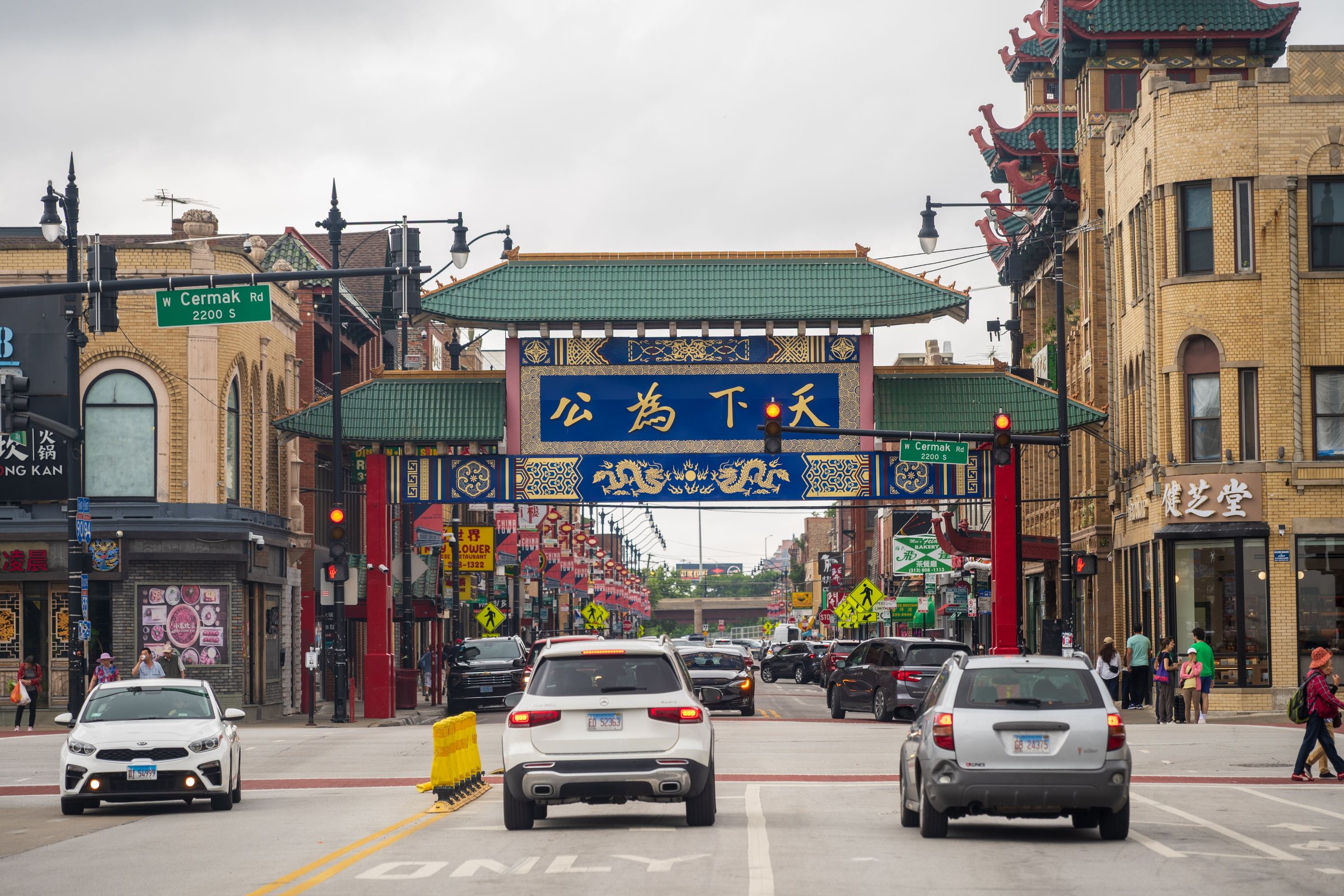
You begin on the main stretch of Chicago's Chinatown, along Cermak Road and Wentworth Avenue. Retail, restaurants, and detailed architecture share those blocks, and the storefronts belong to the same outing. Before this corner held the neighborhood, Chinese residents in Chicago had an earlier address in the Loop. The walk you take now follows the streets that received the businesses when they left that older location.
By the late 1800s, about a quarter of Chicago's roughly 600 Chinese residents lived along Clark Street, between Van Buren and Harrison streets, in the Loop. In February 1912, businesses left Clark Street together and settled at Cermak and Wentworth. The area was proclaimed the New Chinatown. Before 1933, Cermak Road was called 22nd Street, so the road in those early years is the same road you cross under a later name.
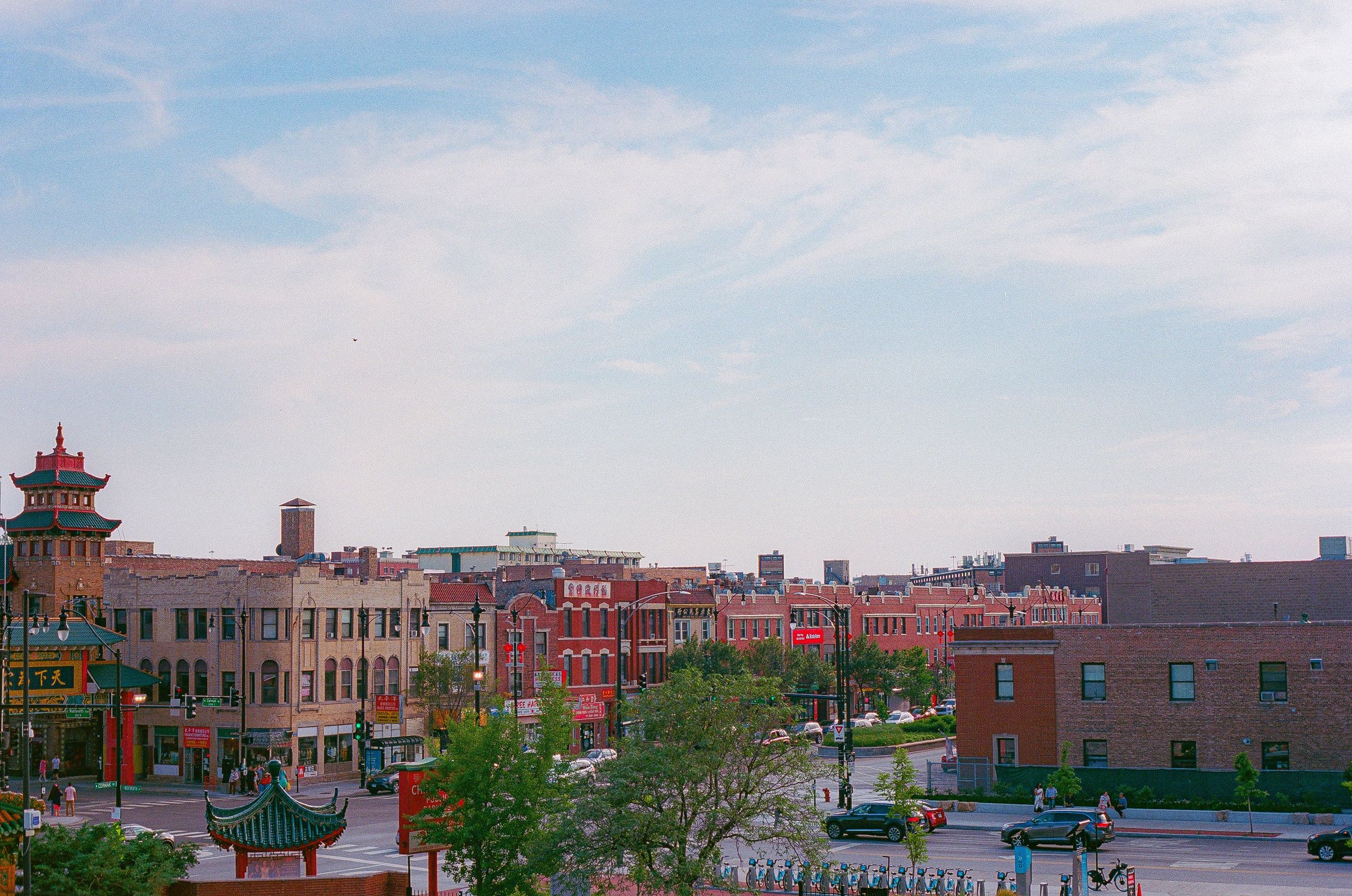
Wentworth Avenue
Storefronts on Wentworth Avenue offer teas, handmade ceramics, beauty products, and jewelry. In early 1927, 22nd Street was widened by as much as 25 feet. Storefronts were moved back, and shops began moving down Wentworth Avenue. Architect Peter Fung designed the Chinatown Gate, completed in 1975, and the gate crosses Wentworth Avenue a little south of Cermak Road.
The Pui Tak Center is the ornately designed building on this stretch. It occupies the On Leong Merchants Association Building at Wentworth and 22nd Place. Construction ran from 1926 to 1928. The building was completed in 1928 and opened in 1928. Norwegian American architects Christian S. Michaelsen and Sigurd A. Rognstad designed it, and their partnership began in 1920. Michaelsen handled structural engineering and the business of the office, while Rognstad handled interior and exterior styling.
Five story pagoda style towers rise at the northeast corner and at the southeast corner. Polychrome terra cotta frames the doorways. Terra cotta covers the entire first floor, and colorful terra cotta medallions of animals sit above the second story windows. In earlier years the building held a third floor shrine to the deity Guan Gong.
The building contains 36,000 square feet. On December 1, 1993, it became a Chicago Landmark, and it is the only building in Chinatown with Chicago Landmark status. The Pui Tak Center is what the building houses now. Preservation of the terra cotta, tuck pointing, and restoration of the front canopy were completed in 2022 and 2023. In September 2025, the building gained a listing in the National Register of Historic Places.
The Nine Dragon Wall is jewel toned in its art, and that art honors ancient Chinese folklore. When you are ready, Chinatown Square is the next place, just north of the Wentworth Avenue district.
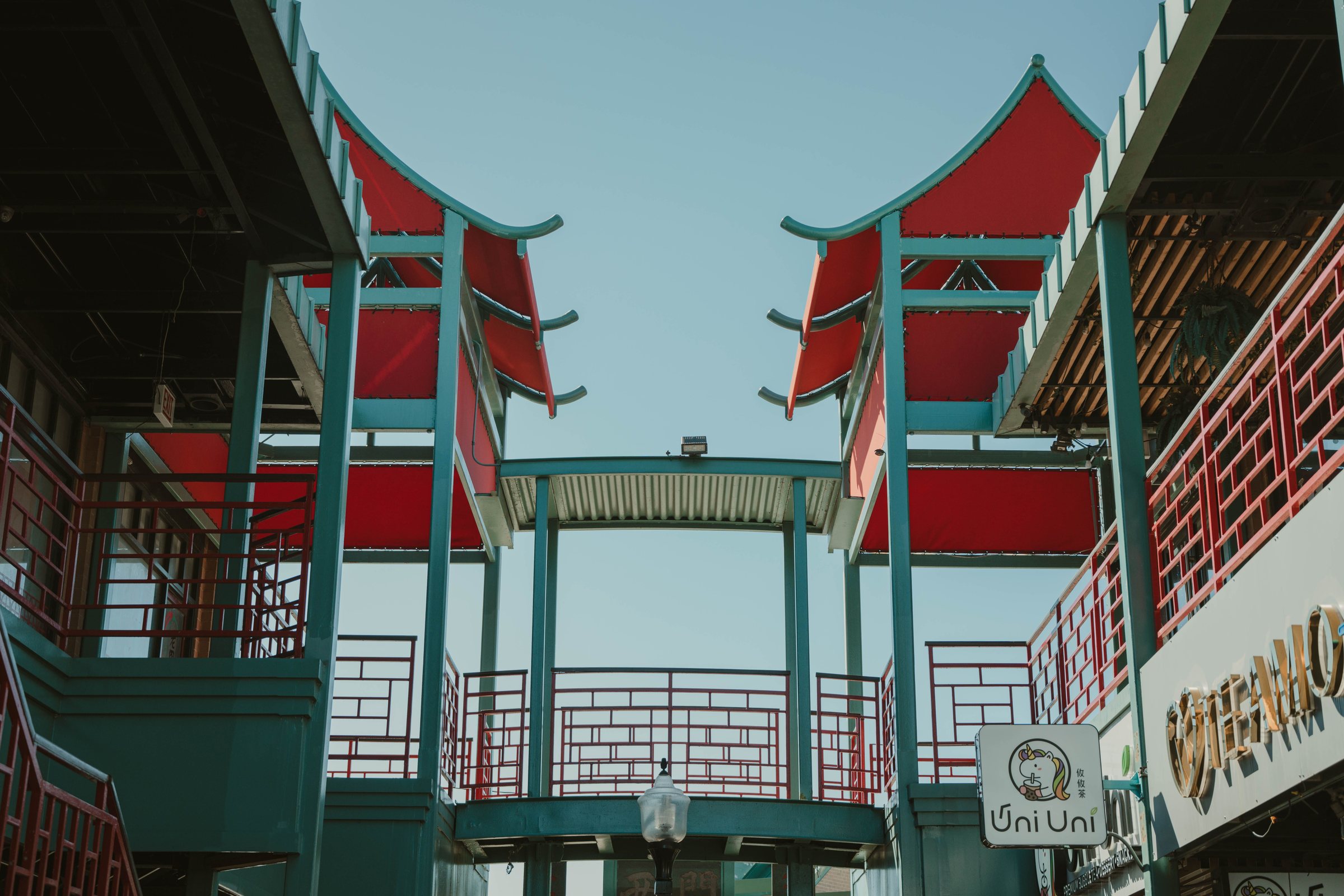
Chinatown Square
Chinatown Square is an outdoor mall just north of the main Wentworth Avenue district. The Chinese American Development Corporation developed the square from 1988 to 1993, working from plans by Harry Weese and Associates. The shopping area opened in 1993. Cafes and boutiques are part of what the mall holds. The square is pedestrian friendly, so you move through it on foot, with the open mall around you.
Twelve statues of the Chinese zodiac stand in the middle of the square. You can pause there and match one statue to your own sign. This is the point in the outing where you can pick a figure before you go on to Ping Tom Memorial Park. Give yourself time to look at all twelve before you choose.
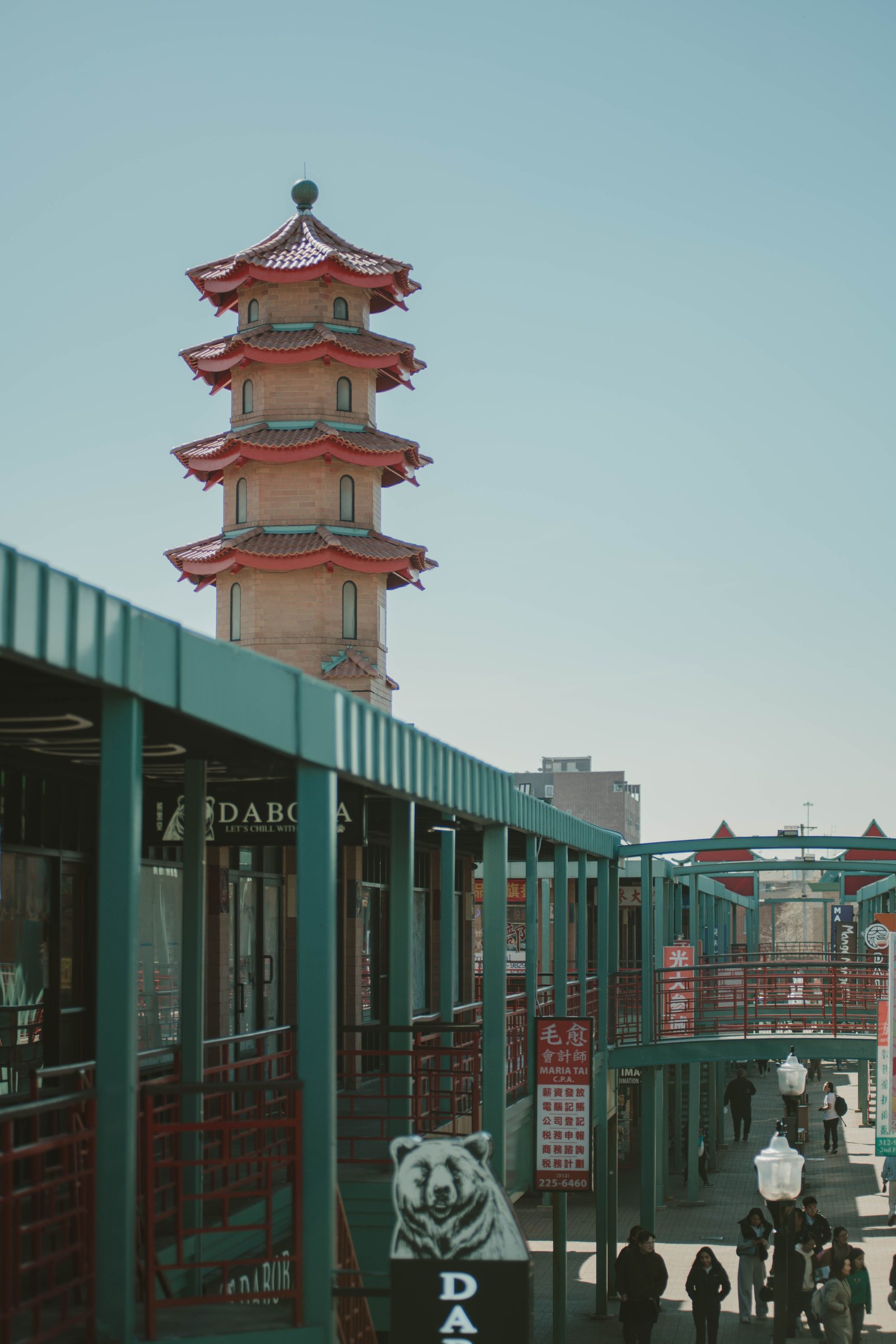
Ping Tom Memorial Park
Ping Tom Memorial Park occupies land that was once an abandoned rail yard. What stands there now is a rolling green park on the waterfront, with views of the city and the Chicago River. The park is a place for walking, picnics, and kayaking. It officially opened on October 2, 1999. A boathouse at the park had its opening on June 9, 2013.
Ernest C. Wong of Site Design Group designed the park. The pagoda style pavilion takes its form from a structure Wong saw in Suzhou. Bamboo gardens and a playground are included in the grounds. The park honors Ping Tom, a Chinatown businessman, and a bronze bust of him stands near the pavilion. You can walk the green space, set out a picnic, or go kayaking, with the river and the city in view.
You have already passed storefronts, the ornately designed Pui Tak Center, the Nine Dragon Wall, and the zodiac statues in the square. Walking, a picnic, or time in a kayak are the uses the park holds out, on ground that once sat unused as a rail yard.
Lunar New Year Parade
Each winter, Chicago's Chinatown holds the Chinatown Lunar New Year Parade as one piece of its Chinese New Year celebrations. You might choose that season if you want the parade on the same trip as Wentworth Avenue, Chinatown Square, and Ping Tom Memorial Park. The twelve zodiac statues are a feature of the square, apart from that winter parade. They stand in the middle of the mall for you to match to your own sign. Which zodiac statue is yours?
Stories, places and events, edited by LIVIN.in.