
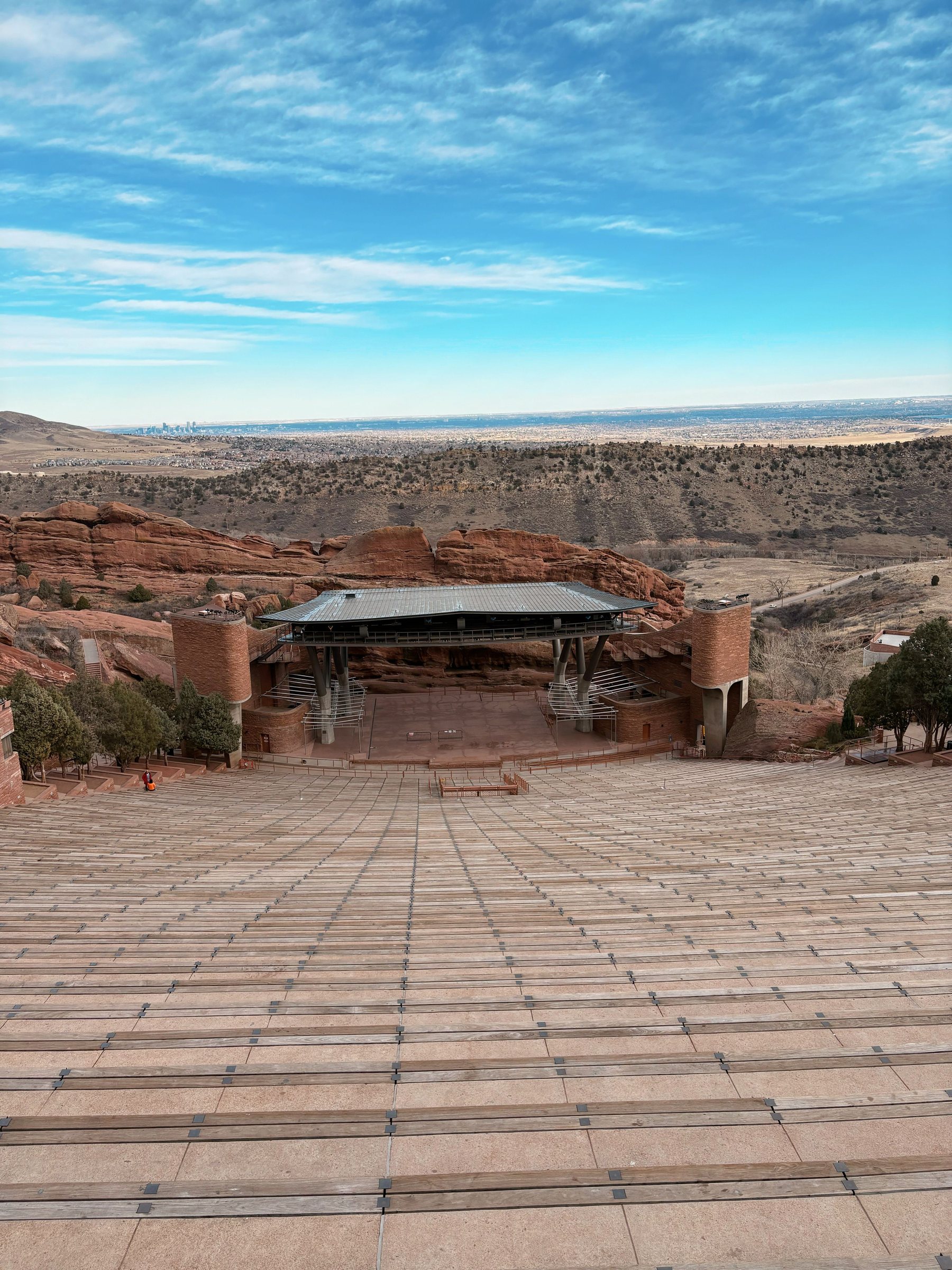
Red Rocks Park is a mountain park in Jefferson County, Colorado. Red Rocks Amphitheatre sits inside the park, and it has been used as a venue since 1941.
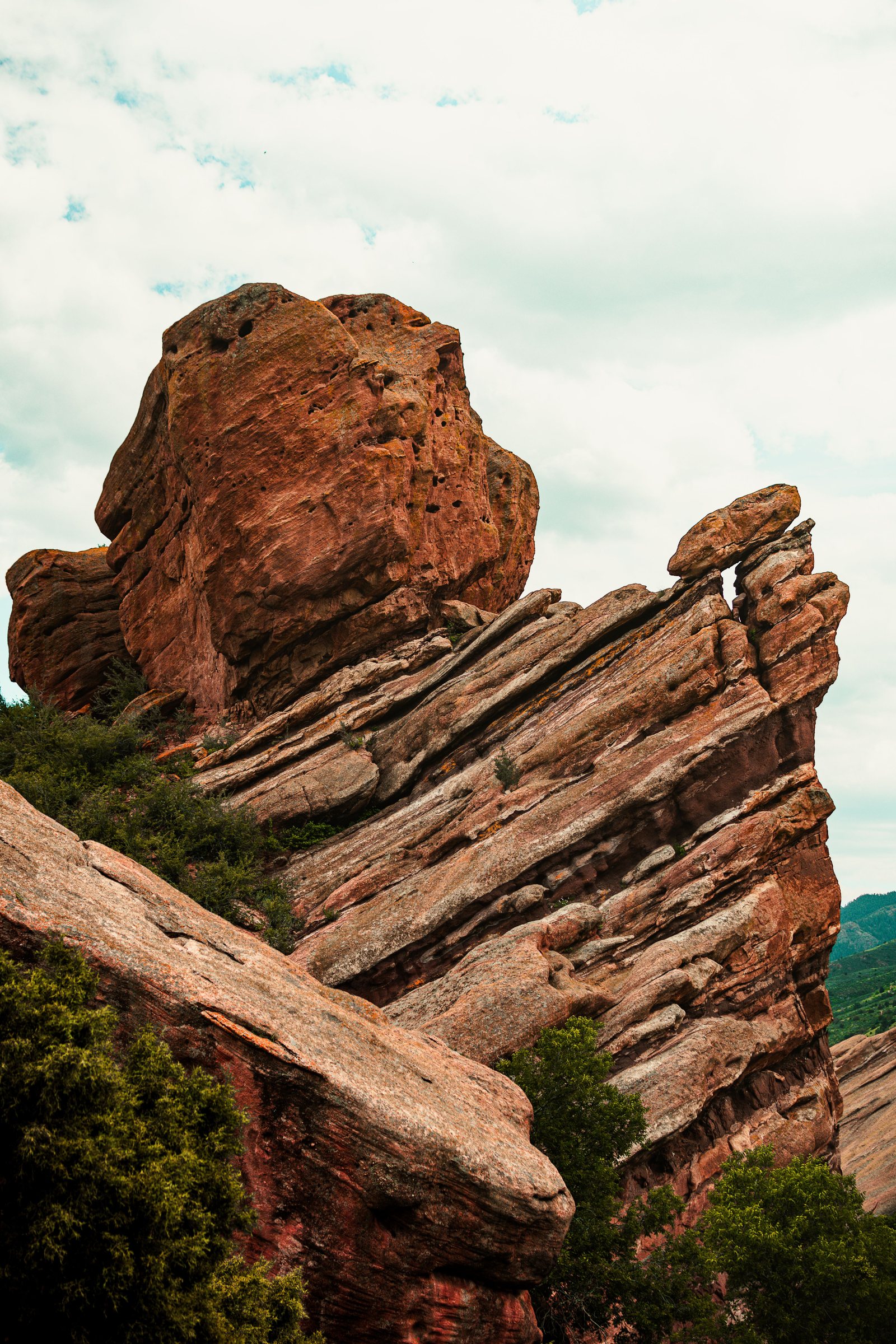
The park is known for its very large red sandstone outcrops. Many of the rock formations in the park have names, from the mushroom-shaped Seat of Pluto to the inclined Cave of the Seven Ladders. The most visited rocks, around Red Rocks Amphitheatre, are Creation Rock to the north, Ship Rock to the south and Stage Rock to the east.
The red sandstone found throughout the park belongs to the Fountain Formation. Other Colorado examples of Fountain Formation geology include Roxborough State Park, Garden of the Gods near Colorado Springs and the Flatirons near Boulder. The rocks formed about 290 to 296 million years ago, when the Ancestral Rocky Mountains were eroded. Later, uplift during the Laramide orogeny tilted the rocks to the angle at which they sit today.
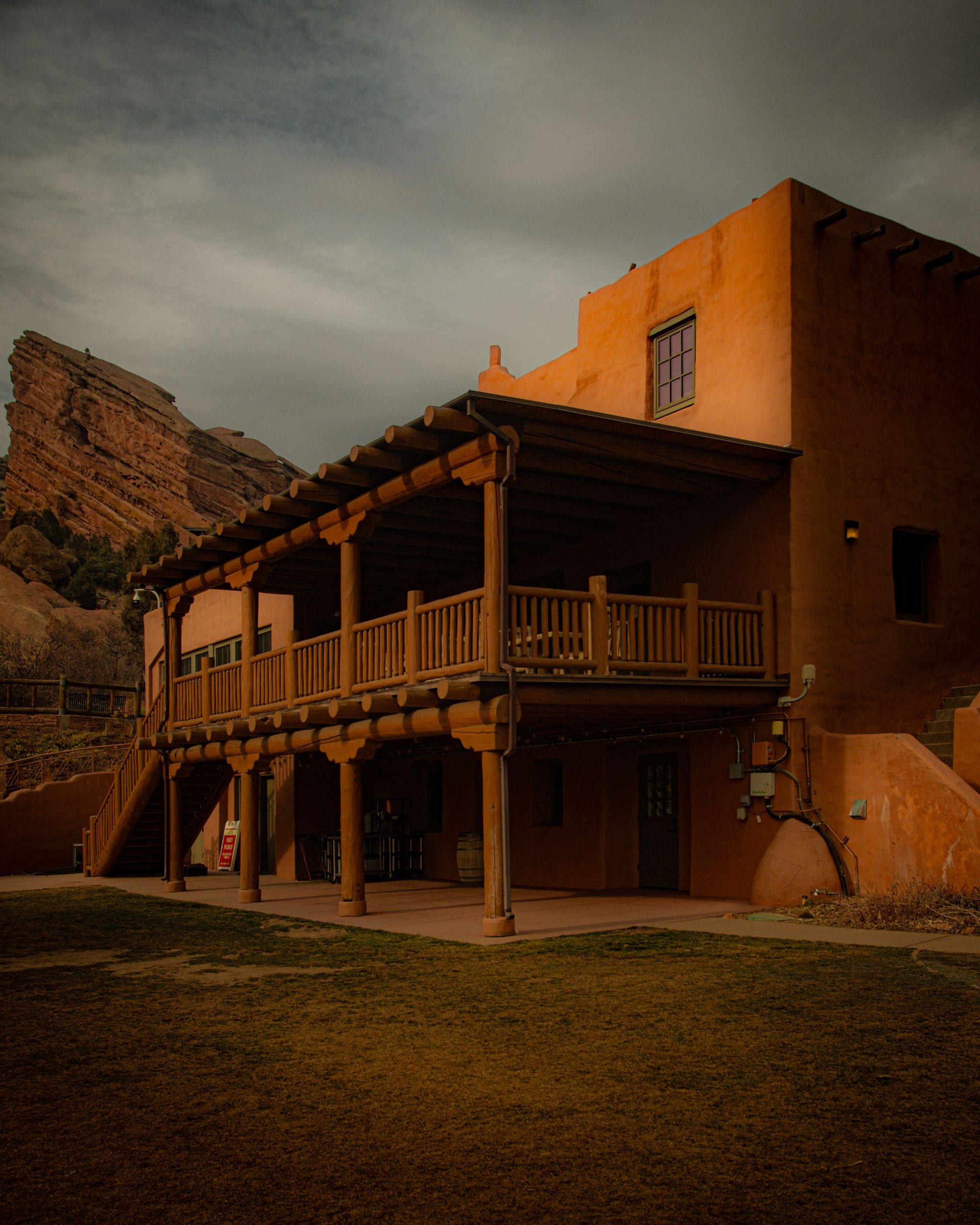
The Trading Post is also the perfect place to start a walking tour of the park. The Trading Post was built in 1931 in a Pueblo Revival style, and the building preceded the amphitheatre by a decade. It was originally known as the Indian Concession House. It was originally home to a museum about the flora, fauna and geology of the Denver Mountain Parks. The Trading Post sells Red Rocks souvenirs, apparel and historical memorabilia.
The Trading Post is open 9 AM to 6 PM from March through October and 9 AM to 5 PM from November through February. It is closed on Thanksgiving and Christmas.
The Trading Post Trail is 1.4 miles long and passes rock formations, valleys and a natural meadow. It winds through the Fountain and Lyons formations on a narrow, rough surface that follows moderate to steep terrain. Some of the terrain is rough, so hiking boots or shoes are recommended.
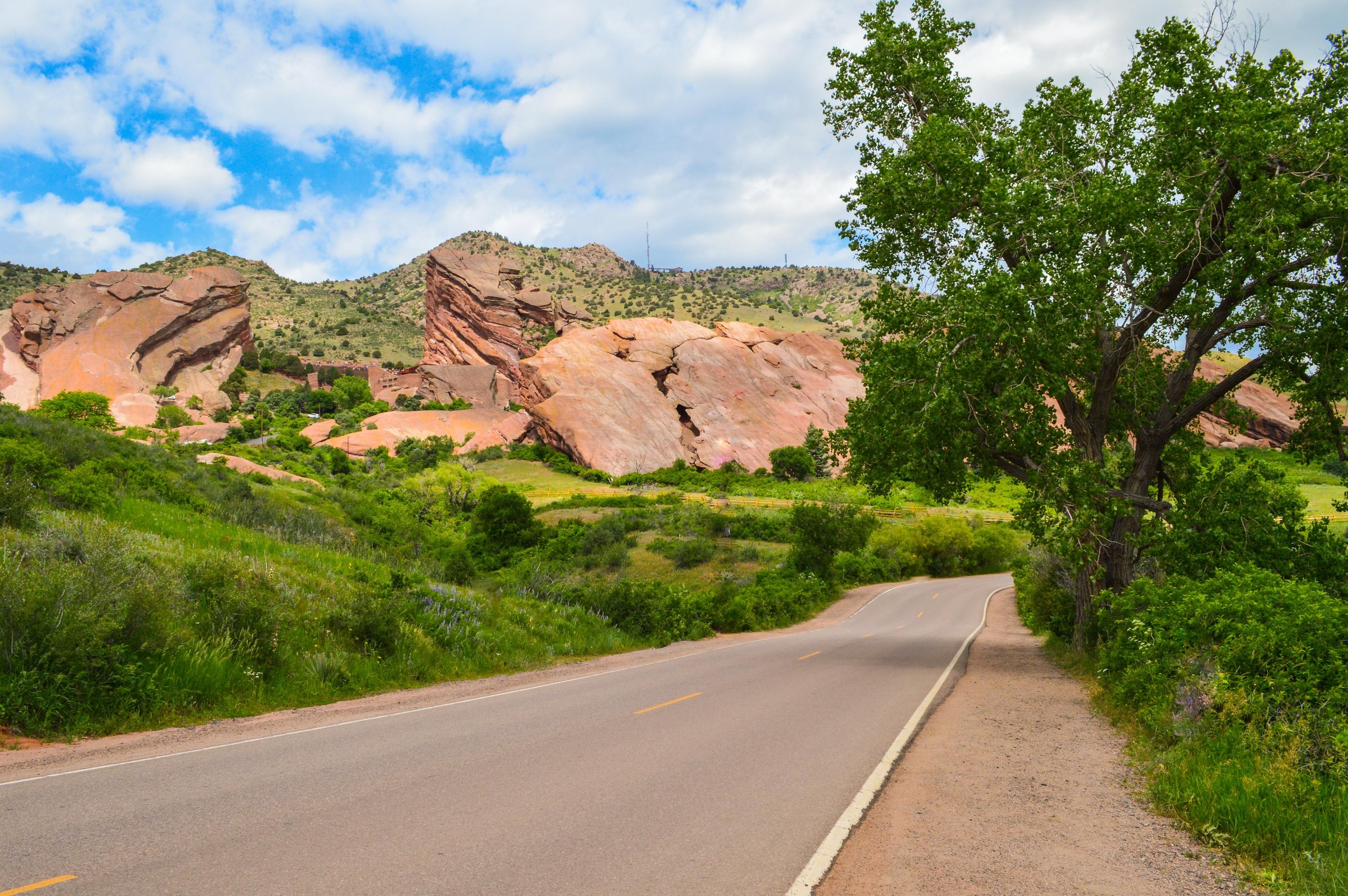
The Mt. Vernon Creek Trail is 1 mile long. It follows the creek for a short distance and then turns toward the Lower South Parking Lot, where it connects to the Trading Post Trail. Nice views of the amphitheatre can be had along the trail as it travels through the meadows above the creek.
The Funicular Trail is a short, steep trail that connects the Upper North Lot with a small parking area along Trading Post Road. The trail follows the route of an incline railway, or funicular, that carried tourists to the top of Mt. Morrison to enjoy the views.
The Geologic Overlook Trail is a short, moderate trail located in the northwest corner of the park.
The Geologic Overlook Trail, Trading Post Trail, Funicular Trail and Mt. Vernon Creek Trail are restricted to pedestrians only.
The Red Rocks Trail runs through the east side of the park. It is a multi-use trail for hiking, horseback riding and mountain biking. There is a connecting trail from the Lower North Parking Lot to the Red Rocks Trail. The trail splits, with one segment going north to connect to Matthews / Winters Park and the other going east to connect to the Dakota Ridge Trail. The Red Rocks Trail continues to Matthews / Winters Park, creating a 6-mile loop.
The trail connecting to the Red Rocks Trail and the Red Rocks Trail to Matthews / Winters Park are the only trails in the park where bicycles are permitted, including Class 1 e-bikes.
Red Rocks Amphitheatre has become a popular site for runners and those looking for a challenging workout at 6,400 feet. Access to the amphitheatre is subject to scheduled events, and a ticket may be required for admittance.
The Visitor Center opened in 2003. It houses exhibits related to the park and amphitheatre, the Red Rocks Hall of Fame and the Ship Rock Grille. The Visitor Center is open every day of the week. From March to October it is open 7 AM to 7 PM, and from November to February it is open 8 AM to 4 PM. After 2 PM on event days, access to the Visitor Center is limited to ticket holders only.
In times far past, the park was a favored campsite of the Ute tribe, because it provided natural cover from the elements. Its earliest known name was the Garden of the Angels.
Leonard Eicholtz developed the property into a park in 1878. He added roads, trails, picnic grounds, steps and ladders so visitors could explore the park. In 1906, Eicholtz sold Red Rocks to John Brisben Walker. Walker organized concerts on a temporary platform at the Garden of the Titans.
Dinosaur Ridge is a segment of the Dakota Hogback near the town of Morrison and just west of Denver. The first identified Stegosaurus fossils in the world were discovered at Dinosaur Ridge. When Alameda Parkway was being built in 1937 to provide access to Red Rocks Park and Amphitheatre, workers discovered dinosaur tracks. The Dinosaur Ridge trail follows a paved closed road that climbs about 700 feet from the main visitor center to the high point along the ridge. The walk is about 2 miles round trip and takes about 1 1/2 to 2 hours. A fully guided bus tour is available at Dinosaur Ridge.
The trails are about 6,280 feet above sea level, so guests with health conditions may wish to consult a doctor before attempting the hike. If you are coming from a lower altitude, the park advises avoiding alcohol for the first 48 hours, drinking plenty of water, and wearing layers and comfortable shoes. If children are joining the hike, provide supervision, because some areas of the trail include drop-offs, steep grades and road crossings. The majority of all trails are less than 3 feet wide. Hikers should be prepared for adverse weather conditions, because the weather can change very quickly. Rock climbing is prohibited, drones are prohibited, and pets must be on a leash at all times.
Which way are you headed?