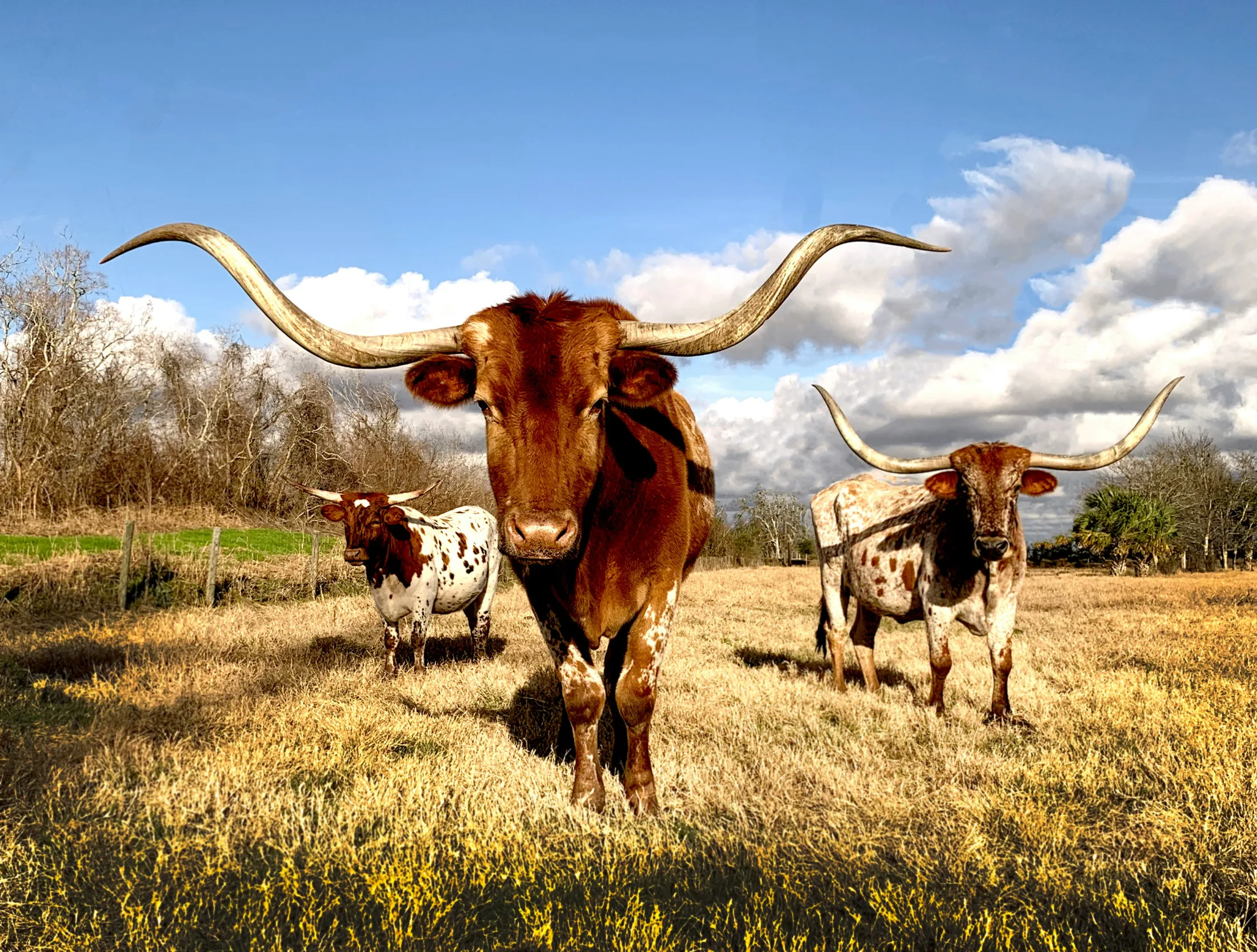
The first thing Texas teaches you is proportion. You come from somewhere smaller — a tighter skyline, a shorter horizon — and then you pull off the highway into a pasture just to stretch your legs, and a Longhorn walks up and stares you level in the eye. The horns spread wider than you thought horns could spread. The sky behind them goes up and up until the clouds pile into something that looks painted. Nothing about the moment is subtle, and nothing about it is trying to be.
That's the daily reality of living here. Texas doesn't soften its edges for you. The land is bone-dry caliche one county over and lush coastal grass the next. The summer heat is a physical presence, not a complaint. The distances between towns are real distances — the kind that require a full tank and a good playlist, not a quick errand. None of it reads as hostile. It reads as honest. The place is exactly what it says it is, and once you accept that, something in you relaxes.
People who have lived here a long time call it freedom without making a speech. They leave the gate open a little wider than necessary. They wave from the truck without knowing your name yet. The code is simple: show up, pull your weight, don't take up more room than you need. The land modeled that long before anyone put a fence on it.
The Quiet Confidence of the Land
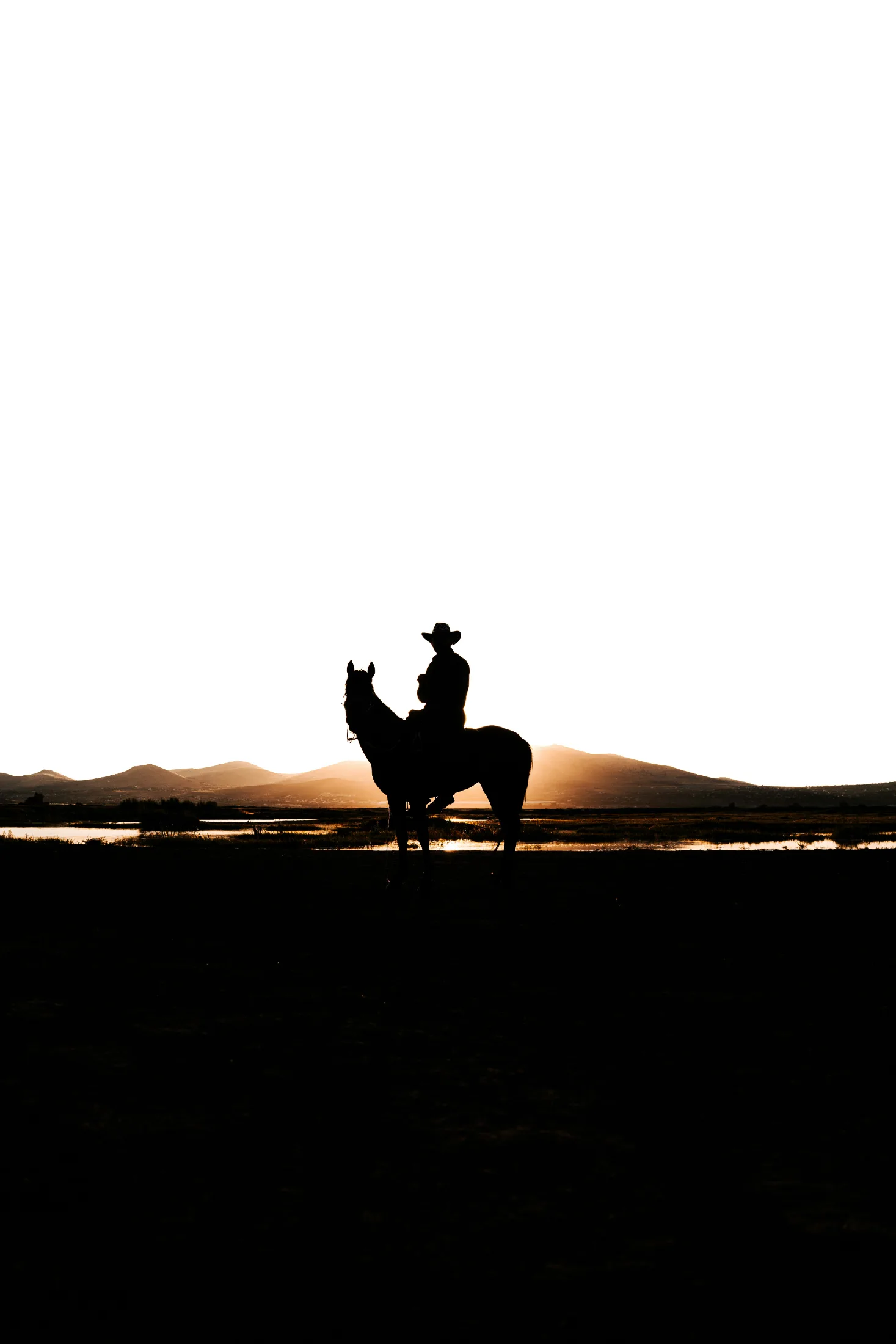
There is a particular quality to a Texas evening that no photograph fully catches, though the silhouette of a rider on horseback at the edge of dusk comes close. The sun drops behind low mountains and throws gold across whatever water it can find — a stock tank, a slow creek, the wet caliche of a ranch road. The rider doesn't hurry. The horse doesn't either. The whole scene operates at a pace that feels earned rather than slow.
That pace surprises people when they arrive. Texas has fast cities — there's no argument there. But the land runs on a different clock, and if you live here long enough, that clock becomes your own. You start noticing the particular color the sky turns an hour before rain. You learn which road gives you the cleanest view of the Milky Way on a moonless night. You stop rushing the drive home because the drive home is good.
It exists right now, on any given Tuesday, on any county road that doesn't show up on the first page of a search result. The land is not performing for you. It's just there, and you are lucky enough to be standing in it.
The Easy Pride of the Symbols
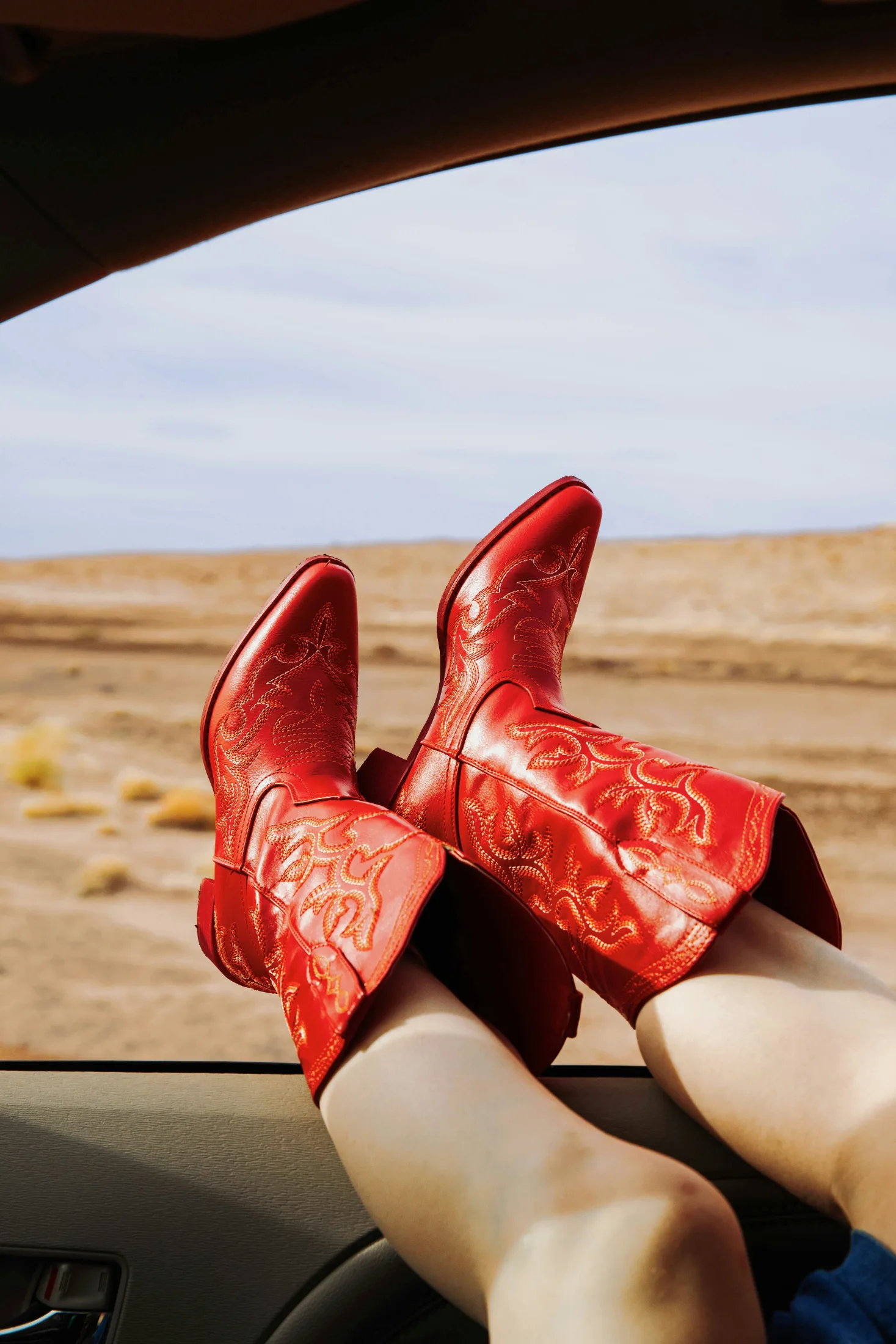
Somewhere on a long stretch of road west of nowhere in particular, someone is sitting in the passenger seat with red boots kicked up on the dashboard. The stitching on those boots — gold thread worked into scrolling flame patterns — catches the desert light through the windshield. Outside, the scrubland runs flat and tan to the edge of sight. The radio is low. Nobody has spoken in twenty minutes, and that's perfectly fine.
The boots matter here. Not as fashion — as shorthand. A pair of well-worn cowboy boots says something about how a person moves through the world: unhurried, planted, not trying to impress anyone who doesn't already get it. Texas has a whole vocabulary of symbols like this, and what sets them apart is that nobody uses them ironically. The Lone Star on a barn wall means the same thing it meant fifty years ago. The flag colors painted on wood planks mean the same thing whether the building is new or falling down.
That lack of irony is either the first thing you love about Texas or the last thing you come around to. But most people come around.
A Glow You Don't Walk Away From
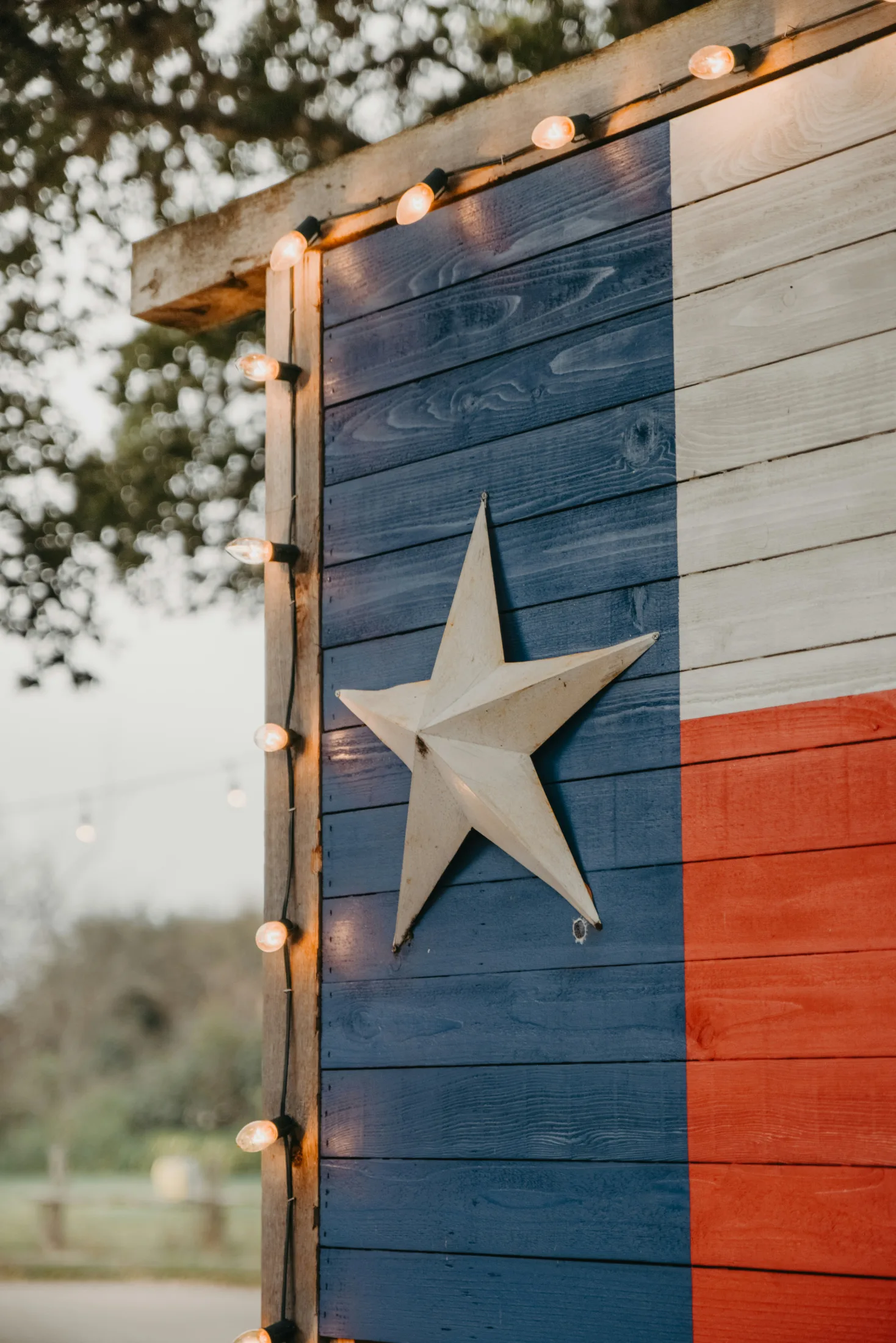
The wooden Texas flag in the photograph is the kind of thing someone made by hand on a weekend. Blue planks, white planks, red planks, a metal star hung at the center. String lights looped along the frame, not because the occasion demands it but because it's evening, and evenings in Texas get lit up whenever possible. The trees behind it are soft with dusk. Someone nearby has a fire going, or a grill, or both.
This is where the place lives — not in the grand gesture but in the ordinary one done without apology. People here put the flag up because they want to, not because someone is watching. They string the lights because a warm glow in the dark is better than no warm glow. The sentiment is uncomplicated and genuinely felt, which makes it the most Texan thing there is.
If you're half-thinking about coming — truck mentally packed, running the math one more time — here's what nobody tells you until after you've arrived: you won't remember the moment it happened. One evening you'll be sitting outside under string lights with a cold drink, looking up at a sky that runs clear to the horizon in every direction, and you'll realize the math stopped mattering a while back.