
Saturday Morning on the Plaza Teaches You Everything
Tourists do a loop and leave. New residents do it every weekend until the portal makers know your face, and that's when the city actually opens up.


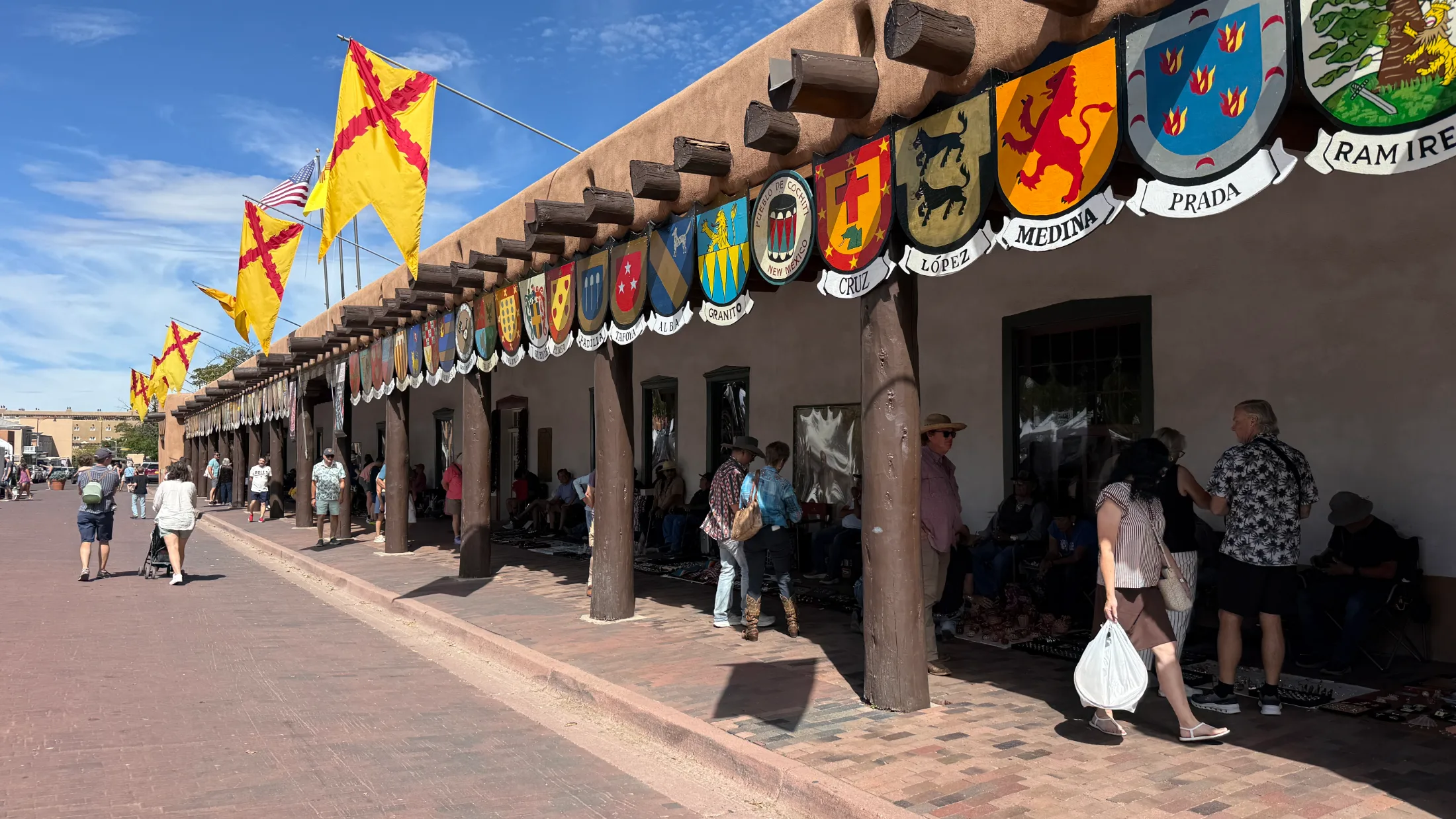
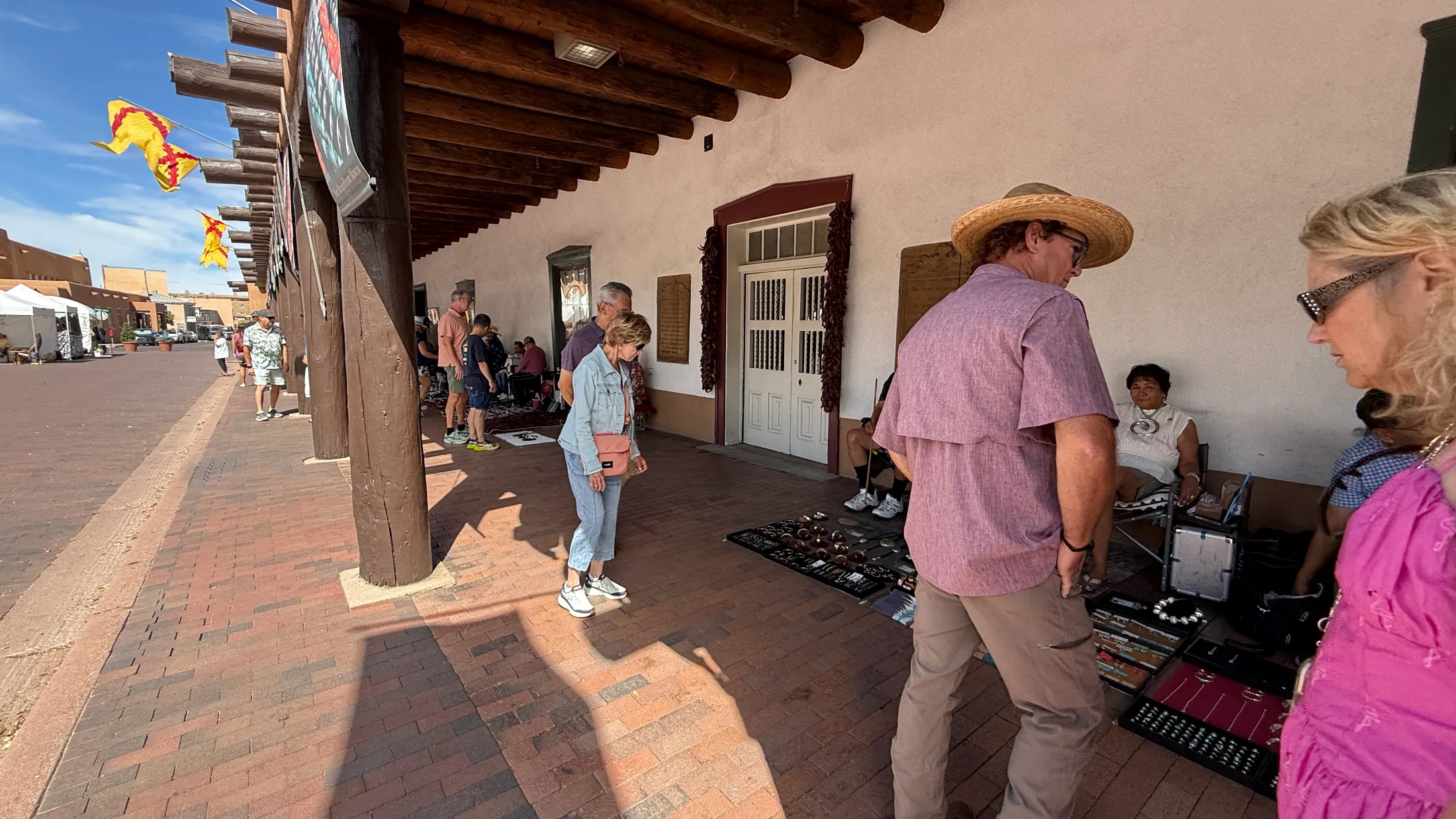
Saturday morning, just after eight, and the Plaza is still cool enough that you can feel the adobe holding overnight cold. The cottonwoods in the park throw long shadows across the brick paths. A few early walkers cut through without looking up. Then the makers arrive, one by one, spreading blankets under the long portal of the Palace of the Governors, laying out trays of silver rings, coral strands, turquoise cabochons in every shade from pale robin's egg to the deep oxidized green that looks like it came straight out of a canyon wall. By the time the morning light goes white and sharp the way only high-desert light does, the portal is full, the park tents are going up across the square, and the city is awake.
I did not understand Santa Fe until I started treating the Plaza as a standing Saturday appointment rather than a thing I'd already crossed off. That distinction matters more than it sounds. Tourists come once, do a loop, carry home a photograph of the portal. Residents, people who chose this city and stayedcome back until the rhythm of the place becomes their own rhythm. The weekend Plaza is not a checklist stop. It is where you practice being from here, and the difference between those two things is the whole ballgame when you're deciding whether to actually move.
The most important thing happening under that portal is the Native American Arts and Crafts program administered through the Palace of the Governors. Licensed Native makers, the program requires that sellers be enrolled tribal members selling their own handmade work, set up directly on the brick, seated behind their pieces, face to face with anyone who stops. No middleman, no gallery markup, no story laundered through a third party. What you see on those blankets was made by the person sitting in front of you: heavy silver cuffs, heishi bead strands in shell and turquoise, coral and jet inlay, rings with stones set so well they catch the light from twenty feet away. The conversation that comes with a purchase, if you let it happen, is more education about this place than any museum audio tour.
Cross the street into the Plaza park and the character shifts. White and blue vendor tents fill the brick paths under the cottonwoods on weekends, and the work ranges widely: textile art, ceramics, woodwork, painted pieces, jewelry operating in a different tradition than the portal. On peak summer and fall weekends the tents pack in tight enough that you move single-file through the shade. The energy is looser than the portal, more browsing and less transactional. If Santa Fe Fiesta falls on your weekend, the bandstand at the center of the square goes live, food booths line the perimeter, and the whole park smells like green chile and funnel cake simultaneously. Fiesta is not a tourist production. It is the city celebrating itself, loudly, in the middle of its own living room, and watching it as a new resident tells you something no relocation guide will.
None of this is frictionless. Parking near the Plaza on a summer Saturday is an exercise in patience and a good argument for living close enough to walk. By midday, when the light is direct and the temperature is climbing toward the nineties, the portal is elbow-to-elbow and the park paths are a slow shuffle. There is also a real distinction between the licensed portal program and everything else in the broader tourist corridor: not every piece of turquoise jewelry for sale in the surrounding blocks was made by the person selling it, and not every silver item is sterling. The portal program exists precisely because that distinction matters, legally and ethically. As a resident, learning to look for hallmarks, the maker's stamp on the back of a piece, the tribal affiliation tag, is part of your education, not a cynicism. It means you know what you're buying and from whom.
The practical shape of a good Plaza morning: arrive before ten, when the light is still raking and the brick is cool. Portal makers generally prefer cash; the park tents vary, so bring both. Walk the full length of the portal first, slowly, before committing to anything, the variety from one end to the other is wider than it looks from the middle. Then cross into the park and walk the square's full perimeter before doubling back to anything that caught your eye. The circuit takes less than half an hour at a real pace, and completing it before buying is the difference between a considered purchase and an impulse you're second-guessing on the drive home. If the heat is building by the time you finish, the cold drinking chocolate at Kakawa is a short walk from the square and worth the detour before the afternoon gets serious.
The Plaza stops feeling like a landmark and starts feeling like a neighborhood anchor faster than you'd expect. It becomes the place you pass through on the way to other things, the place you end up when you don't have a plan, the place that keeps offering something new because the makers and the seasonal rhythms keep rotating. Santa Fe has a particular gravity for people who arrive and don't leave, and most of them will tell you the Plaza had something to do with it, not as a postcard, but as a place they returned to until it became theirs. Show up enough Saturdays and you'll know which makers carry the coral you've been looking for, which side of the park stays shady longest, and when to leave before the tour buses arrive. That knowledge is what belonging feels like here: earned in increments, one morning at a time.