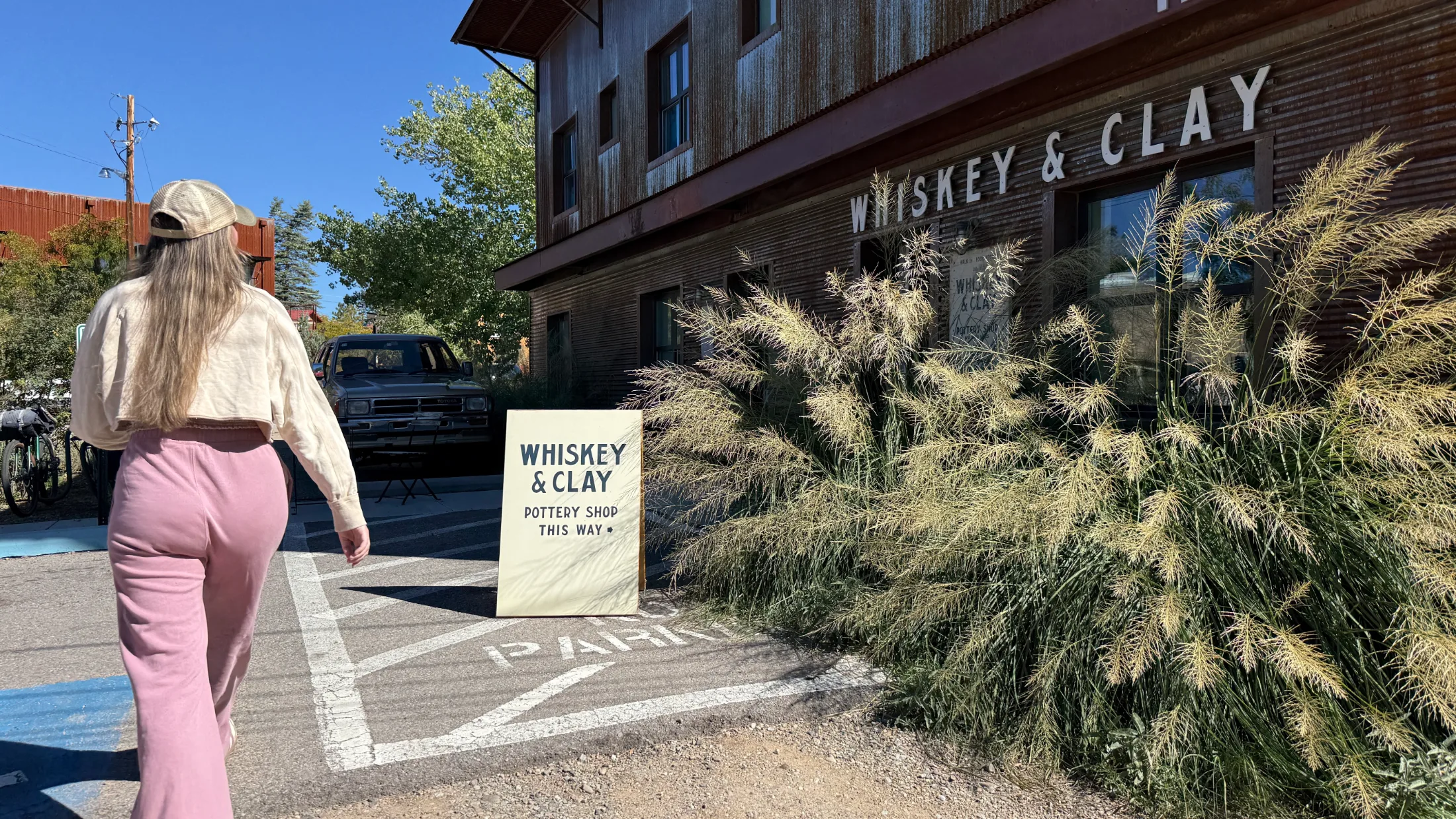
In 1999, this block was a Shuttlejack bus yard: derelict buses, oil drums, the smell of old diesel baking in the high-desert sun. I think about that every time I turn onto Lena Street and see what it replaced it. In the mid-2000s, developer Rick Brenner built the Lena Street Lofts here, live/work buildings wrapped in rusted corrugated steel that made no apologies for where they came from. The New York Times eventually called it an "artsy enclave." That's accurate, if a little tidy. What I notice walking it is something more specific: the people who landed here chose it deliberately, not as a stepping stone to somewhere better.
The walk takes maybe ten minutes end to end. I do it slowly.
Bread Shop, 1703 Lena
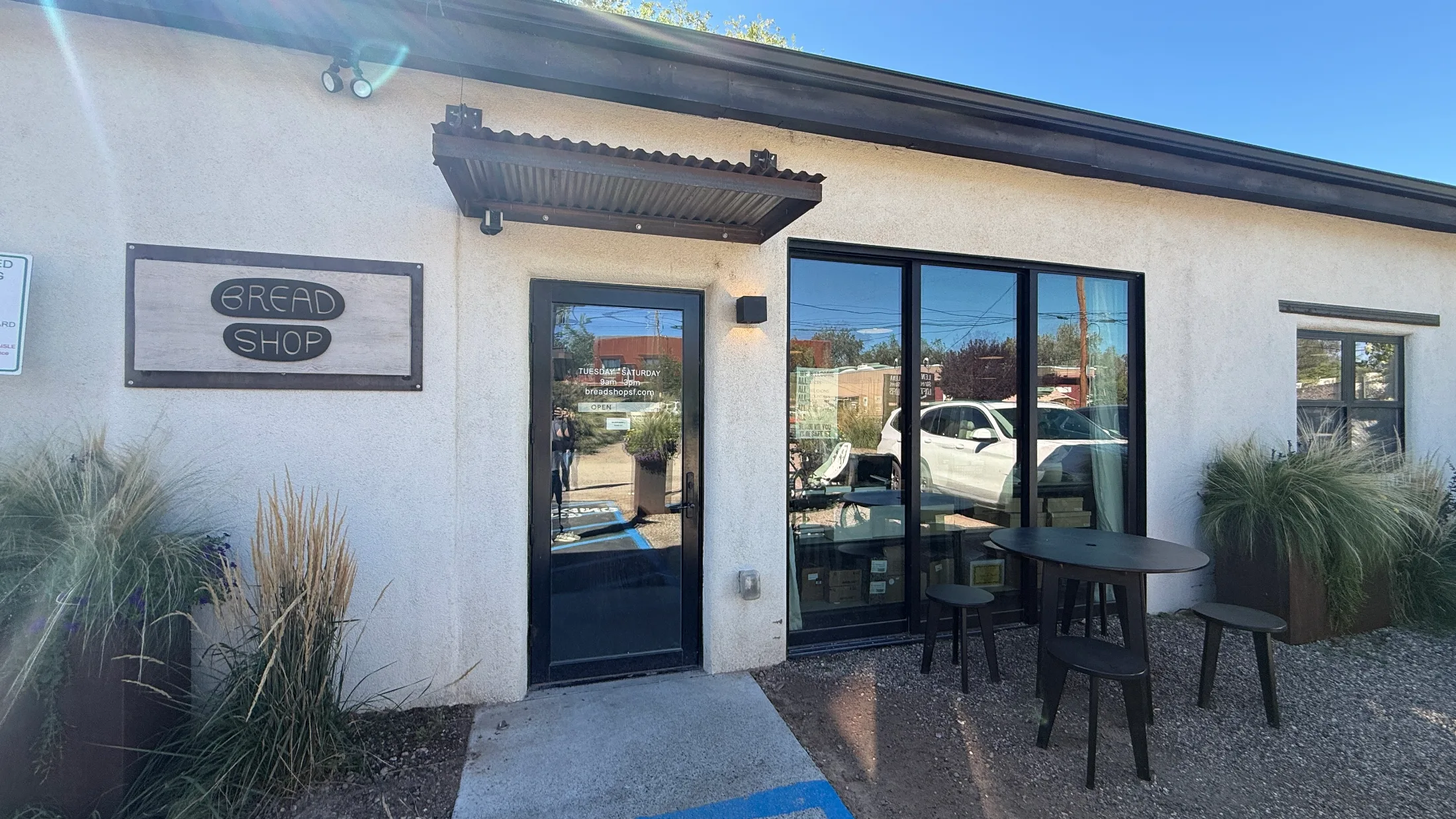
I start here. Jacob Brenner, Rick's son, and Mayme Berman opened Bread Shop in January 2020, which is about as difficult a moment as any to open a bakery. They survived it, outgrew their first space, and moved into this larger one in 2022. A strip of corrugated metal trim above the door nods to the lofts next door; the rest of the exterior is plain stucco, black-framed glass, a couple of outdoor stools on gravel. Nothing performing charm. The corrugated overhang is the only ornament, and it earns its place.
They're open Tuesday through Saturday, nine to three. That window matters. It disciplines your week. You plan around Bread Shop, not the other way around. The lines Santa Fe asks you to wait in for good food are a recurring theme in this city, and Lena Street is no exception.
Lago Cafe, 1704 Lena St, Suite B1
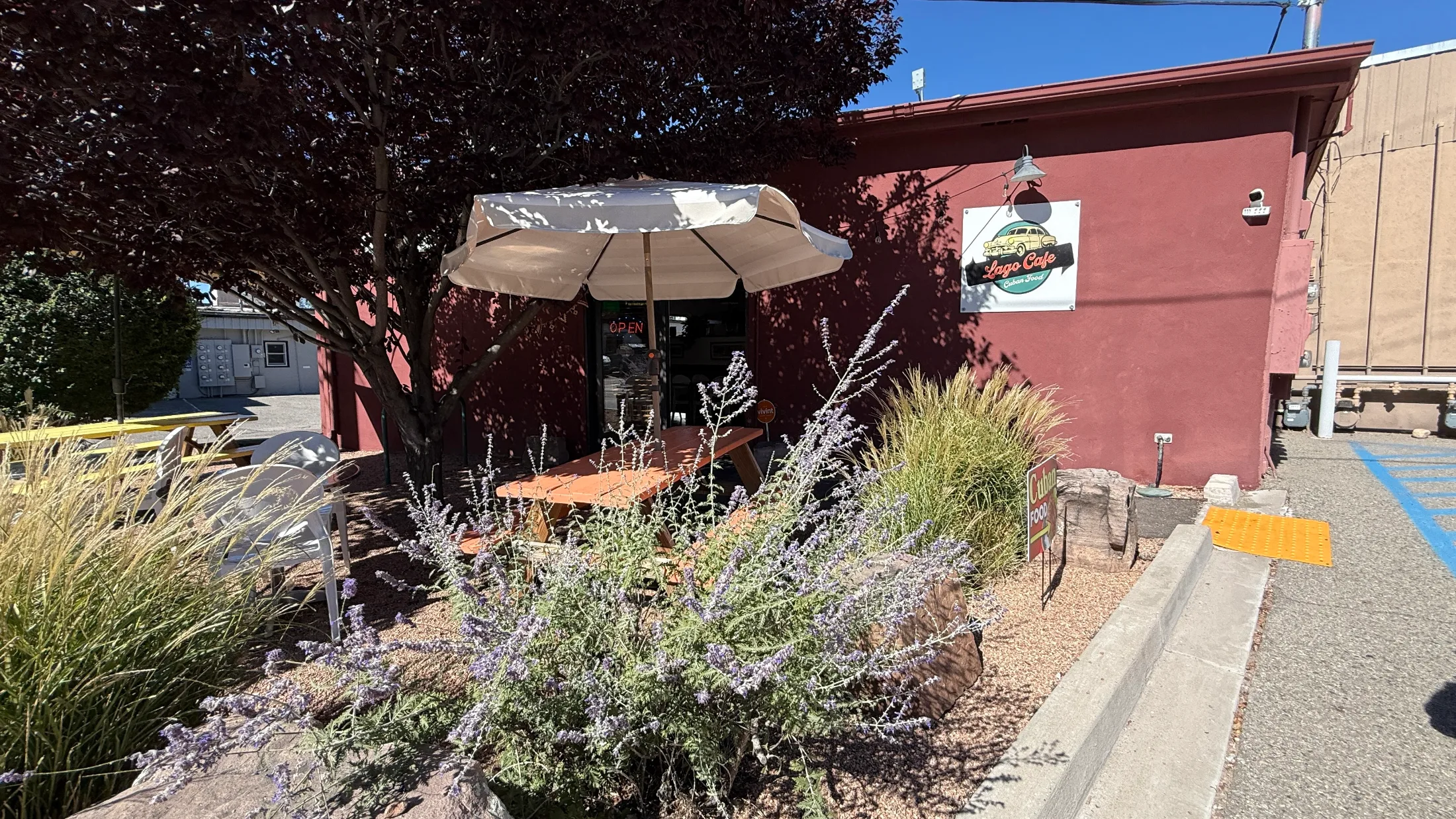
Cross the street. Yaseni Lago and Adrian Nuñes left Cuba and settled in Santa Fe. Yaseni runs the kitchen at Lago Cafe. What she's cooking is Cuban food, on a block that in a previous life wouldn't have registered as a destination for anything at all.
The patio is what stops you: Russian sage gone purple against red stucco, a wooden picnic table under a market umbrella, ornamental grasses catching the afternoon light. The Lago Cafe sign hangs on the wall beside a vintage car illustration that reads as deliberate rather than decorative, a place built partly on the memory of a bus yard should have a vintage car on its wall. On a clear Santa Fe afternoon, which is most of them, this patio is exactly where you want to be. Santa Fe has plenty of places to eat outside, but few where the setting has this kind of layered logic to it. The restaurants this city wasn't supposed to have are often the ones that stick.
Whiskey & Clay
Back across, further down the block, into the lofts proper. The rusted corrugated steel does specific work here, two stories of oxidized metal the color of old pennies, WHISKEY & CLAY in white letters above a sandwich board on the sidewalk that reads "Pottery Shop This Way." Follow it.
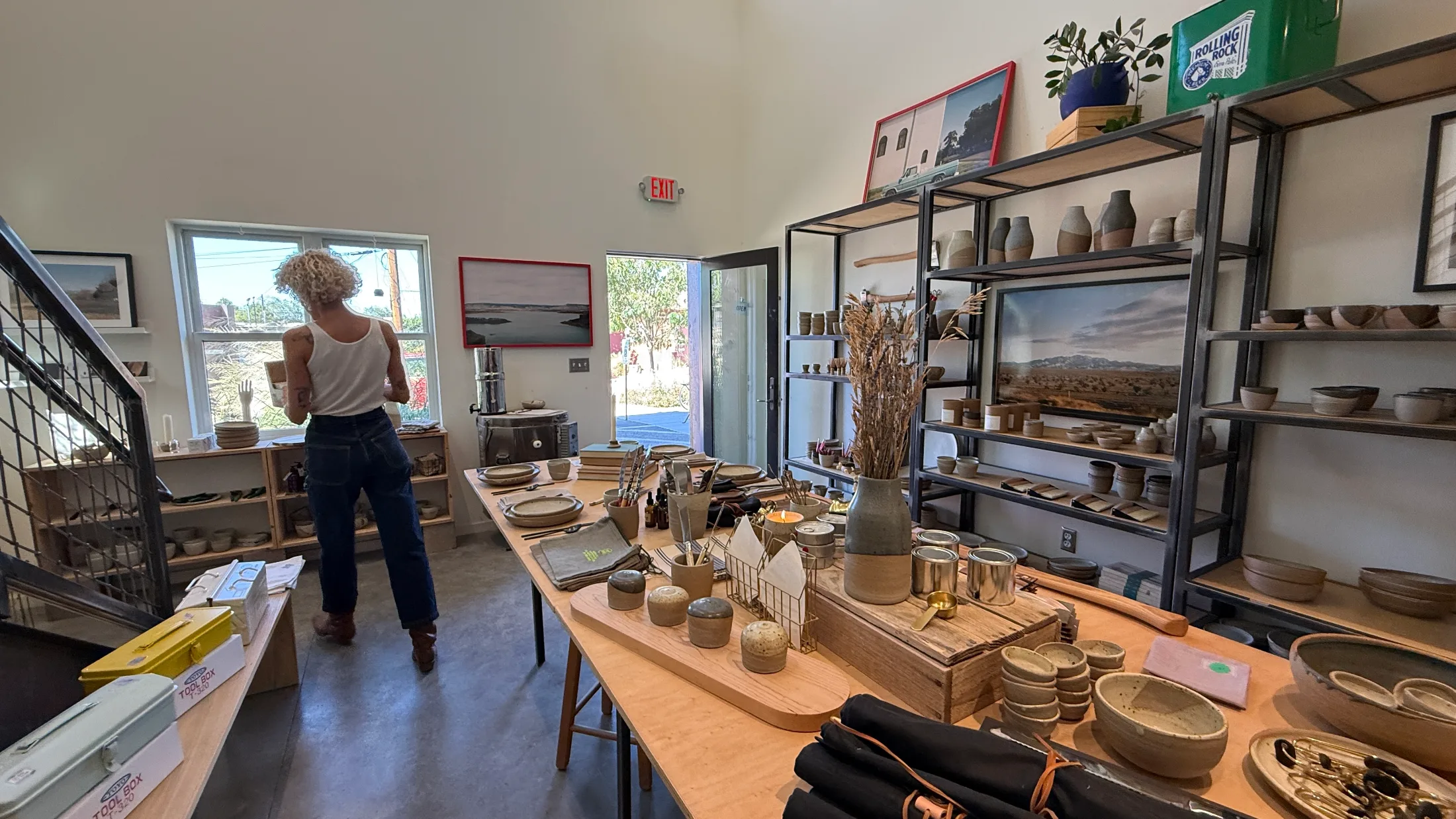
Potter Kimmy Rohrs and Aaron McSorley opened their studio and shop on Lena in 2020. The name comes from nights of whiskey and pottery-making in Austin, which tells you something about the register they're working in: serious craft, no mythology around it. The building is Rick Brenner's original vision made physical, live, work, make, sell, all in the same structure. It's not a gallery in the Canyon Road sense. It's a working studio with a shop attached, and you know that the moment you're inside: clay dust, shelves of finished work, the smell of a place where the making happens in the next room, not off-site.
Santa Fe has always held a tension between the gallery district and everything happening off it. Whiskey & Clay sits firmly in the off-it category, which is what makes the walk down Lena feel different from an afternoon on the Plaza side of things. The craft here is in conversation with the building, with the block's history, with the fact that twenty-five years ago there were oil drums where the ornamental grasses now grow.
I've walked this block in every season Santa Fe offers. It's best in the fall, when the grasses go gold and the sage has finished blooming and the corrugated steel turns almost warm in the low afternoon light. But the season isn't the point. The point is that Lena Street required someone to see past what it was, and then required a baker, a Cuban cook, a pair of potters from Austin, and a decade of small decisions to make that vision legible to anyone walking by.
The question I keep coming back to: how many other blocks in this city are still one developer's imagination away from becoming something like this?