
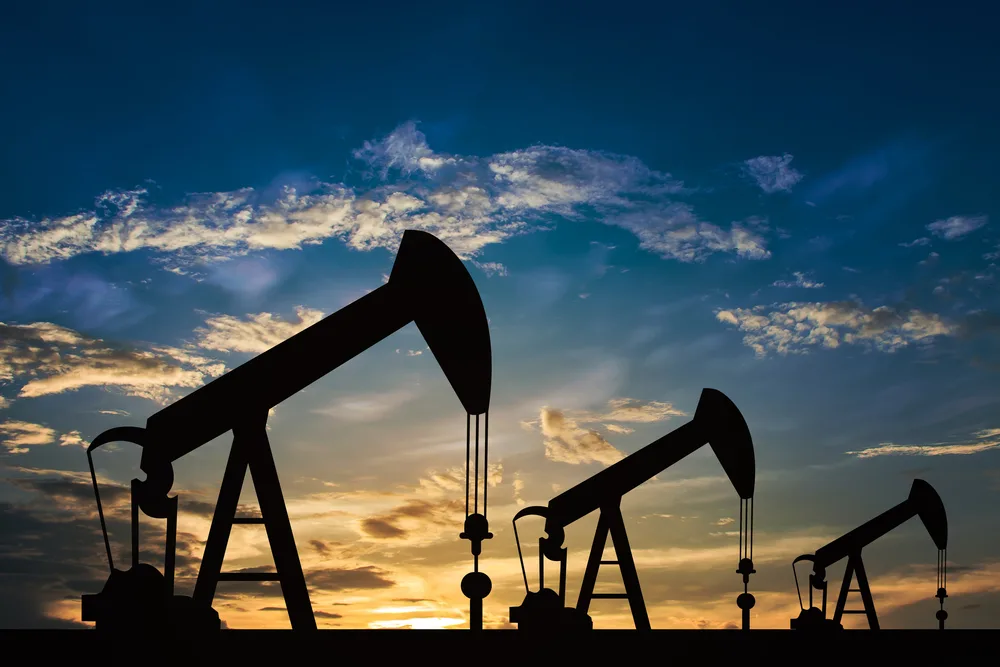
Start at dusk, somewhere west of everything, where three pumpjacks rock against an orange and blue sky. That equipment is running right now, pulling from formations that have financed everything that follows: the skylines, the subdivisions, the stadium-sized gas stations. Energy is not Texas's past. It's the reason the math still works for people moving here from California, Illinois, and New York.
What that math looks like is embarrassingly concrete: what will I earn, what can I afford, what does Tuesday morning actually feel like? Texas keeps winning on all three in ways that are harder to argue with every year.
Convenience Is Not a Small Thing
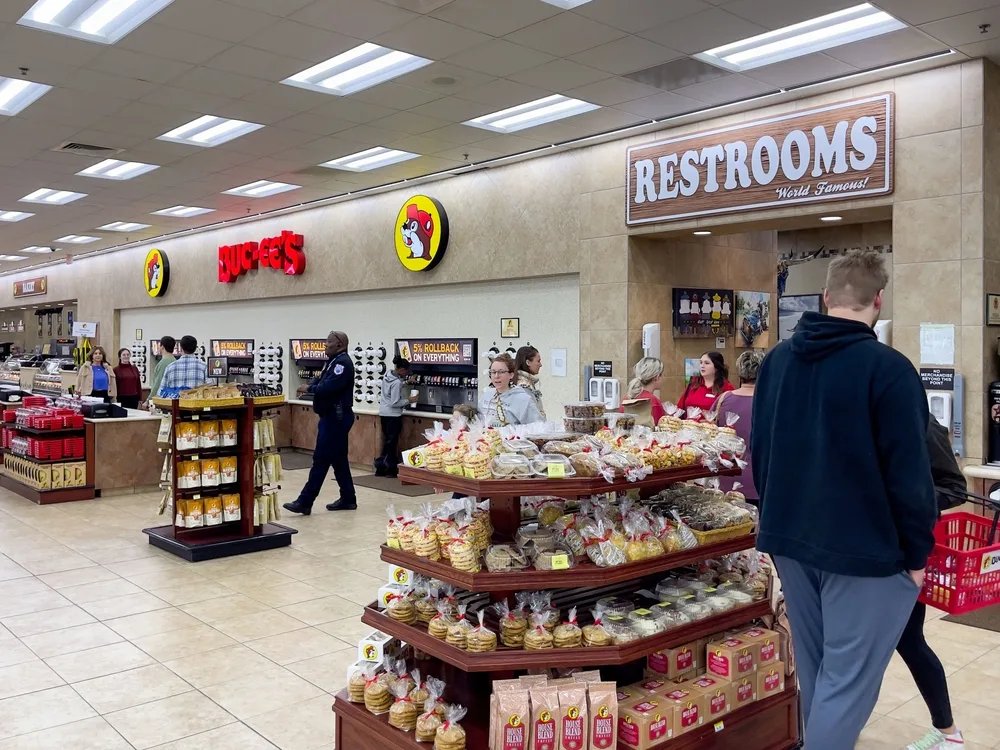
Take Buc-ee's. It reads like a joke to outsiders — a gas station so large it has its own merch section, its own fudge counter, restrooms that have won actual awards — until you stop at one on a long drive and understand that it is simply a place that decided to be excellent at what it does. Packed shelves, enough registers that a line never forms, food that is genuinely good. Texans treat it like a landmark because it is one. That willingness to do ordinary things at extraordinary scale is not a quirk. It's a pattern.
A City That Keeps Adding Floors
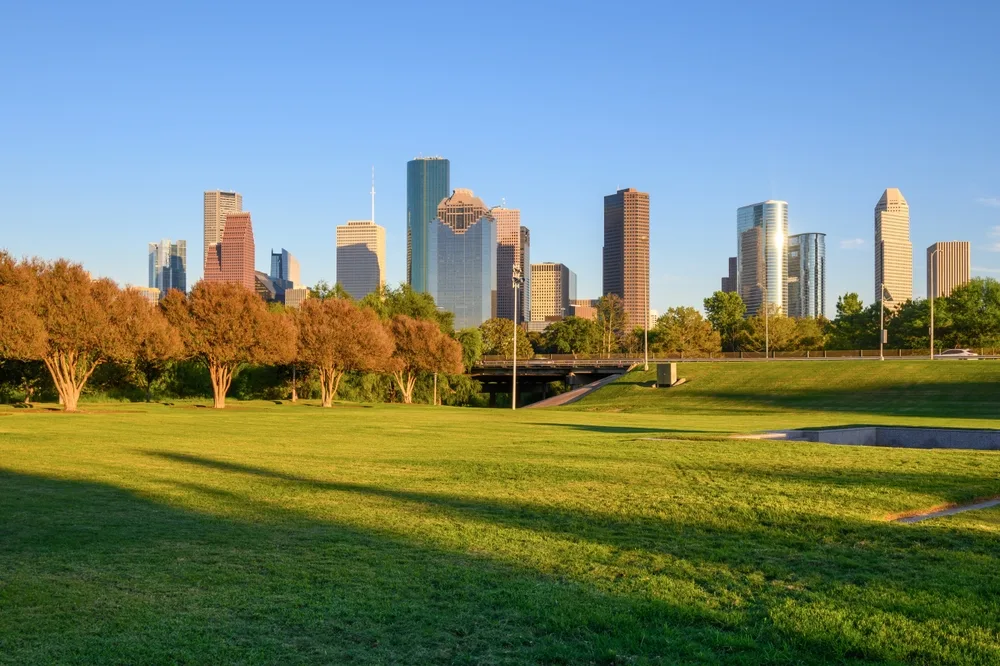
Stand at the edge of a Houston park at golden hour. Glass towers catch the late sun, the green in the foreground still warm. Houston is the fourth-largest city in the country, and it did not get there by accident. The jobs are real, the industries are diverse, and the cost of getting into the market — compared to coastal peers — remains within reach for people actually earning middle-class wages.
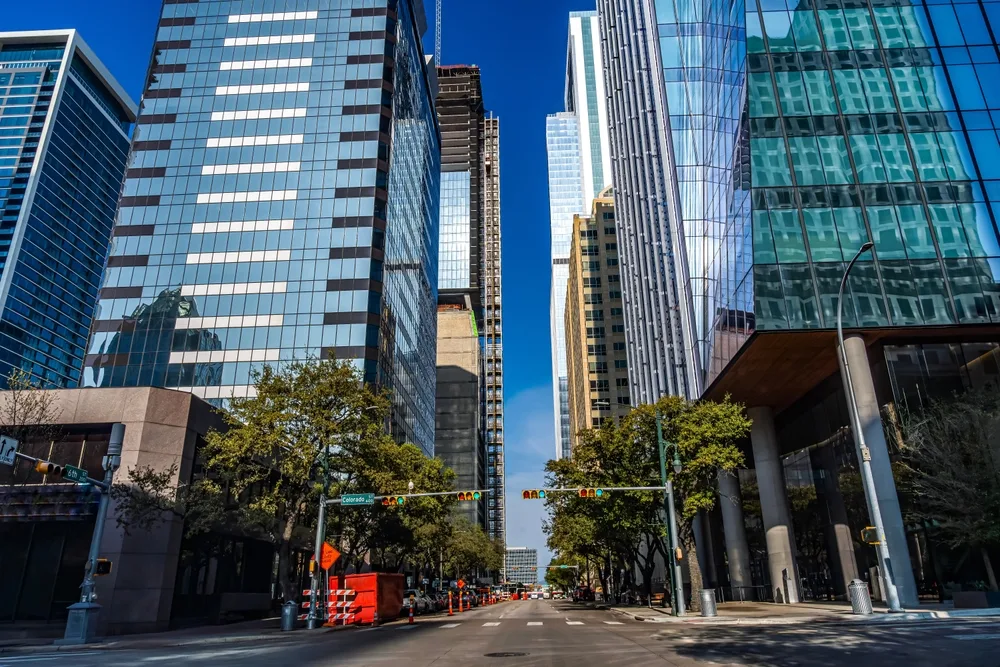
Walk the downtown canyons and the evidence compounds. Glass curtain walls reflect each other across streets lined with live oaks. A tower under construction rises between finished neighbors — concrete core climbing, cranes still in frame. The orange construction barriers are permanent scenery here, not a sign of disruption but of direction.
The Cranes Are the Point
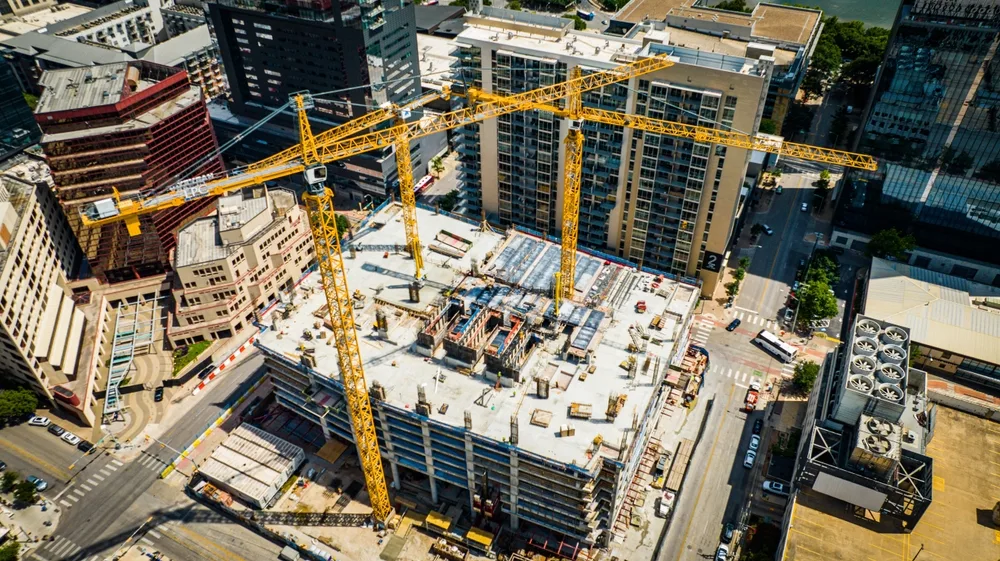
From the air, the construction site reads clearly: three yellow tower cranes over a single block, fresh concrete floors stepping up, surrounding streets still moving with traffic. Multiply that across dozens of blocks in multiple Texas cities simultaneously and you have the most honest answer to why people keep coming. Supply is actually responding to demand — which means someone who moves here now can still buy into a new neighborhood before it prices them out. That window does not stay open forever.
The boom shows up in your commute, your grocery run, your property tax bill, and the skyline visible from your backyard. Texas is not perfect at any of this: the summers are punishing, the power grid has been tested, the sprawl is real and relentless. But the momentum is also real, and momentum is what people are betting on when they load the moving truck.
The pumpjacks are still running. The cranes are still swinging. The math, for now, still works.