

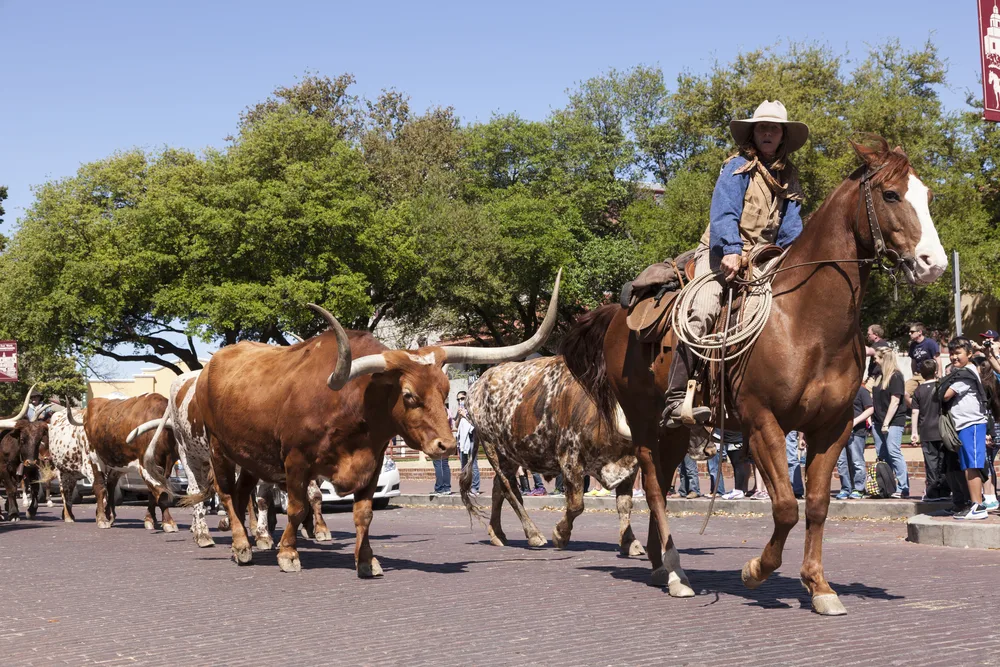
It is a Tuesday morning on Exchange Avenue in the Fort Worth Stockyards, and a wrangler on horseback is moving a small herd of longhorns down a brick street while a FedEx driver waits, engine idling, not particularly annoyed. Two tourists photograph it. Three office workers walk past without looking up. The western civic memory here is not a put-on. It is just Tuesday. Thirty-two miles east, someone is closing a term sheet in Uptown Dallas over a cortado before the 9 a.m. call, and that is just Tuesday too. One metroplex, one shared freeway system, two completely different answers to the question of how a day should feel.
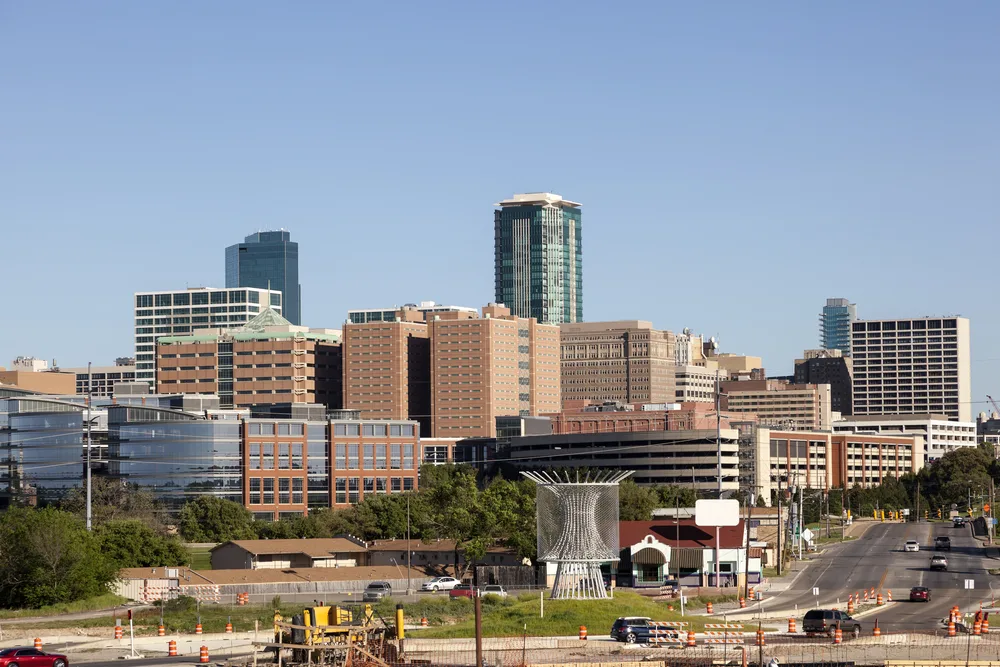
Dallas and Fort Worth share DFW International, share I-30, share the Rangers and the Cowboys, and in recent years have started to share the same wave of transplants arriving from both coasts. But the cities do not share a tempo, a social grammar, or a sense of what the built environment is for. Living in Dallas means organizing your week around momentum: deals, openings, the next thing. Living in Fort Worth means something closer to a city that knows what it is and does not feel the need to announce it every fifteen minutes. That difference is structural, not atmospheric, and it shapes everything from where you eat dinner to whether you buy or rent.
The proof is in named places, not abstractions. The Stockyards are the obvious exhibit, but the Cultural District is the one that closes the argument for Fort Worth. The Kimbell Art Museum, the Modern Art Museum of Fort Worth, and the Amon Carter Museum of American Art sit within a short walk of each other on a campus that never feels crowded and never feels like it is auditioning for relevance. The architecture alone, Louis Kahn's cycloid vaults at the Kimbell, Tadao Ando's pavilion addition, earns the trip from anywhere. Sundance Square, Fort Worth's downtown core, reads like someone decided a city center should actually be used by residents rather than commuters passing through. The scale is human. The streets have friction in the good sense: you run into people you know.
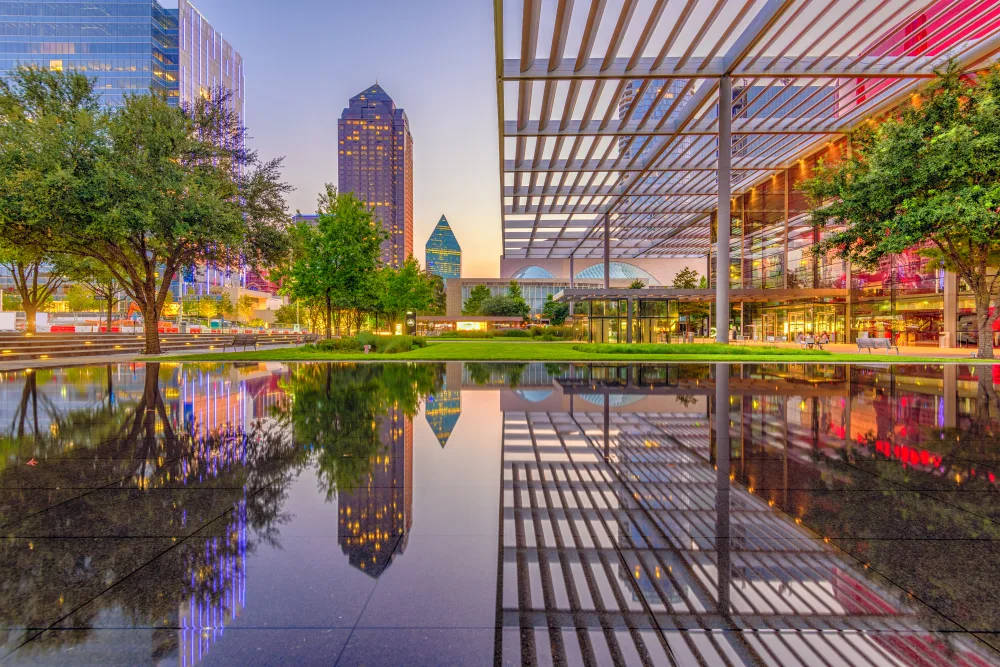
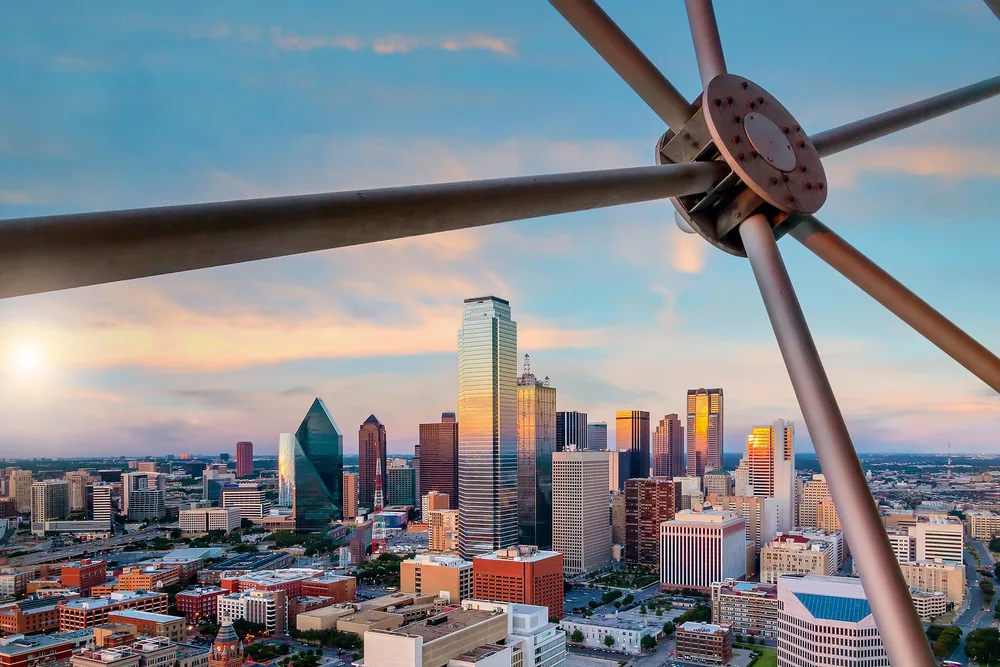
Dallas offers a different kind of proof. The Arts District along Flora Street is one of the largest contiguous urban arts districts in the country, and when the light hits the Winspear Opera House canopy at golden hour the effect is hard to argue with. Uptown's density of restaurants and bars along McKinney Avenue gives you a walkable social life that Fort Worth's more spread-out geography does not replicate. And downtown Dallas, that canyon of glass towers whose reflection fills the Arts District pools at dusk, signals plainly that this city is playing a different game, one organized around scale, speed, and the conviction that bigger is a legitimate ambition. If your professional life runs on networking dinners, conference circuits, and the particular energy of a room where everyone is also building something, Dallas returns the investment.
Every honest relocation story has a friction paragraph, so here it is. The heat is non-negotiable and equal opportunity: July in Fort Worth and July in Dallas are both punishing, and anyone who tells you otherwise has not stood on a parking lot at 4 p.m. in August. Traffic on I-30 between the two cities can dissolve an hour of your life on a random Wednesday afternoon, which means that if you work in Dallas and choose Fort Worth for the pace, you will pay a commute tax that compounds. There is a social tax too, quieter but real. Dallas people have an opinion about Fort Worth people, quaint, behind the curve, proudly provincial. Fort Worth people have an opinion about Dallas people, frantic, performative, allergic to stillness. If you land on the wrong side of that divide at a dinner party, you will hear about it. Picking a city in this metroplex is a mild form of identity declaration, and the locals on both ends will notice which flag you planted.
The people who helped me understand both cities were not developers or chamber-of-commerce spokespeople. My neighbor Carla, who moved from Chicago to Fort Worth's Near Southside, said the thing that clarified it best: she came for a job and stayed because she could actually afford to buy a house near where she eats dinner. My colleague Marcus, living in Dallas's Bishop Arts District for three years, says he could not imagine giving up the professional density, every conversation in Dallas eventually yields a connection he needed. Neither of them is wrong. Both made a complete life. They also text each other about once a month about getting together and almost never actually make the drive.
Before you sign a lease in either city, drive the actual commute you will make, not on a Sunday afternoon, but on a Tuesday at 8 a.m. Eat on the Near Southside in Fort Worth and in Deep Ellum in Dallas in the same week and notice which one you are still thinking about. Spend a Saturday morning at the Fort Worth Farmers Market and a Saturday night in Uptown Dallas. The contrast is not about better or worse; it is about which rhythm fits. Sort your DFW airport logistics early too: frequent travelers make terminal proximity a quiet but serious variable, and depending on where you land, one side of the metroplex will serve you measurably better than the other.
In Fort Worth, you build a week around the Cultural District, a Saturday at the Stockyards, an evening on Magnolia Avenue, and at some point you notice the city has grown around you like something that fits. In Dallas, the city keeps pulling you forward, toward the next opening, the next quarter, the next version of the skyline. The metroplex shares one airport and one brutal July sun. What it offers are two genuinely different answers to the question of what a life in North Texas is supposed to feel like. You are not choosing a winner. You are choosing a week, and then another one, until the place becomes yours.