

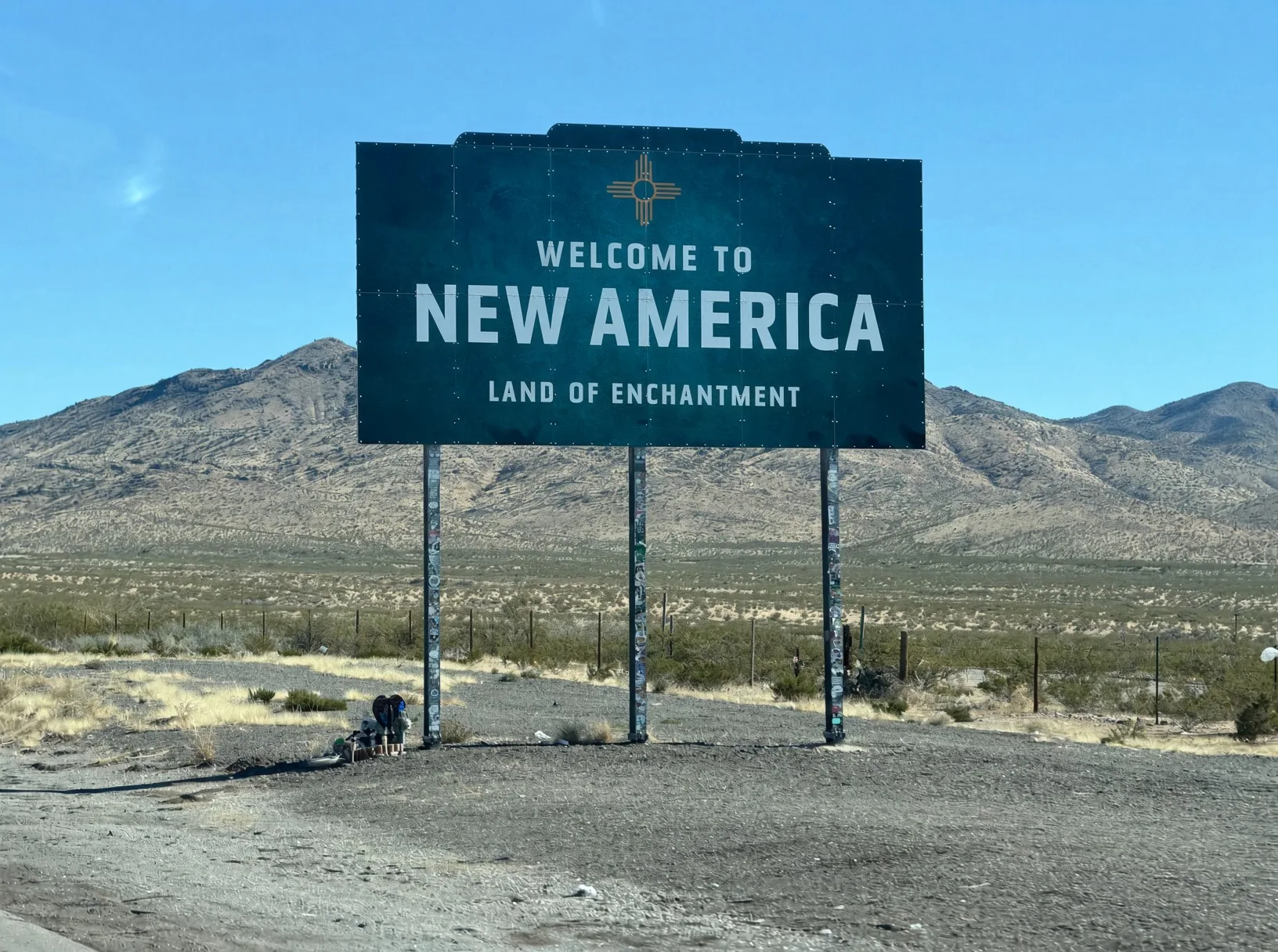
The sign in the photo is a fake. Someone swapped the words on the teal roadside welcome board, the one with the golden Zia sun at the top, the one people pull over to photograph coming in from Texas or Arizona, replacing "New Mexico" with "New America." The image went viral in early September 2026. People shared it. People argued about it. The desert behind the sign kept doing what it does: holding still in the high-altitude light, unbothered.
Worth stating once, plainly: a president cannot rename a state. That power does not exist in the Constitution. The name Nuevo México was given to this land by Spanish colonizers in the sixteenth century, long before there was a United States to belong to. It passed through territorial status and arrived at statehood in 1912 with the name intact. No executive action changes that. Governor Michelle Lujan Grisham said the name is not up for debate. That is where the legal and political story ends, and where the actual story of this place begins.
A name is not branding. It is not a tagline a committee approves. It is the word people reach for when they mean to say: I know where I am, I know what shaped me here, I belong to this ground. That is what "New Mexico" carries. Not geography alone. Belonging. And belonging takes longer than a viral post to establish.
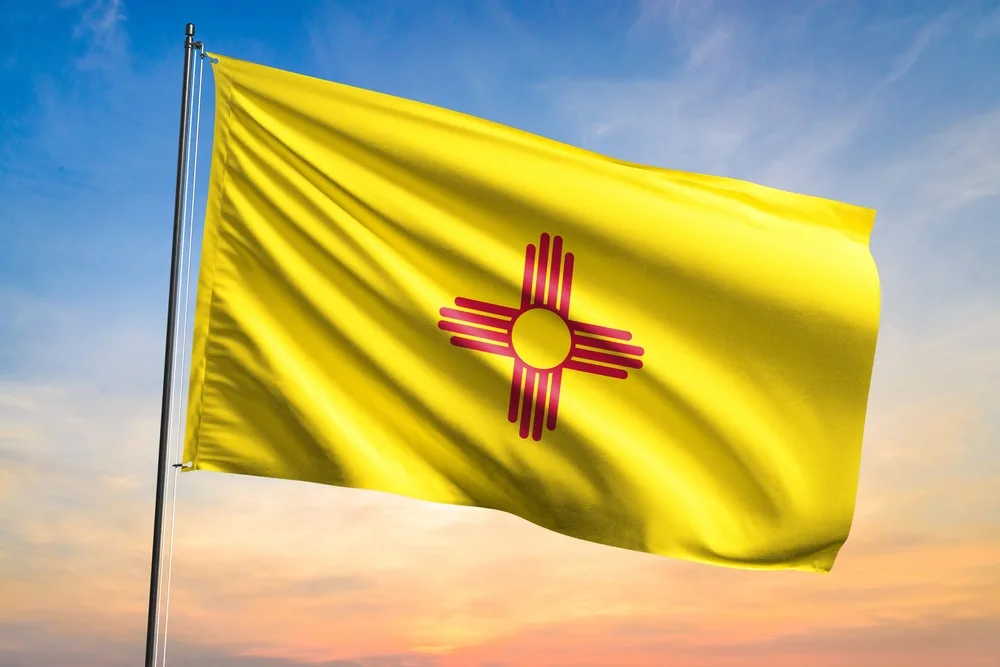
The flag is a specific, unambiguous yellow, the color of late afternoon sun hitting the chamisa along the arroyos north of Santa Fe. The red Zia at its center belongs to the Zia Pueblo people, adopted onto the state flag in 1925. When that yellow catches you through the window of a roadside building or above a school entrance, something in you recognizes it before you think to. That recognition is not tourism. It is place-memory, and it takes years of living here to grow.
The light is the first and most persuasive argument for staying. At 7,000 feet it falls differently, Georgia O'Keeffe talked about it, and she was not wrong, but she also could not fully explain it. In October it goes harder and more horizontal, finding adobe walls at a specific angle in the late afternoon and turning them the color of something warm and alive. Anyone who has spent time watching that light land understands why people arrive for a weekend and start doing the math on a longer stay.
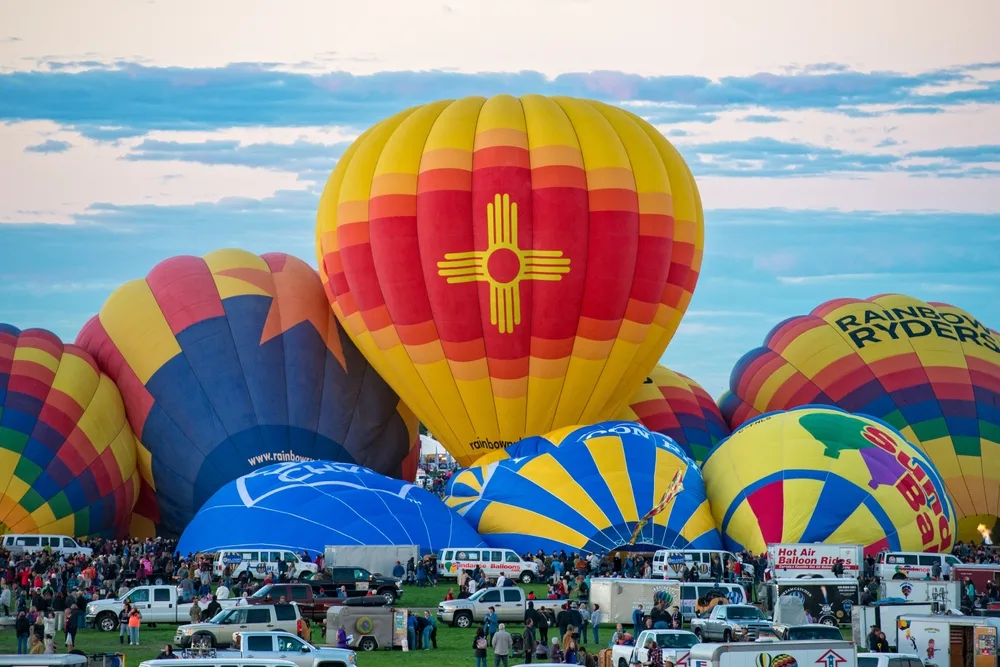
Then there are the balloon mornings. Before sunrise on the field outside Albuquerque, the propane burners ignite, the envelopes fill, and what was flat nylon on cold grass lifts into still air. One balloon carries the Zia in gold on a field of red and yellow panels, and when it clears the tree line it looks less like recreation and more like a declaration. The smell of propane mixing with cold desert air, the low roar of the burners, the crowd going quiet when the first balloon clears the ground, you do not forget it. It becomes part of the internal library you reach for when someone asks why you chose to live here.
New Mexican chile is a loyalty test, and the question of red or green is not small talk, it is introduction. The chile grown in Hatch, in the Río Grande valley, has a specific flavor that does not survive being called "southwestern" somewhere else. Roasting season in late summer fills the air along certain roads with a char-and-sweetness so particular to this state it functions almost as a border crossing: you smell it and you are in New Mexico. The table traditions here go deeper than most visitors realize, and eating your way into them is one of the faster routes to feeling like you actually belong.
The friction is real and should not be romanticized. The distances are not charming when you need a specialist ninety miles away. The altitude punishes you the first week with headaches, disrupted sleep, and the specific exhaustion of a body recalibrating. Internet is patchy in places that otherwise look perfect for remote work. Water is a permanent, serious negotiation between competing needs, and anyone who tells you otherwise is selling something. Housing costs in Santa Fe have moved sharply upward, and the gap between what longtime residents can afford and what the market now demands is a tension the city has not resolved. You feel it. You should feel it.
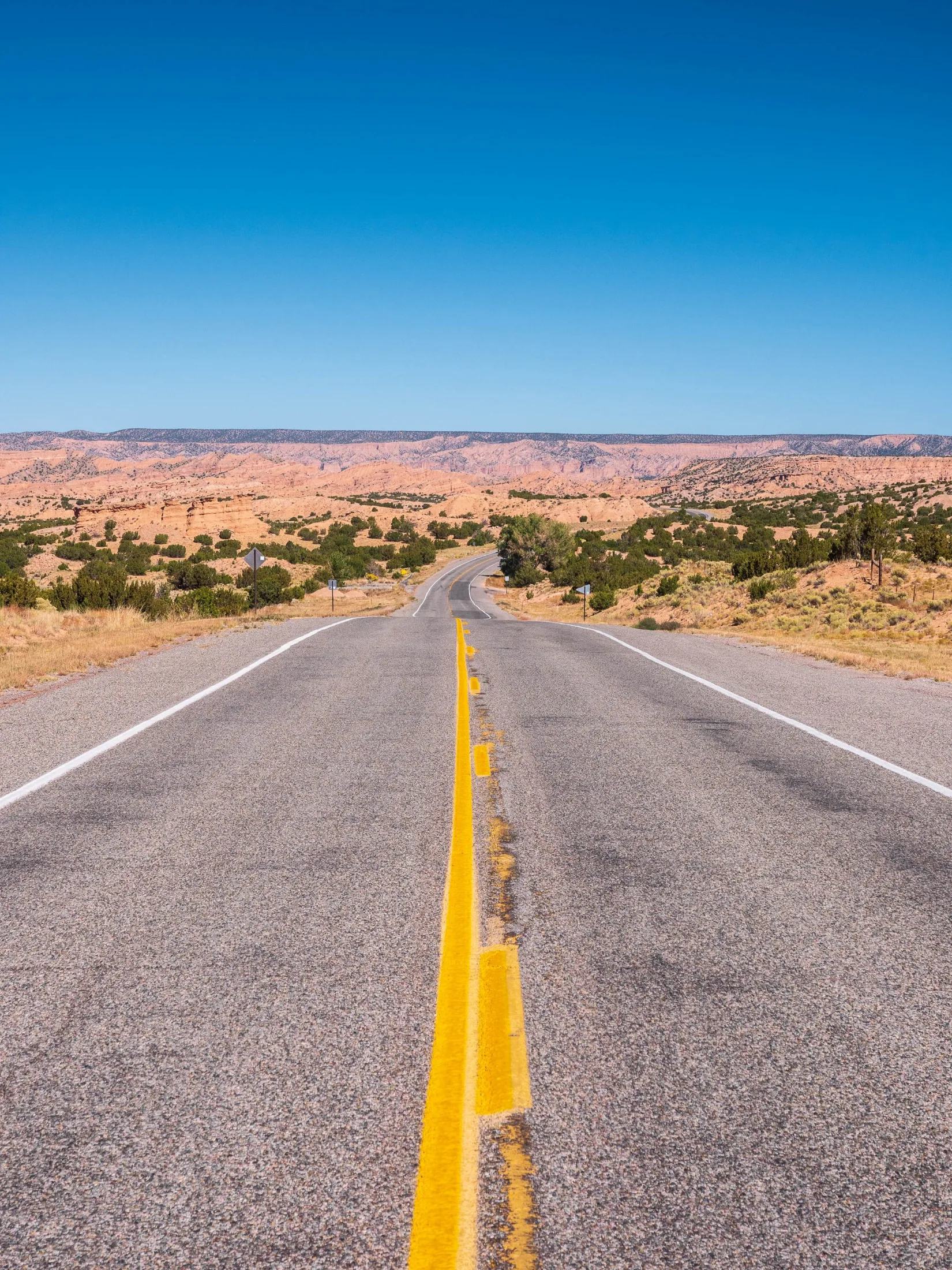
None of that makes the place smaller. The road north out of Santa Fe, bending through red rock and juniper toward the high plateaus, will reset something in you on a Tuesday afternoon when nothing else will. A summer thunderstorm arrives from the southwest, fast and total, then passes in twenty minutes and leaves the air cooler and smelling of wet creosote. Neighbors who have lived on their land for generations and choose to talk to you will change what you know about time and place. These are not selling points. They are the terms of living here.
If you are weighing a move or a longer stay, resist the summer weekend. Come in November, when the light goes low and the town exhales. Walk the streets in the cold. Eat the chile. Drive that highway north until the red rock opens into something even wider. The name that has been here since before statehood, before the territory, since the Spanish first pushed north into this landscape, it will still be there when you arrive. This is the pattern: people arrive, and the leaving gets harder to explain. The land has always been indifferent to what anyone calls it. It just keeps being what it is.