
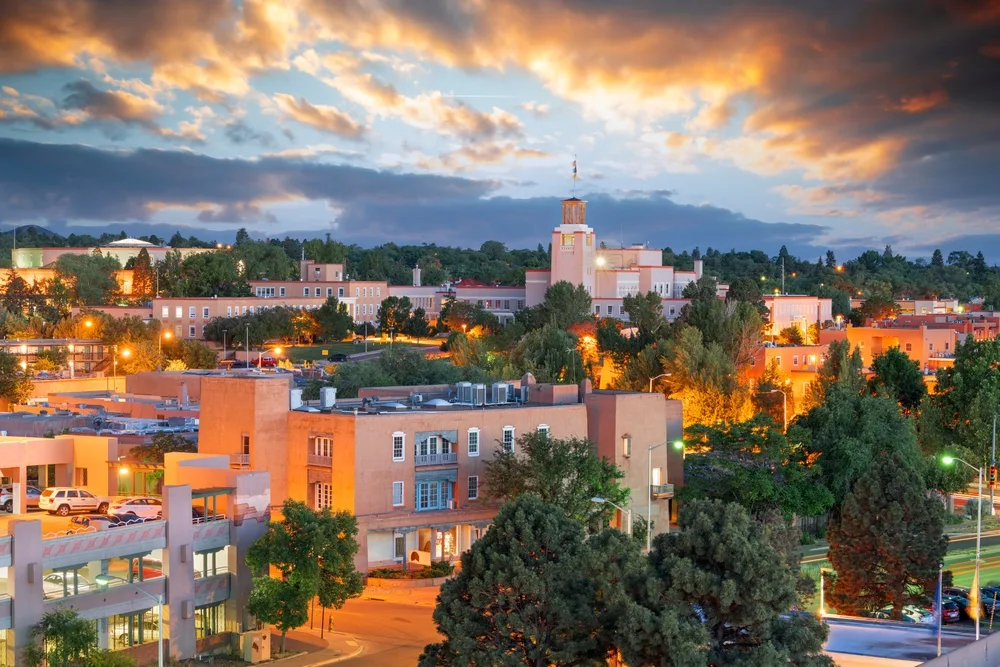
The clouds stack up over the Sangre de Cristos in a way that would look theatrical anywhere else. Here, it's just a Tuesday evening. The warm amber lights of the downtown buildings switch on block by block as the sky goes from copper to violet, and the whole low-slung adobe skyline seems to breathe out. That moment — the one most cities don't have — is the one Santa Fe hands you every single day.
The elevation sits above 7,000 feet, and the air carries it: thinner, cleaner, with the faint scent of piñon year-round. People who move here talk about the first few weeks like a slow decompression. The pace isn't manufactured or marketed. It's structural — baked into the zoning, the building heights, the way the streets dead-end into trails.
The Frame Around Everything
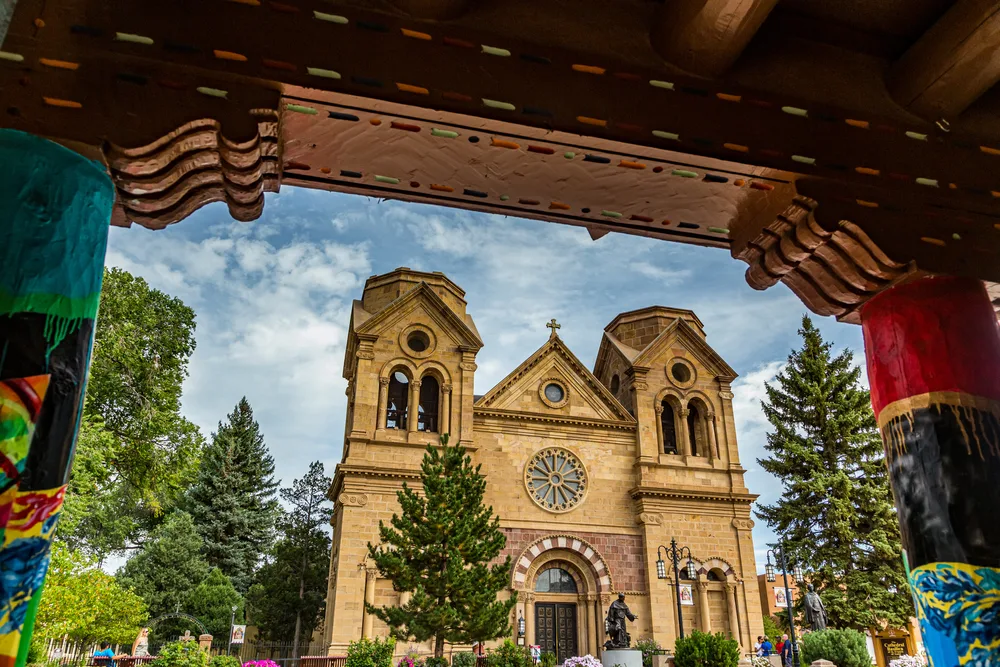
Stand under the portal on Cathedral Place and look east. The hand-painted columns — thick with bold folk-art color, dripping teal and crimson and gold — frame the Cathedral Basilica of St. Francis of Assisi in a way that feels completely unplanned and completely intentional at once. The Romanesque stone towers rise behind a canopy of blue spruce. The rose window sits dead center. The sky above does what New Mexico skies do.
That collision — vivid local artistry pressed up against centuries-old stone — is not an accident of geography. It's the working definition of daily life here. Santa Fe has been a creative capital since long before it marketed itself as one, and the art is not corralled into galleries or festival weekends. It shows up on the columns you walk past on your lunch break.
The Plaza on an Ordinary Day
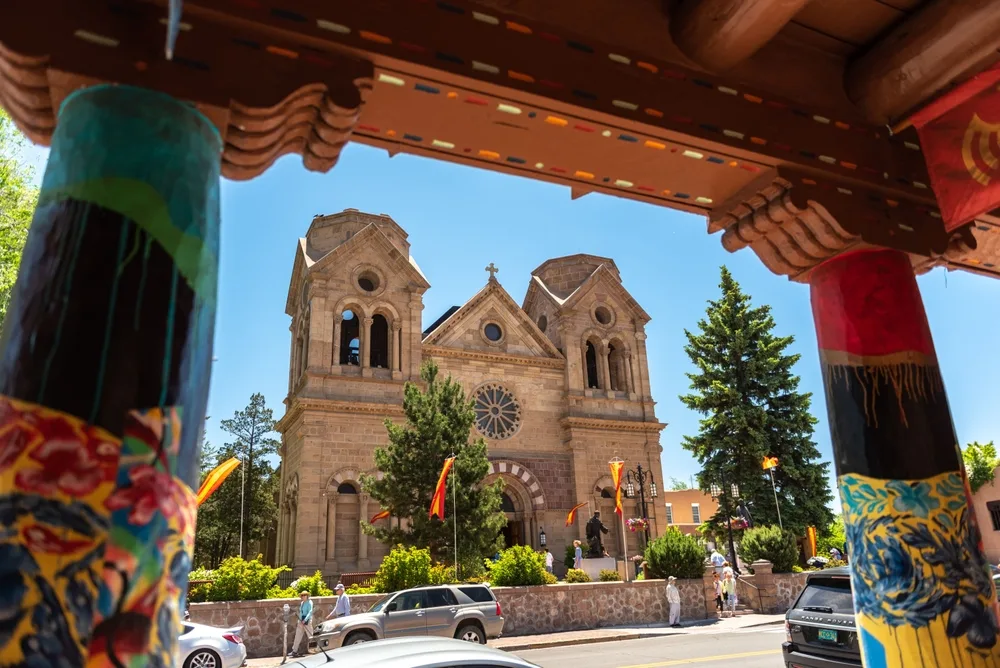
On any given afternoon the flags out front of the cathedral are moving in a breeze that comes down off the mountains and doesn't apologize for itself. People are strolling — actually strolling, not power-walking between appointments. A couple lingers near the statue. Someone is reading on a bench under the spruce trees. Nobody is performing busyness.
The unhurried pace is not a symptom of a slow economy or a lack of ambition. It's a choice the city has made and keeps making. You can be serious about your work and still take twenty minutes to watch the light change over the Jemez. Ambition and stillness aren't a trade-off here — they coexist, quietly, the way everything in Santa Fe seems to. People come to Santa Fe and don't leave — and this is a big part of why.
After the Sun Goes Down
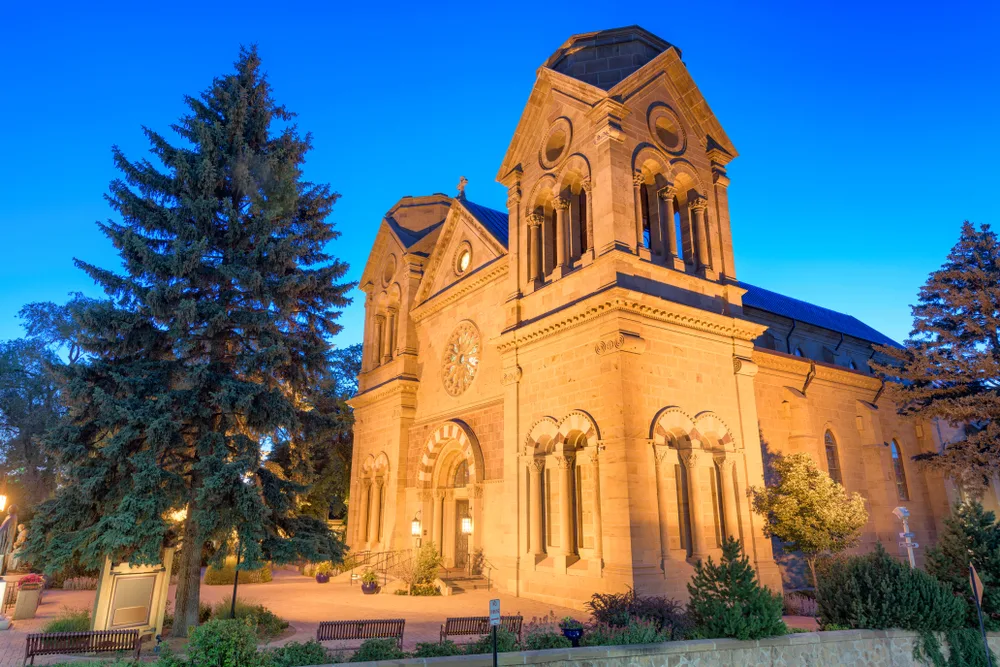
When the sun drops fully behind the mountains and the sky goes that particular shade of cobalt that photographers chase and locals just call evening, the Cathedral Basilica earns a second look. The floodlights warm the Romanesque stone to a deep honey gold. The tall evergreens go dark silhouette. The benches sit empty and unbothered. Most nights there's nobody there to photograph it — just residents cutting through on the way home.
That's what it means to live here instead of just passing through. The postcard moments are your daily commute. The golden hour is just the hour before dinner. The cathedral isn't a landmark you schedule — it's the building you orient yourself by when you're explaining to someone how to find the good green chile.
Move here and the beauty stops being something you notice. It becomes the background condition of an ordinary Wednesday, and that's the whole point.