
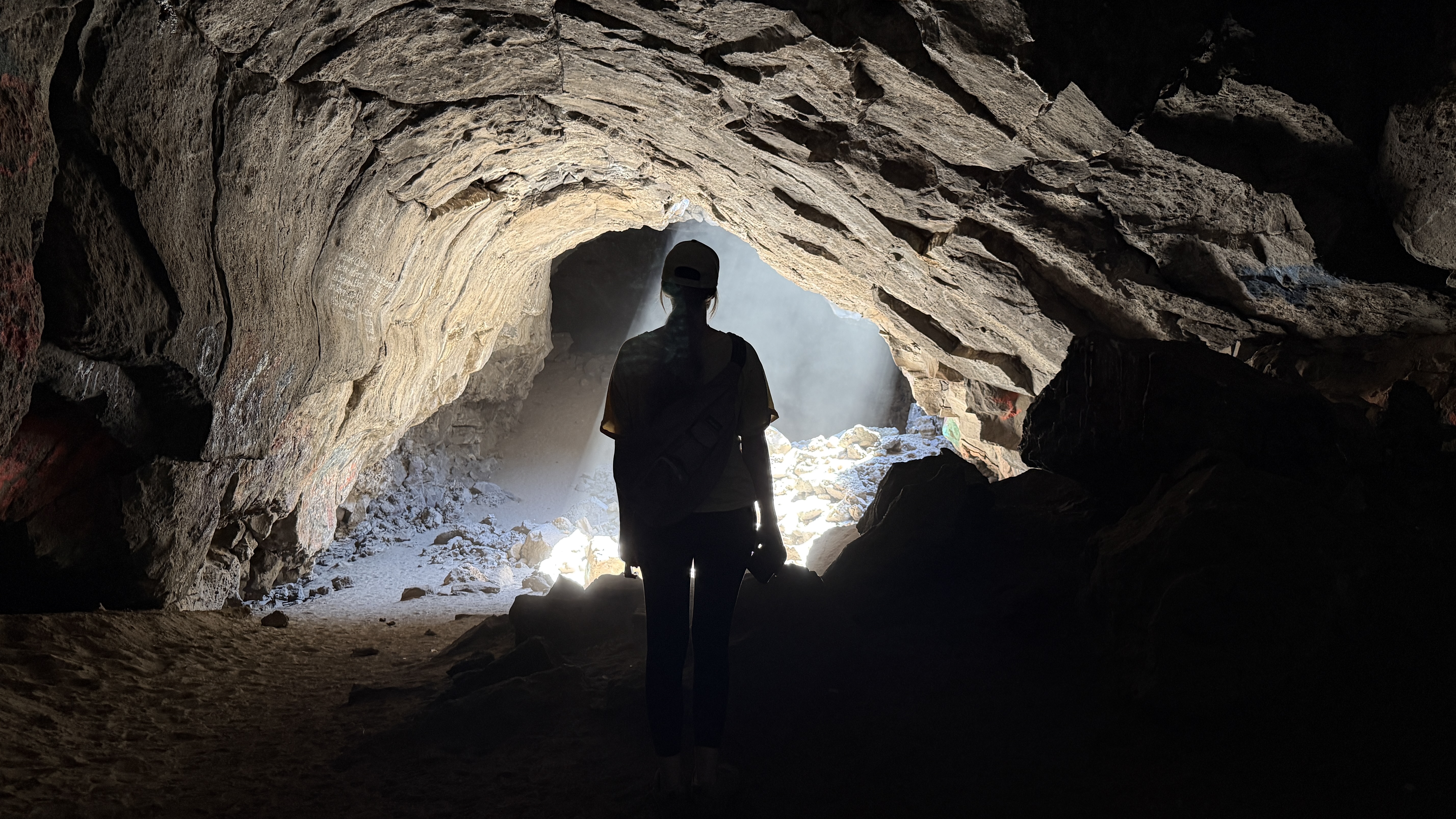
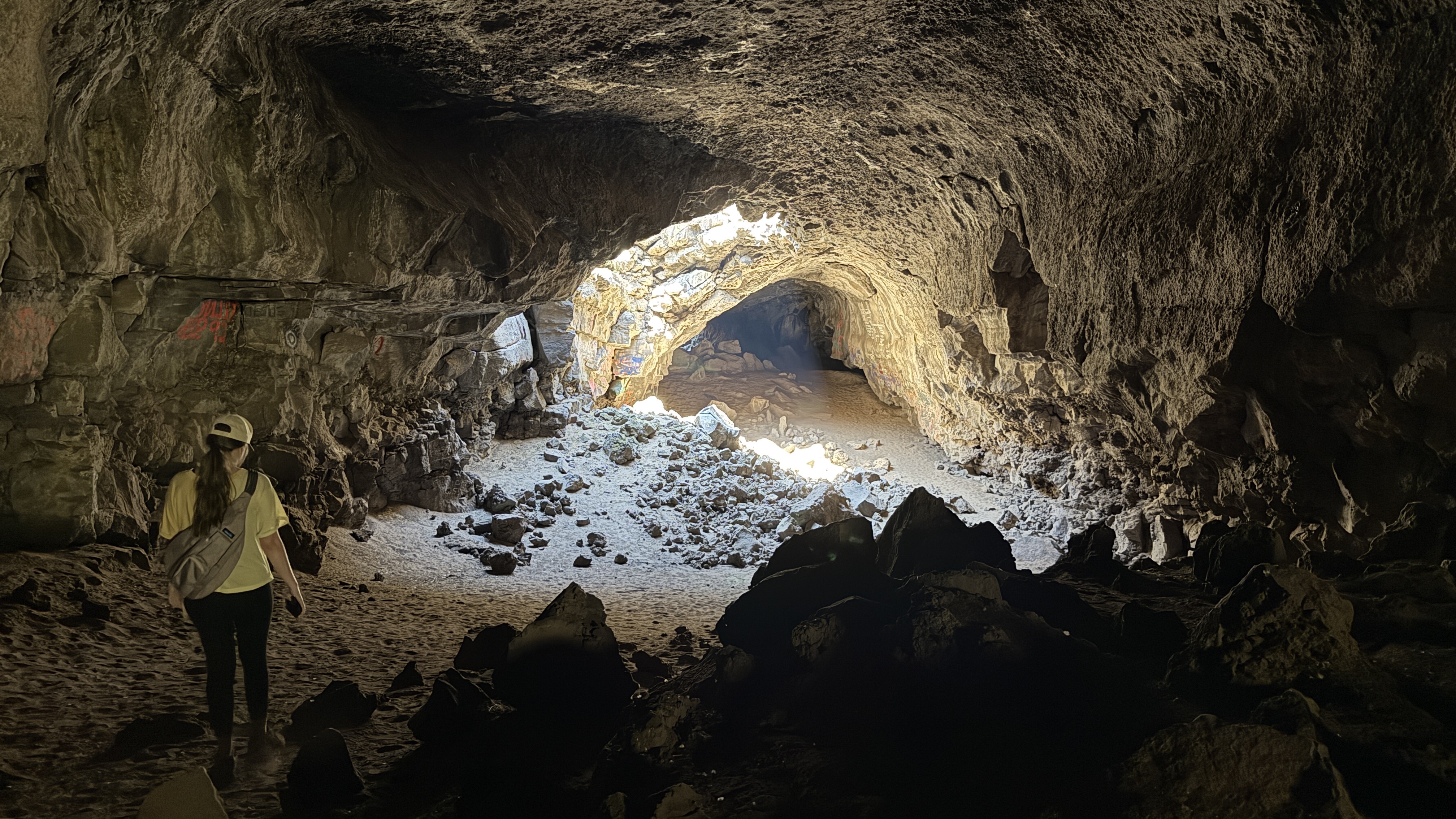
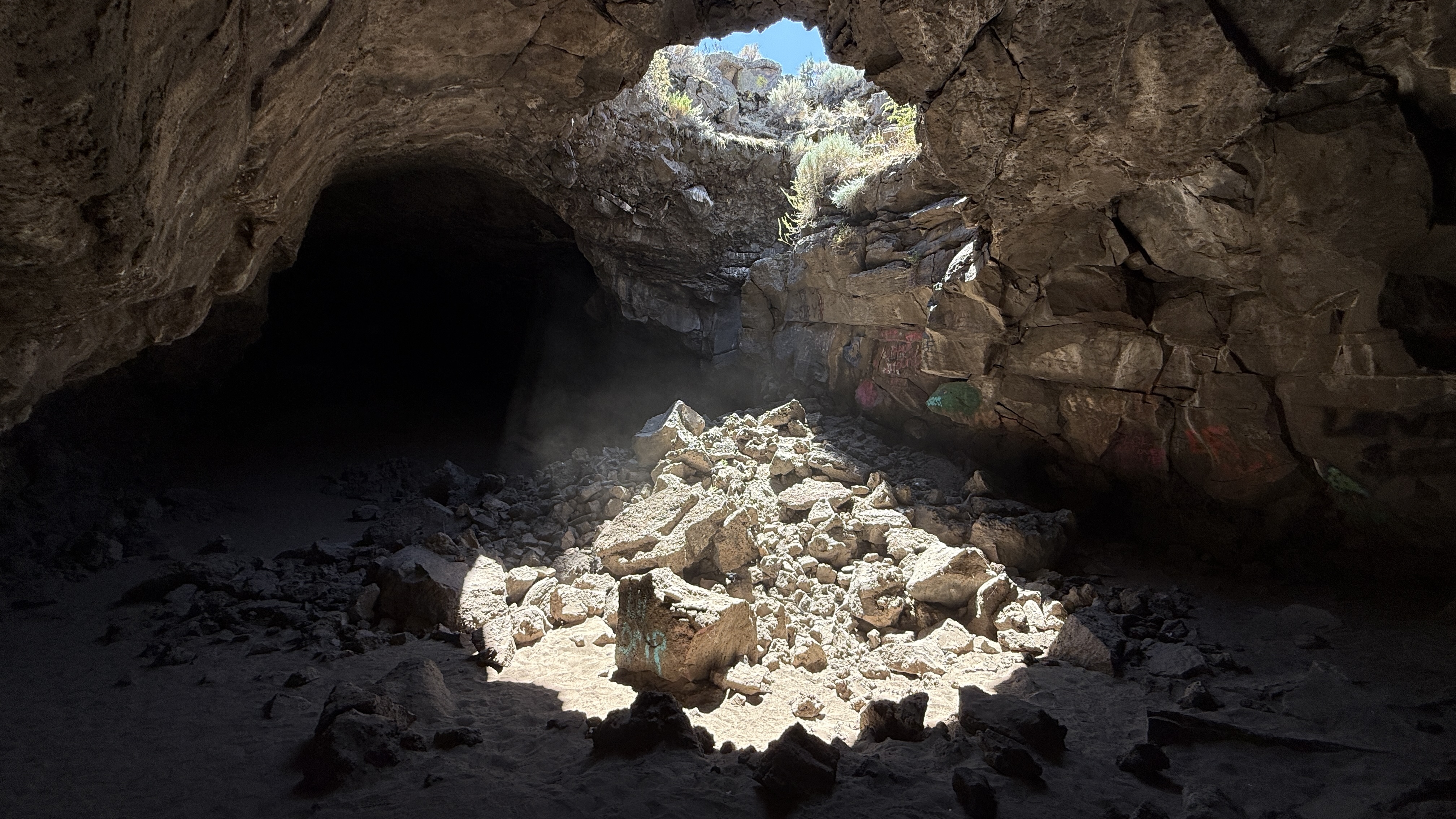
The sand went fine and dark underfoot the moment the light died. Ahead, a hole in the ceiling dumped a hard column of sun onto a pile of broken basalt. Dust hung in that beam. The tube kept going past it, black enough that the walls disappeared. We stood in the cold and looked at the skylight. That is Pluto's Cave. Not a gift shop. Not a paved tour. A feeder tube that once carried lava into the Shasta Valley, now a walk you take on your own light.
People come to Mount Shasta for the peak. That is the postcard. The place that actually tells you what this ground is made of sits northeast of Weed, off US 97, on Forest Road 43N30. You can skip the summit and still understand the mountain if you walk 1,200 feet into this tube.
The Forest Service is plain about how it formed. Basaltic lava came from a vent about eight miles to the northeast, between Deer Mountain and The Whaleback. Pluto's Cave was one of the main feeder tubes into the Shasta Valley. The little lava domes around the entrance are schollendomes, pushed up when the tube filled and the flow bulged. The walls show more than one flow: fine-grained basalt at the base, coarser rock full of gas bubbles near the top. The skylights are collapses. The Forest Service says the diameter is exceptionally large, larger than many of the major caves in the Hawaiian Islands. I am not going to dress that up. It is a big dark room with a hole in the roof, and it is enough.
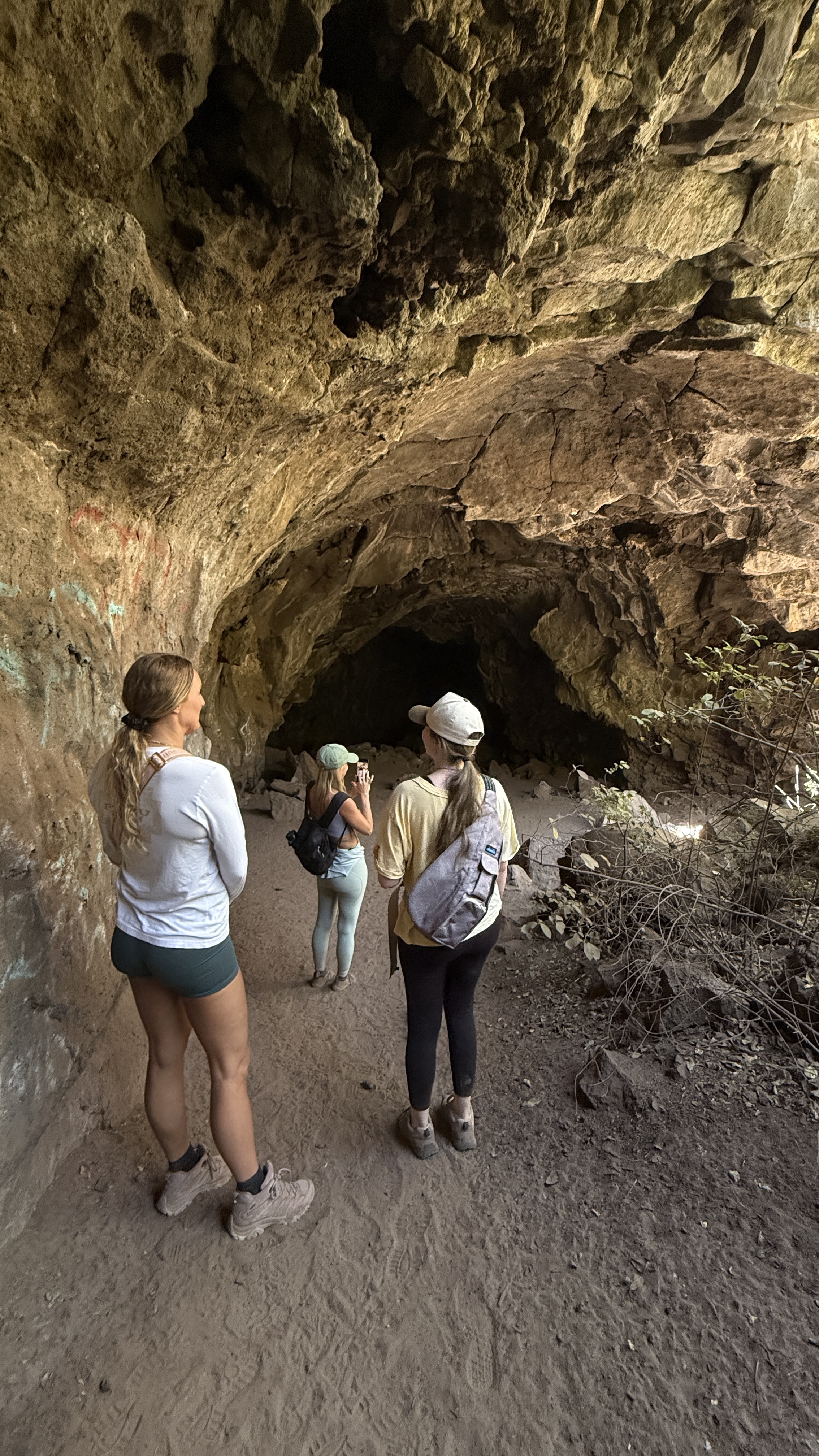
Getting there is a short stack of turns, not a pilgrimage. From I-5 in Weed you take US 97 northeast about seven miles to County Road A-12. Left for about 3.3 miles to Forest Road 43N30. Left again, two-tenths of a mile, to the parking area. Park in the designated lot only. Do not drive past it or off the road. The walk from the lot to the mouth is short, juniper and high-desert ground, with the mountain sitting on the horizon if the weather is clean. You hear the highway fade. Then you hear nothing but feet on sand. The first opening is not the pretty one. It is a raw mouth in the rock, then the tube, then the skylight you came for. No fee. No permit. The Forest Service last restated the rules in May 2025: no camping, no food or drink inside, no pets in the cave, no fires, no torches, no smoking, pack out everything. There is no water and no trash service.
Here is the part the brochure tone will skip. The cave is not maintained like a park path. The floor is sand and loose rock. It gets black past the first skylight. If you did not bring a real light, you turn around. Graffiti shows on the left wall in the first chamber, red and blue, cheap against the basalt. People have been in here who did not treat it as a place. The air drops. The scramble is real. Dogs stay out. If you came from a Mount Shasta afternoon that was hot and bright, this is a different season ten minutes from the car.
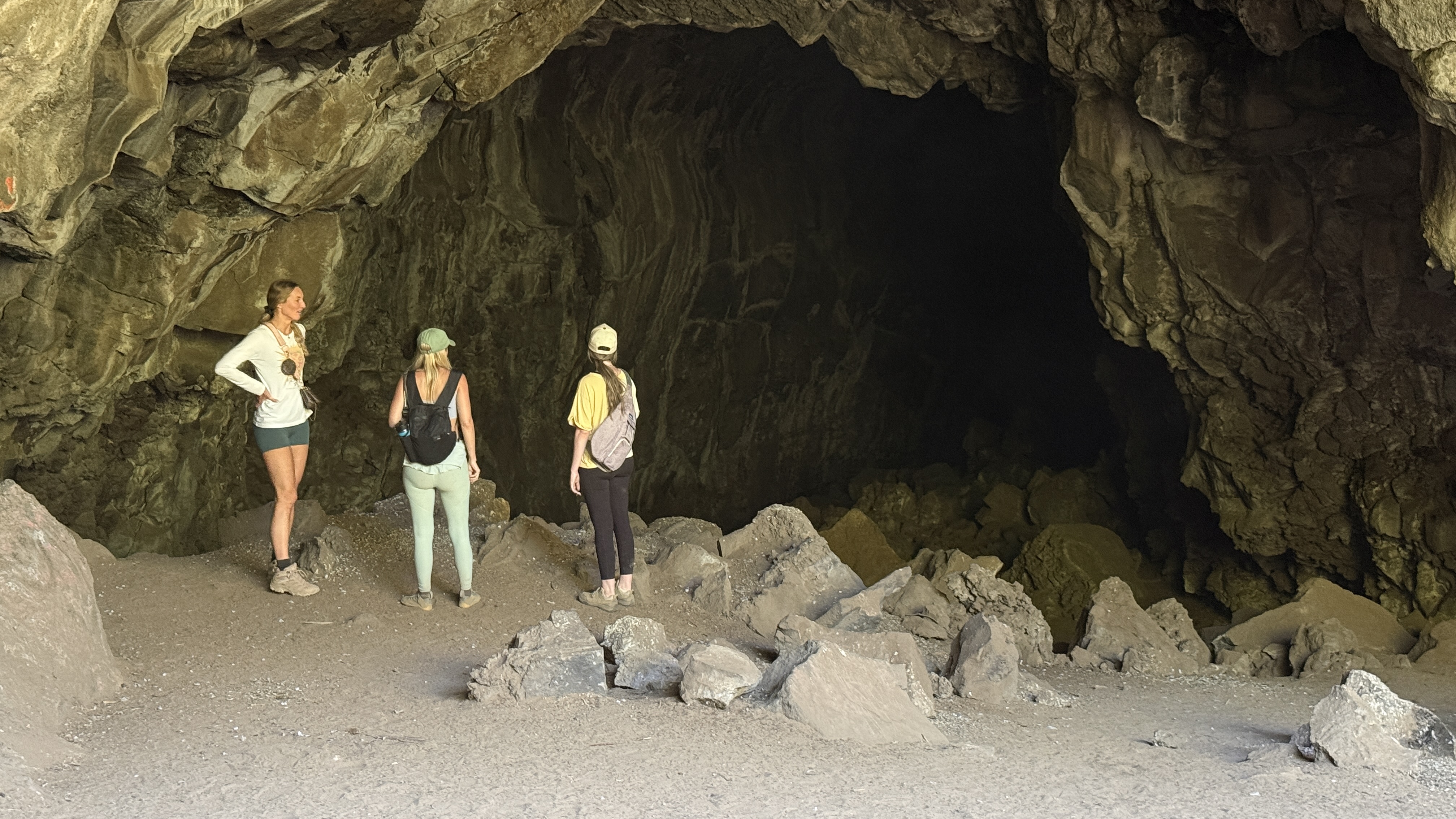
I will not invent names for the people on that sand. I can say what the visit was. Three of us at the mouth, looking into the dark. One of us under the skylight, back to the camera, yellow shirt, watching the beam hit the rock pile. Phone lights. Footprints already all over the dust. The tube narrowing ahead until it is just a hole. Past that beam the cave does not perform. It just continues. If you keep walking you are choosing the dark on purpose, which is the only honest way to do this place. You feel small in a way the peak does not make you feel, because the peak is always above you and this is around you.
Tomorrow is simple. Gas up in Weed or Mount Shasta. Take 97. Make the A-12 turn. Wear shoes that grip on loose rock. Bring two lights, not one, and a spare set of batteries. A jacket even in August. Leave the dog in town. Eat before you go in. Walk to the skylight, then decide if you want the next 1,200 feet. When you come out, the mountain is still there on the skyline. You just saw what it is built from, under your feet.
This is LIVIN in Mount Shasta. The cave first, then the peak. Where You LIVE.