
How to Visit the Space Needle and Seattle Center
A napkin sketch became the symbol of the 1962 World's Fair. Here is the build story, the 2018 renovation, and how you reach the top from Seattle Center.

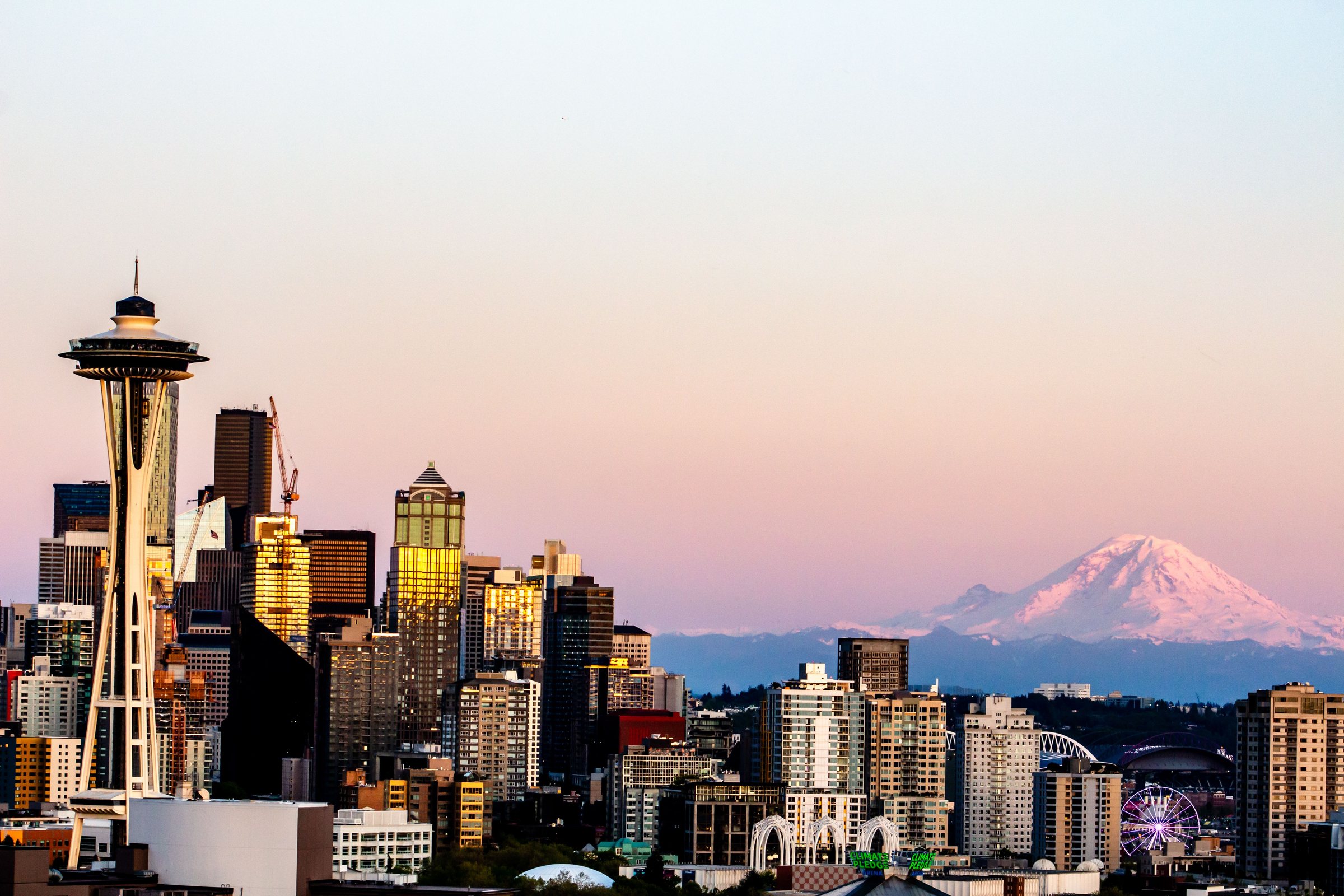
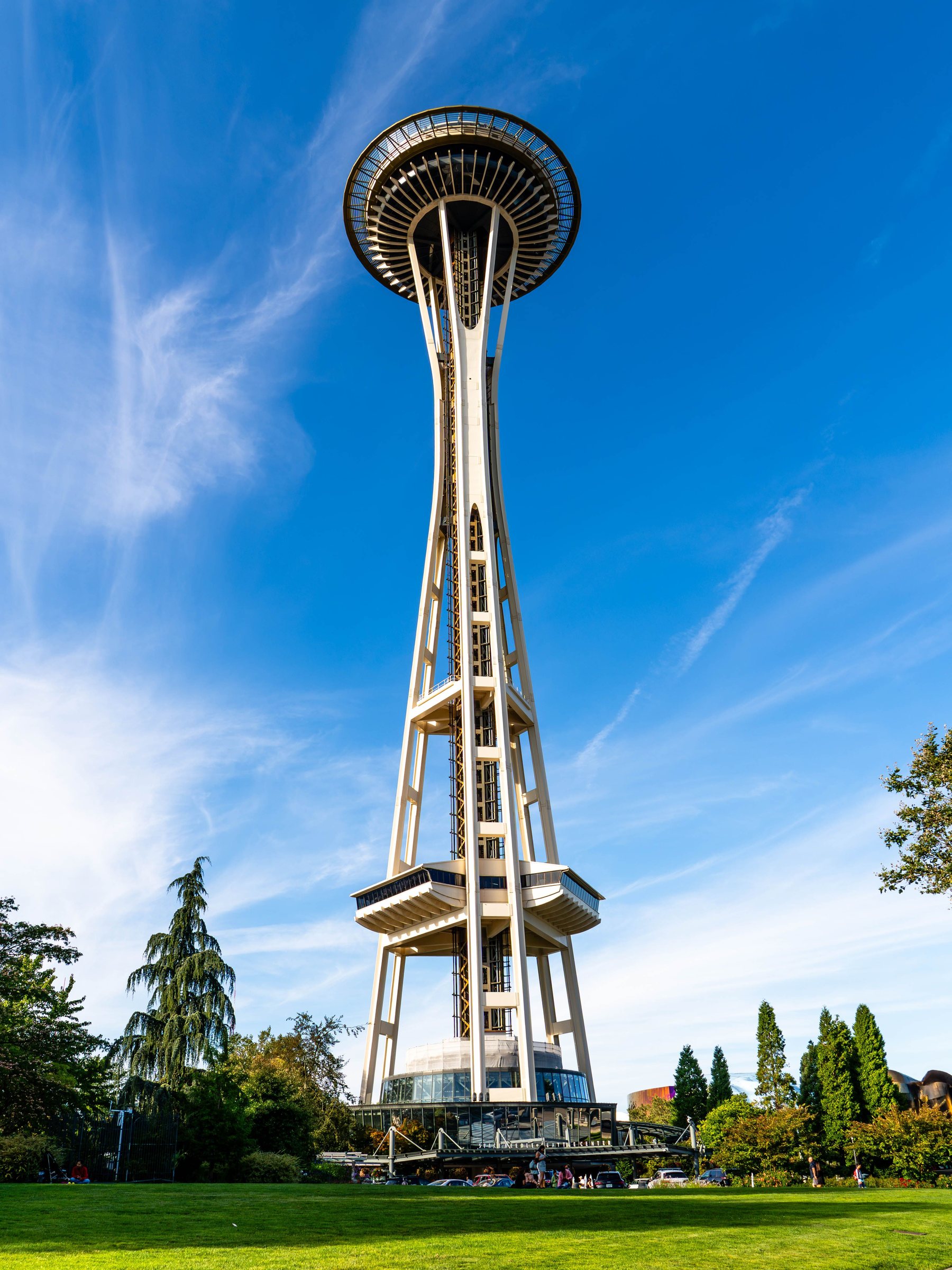
The Space Needle is at 400 Broad St., on the Seattle Center grounds. Built for the 1962 World's Fair, it opened to the public on the fair's first day, April 21, 1962. Two glass levels offer 360 degree viewing. The tower is open year round, hours vary by season, with natural sights by day and city lights at night.
Napkin Sketch
In 1959, Seattle hotel executive Edward E. Carlson, a chief organizer of the 1962 World's Fair, was inspired in Stuttgart, Germany, by a broadcast tower with a restaurant. His sketch went on a cafe napkin, per the tower's own history, and he named the enduring symbol for Seattle the "Space Needle". Versions included a landed UFO and a tethered balloon.
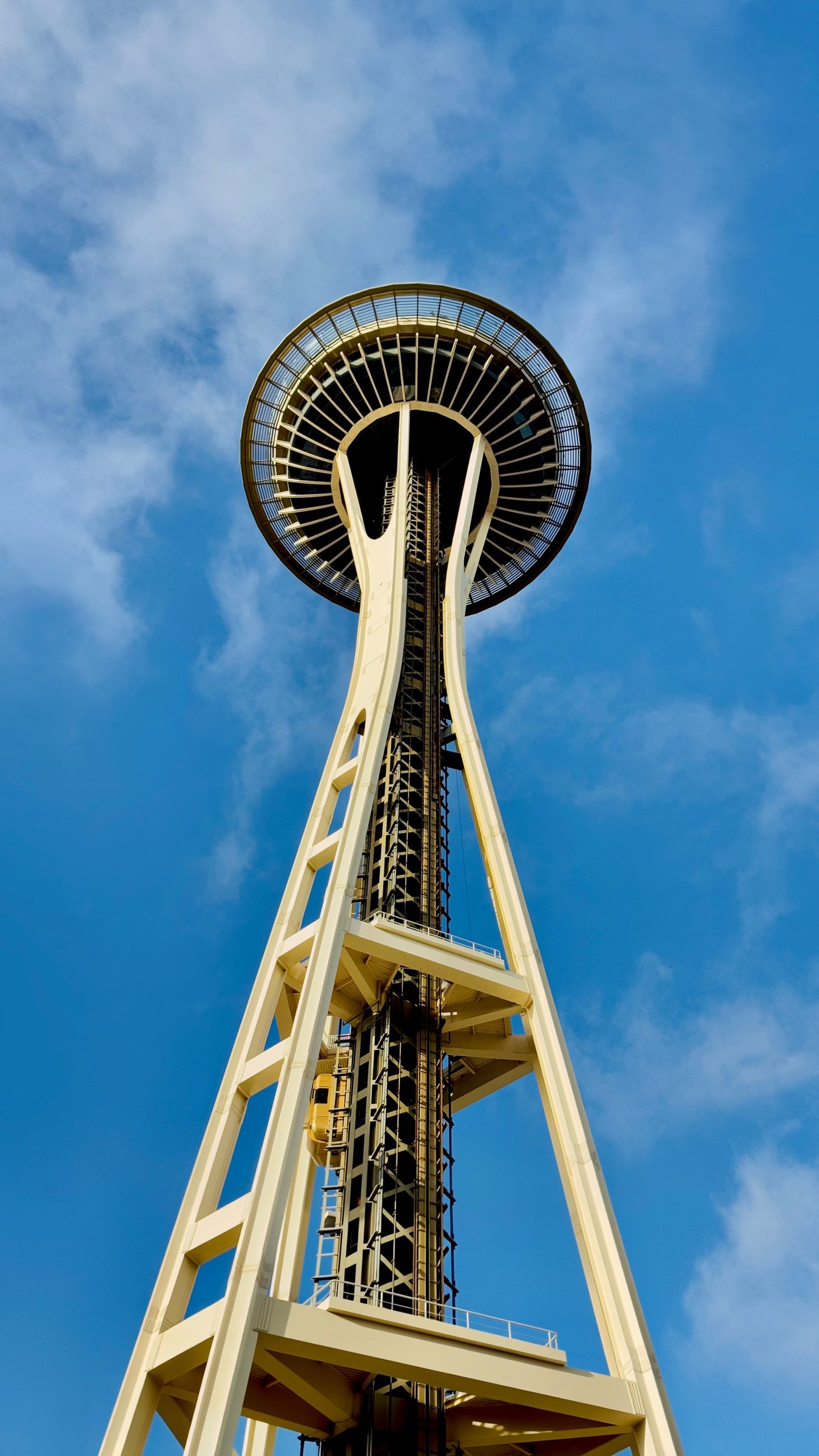
John "Jack" Graham Jr. focused his team on a flying saucer top house. Victor Steinbrueck set the wasp-waisted shape from the abstract dancer sculpture "The Feminine One", and John Ridley, on Graham's team, perfected the double-decked crown. Alfred H. Fast of the Graham firm was project architect, and chief engineer John Minasian had designed NASA rocket gantries, including the Saturn assembly gantry.
Record Build
Groundbreaking on April 17, 1961, opened a hole 120 feet across. On May 22, 1961, 467 cement trucks poured for about 12 hours while a crowd watched, the largest continuous concrete pour attempted in the West. The tower's own history says that base weighed as much as the tower and set the center of gravity five feet above the ground. Steelworkers from Pacific Car and Foundry placed 3,700 tons of steel.
Workers topped off on December 8, 1961. The basic tower took eight months, per the tower's history. The paint put Astronaut White on the legs, Orbital Olive on the core, Re-entry Red on the halo, and Galaxy Gold on the sunburst and pagoda roof.
Seattle Center
The Century 21 World's Fair opened April 21, 1962, at 11 a.m., for 184 days on 74 acres at the foot of Queen Anne Hill, north of downtown. On opening day the Space Needle carillon rang 538 bells over 44 loudspeakers, and 2,000 balloons printed "See You In Seattle" went up. The original mast was a natural gas torch lit at night in rainbow colors. An estimated 2.65 million visitors came during the fair. The 605 foot tower was the tallest in Seattle when it opened.
The fairgrounds became Seattle Center. The campus is 74 acres and home to more than 30 organizations in arts, culture, sports, and entertainment. Buildings from that fair include Pacific Science Center, once the United States Science Pavilion, the Monorail, and the Space Needle.
Later Chapters
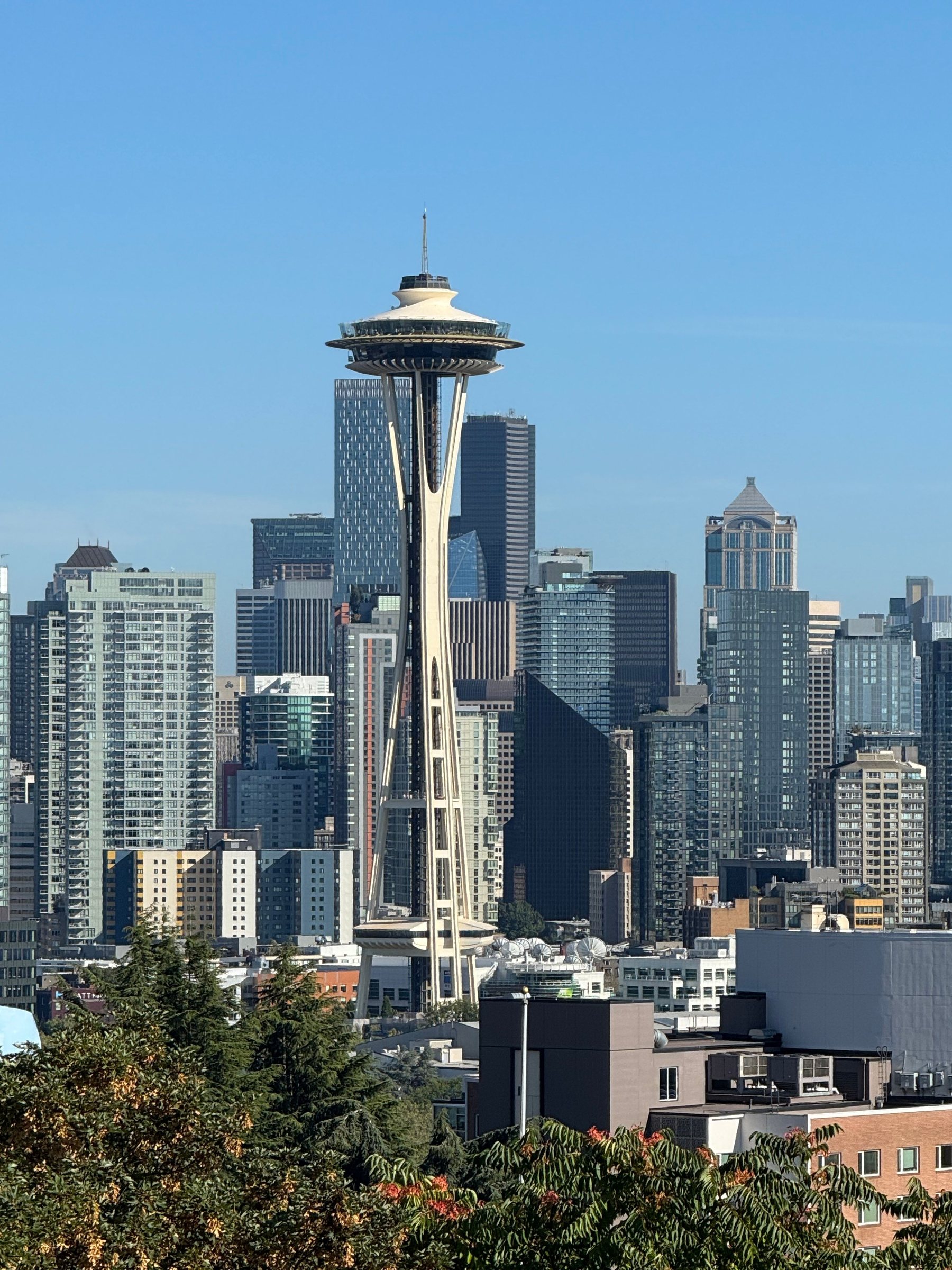
The 100 foot SkyLine level opened May 19, 1982, as an event space. Legacy Lights, a beam of 85 million candela, shine up for national holidays and special occasions. For the 50th anniversary, Space Race 2012 offered one winner a flight into orbit, announced by Apollo 11 astronaut Buzz Aldrin.
The Century Project, the largest renovation in the tower's history, began in September 2017 and stayed open through the summer 2018 reveal. Alan Maskin, design principal at Olson Kundig, led the design with Hoffman Construction. Glass from Switzerland, Germany, and California passed 176 tons in 10 types and added 196 percent more glass to the top house. Wire caging on the outer deck gave way to 11 by 7 foot glass barriers that tilt outward with the building. In 2022 the AIA gave Olson Kundig its National Architecture Honor Award for the project.
Monorail and Parking
The Seattle Center Monorail, the first commercial monorail in the nation at full scale, links downtown and the Space Needle. Alweg began in April 1961, and public rides started March 24, 1962, nearly a month before the fair. Blue and Red, made in West Germany in 1961, moved over eight million guests in the fair's six months. The entrance is outside on the north side of the Space Needle, across from the monorail station. Parking at the Needle is limited, and Seattle Center parking is a short walk away.
Timed Tickets
Arrival times come every 15 minutes with a 5 minute slot, so arrive at the time on your ticket. Step outside that 5 minute mark, early or late, and see a team member for the next time. Your ticket is good for its date, and you can stay on the Upper Observation Level and the Loupe Level until closing. Allow about 30 minutes from the entrance to the top for security, the Building the Marvel history exhibit, and the elevator.
Observation Levels
The Skyliner, at up to 10 mph, reaches the Observation Level in about 41 seconds, a 520 foot rise with floor to ceiling glass. Outdoors, open air glass walls hold 24 tilted Skyriser glass benches. Oculus Stairs lead to The Loupe at 500 feet, the first rotating glass floor and the only one, at 37 tons with 10 layers of structural glass. Through the floor you can see 12 motors, the elevators, and the counterweights.
Cameras are allowed and photos are highly encouraged. Tripods are allowed if pathways and views stay clear. Personal video is fine, and anything beyond personal use needs approval from the Public Relations Department.
Day views or city lights? Either can be yours.
Stories, places and events, edited by LIVIN.in.