
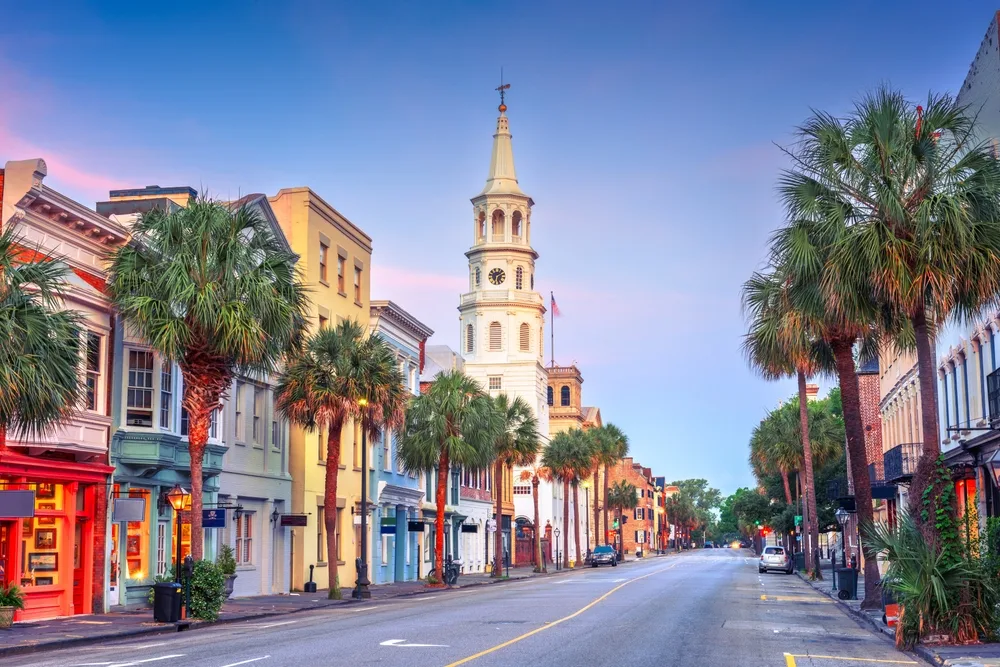
Before the tourists arrive, before the heat sets in, Charleston belongs to itself. The facades along the lower peninsula — yellow, red, slate blue — catch the early light in a way that makes the whole street feel composed. The palms stand still. The steeple of St. Michael's rises white and unhurried against a sky that hasn't decided its color yet.
That image is not a marketing device. It's part of the reason South Carolina has spent the last several years at or near the top of domestic migration rankings. People come because the place looks like this — and stay because it functions like somewhere worth staying.
The Market Has Been Here Since 1807
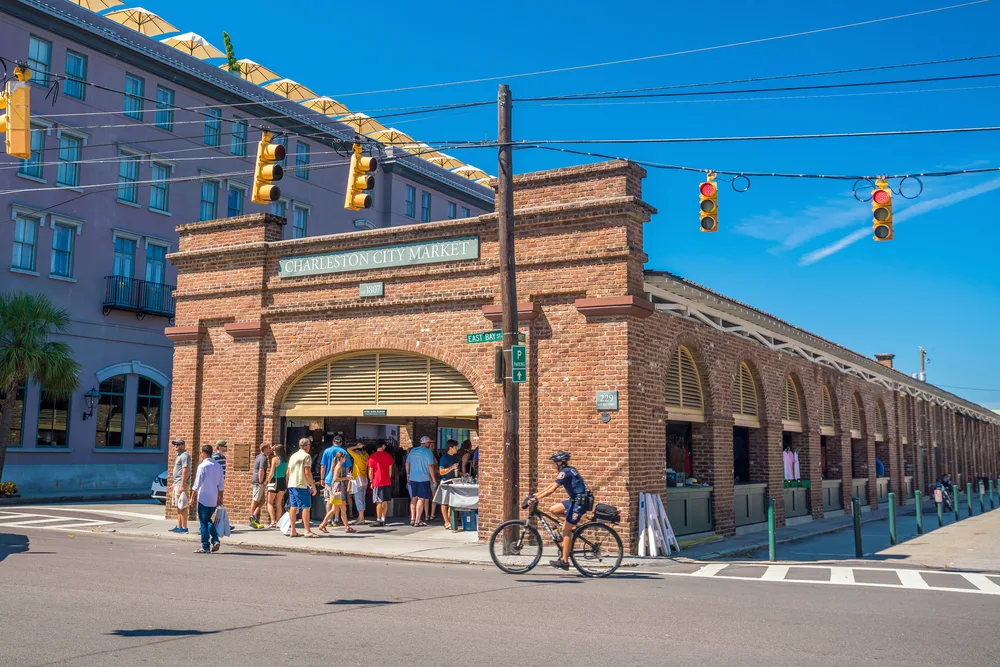
Walk down to the Charleston City Market on a weekday morning and the crowd tells you something true about the state right now. Long-timers moving through out of habit, newcomers slowing at every stall. The brick arcade — open-sided, long, low — has been here in some form since 1807. It doesn't perform history; it just has it.
That dynamic plays out across South Carolina at a larger scale. The infrastructure of a place people actually live in — markets, squares, neighborhoods with some age on them — was already here when the migration numbers started climbing. The state didn't build itself for an influx. It was just ready.
The Numbers People Run Before They Move

Most moves don't start with a photograph. They start with a conversation — with a spouse, a business partner, a friend who already left and won't stop talking about it. The decision to relocate to South Carolina is rarely impulsive. People research it, argue about it, run the numbers: cost of living relative to coastal metros, tax structure, access to schools, airports, employers. South Carolina holds up under that scrutiny, which is why so many of those conversations end the same way.
The state has drawn serious economic investment in recent years — manufacturing, aerospace, life sciences — which means the professional calculus looks different than it did a decade ago. Remote workers came first, but they're no longer the only story.
The First Night in a New Place

There's a specific moment that comes after a long-distance move — after the truck is unloaded, before anything is unpacked — where you sit down and the house goes completely silent and you realize you actually did it. The boxes are still everywhere. The kid climbs into someone's lap. Nobody moves for a while.
That moment is happening in South Carolina neighborhoods right now at a rate most states can't match. Families who spent years watching their metro area get more expensive and less manageable made a decision, and they're sitting in it. The state's population growth has been consistent enough that it's become the expectation rather than the headline.
Dusk in a City That Has Stayed Itself
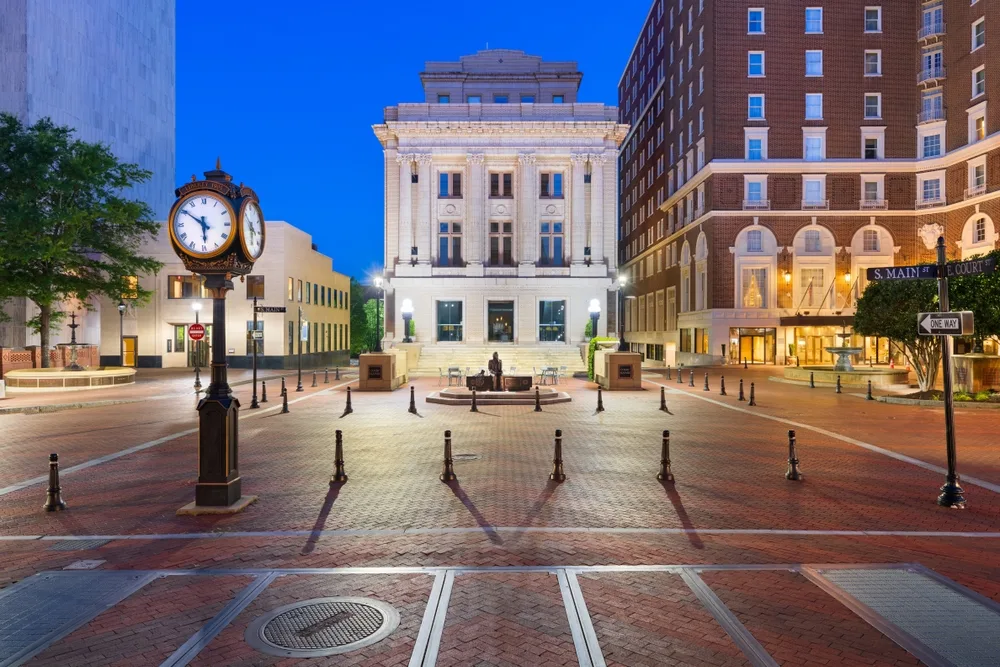
By evening the brick square goes calm. The street clock casts a long shadow across the pavers. The neoclassical building behind it — stone facade, tall windows going warm with interior light — looks like it was built by people who expected the city to still be here in a hundred years. They were right.
This is the part of South Carolina that doesn't photograph dramatically but matters most to the people who choose to live here: the sense that the place has scale, continuity, and enough civic structure to feel like somewhere rather than anywhere. It's not loud about what it is.
South Carolina keeps ranking among the nation's top destinations for domestic movers because, on closer inspection, it keeps being exactly what it looks like from a distance. That's rarer than it sounds.