
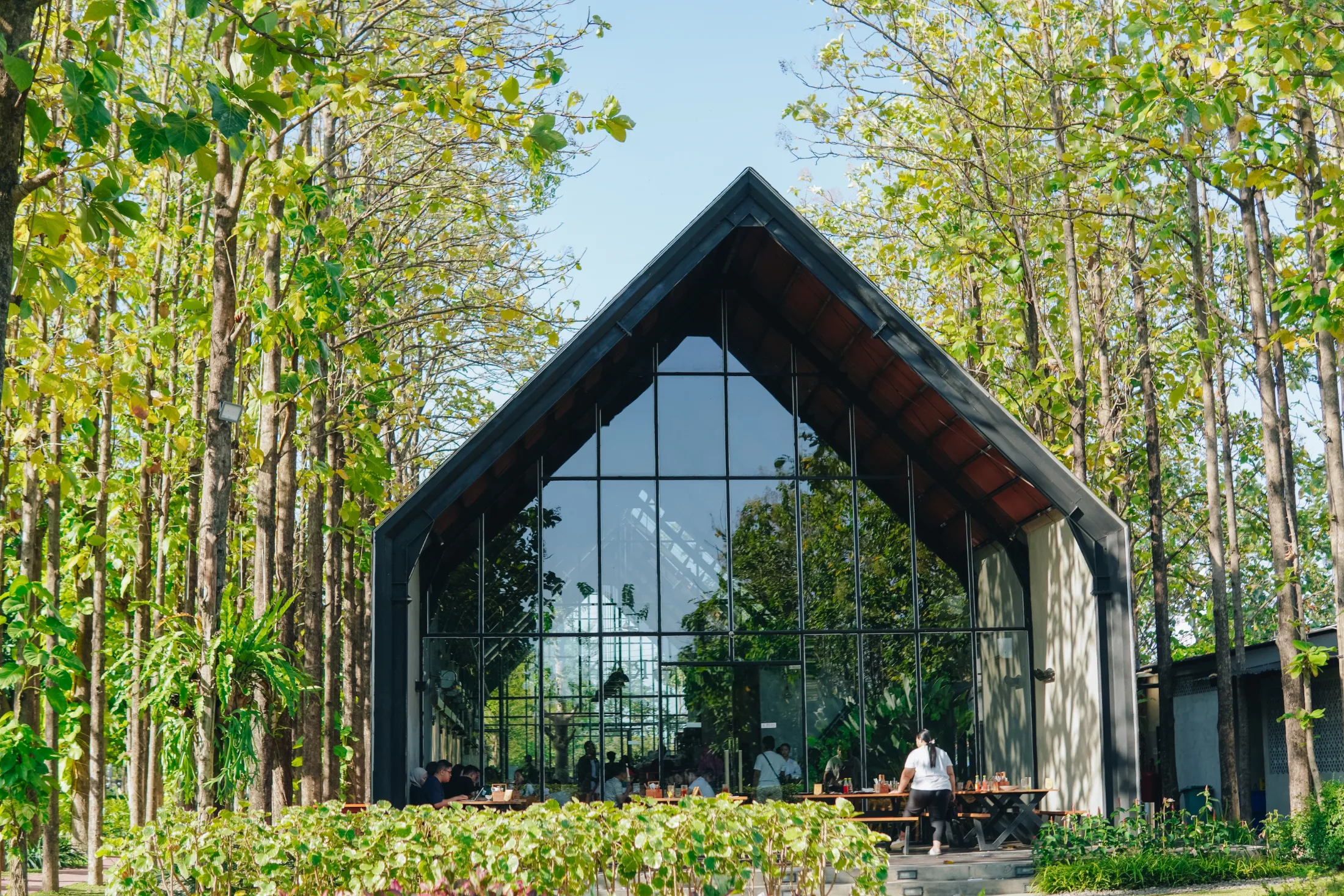
A glass A-frame, black steel frame, full gable of windows facing a stand of tall trees. Inside, people sit at plain wooden tables — no one performing productivity, no one rushing. The light comes through the canopy in pieces. The trees are the décor. That's the whole idea.
One version of nature-adjacent living is a subdivision with a greenbelt behind it. The other version is the forest as the first thing you register every single morning — not because it's scenic, but because it is structurally unavoidable. Mount Shasta operates on the second model. The mountain doesn't frame the view from a distance. It is the weather, the temperature, the smell of the air when you open your door before coffee.
People who live here will tell you the adjustment is real. You stop managing your relationship with the outdoors and start being managed by it. One year in, most of them say the same thing: the landscape got into their nervous system.
Built For the Water, Not Around It
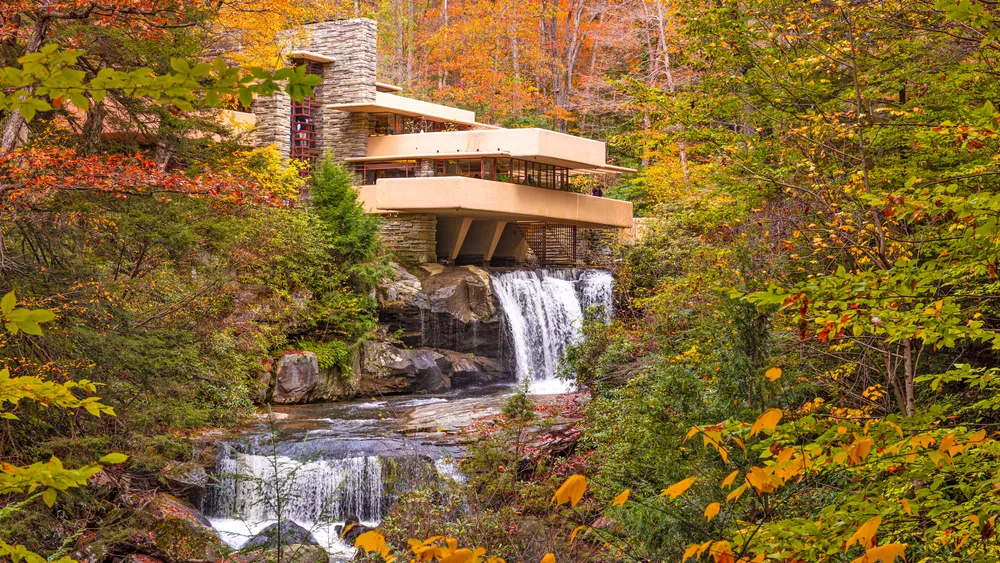
The most honest architecture in a landscape like this doesn't resist its surroundings — it concedes to them. Horizontal concrete planes cantilevered over a falling stream, stone walls that read as an extension of the riverbed below, autumn color pressing in from every side. The structure in that image isn't imposing itself on the woods. It's negotiating with them, and the woods are winning, and that's correct.
That's the standard worth holding. Not how dramatic the design is, but how well it listens. A building that belongs to its site feels different the moment you're inside it — the sound of water below, the light shifting as clouds move through, seasons visible from every window without going anywhere. Mount Shasta rewards that kind of attention to place. The land is specific enough that shortcuts show.
The Light Changes the Plan
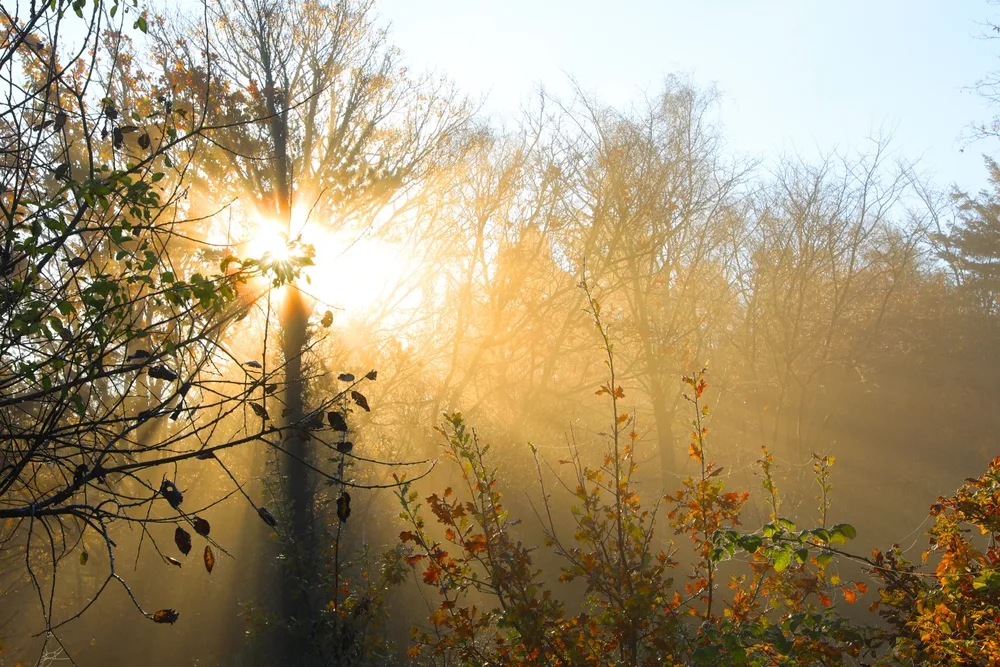
There's a particular hour in the forest here — after the mist hasn't quite burned off, when the sun clears the ridge and throws long rays through bare branches — where whatever you were planning to do next becomes optional. The light turns the air gold. You can see individual particles suspended in it. It isn't dramatic in a postcard way; it's quiet and specific and it stops you.
That's the rhythm this place runs on. The weather here has personality — fog that settles hard in the valley, mornings that arrive slowly, afternoons that shift without warning. You learn to read it. After a while, you start building your day around it rather than working against it. Most people who stay long enough say that's not a compromise. That's the point.
The trails around Mount Shasta put you directly inside this light, this mist, this particular quality of morning that you can't replicate anywhere lower in elevation. That's not a recreation option. That's the infrastructure of daily life here.
The View From Above the Canopy
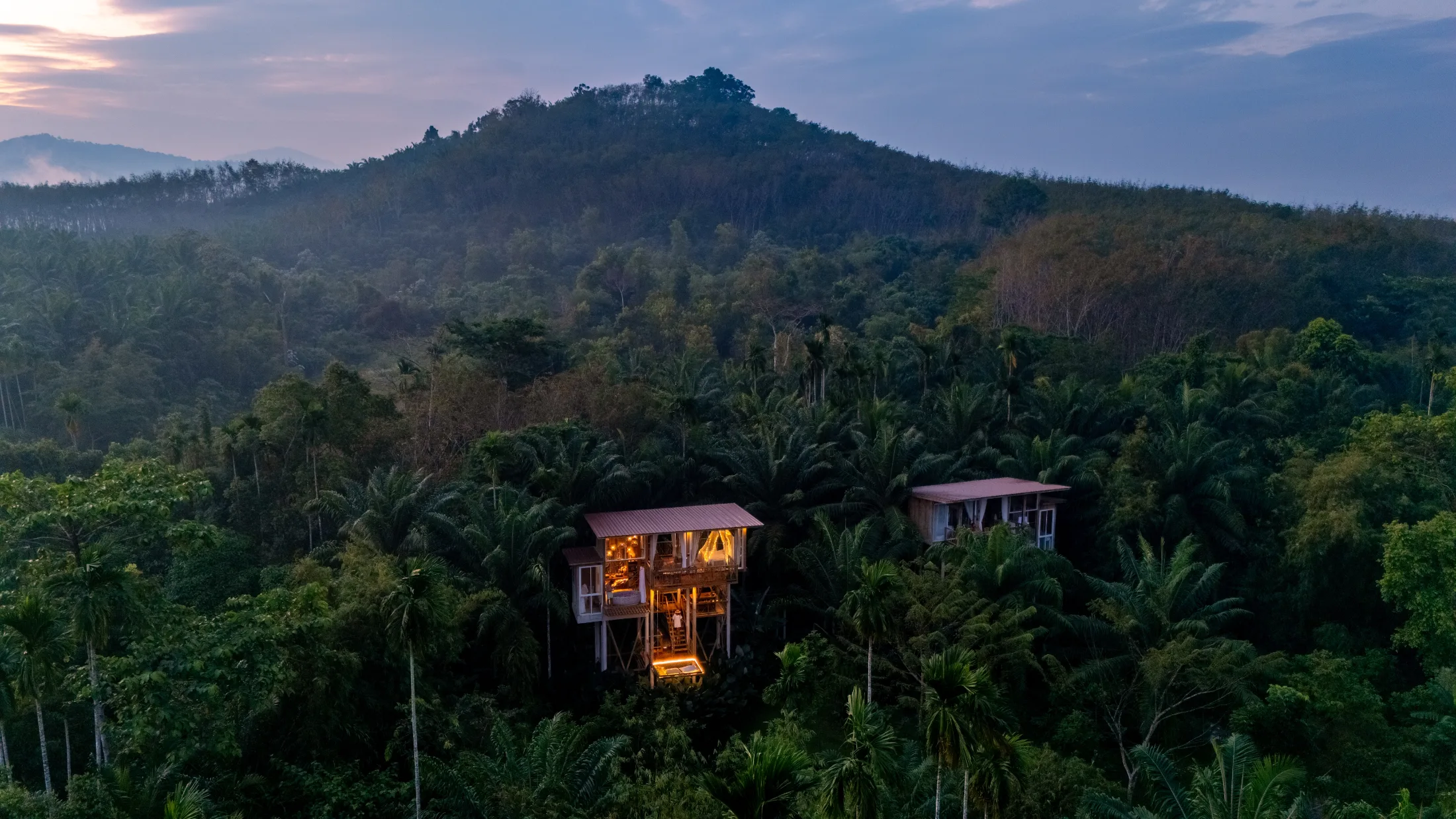
Pull back far enough and the picture resolves into something simple: two small structures raised on stilts above a dense hillside, windows lit amber against the darkening green, a ridgeline going purple behind them. The forest swallows almost everything. These cabins are what's left visible — and barely.
That ratio is the whole argument. The land is vast and mostly wild. The human footprint is small and warm and deliberate. Living that way — where you are a bright point inside something much larger — requires a different kind of confidence than building something that dominates the view. It requires trusting that smallness is not a loss.
Mount Shasta asks that of you. The people who answer it tend to stay. The honest accounting of what that choice looks like in practice is worth reading before you decide — but the short version is this: what you trade in convenience, you recover in something harder to name. A morning where the forest is doing something extraordinary and you have nowhere else to be.
That's not a vacation. That's a life.