
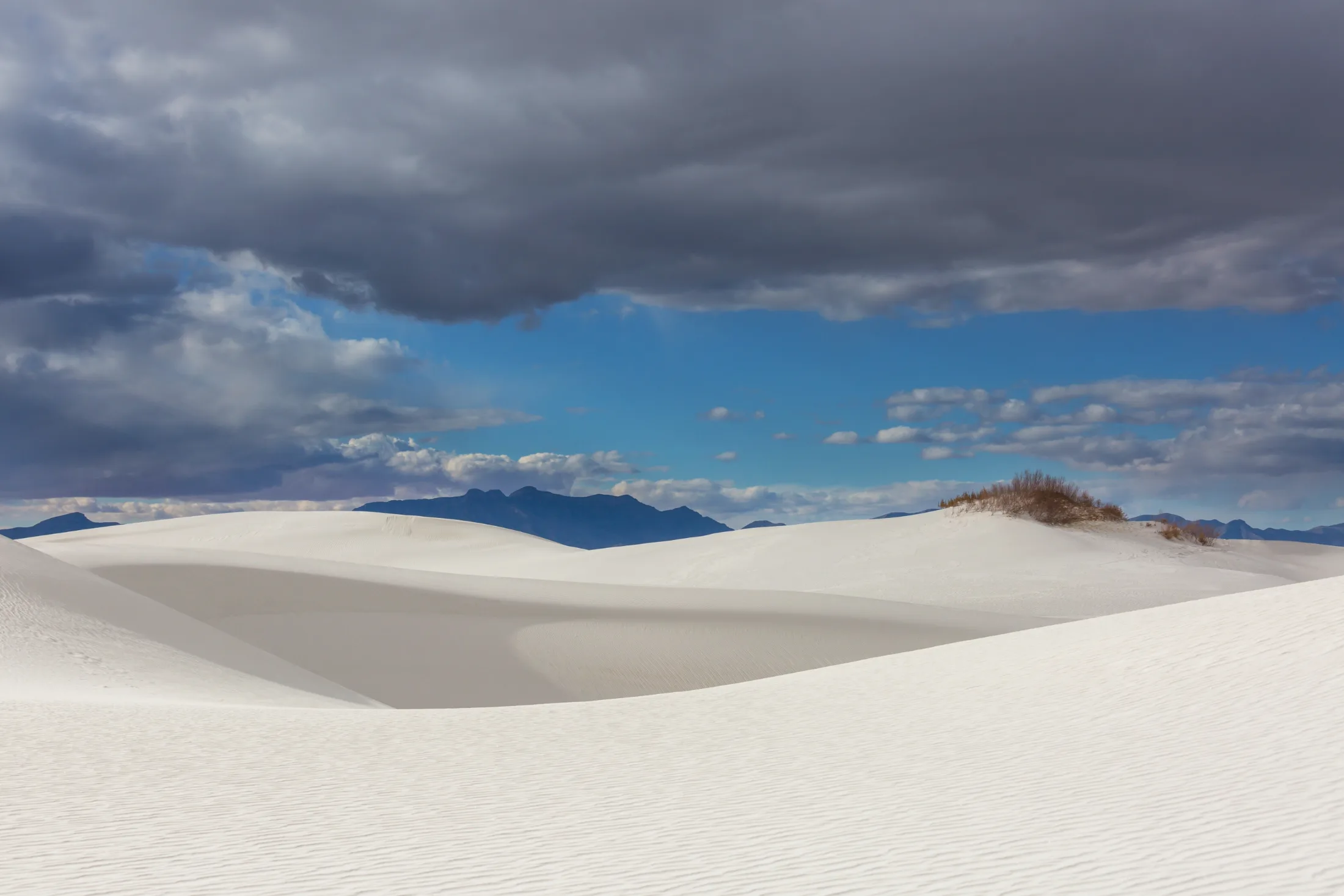
Pure white gypsum, no shadows at midday, just soft ridges curving into each other under a sky stacked with storm clouds above the Sacramento Mountains. The dunes stay bright while the clouds build — indifferent, almost hostile to drama. There is almost no sound. The wind rearranges the surface while you watch. For residents within the Santa Fe region's orbit, White Sands is a half-day drive south, not a bucket-list trip. That distinction matters more than it sounds.
The Santa Fe region is not a city with day trips attached. It is a living radius — enormous, geologically strange, and inhabited by people who use all of it. The plaza is the address. The land is the life.
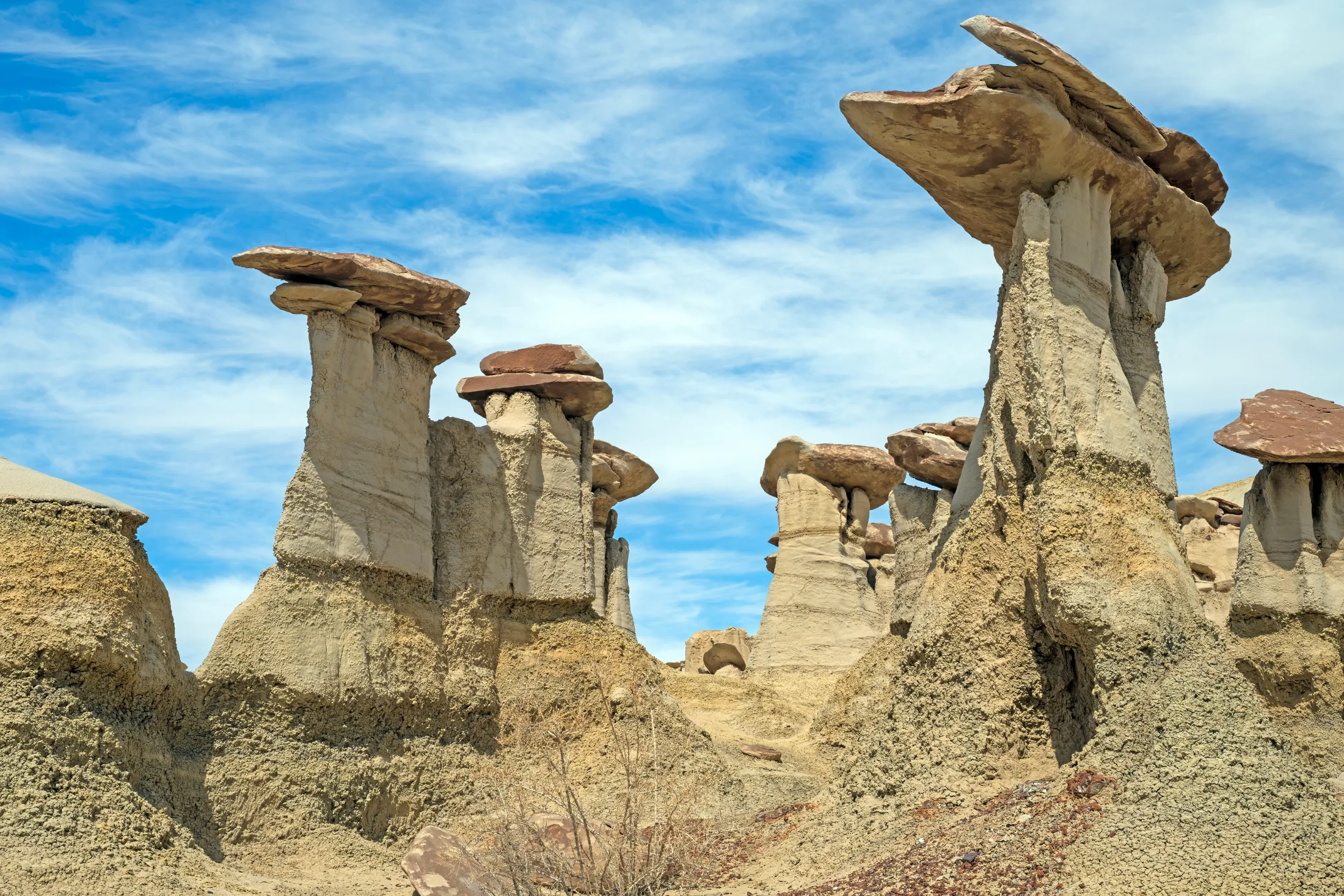
Move north and east into the badlands and the geology gets stranger. Pale stone columns rise from eroded earth, each topped with a flat sandstone cap that looks placed there by hand. It wasn't — the caps protected the softer material below while everything around them wore away over millions of years. Standing in front of them, that timeframe stops being abstract. The blue sky behind them is almost theatrical, and the hoodoos seem to lean into it, patient and slightly absurd.
This is high desert at altitude: dry, quiet, and enormous. You can spend an hour here and not see another person. That, too, is part of what the region offers.
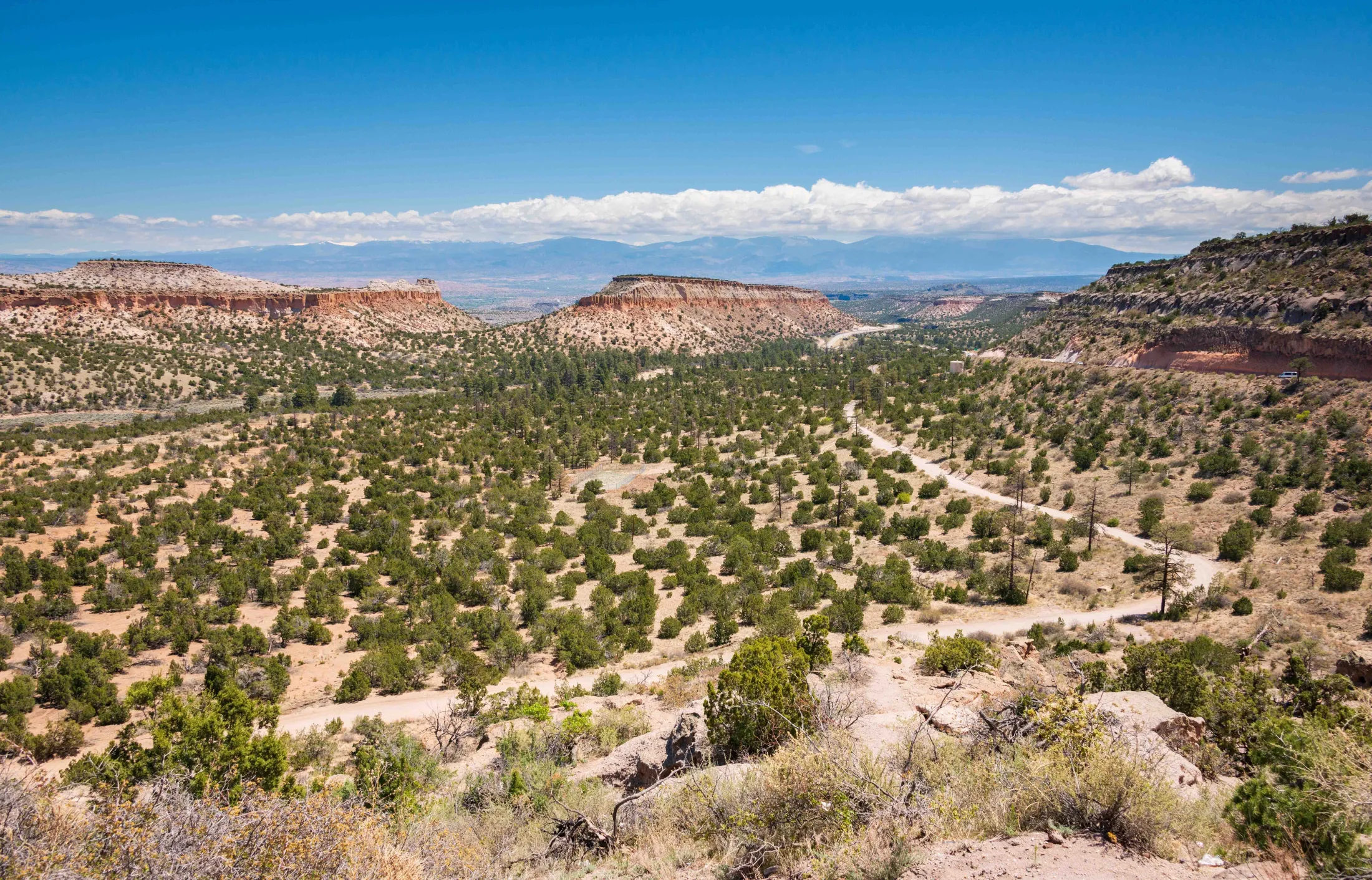
Pull back wider. The mesa country between Santa Fe and Taos is where the region reveals its true character. Piñon and juniper dot the plateau in every direction, low and dark green against red and ochre earth. A dirt road cuts through without hurry, threading past red-rock cliffs toward a distance where the Sangre de Cristo mountains rise into cloud. The road goes somewhere specific; from up here it looks like it goes on forever. It does both.
People drive this stretch for work, for groceries, for school runs. The grandeur is not decorative — it is the commute. You either fall in love with that or you don't, and the people who stay have made their answer clear.
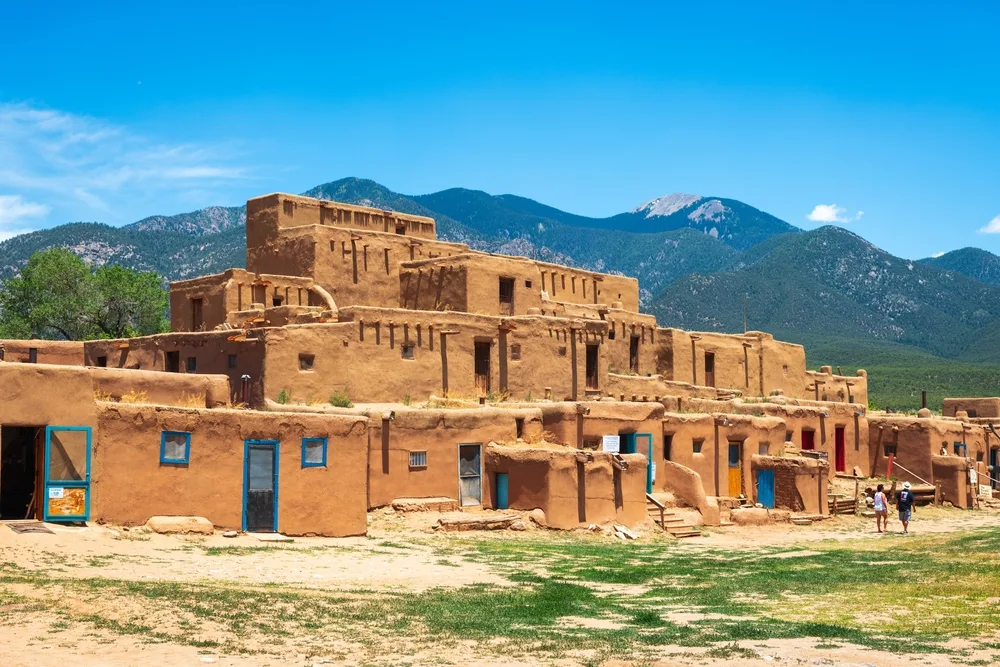
The road ends, eventually, at Taos Pueblo. Multi-story adobe stacked against the Taos Mountains, blue doors and red doors catching the afternoon light, a few people crossing the dusty open ground between the buildings. The Pueblo has been continuously inhabited for centuries — a fact that carries real weight, not the kind that gets printed on a brochure. The dunes, the hoodoos, the mesa road: all of it exists inside a human story that was already old when the first Spanish expedition arrived.
Living in the Santa Fe region means living inside that story, even as a newcomer. The land is not backdrop. It is context — ancient, working, and entirely present.