
Game Day at Dodger Stadium in Chavez Ravine
The ballpark in Elysian Park opened in 1962.

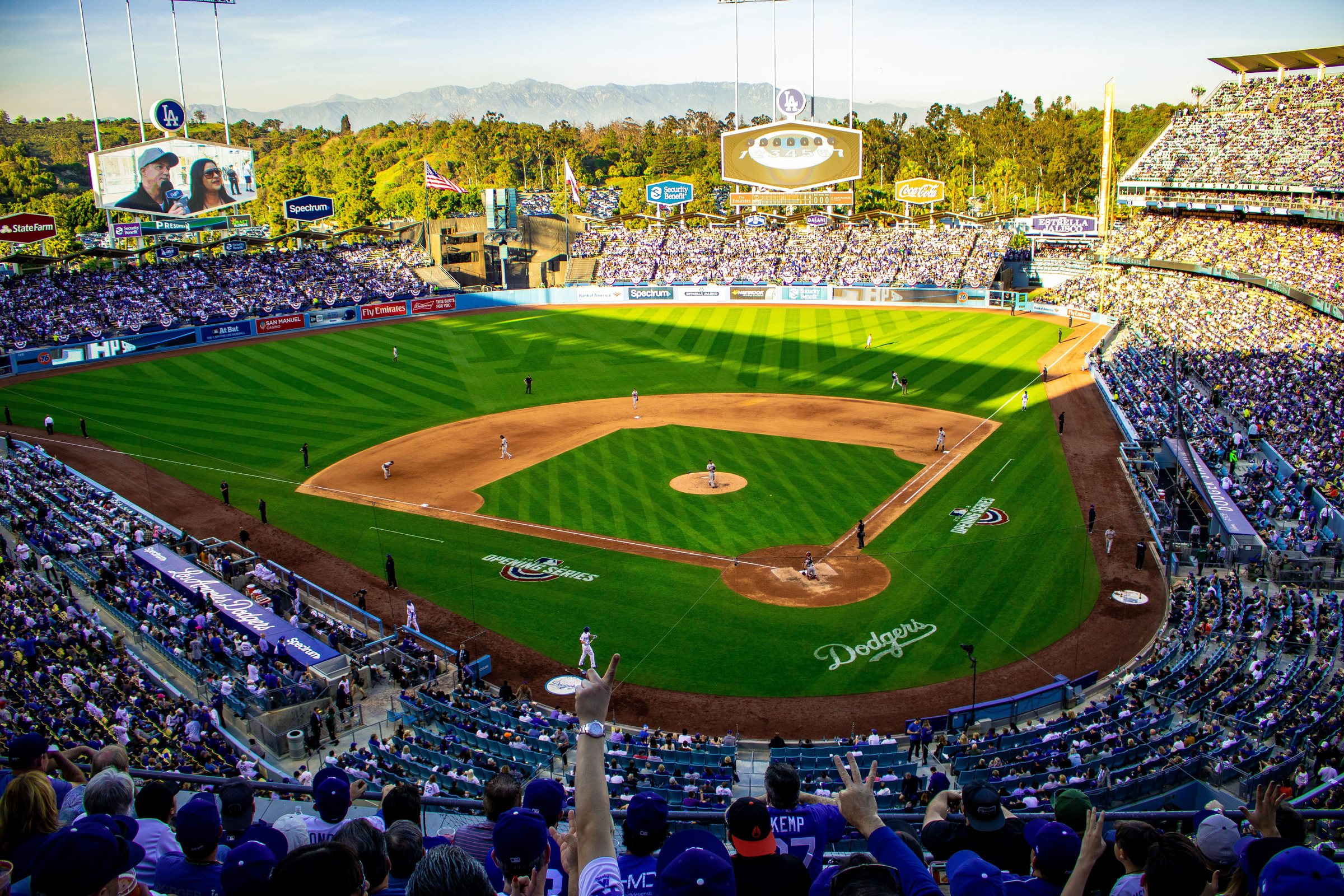
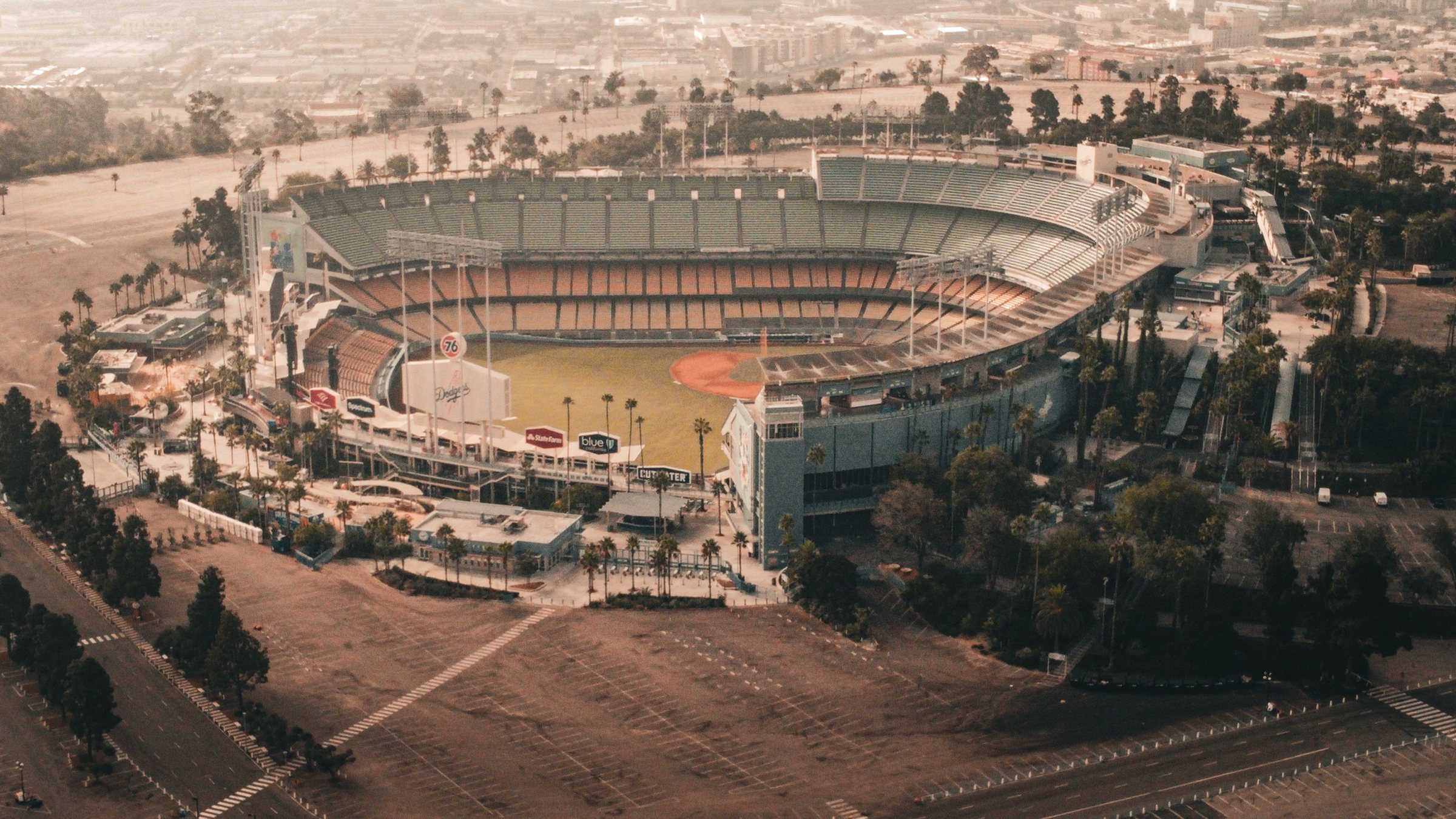
You come to a Los Angeles ballpark in Chavez Ravine and in the Elysian Park neighborhood. It has been home to the Dodgers since 1962. The address is 1000 Vin Scully Avenue, Los Angeles, CA 90012. While construction went on, the club's games were held at the Los Angeles Memorial Coliseum, and that arrangement ran through 1961. The groundbreaking came on September 17, 1959, and the players first saw the new park on April 9, 1962, the day before the opener.
A 1962 Ballpark
The build took less than three years. On August 25, 1960, Walter O'Malley signed the construction contract with Vinnell Constructors, the firm from Alhambra, for the full build. About 300 acres were graded, and eight million cubic yards of earth shifted until the site took a bowl shape. On that site Vinnell built a casting yard of six acres. Seat units of 22 feet were cast inside steel forms, then cured by steam.
Dodger Stadium opened in 1962. Among ballparks in Major League Baseball, it is the oldest west of the Mississippi River. It ranks as the third oldest overall, after Fenway Park, opened in 1912, and Wrigley Field, opened in 1914. Measured by the number of seats, it has been called the largest baseball stadium anywhere in the world.
The Design Team
The stadium was designed by O'Malley and by Emil Praeger, a New York architect and civil engineer with Praeger, Kavanagh, Waterbury, together with Los Angeles architect Edward Fickett, FAIA. Fickett was a fourth generation native of California, and his sense of style and color gave the stadium a modern Southern California character of the 1960s. Praeger designed every entry so that it sits at grade, from the Top Deck down to Field Level. There are 21 terraced entrances spread across six seating levels. A cantilever design means no pillar or post stands between you and the field.
O'Malley pictured a place with the spirit of Disneyland. He wanted trams to carry people, water on the grounds, planting laid on thick, and buildings meant to point toward the future. The dugout box seats drew on the ground level seats at Korakuen Stadium in Japan. The Dodgers played exhibition games there on their goodwill tour in 1956. He telegraphed the architects to ask that the wall running behind the dugout boxes be painted in a rainbow of color. The scheme uses six pastel shades, and the original seats ran yellow on Field Level, orange on Loge, turquoise on Reserved, and sky blue on the Top Deck.
Terraced entrances carry you between levels along landscaped plazas around the stadium. Each entry meets the ground at grade. Parking for each seating section sits right beside its entrance.
Mid-Century Modern
The Los Angeles Conservancy calls the ballpark Mid-Century Modern. The notes cite a metal roof folded above the pavilion in center field, inverted canopies, urns formed in abstract shapes, topiaries set at terraced entrances, and a range of pastels from the early 1960s.
Opening Day
Opening Day was April 10, 1962, against the Cincinnati Reds. Johnny Podres, the hero of the 1955 World Series title for the Brooklyn Dodgers, threw the first pitch. Kay O'Malley threw the ceremonial first pitch. Commissioner Ford C. Frick praised O'Malley, crediting him with imagining a city along a hillside and with moving mountains to accomplish that aim.
A reporter on dedication day caught two sign errors, Lounge standing in for Loge and Pavillon standing in for Pavilion. The errors drew a roar of laughter from O'Malley. The original scoreboards were billed as the largest in the world, measuring 75 by 34 feet, with 17,000 lights. Later moments at the park include a perfect game by Sandy Koufax in 1965, the All-Star Game of 1980, Fernandomania in 1981, Olympic baseball in 1984, and a home run by Kirk Gibson that ended Game 1 during the 1988 World Series.
The View
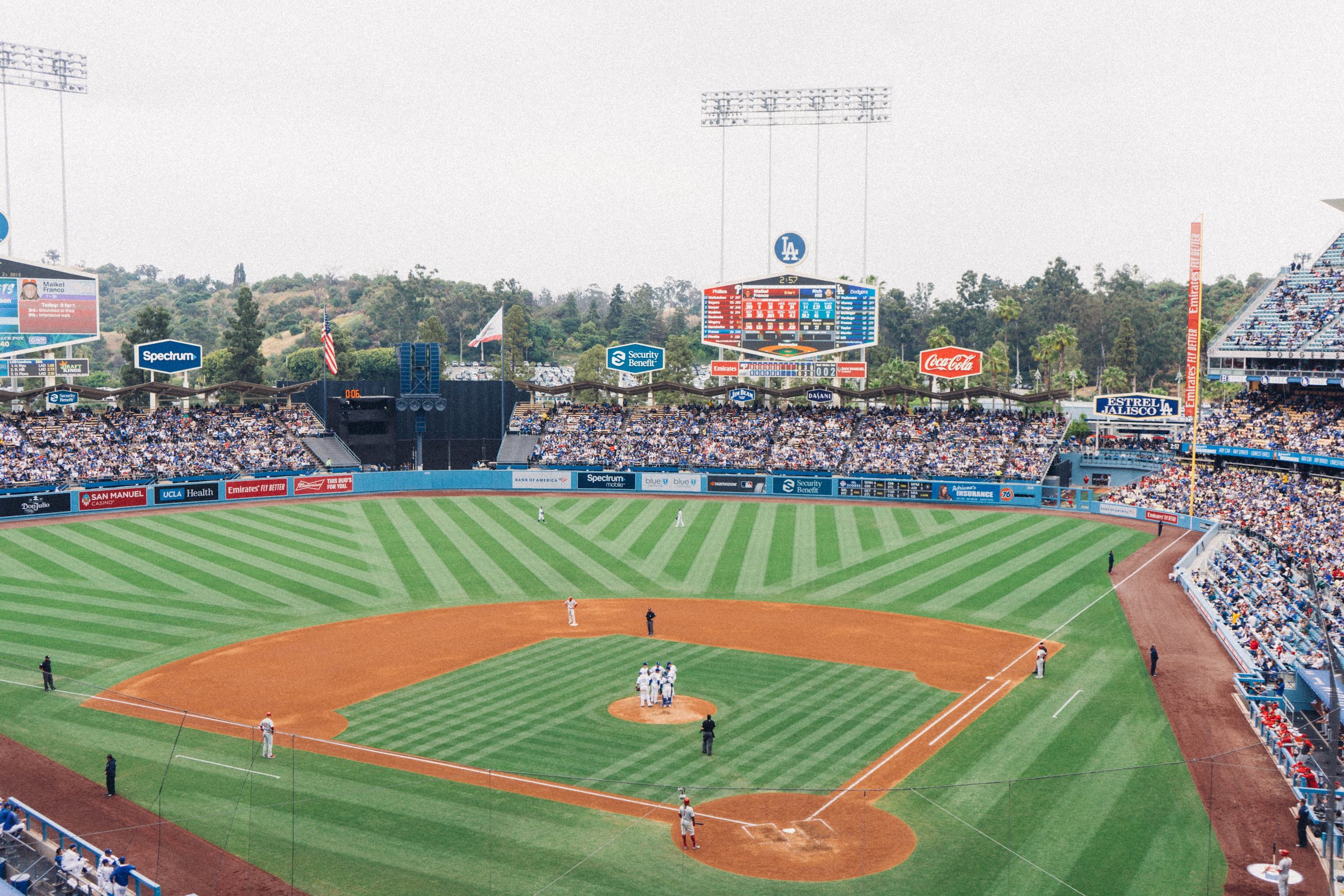
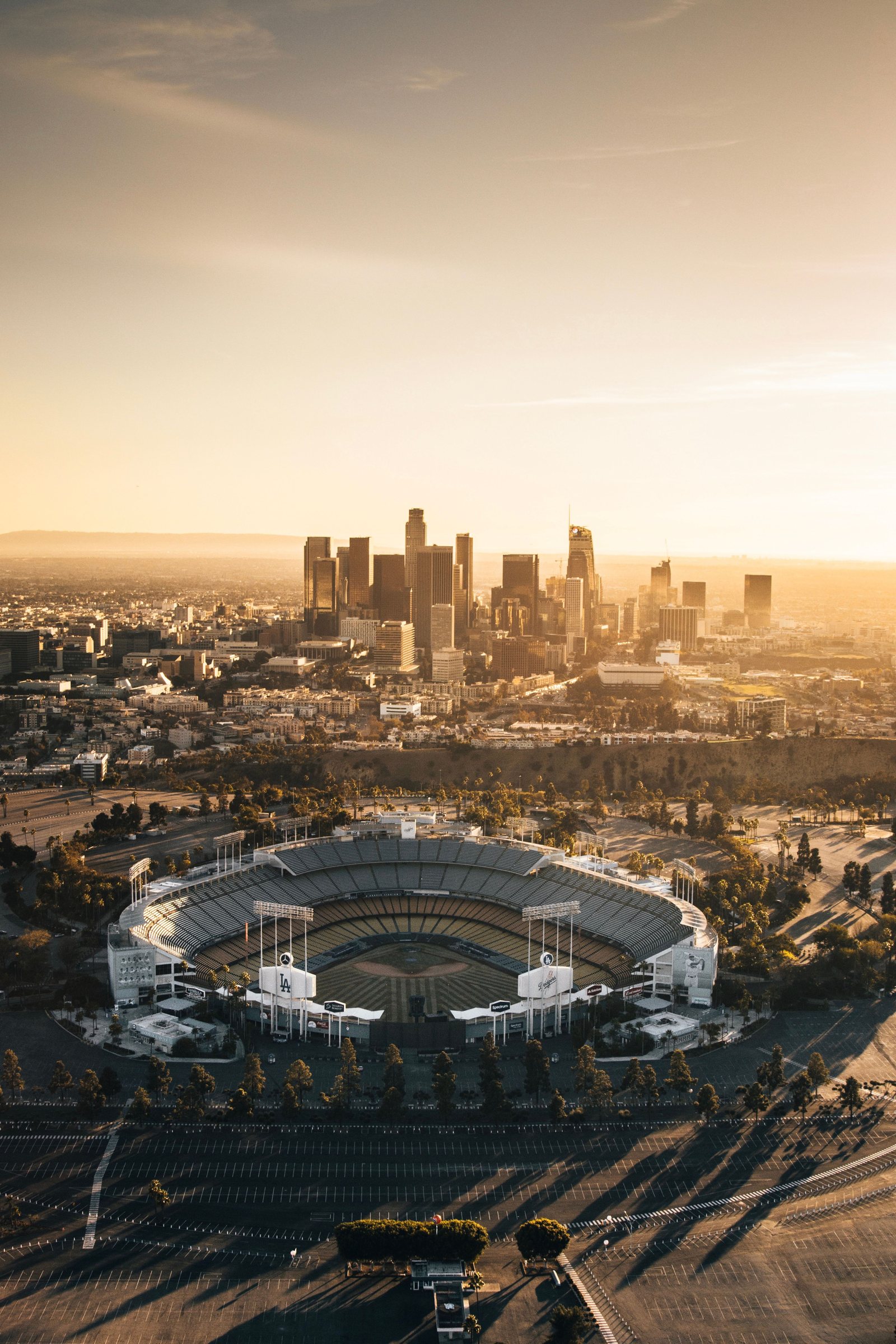
An outdoor plaza holds a view that turns through all 360 degrees, gathering the downtown skyline, Santa Monica Bay, the Santa Monica Mountains, the San Gabriel Mountains, and the diamond in one circuit. Past left field, a stand of palms occupies the slope. California poppies were planted on hills that had been bare.
Centerfield Plaza
Centerfield Plaza was renovated in 2021, and the work introduced the Dodger Stadium Fire Truck. On June 4, 2022, a statue of Sandy Koufax was unveiled in that plaza. Retired numbers honor Koufax at 32, Fernando Valenzuela at 34, Roy Campanella at 39, Jackie Robinson at 42, and Don Drysdale at 53. The list of honors also includes broadcasters Vin Scully and Jaime Jarrin and former team president Walter O'Malley. A traditional ballpark menu item, named when the stadium opened in 1962, now has a statue of its own.
Which seat will you choose for a game in Chavez Ravine?
Stories, places and events, edited by LIVIN.in.