
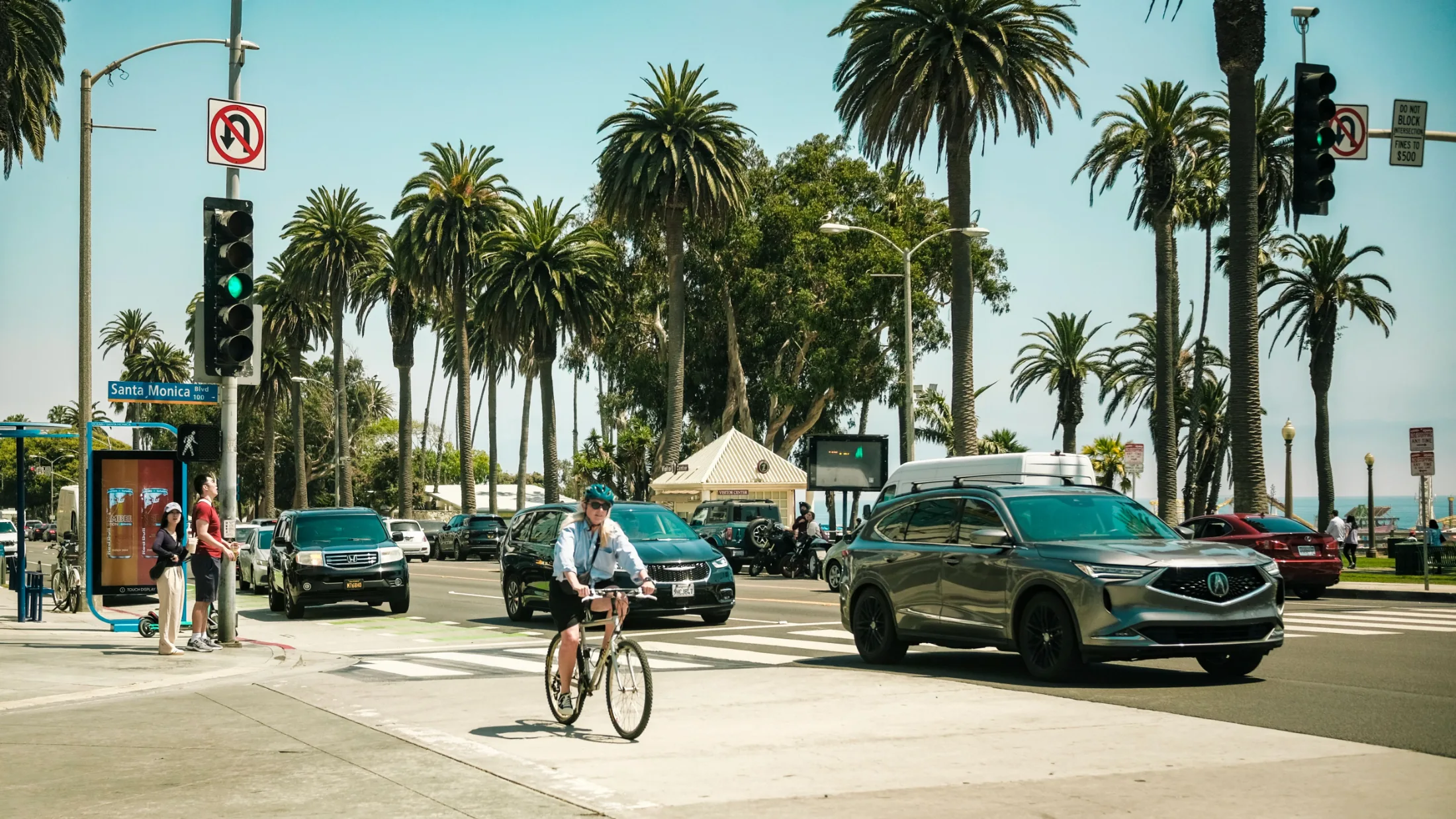
Gas in LA County runs above $5 a gallon. California auto insurance premiums have surged sharply in recent years, with the state ranking among the most expensive in the nation for coverage. The average transaction price on a new vehicle has climbed past $47,000 nationally — a number that lands harder once you factor in California taxes and dealer fees. At some point, the math stops being theoretical. A growing slice of Angelenos — not just students and bike evangelists, but working adults who have actually run the numbers — are choosing to go car-free, or to drop from two cars to one. The prerequisite is living somewhere the city is actually walkable and bikeable. That rules out most of it. Not all of it.
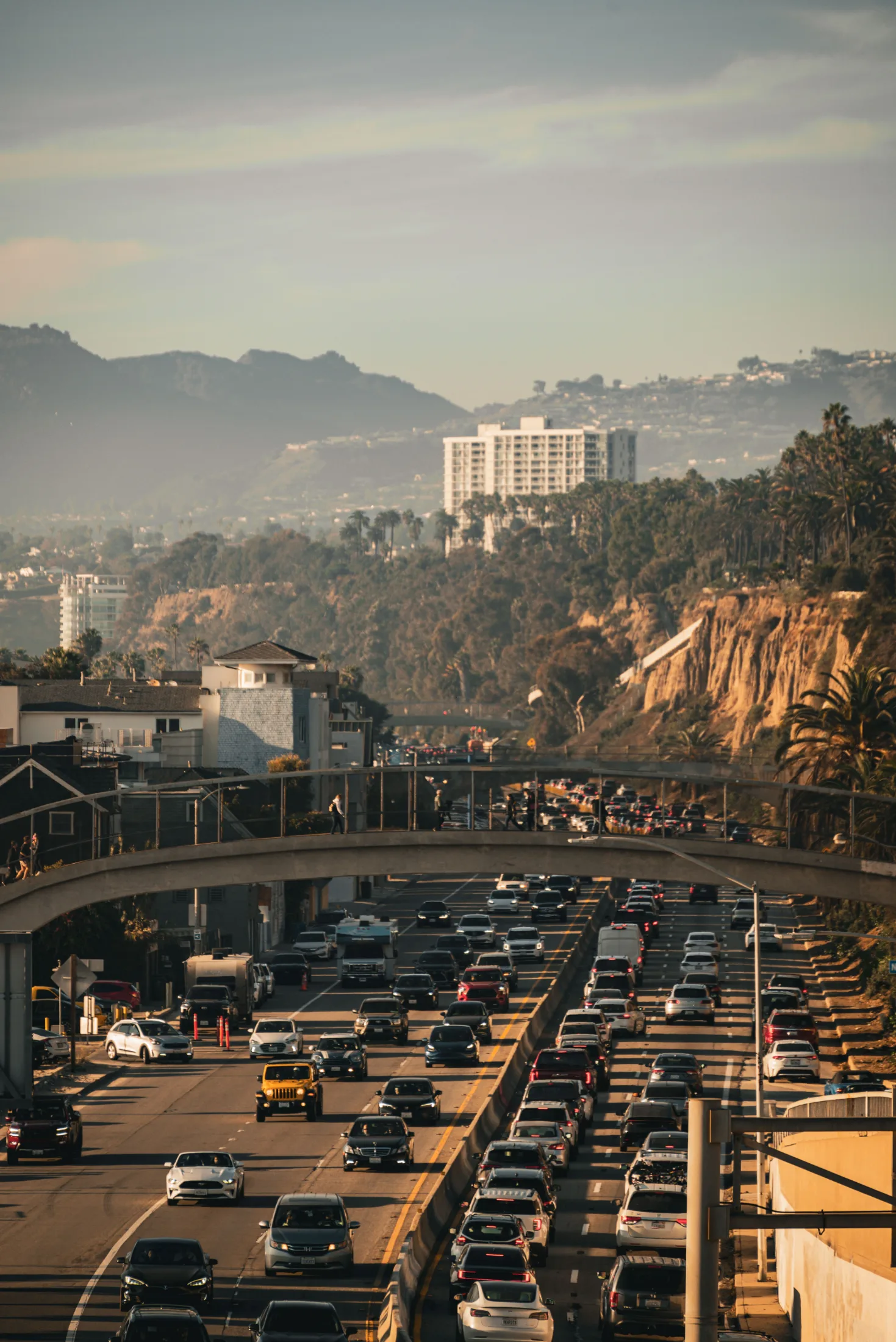
Where the Infrastructure Is Actually There
As I've said before, nobody lives in "LA" — they live in one neighborhood of it. That framing matters more for this conversation than almost any other. The question isn't whether Los Angeles is bikeable. It's whether the specific blocks you'd be living, eating, working, and running errands on are bikeable. In a handful of places, the answer is yes.
Santa Monica is the clearest case. The city has invested heavily in protected bike infrastructure, and the numbers reflect it — Santa Monica consistently ranks as one of the most bikeable cities in Southern California. The Expo Line bike path connects directly to the Metro E Line, the beach bike path runs for miles without a car in sight, and the grid north of Wilshire is flat enough that an e-bike becomes almost unfair. Errands, coffee, groceries, the beach — all of it is genuinely reachable on two wheels.
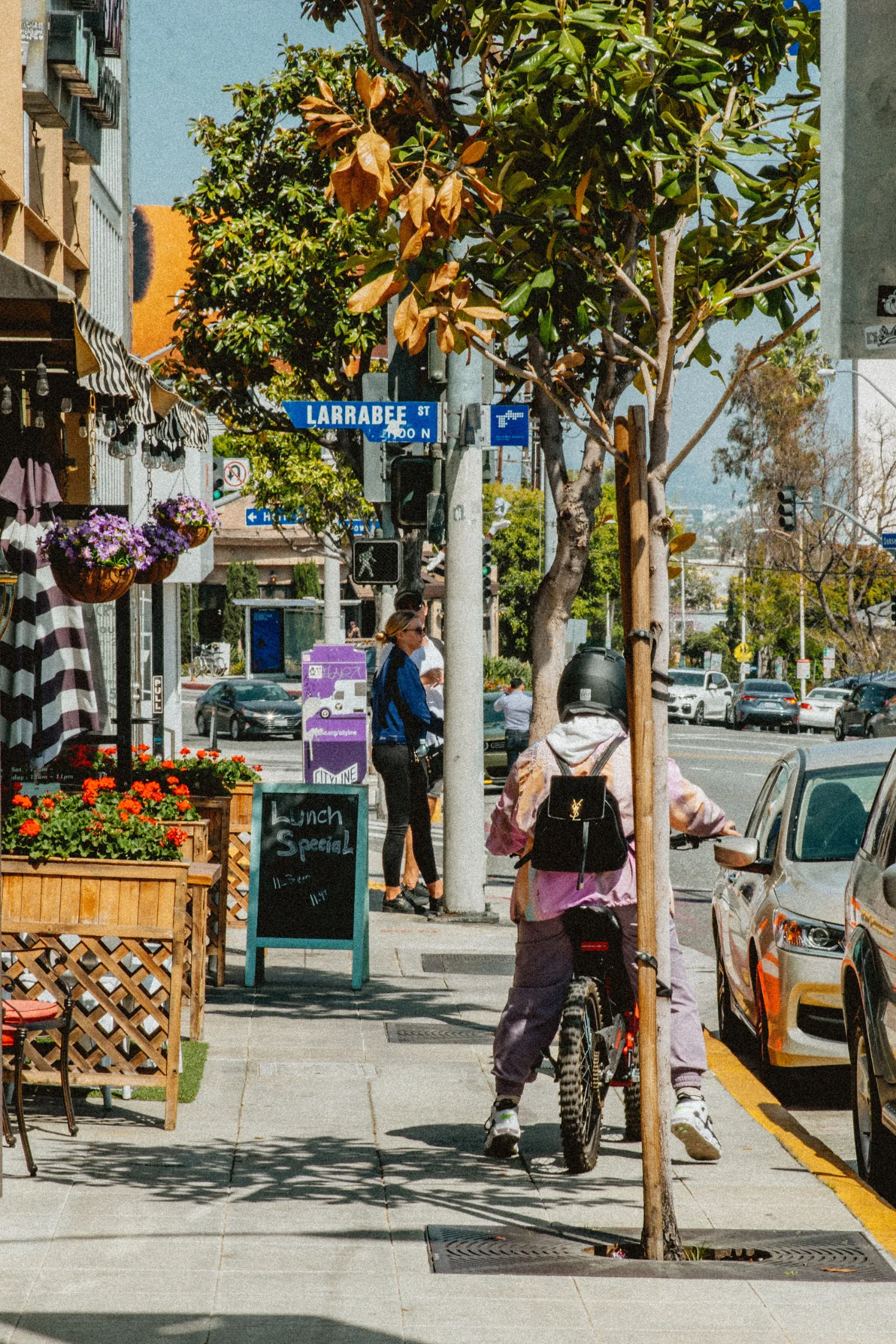
West Hollywood punches above its size. The city is just 1.9 square miles, which means destinations that would require a car in most of LA are often a short ride apart. Santa Monica Boulevard and Melrose Avenue have both seen bike lane additions, and the density of restaurants, shops, and services means your daily radius stays tight.
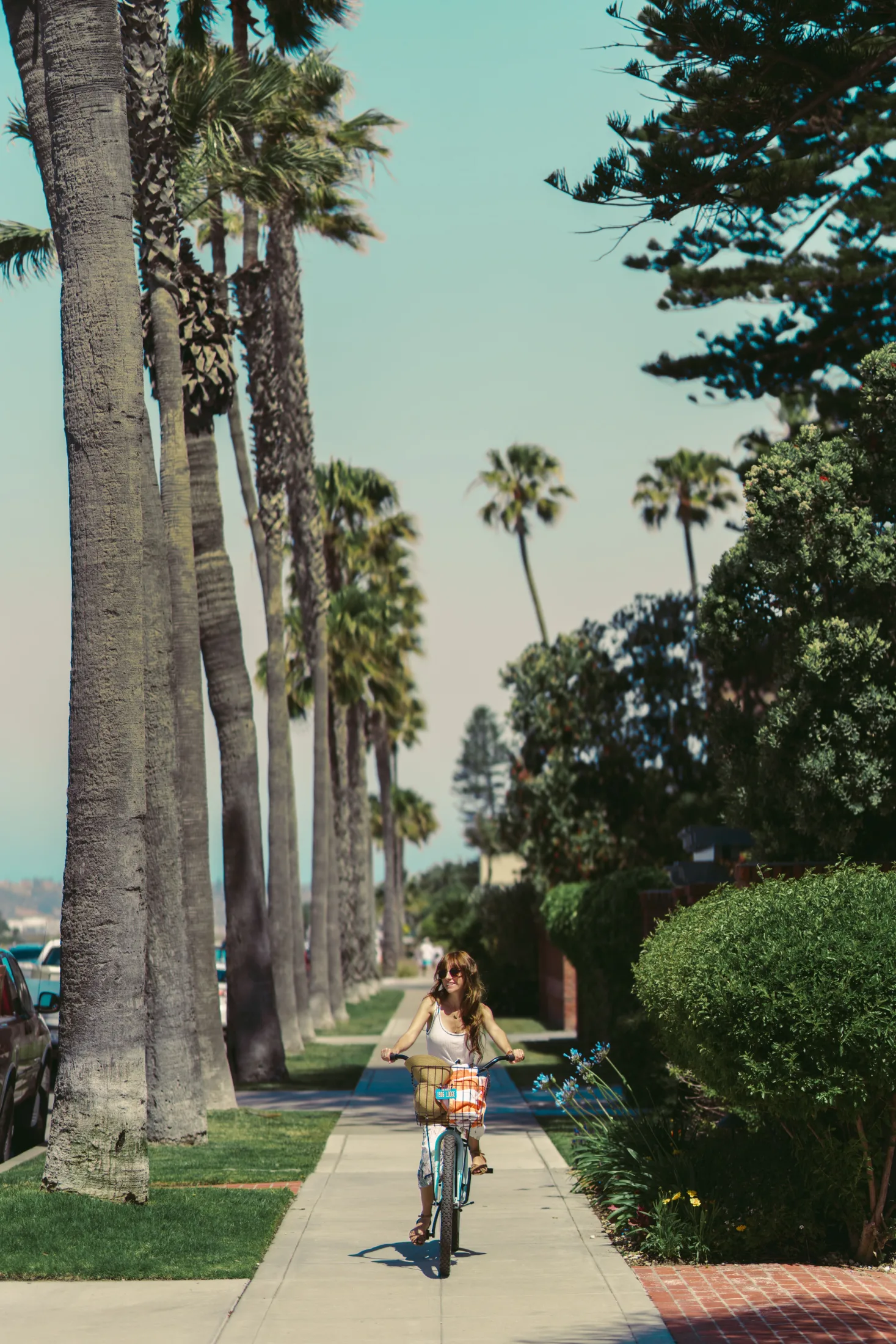
Long Beach has some of the most developed bike infrastructure in the county — a network of protected lanes and the beach path connecting into the broader coastal corridor. It's flat, the grid is logical, and the density of the downtown core means day-to-day life is genuinely walkable in a way that surprises people who've only driven through.
The E-Bike Factor
What has shifted the calculus in the last two years isn't just gas prices — it's the electric bike. A quality commuter e-bike runs anywhere from $1,500 to $3,500. Put that next to a single year of California auto insurance plus a few months of gas and the comparison doesn't take long. The flat coastal terrain that covers Santa Monica, Venice, and Long Beach makes range anxiety a non-issue. And a bike moving at 20 mph on a protected lane is often faster point-to-point than a car stuck behind a Waze reroute.
What You're Actually Trading
Going car-free in LA is not a universal option, and pretending otherwise ignores the people for whom the city's transit gaps are a real burden, not a lifestyle choice. If your job is in the Valley and you live in Long Beach, a bike isn't an answer. If you have kids in multiple schools across the city, the math changes fast. This is a conversation for specific situations: a renter who works remotely or commutes to a Metro-adjacent office, someone relocating to LA who gets to choose their neighborhood before they choose their commute pattern, or a two-car household weighing whether the second car is earning its keep.
For those people, in the right neighborhoods, the answer is increasingly yes. The cost pressure is real, the infrastructure in certain pockets is functional, and 300-plus days of sun a year eliminates the last reasonable counterargument. The car isn't disappearing from Los Angeles. But in Santa Monica, West Hollywood, and Long Beach, leaving it in the garage for days at a stretch isn't a statement. It's just arithmetic.